

- At heart, Minish is tooth restoration, not a beauty procedure. A natural look follows once the tooth is repaired well.
- Enamel, the tooth's protective outer layer, is just 0.5–1 mm thick. How much of it you keep matters most.
- The treatment removes nothing, or about 0.1–0.3 mm. That is less than laminates or crowns.
- Most importantly, it keeps future options open. Tooth structure that is removed never grows back.
"How is Minish different from laminates?" It is often the first question we hear at Reset Dental Clinic in Seomyeon, Busan. Before answering it, we need to explain what Minish is actually trying to do. This column covers why it is so focused on removing less tooth, and what that choice leaves you with ten years from now.
For patients living in or visiting Korea, we provide 1:1 English interpretation from your first consultation through the end of treatment.
What is Minish, and what is it meant to do?
Many people arrive thinking of Minish as "a treatment that makes teeth prettier." That is half right.
Its real purpose is tooth restoration. It returns the worn, chipped or discolored outer surface of a tooth, the enamel layer, to its original state.
A beautiful result is simply what follows when a tooth is restored in a healthy way. It is the natural outcome, not the starting point.
That is why we call it restoration, not a cosmetic makeover. This difference changes the whole treatment plan.
When the goal is restoration, the plan starts from the tooth you already have. The first question becomes how much of it can stay, not how it can be changed.
Why do enamel and every 0.1 mm matter so much?
A tooth is built in layers. The outermost layer is enamel, and underneath it lies dentin.
Enamel is 0.5 to 1 mm thick, thinner than a fingernail. Yet this thin layer is the shield that protects the whole tooth. It also holds light, which gives a tooth its natural color.
So removing 0.3 mm can mean losing close to half of this protective layer. The number sounds tiny, but as a share of the enamel it is not small at all.
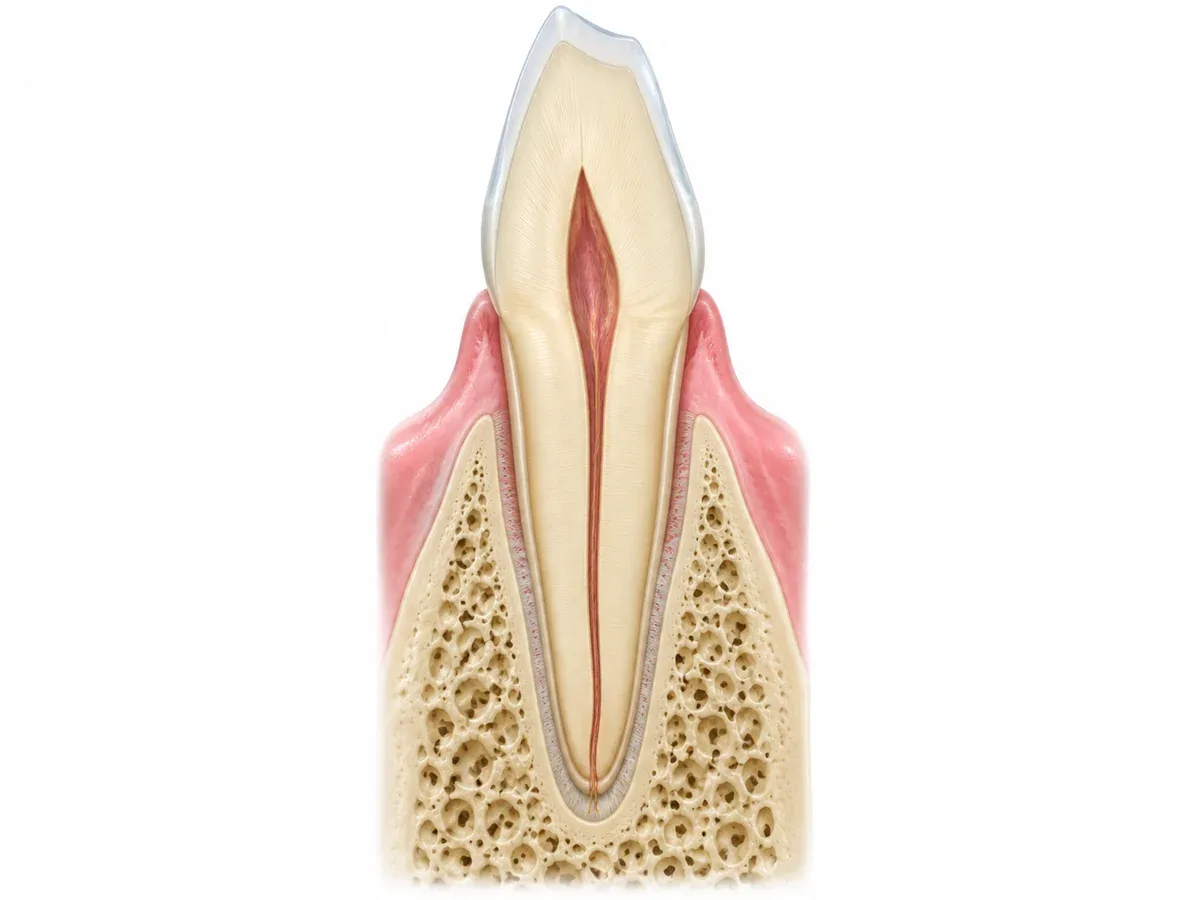
Why does the amount removed matter so much? The reason comes down to one fact: tooth structure that is removed does not grow back.
Hair and nails grow again after you cut them. A tooth that has been ground down will not return, whatever you do later. This sets esthetic dentistry apart from many other kinds of treatment.
| Treatment | Amount removed | Compared with enamel |
|---|---|---|
| Minish (no-prep) | 0 mm | Left as it is |
| Minish (minimal-prep) | 0.1–0.3 mm | Lightly refined in places |
| Conventional laminate (veneer) | 0.5–1 mm | Most of the enamel |
| Crown | 1.5–2 mm | 60–70% of the outer surface |
The table makes the difference easy to see. Minish sits at the low end of tooth reduction, well below conventional laminates and crowns.
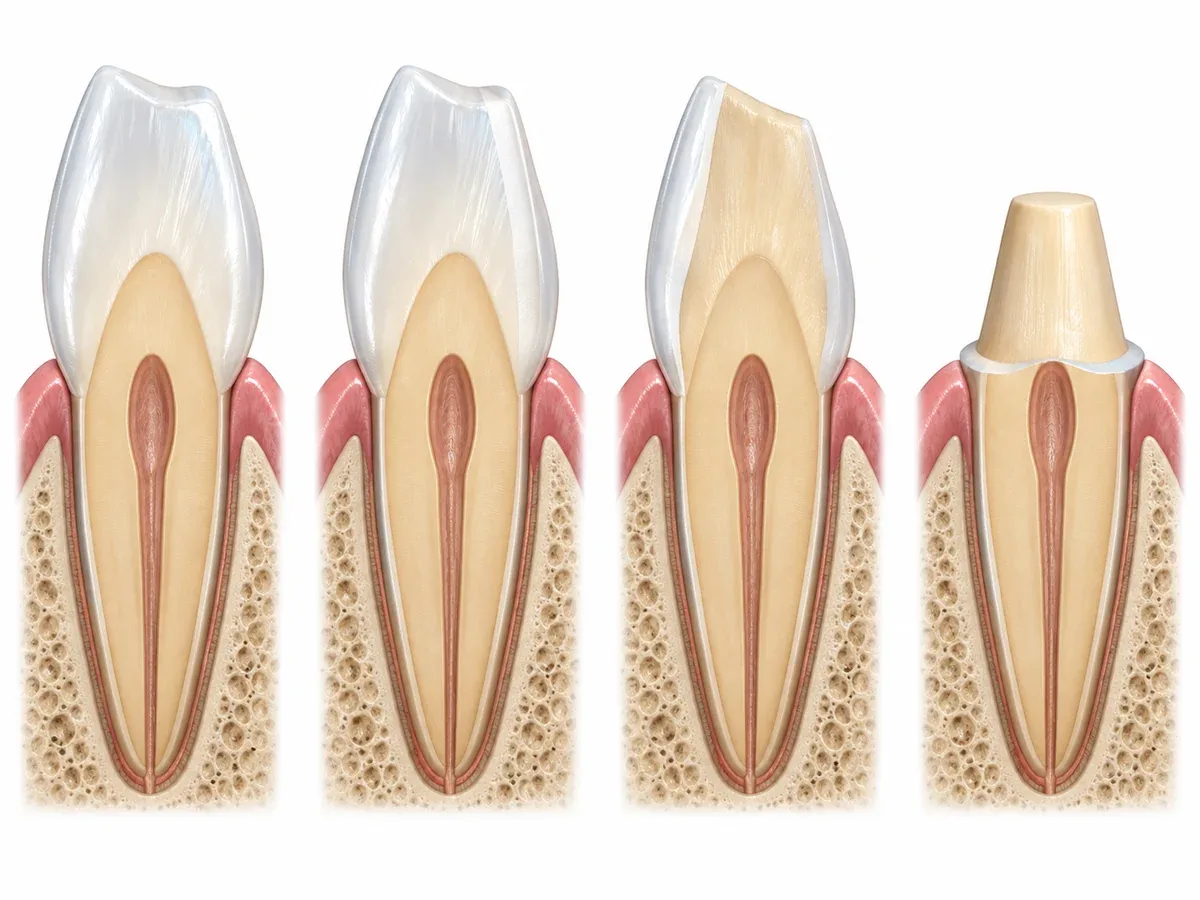
Keeping your next option open
This is the point we most want to stress.
Removing a lot of tooth may cause no trouble at first. But restorations wear with time, so a replacement is likely to be needed 10 or 20 years later.
At that point, your choices depend on how much natural tooth is left. If plenty remains, you have several options.
If 60–70% of the tooth was already removed for a crown, another crown is usually what remains. After that may come root canal treatment (endo), and then extraction.
| How much was removed first | At replacement time | What may follow |
|---|---|---|
| Little or none (0–0.3 mm) | Plenty of natural tooth remains | Several options stay open |
| Most of the enamel (0.5–1 mm) | Less tooth remains | Fewer options |
| 60–70% of the surface (crown) | Another crown is usually what remains | Root canal treatment, then extraction |
That is why we care about every 0.1 mm. Removing less today keeps your options open later.
Why repair the damage instead of reshaping the whole tooth?
An analogy may help here.
Imagine a treasured porcelain piece, several hundred years old, with a small chip on one edge. Would you grind away all the healthy parts and turn it into a small cup, just because of that chip?
Probably not. You would ask a skilled restorer to repair just the chipped area, matching the original material, color and texture.
Teeth work the same way. If one spot on a front tooth bothers you, there is no reason to grind away the healthy parts. The sensible approach is to restore the damaged area with a material as close to the original as possible.
Minish uses a material chosen to be close to enamel in color and strength. Once the enamel is restored, the tooth can end up very similar to a natural tooth.

The edge should be impossible to feel
Esthetic treatment is a game of 0.1 mm. Removing 0.1 mm more or less, or making a layer 0.1 mm thicker or thinner, can change the result a great deal.
The most important part is the margin, where the restoration meets your tooth. When you run your tongue over it, you should not be able to tell where one ends and the other begins. The two should feel like a single, smooth surface.
This is not just about looks. A tiny 0.1 mm gap makes an ideal playground for bacteria.
If a step is left at the edge, problems can build up in that spot. It can lead to bad breath and swollen gums, and eventually the tooth underneath can be damaged.
A quick check you can do right now
Already had treatment on your front teeth? You can check the edges yourself in a minute.
- Stand in front of a mirror.
- Gently run the tip of your tongue along the line where your front teeth meet your gums.
- Notice whether the surface feels smooth and continuous.
- If something catches like a small ledge, have that spot checked by a dentist.
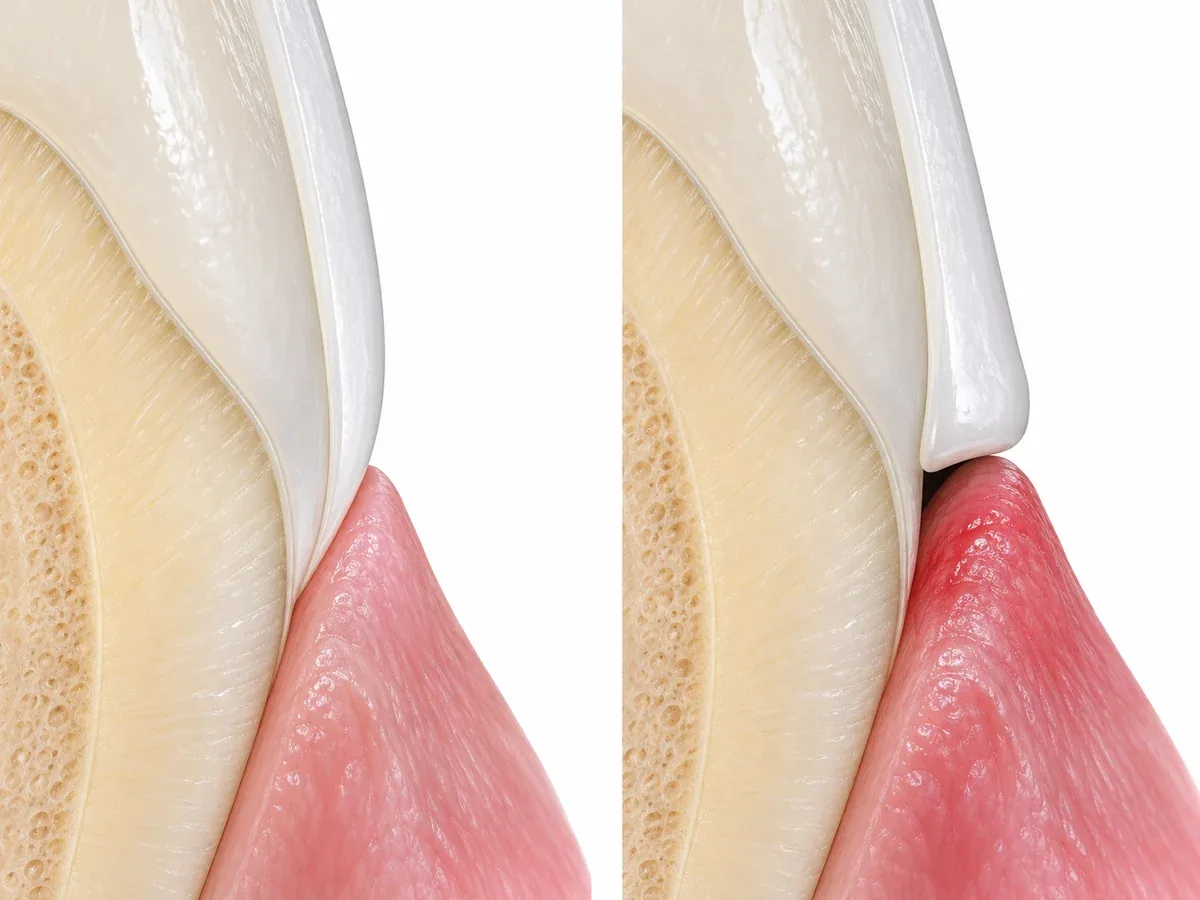
How is Minish designed and made for patients in Busan?
Minish is not a ready-made shape stuck onto teeth. It is designed to suit your face. We work out the shape and color by looking at:
- the proportions of your face
- your skin tone
- the thickness of your lips
- how your muscles move when you smile
Think of it as the difference between squeezing into an off-the-rack outfit and wearing clothes tailored to your body.
Most of us know the feeling. A dress looks great on a store mannequin, yet feels awkward once we try it on. It does not suit our body shape, skin tone or style.
Teeth are no different. Rounded teeth can look odd on a square face, and square teeth can look odd on a slim face. That is why no two Minish smiles are the same.
Why we make it inside the clinic
We do not send the work out to an external dental lab. We make it ourselves, inside the clinic, and there is a reason for that.
Esthetic work needs to be adjusted while it is tried on the patient's face. A little longer, a little thinner, half a shade lower on one side. Fine adjustments like these are hard to make at an outside lab.
Some people imagine "in-house" means fast, factory-style production. It is the opposite. On that day, our time and focus go to one patient at a time.
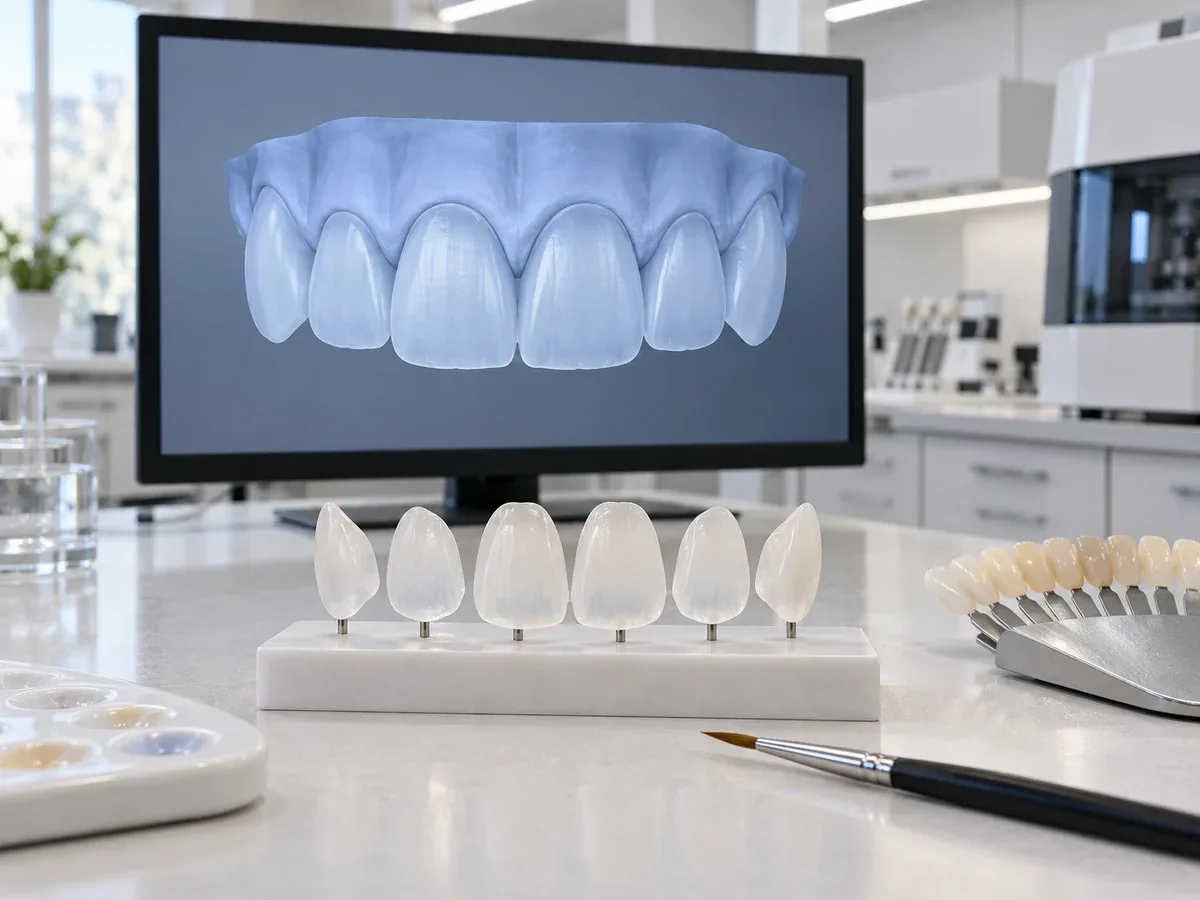
What does the process look like?
In a typical case, treatment takes two visits over two to three weeks. Diagnosis, design and shaping happen at the first visit, and the finished work is bonded at the second.
| Stage | What happens | Note |
|---|---|---|
| Before starting | Gum or bite problems are treated first | If needed |
| First visit | Diagnosis, design and shaping | The plan is set with your dentist |
| Second visit | The restorations are finished and bonded | Usually 2–3 weeks in total |
That is the usual course, not a fixed rule. If the gums are not healthy or the bite needs work, we take care of that first.
Laying marble over a weak foundation does not make a strong house.
Three questions to ask at any consultation
- "How many millimeters of my tooth will you remove?" Listen for an answer in numbers. This one question tells you a lot.
- "What options will I have when it needs replacing later?" Check that the clinic is thinking about ten years from now, not just today.
- "Can I consult with the dentist directly?" A treatment plan should be made with the person who will treat you.
To be clear, this is not about criticizing other dentists. It is simply to give you a basis for your own decision.
Is Minish right for you?
The answer depends on your teeth and your goals. Here is how we think about a few common situations.
If braces could solve it: for younger patients whose problem can be fixed with orthodontics, we recommend orthodontics first. If there is a way to leave the teeth untouched, that is the better path.
Orthodontics does not change tooth shape or color, though. Relapse after past orthodontic treatment is also a different story.
If one front tooth bothers you: treating a single tooth is possible. It is often harder than treating several, because color and shape must match the neighboring teeth very closely.
If you are older: age is not a barrier. Teeth often wear down and shorten over time, which can make a face look older. Caring for your teeth can be as much anti-aging as caring for your skin.
If you worry about daily care: when the edge is finished smoothly, you care for Minish just like a natural tooth. Trouble comes from a step left at the margin, which is why we put so much work into finishing.
Before any treatment begins, we look at a few things first:
- the health of your gums, which are treated first if needed
- your bite, in case it needs adjusting
- whether teeth stick out or overlap, which can call for minimal shaping
- heavy grinding habits, which need a plan of their own
Frequently asked questions
Can Minish be done with no tooth reduction at all?
Sometimes, depending on the teeth. If teeth already stick out or overlap, some minimal shaping is needed. If a clinic promises "no reduction, no matter what," it is worth asking again, because tooth size and position can make that physically impossible.
Will my teeth feel sensitive afterwards?
In general, the less tooth is removed, the less sensitivity there tends to be, because more distance to the nerve is kept. Teeth may feel sensitive for a while right after treatment, and in most cases this fades.
How long does Minish last?
There is no fixed expiry date; the aim is to use it like your own teeth. How long it lasts depends on care and chewing habits. If you grind your teeth heavily, you will need a plan made for that.
Can I get treatment in English in Busan?
Yes. We offer 1:1 English interpretation from the first consultation through the end of treatment. The clinic is near Seomyeon Station Exit 2 (5-min walk), opposite Lotte Hotel Busan, and you can call 010-8555-2854 (+82-10-8555-2854 from abroad).
At its core, Minish is about restoring teeth, not just making them prettier.
Tooth structure that is removed never comes back.
So removing less today
keeps your options open ten years from now.
We think carefully about every 0.1 mm.
How much to remove, and whether to remove anything at all —
we will look closely before we advise you.
If you are considering Minish in Busan, Reset Dental Clinic offers 1:1 English interpretation from your first consultation through the end of treatment. Call 010-8555-2854 to book a consultation, and bring the three questions above.
References
- KDCA National Health Information Portal, "Laminate Treatment" — what laminates are, how much tooth they remove (0.5–1.0 mm) and when they are used
- KDCA National Health Information Portal, "All-Ceramic Crowns" — pros and cons of porcelain restorations and the tooth reduction a crown requires
- KDA newspaper Dailydental (Chiui Sinbo), "Court Orders Damages for Excessive Tooth Reduction in Laminate Treatment" — how the court viewed the duty to explain when more tooth was removed than advertised
- KDCA National Health Information Portal, "Dentin Hypersensitivity" — the structure of enamel and dentin, and why teeth can feel sensitive after reduction
- KDCA National Health Information Portal, "Gum Disease (Periodontal Disease)" — how plaque at the edge of a restoration can lead to gum inflammation
Written by Reset Dental Clinic Support Team
Medical review Dr. Kim Hyun-joo, Head Dentist · Esthetic Restorations
Last updated: September 19, 2026
This column is for general information and does not replace diagnosis or treatment for individual patients. If you have symptoms, please see a dentist.


