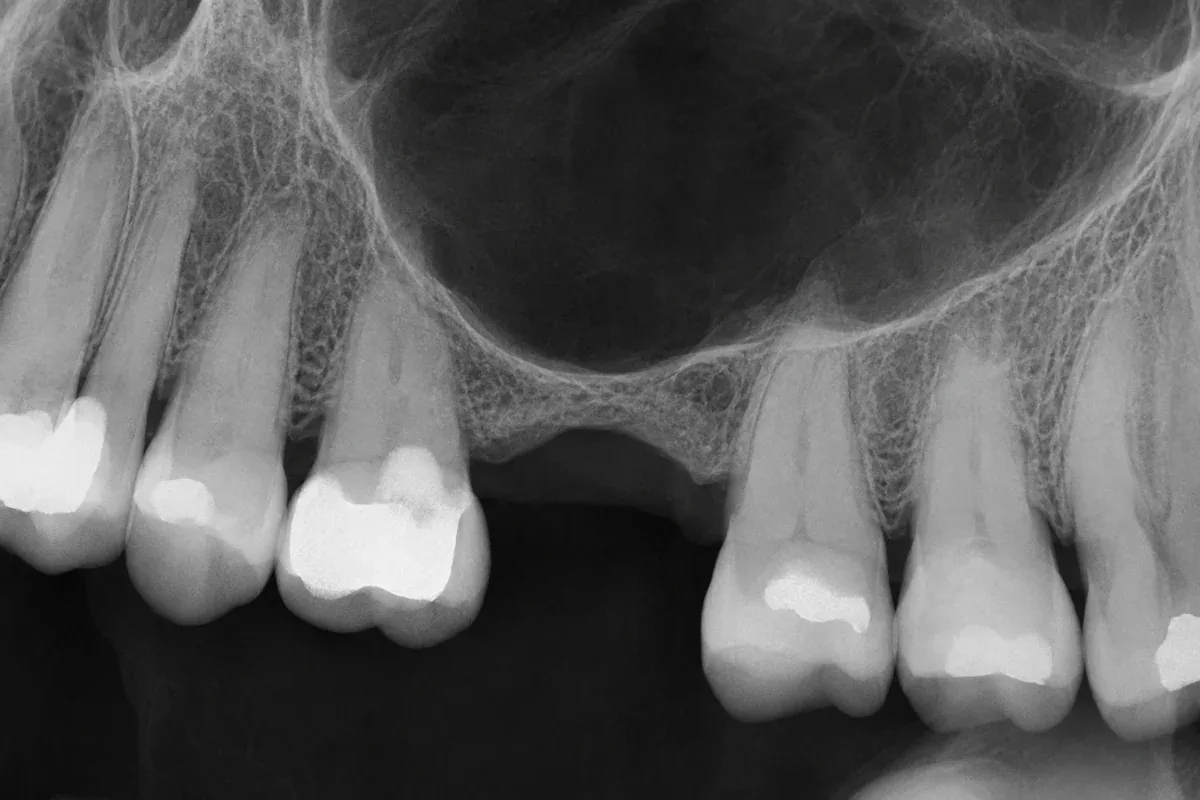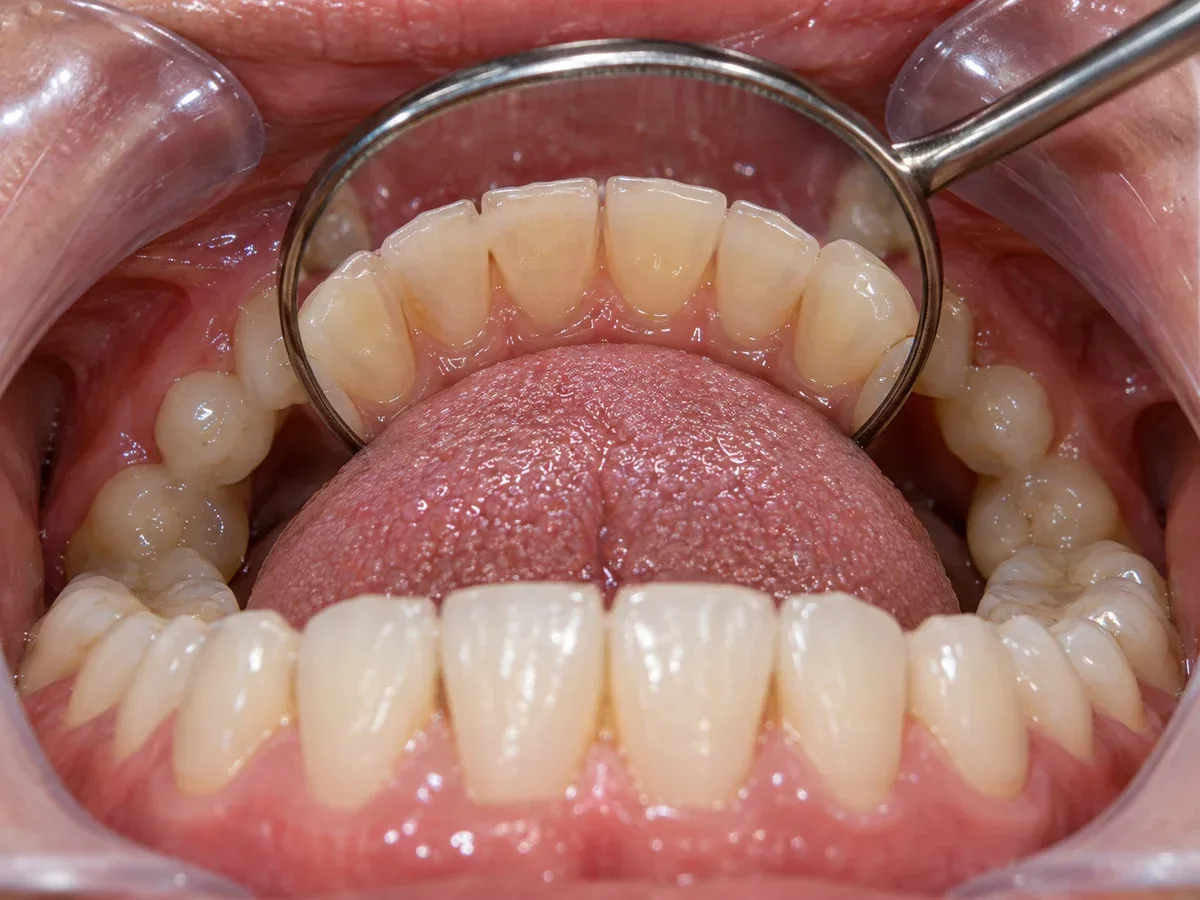
- The biggest difference is how much tooth is removed: 0.5–1mm for conventional veneers, 0 to 0.3mm for Minish.
- Less reduction allows a thinner restoration. Thicker teeth look pushed forward and unnatural.
- Front teeth steer your jaw. Too thick, and they brake every movement.
- Veneers are not bad. But if the result is the same, removing less tooth is wiser.
"Aren't Minish and veneers the same thing?" We hear this question often at our English-speaking dental clinic in Seomyeon, Busan. Both are bonded onto the front of your teeth, so at first glance they look alike.
But they differ in four ways: how much tooth is removed, how thick they are, what they are made of and where they are made. Those differences change what is left of your teeth ten years from now.
This guide walks through each difference one at a time. We offer 1:1 English interpretation from your first consultation through the end of your treatment. You can ask every question in this article in your own language.
How are Minish and veneers different in tooth reduction and thickness?
This is the core difference. Everything else in this article follows from it.
| Treatment | Amount removed | How far it goes |
|---|---|---|
| Minish (no-prep) | 0mm | The tooth is left as it is |
| Minish (minimal-prep) | 0.1–0.3mm | The surface is lightly smoothed |
| Conventional veneers | 0.5–1mm | Most of the enamel on the front surface |
| Crown | 1.5–2mm | 60–70% of the outer tooth |
Enamel is the protective outer layer of your tooth. It is just 0.5 to 1mm thick.
So removing 0.5mm can mean losing more than half of that layer. In some teeth, it means losing almost all of it.
Tooth structure that has been removed never grows back. It is not like hair or nails, which keep growing after a cut. This one fact is why we pay such close attention to reduction.
Why does thickness follow reduction?
The more tooth you remove, the thicker the restoration has to be. If it is made thin, the space you cut away is not filled. The tooth then looks sunken, as if it has moved inward.
Think of conventional veneers like ready-made artificial nail tips from a nail salon. They cover the nail, but they add bulk on top of it.
What happens if you glue a thick tip over a nail you don't like? The whole finger starts to look bulky. Teeth work the same way.
A thick restoration can make the mouth look pushed forward. It can also make the smile look slightly artificial, even when the shape itself is nice.


Why are front teeth more than decoration?
This is the part we especially want you to take away. Front teeth do much more than shape your smile.
Your front teeth work like a steering handle that guides your jaw. The jaw moves side to side and forward and back. When you chew, the upper and lower front teeth glide past each other and lead that movement.
If the front teeth are made too long or too thick, they act like a brake every time your jaw moves. That force does not happen once. It repeats every day, with every meal.
Over time, that daily braking force can cause three problems:
- The bonded restoration may chip or crack.
- It may come loose from the tooth.
- It can put extra strain on the jaw joint (TMJ).
So front teeth cannot be designed by looks alone. A dentist also has to check how the upper and lower teeth meet, and which way your jaw moves.
Teeth are not ornaments. Beauty without function is a sandcastle waiting for the tide.

What are they made of, and where are they made?
The material
Minish uses a material chosen to be very close to natural enamel in color and strength. When Minish restores lost enamel, the tooth ends up in a state close to a natural tooth.
The key here is light. In a natural tooth, enamel holds light and lets the color of the inner layer, the dentin, softly show through. That is what makes a tooth look alive.
A thick restoration blocks this light. Even with a well-matched shade, the tooth can look flat and lifeless.
When people can tell that "someone has had their teeth done," it is usually not the color. It is this missing translucency.

Where it is made
Esthetic dentistry is a game of 0.1mm. Removing 0.1mm more or less, or making it 0.1mm thicker or thinner, can change the result a lot.
That is why we do not send the work to an outside dental lab. We make it in-house, inside the clinic.
We try it against your face and adjust on the spot. An outside lab cannot do that fine-tuning while you sit in the chair. Typical adjustments look like this:
- Making a tooth a little longer
- Making it a little less thick
- Lowering the shade on one side by half a tone
No two Minish smiles are the same. No two sets of veneers are, either. The reason is that each face is different in these ways:
- Facial proportions
- Skin tone
- Lip thickness
- The way your smile muscles pull when you laugh
Here are the main differences side by side. The table sums up what this article has covered so far.
| Point of difference | Minish | Conventional veneers |
|---|---|---|
| Tooth removed | 0mm (no-prep) or 0.1–0.3mm | 0.5–1mm, most of the front enamel |
| Thickness | Can be made thin, because little is removed | Has to be thicker to fill the space cut away |
| Material and light | Close to enamel in color and strength; lets light through | A thick layer tends to block light |
| Enamel left | Largely kept | More than half of the layer can be lost, sometimes almost all |
Are veneers a bad choice, and which option fits my teeth?
No, veneers are not a bad choice. To be clear: veneers are a good treatment.
The national health information portal run by the KDCA, the national public health agency, describes veneers as a treatment for several conditions:
- Gaps between teeth
- Discoloration, whether present from birth or acquired later
- Small cavities
- Mild problems with tooth position or shape
- Broken or chipped teeth
It is a treatment with clear indications. Our point is simple. If the same result is possible, removing less tooth is the better path.
And depending on your teeth, veneers can be the right fit. Which one suits you depends on the condition of your teeth and your goals. Here is a rough guide.
| Your current condition | What we consider first |
|---|---|
| Teeth sit inward or are small | Adding material with little reduction tends to work well |
| Teeth already stick out | Some reshaping is usually needed |
| There are gaps between teeth | It depends on how wide the gaps are |
| Teeth overlap a lot | We look at orthodontics first |
| Staining goes deep into the tooth | We calculate how much masking is needed |
| Teeth have already been heavily reduced | We start by seeing what the remaining tooth allows |
The guiding principle is this: if there is a way to solve the problem without touching the tooth, we look at that first. If you are young and braces can fix it, we recommend orthodontics first. Your teeth still have many years ahead of them.
A few practical points
- How many teeth? We look at the teeth that show when you smile. Sometimes one is enough; sometimes several are needed for balance. We avoid treating more teeth than necessary.
- How long does it take? It usually takes two visits over 2–3 weeks. If your gums or bite need work, we fix that first. Marble laid on a weak foundation does not make a strong house.
- Will my teeth be sensitive? The less tooth removed, the less sensitivity. Less reduction leaves more distance to the nerve. Some sensitivity right after treatment usually passes.
- Can I get very white teeth? Yes, but we will talk it through first. Paper-white teeth were the standard 20 years ago. Today, that artificial color often announces that the teeth have been done.
The result we aim for is simple. Your teeth look better, and nobody can tell anything was done.
What causes veneer problems, and what should you ask in Busan?
Sensitivity, bad smell, gums that look dark, restorations that fall off or break. Patients tell us many different stories in the consultation room.
But when you narrow down the causes, there are two main ones:
- Too much reduction: removing more tooth than needed brings the nerve closer and weakens the remaining tooth.
- Imprecise fabrication: a step is left at the edge, and bacteria grow in that gap.

If you already have front-tooth work, you can check the edge yourself right now. It takes a few seconds:
- Place the tip of your tongue where a front tooth meets the gum.
- Gently run it along that border line.
- Notice whether it feels smooth, or whether your tongue catches on a ledge.
- If something catches, have that spot checked by a dentist.
Whether you consult us or another clinic, make sure you ask these three questions:
- "How many millimeters of my tooth will you remove?" Listen for an answer in numbers. "Hardly any" is not an answer.
- "Can my case be done with less reduction?" If not, ask why not, and note the reason.
- "Will you check how my upper and lower teeth meet before deciding the shape?" Front teeth cannot be designed by looks alone.
This is not about criticizing other dentists. It is to give you a basis for your own decision.
Frequently asked questions
Which lasts longer, Minish or veneers?
The health of the remaining tooth matters more than the material itself. When less tooth is removed, a strong tooth stays underneath. That is what lets a restoration serve you for a long time.
Many clinics advertise "no-prep veneers." Is that true for everyone?
For some teeth, no-prep treatment really is possible. But it is not possible for everyone, for example when teeth already stick out or are large.
If a clinic says "no-prep, no matter what," double-check. One case of removing more tooth than advertised even went to court (see References).
I already have veneers. Can I switch to Minish?
It depends on the tooth that remains. What has been removed cannot be restored, so we look for a suitable option with what you have now. We will advise you after seeing photos and examining your teeth.
Can I get veneers or Minish treatment in English in Busan?
Yes. We provide 1:1 English interpretation from the first consultation through the end of treatment. You can reach us at 010-8555-2854.
We are near Seomyeon Station Exit 2 (5-min walk), opposite Lotte Hotel Busan.
They may look alike once bonded, but what they leave behind is different.
Less reduction allows a thinner restoration.
A thinner restoration lets light through, so it looks natural.
A healthy tooth underneath helps it last.
Veneers can be the right choice for some teeth.
But if the result is the same, removing less is better.
Let's start by checking how many millimeters your teeth really need, here in Seomyeon.
If you are comparing veneers and Minish while living in or visiting Korea, Reset Dental Clinic can look at your teeth with you. Our team offers 1:1 English interpretation from the first consultation through the end of treatment.
Call 010-8555-2854, or +82-10-8555-2854 from abroad, to book a visit.
References
- KDCA National Health Information Portal, "Laminate (veneer) treatment" — definition of veneers, reduction depth (0.5–1.0mm), and indications such as gaps, discoloration and shape problems
- Dental association newspaper (Chiuisinbo), "Court awards 6.5 million won in damages for excessive tooth reduction under veneers" — the duty to explain when more tooth was removed (0.3–0.5mm) than advertised (0.1–0.2mm)
- KDCA National Health Information Portal, "All-ceramic crowns" — pros and cons of porcelain restorations and the reduction a crown requires
- KDCA National Health Information Portal, "Dentin hypersensitivity" — the structure of enamel and dentin, and why teeth can feel sensitive after reduction
- KDCA National Health Information Portal, "Gum disease (periodontal disease)" — how plaque at the edge of a restoration can lead to gum inflammation
Written by Reset Dental Clinic Support Team
Medical review Dr. Kim Hyun-joo, Head Dentist · Esthetic restorations
Last updated September 19, 2026
This article is for general information and does not replace diagnosis or treatment for individual patients. If you have symptoms, please see a dentist.