- Planning veneers in Korea? They are not a one-visit treatment. The government health portal describes a diagnostic model, tooth preparation, impressions, temporary teeth when needed, lab work, bonding and a bite check.
- Final bonding happens when the fit is good and both you and the dental team are satisfied with how the veneers look and work. If not, they may need to be made again.
- After bonding, veneers can come off, chip, stain at the edge or cause sensitivity. With proper care, the portal says they can last around 5–10 years.
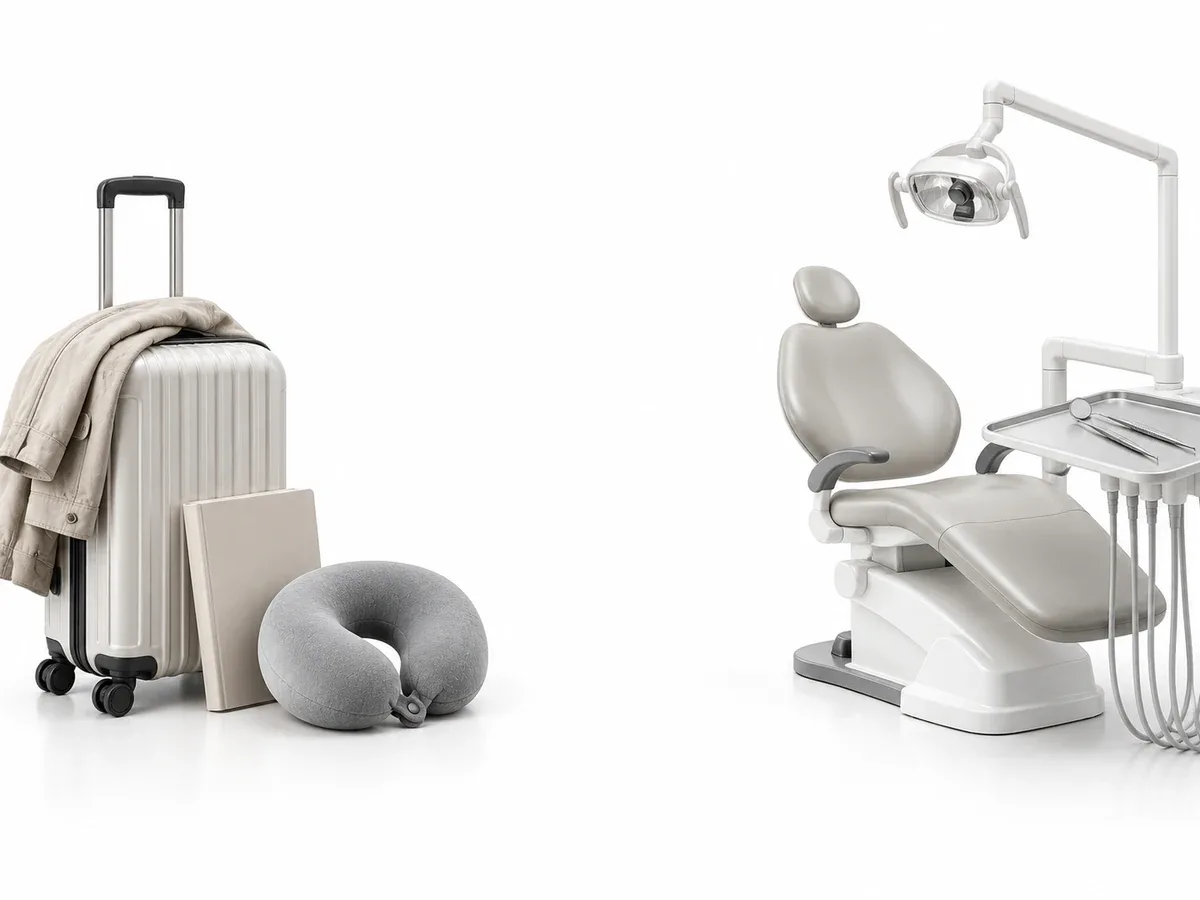
- Before you book, check three things: how many visits, how long to stay, and who will look after your veneers once you are home.
Thinking about getting veneers in Korea while you are visiting or living here? Price is usually the first thing people compare. Yet veneers are a treatment that continues long after the day they are bonded.
This column draws on public sources: a dental association newspaper, the government health portal and a court ruling on tooth reduction. It sets out what to check on visits, staying time and follow-up after you go home.
Reset Dental Clinic is an English-speaking dental clinic in Seomyeon, Busan. We offer 1:1 English interpretation from your first consultation through the end of treatment. That matters for veneers, because much of the process is a conversation about colour, shape and how much tooth is prepared.
This is not about where to go. It is about what to count alongside the price.
Why are more people travelling for dental care?
The dental association newspaper reported that dental travel has become a large and growing global market. People in many countries travel abroad for dental treatment, often because of high treatment costs at home.
The same report noted that Korea is being mentioned more often as a dental travel destination, and was rated very safe in a country safety index. It also pointed to clinics equipped with intraoral cameras, dental microscopes and approved CBCT scanners.
The article also noted that dental travellers spend on accommodation and travel, not just on treatment. In one European example, spending per traveller was reported as treatment and accommodation combined.
The price differences reported in the article are real, and a large market has grown around them. We do not question that. But the same article reported more than prices, and those other points matter for veneers.
Price comparisons describe the cost up to the moment of bonding. The visits, the waiting and the check-ups that follow are not on the list.
How many visits do veneers take?
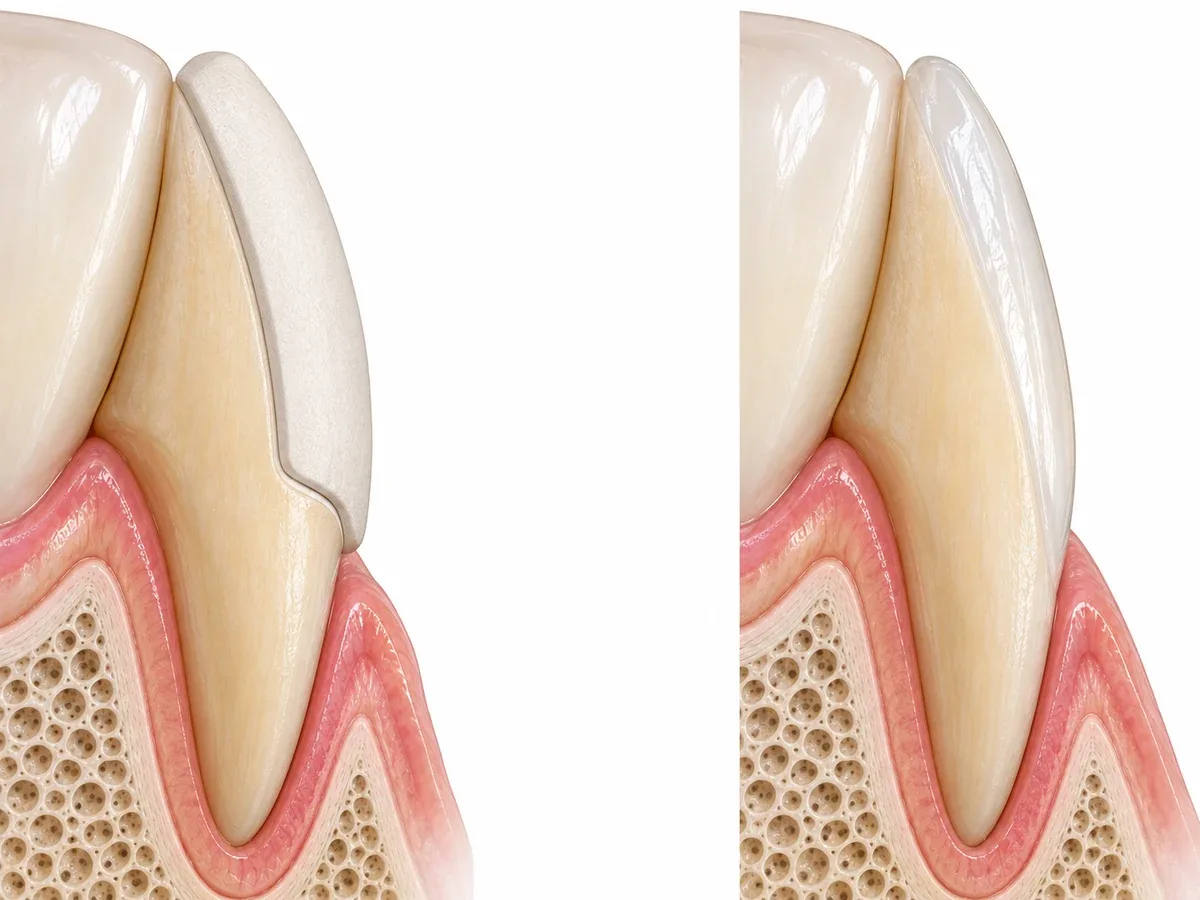
The government health portal describes a veneer as a thin plate, about 0.5–1.0 mm thick, made of porcelain or composite resin. The enamel surface is reduced minimally, and the plate is then bonded with a resin adhesive.
Before treatment, a diagnostic model of your teeth is made. The treatment itself then follows six steps.
- Tooth preparation: a thin layer of the tooth surface is reduced.
- Impressions: a mould of the teeth is taken.
- Temporary teeth: if needed, these are made from composite resin and placed.
- Lab fabrication: the veneers are made in a dental laboratory.
- Final bonding: after colour, shape, appearance and fit are checked.
- Bite adjustment and check.
The table below turns each step into a planning question for your trip.
| Step | What to plan for |
|---|---|
| Diagnostic model | A visit before any tooth is prepared |
| Preparation and impressions | Ask how much will be reduced on your teeth |
| Temporary teeth | A waiting period between visits |
| Lab fabrication | Time between preparation and bonding |
| Check and final bonding | Spare time in case a remake is needed |
| Bite adjustment | A visit after bonding |
Look closely at the temporary-teeth step. It means there is a gap between the day your teeth are prepared and the day the finished veneers arrive.
The condition at step five matters too. The portal says final bonding takes place when the fit is excellent and both the patient and the dental team are satisfied.
That covers both appearance and function. If that is not the case, the veneers need to be made again.
In the clinic, it is not unusual to send veneers back to the lab when the colour or shape doesn't feel right. What you need then is time, and the ability to come back.
The source gives no number of days for the whole process, so we won't give one here either. A realistic schedule can be planned once your teeth have been examined.
What can happen after veneers are bonded?
The portal lists the possible complications clearly.
- the veneer coming off
- a partial fracture of the veneer
- discolouration over time at the border between veneer and tooth
- teeth that feel sensitive or sore, known as hypersensitivity
Discolouration at the border is described as something that appears over time. That is one more reason follow-up matters long after the first weeks.
A veneer is bonded to just one part of the tooth. So, the portal notes, it is more likely to chip or come off than other types of prosthesis.
What to do next depends on the situation. The portal describes three paths.
| Situation | What may be done |
|---|---|
| The veneer came off, and the tooth has no decay | Re-bonding the existing veneer can be tried |
| A small chip in the porcelain that barely affects appearance or function | Smoothing it with dental silicone points and continuing to use it |
| Severe damage, or a functional or esthetic problem | Making a new veneer is recommended |
All three decisions require someone to look inside your mouth. A few photos are hard to use as a substitute.
With proper care, the portal says veneers can be used for about 5–10 years. Who will make these decisions during those years is the item that isn't on the price list.
The portal's page on all-ceramic crowns says something similar. In the literature, their lifespan is around 10 years. But it varies a lot with several factors:
- the condition of the tooth before treatment
- your ability to keep your mouth clean
- your eating habits
- ongoing maintenance, including proper brushing and regular scaling after treatment
In other words, maintenance is part of the result.
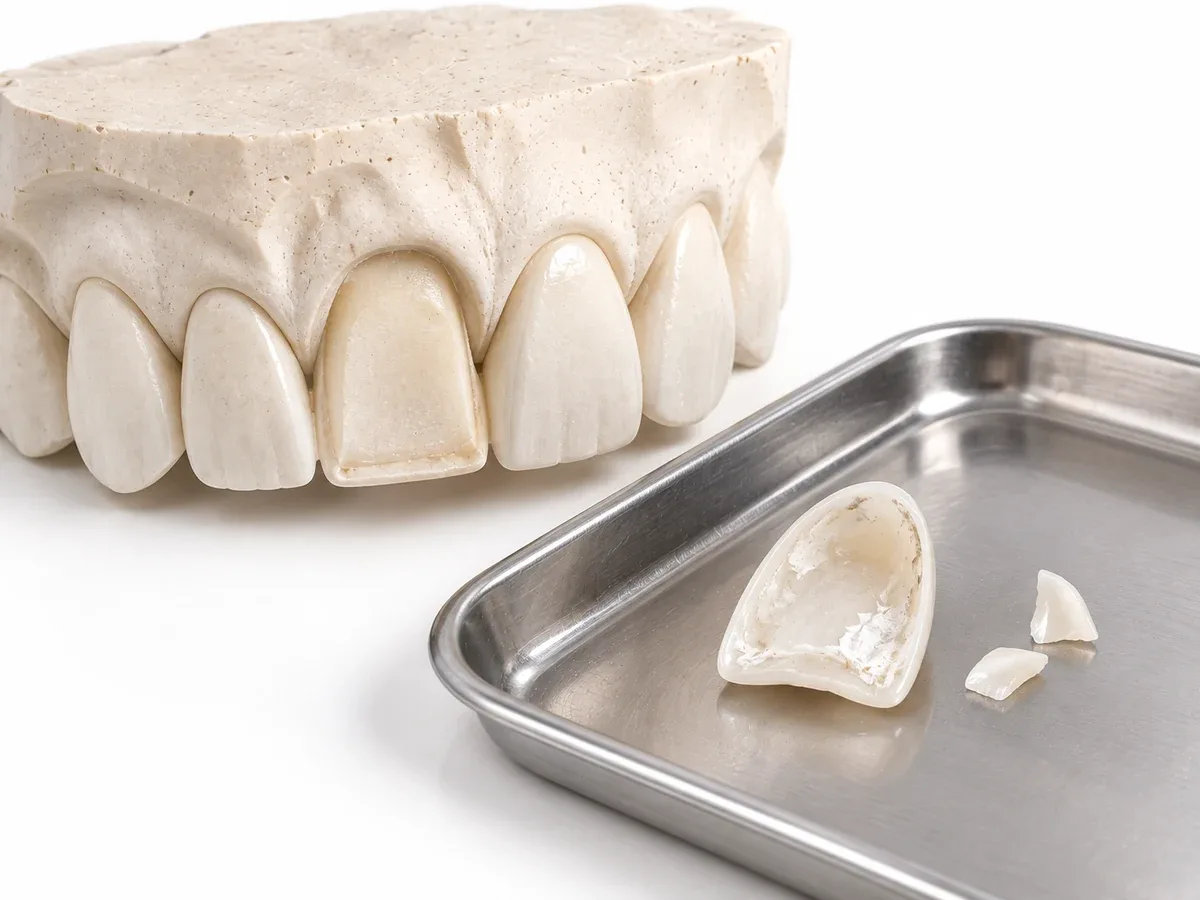
Tooth reduction cannot be undone
The dental travel article did not stop at prices. It quoted experts who urged travellers to be careful about translation and communication difficulties. They also reminded readers of the potentially fatal risk of blood clots when boarding a flight right after surgery.
That warning concerns surgery in general. Ask your dentist how it relates to your own treatment plan and flight dates.
Communication carries real weight for veneers. Step five is where the patient and the dental team both confirm they are satisfied. If talking about colour and shape is difficult, that step can become a formality.
At that stage you are asked to judge colour and shape, and to speak up if something feels off. That is easier when you and the dentist fully understand each other.
The portal also says tooth preparation is generally possible without local anaesthesia. When teeth are sensitive, local anaesthesia is given first, and the tooth is reduced as much as needed. How much is "needed" depends on your own teeth.
A court case reported by the dental association newspaper shows why this matters. A patient chose a clinic because of an advert for no-prep veneers, but more tooth was removed than advertised.
According to the report, the advert described a reduction of 0.1–0.2 mm, or treatment with no reduction at all. In reality, about 0.3–0.5 mm was removed.
The Suwon District Court ruled that if the same reduction as ordinary veneers is required, the clinic must get the patient's consent beforehand. It awarded damages to the patient.
The court noted two things. The reduction had not been properly explained, and the patient's normal-sized teeth made the advertised method impossible.
The point is not the damages. It is that explanation and consent were treated as part of the treatment.
If that conversation happened in one country and you live in another, checking it later becomes harder. The amount removed survives as a record. Enamel does not grow back.
A remake also starts from worse conditions, because the tooth has already been prepared. As the crown page notes, stronger ceramics are less translucent, and more translucent ceramics are less strong. With less tooth left, there is less room to choose.
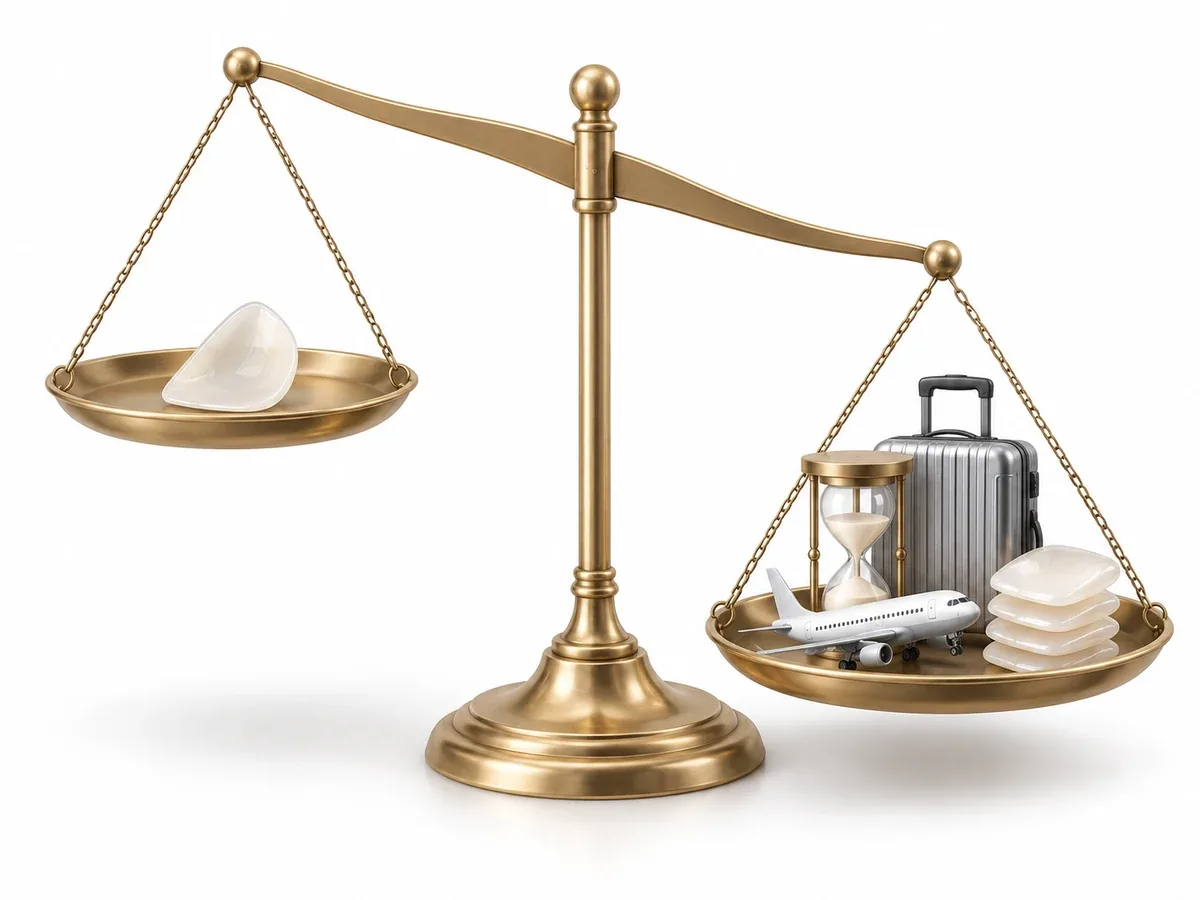
What should you check before getting veneers in Korea?
Whether you live here or are visiting, a few questions cover most of the planning: visits, staying time and follow-up after you go home.
| Question | Why it matters |
|---|---|
| How many visits will my treatment need? | Veneers run through several steps, including temporary teeth and a check before bonding |
| How long should I plan to stay? | If colour or shape needs a remake, you need time to come back before you leave |
| Who will look after my veneers once I am home? | Re-bonding, polishing or remaking is decided by examining the tooth, over roughly 5–10 years |
| How much of my tooth will be reduced, in mm? | The court case shows that explanation and consent on reduction are part of treatment |
If you plan to see a dentist in your home country later, ask for a record of the following.
- which material was used
- how the veneers were made
- how much of each tooth was reduced
If you plan to return to the same clinic when something happens, that is also an option. Put the round-trip cost and travel time into your plan from the start.
Some people ask whether a lower price means more tooth is removed. The sources do not allow that conclusion. What the court case does show is that the advertised and actual reduction can differ.
So the point to check is not the price. It is hearing in advance how many millimetres will be removed from your own teeth.

Frequently asked questions
Can I get treatment in English in Busan?
Yes. At our clinic, a 1:1 English interpreter supports you from your first consultation through the end of treatment, including the talk about colour and shape before bonding. To ask about a consultation, call 010-8555-2854.
How long should I plan to stay for veneers in Korea?
The source lists the steps but gives no number of days, so we won't give one here. The temporary-teeth step tells you there is a waiting period while the veneers are made. Plan your stay after your teeth have been examined, and leave room in case a remake is needed.
Can my dentist at home handle follow-up care?
It depends on your situation. Any dentist can examine whether to re-bond, polish or remake, based on the damage and any decay. Without records of the material, method and reduction, that decision may take more time.
Are veneers and laminates the same thing?
Yes. Veneers are often called laminates here. The government health portal describes them as a thin plate, about 0.5–1.0 mm thick, bonded after the enamel surface is reduced minimally.
A price list shows the cost up to the moment of bonding.
Veneers are prepared, moulded, waited for,
checked and adjusted,
and then cared for over roughly 5–10 years.
If you are considering veneers in Korea,
put visits, staying time and follow-up
into the same calculation.
Reset Dental Clinic in Busan offers 1:1 English interpretation
from your first consultation through the end of treatment.
We are near Seomyeon Station Exit 2 (5-min walk), opposite Lotte Hotel.
Call 010-8555-2854 (from abroad: +82-10-8555-2854).
References
- Dental association newspaper (Chiuisinbo), "Global dental tourism market nears 6 trillion won as countries compete" — on the growth of global dental travel, spending that covers treatment and accommodation together, expert advice about translation and communication difficulties and the blood-clot risk of flying right after surgery, and the note that Korea is mentioned more often as a destination, with equipment such as intraoral cameras, dental microscopes and approved CBCT
- KDCA National Health Information Portal, "Laminate (veneer) treatment" — definition of a porcelain or composite resin restoration about 0.5–1.0 mm thick, bonded with resin adhesive after minimal enamel reduction; the treatment process from diagnostic model, tooth preparation, impressions and temporary teeth to lab fabrication, bonding after checking colour and fit, and bite adjustment; preparation generally possible without local anaesthesia, with local anaesthesia for sensitive teeth; final bonding when both patient and dental team are satisfied with appearance and function; complications (coming off, partial fracture, discolouration at the border, hypersensitivity) and how each is handled; a higher chance of chipping or coming off than other prosthetics because a veneer is bonded to part of the tooth; use for about 5–10 years with proper care
- Dental association newspaper (Chiuisinbo), "Court awards damages for excessive tooth reduction under laminates" — a no-prep veneer advert and the reduction actually carried out; the Suwon District Court's ruling that patient consent must be obtained beforehand when the same reduction as ordinary veneers is required; the court's consideration of the lack of explanation about reduction and the patient's normal tooth size
- Dental association newspaper (Chiuisinbo), "HIRA discloses fees for crowns and implants" — results of the Health Insurance Review and Assessment Service's sample survey of non-covered dental items, and the explanation that differences depend on the extent of the problem, tooth position, condition and difficulty
- KDCA National Health Information Portal, "All-ceramic crowns" — the trade-off that stronger ceramics are less translucent and more translucent ceramics are less strong; a lifespan of around 10 years in the literature that varies widely with the tooth's condition before treatment, oral hygiene, eating habits and maintenance; the recommendation of proper brushing and regular scaling after treatment
Written by Reset Dental Clinic Support Team
Medical review Dr. Kim Hyun-joo, Head Dentist · Integrated Dentistry Specialist
Last updated September 19, 2026
This article is for general information and does not replace diagnosis or treatment for individual patients. If you have symptoms, please see a dentist.