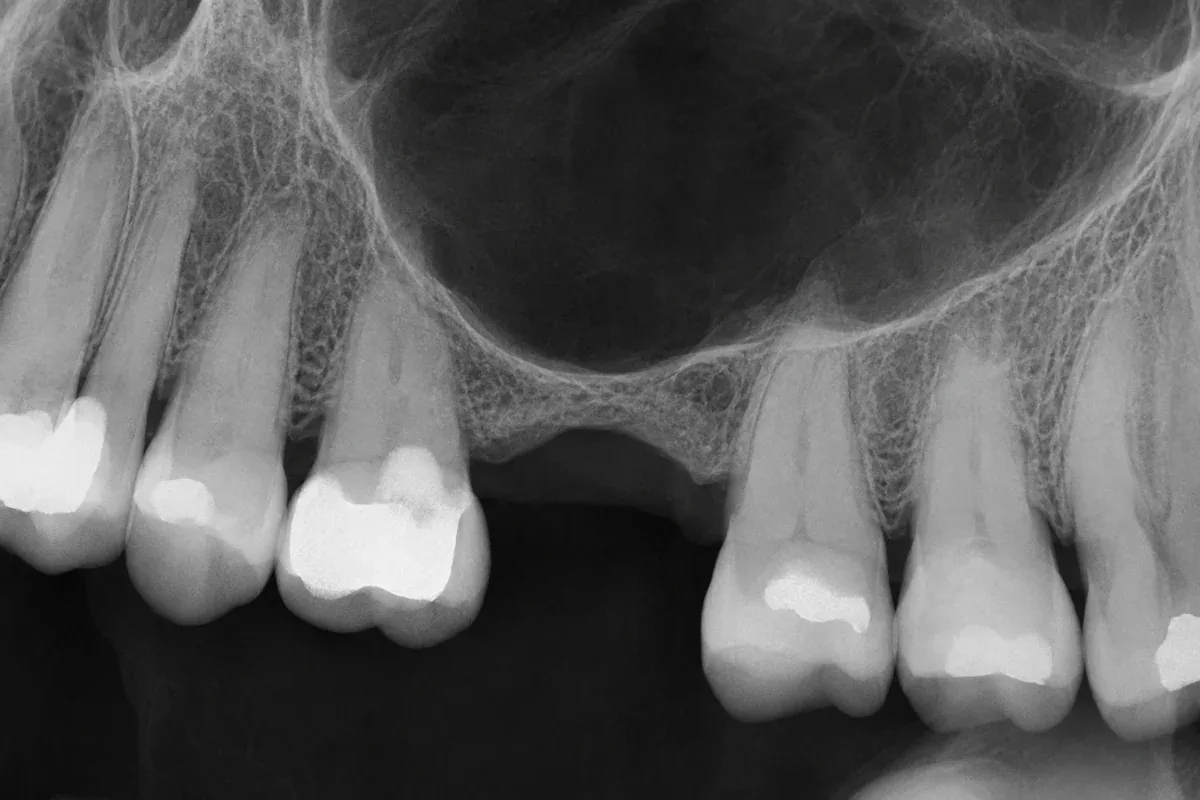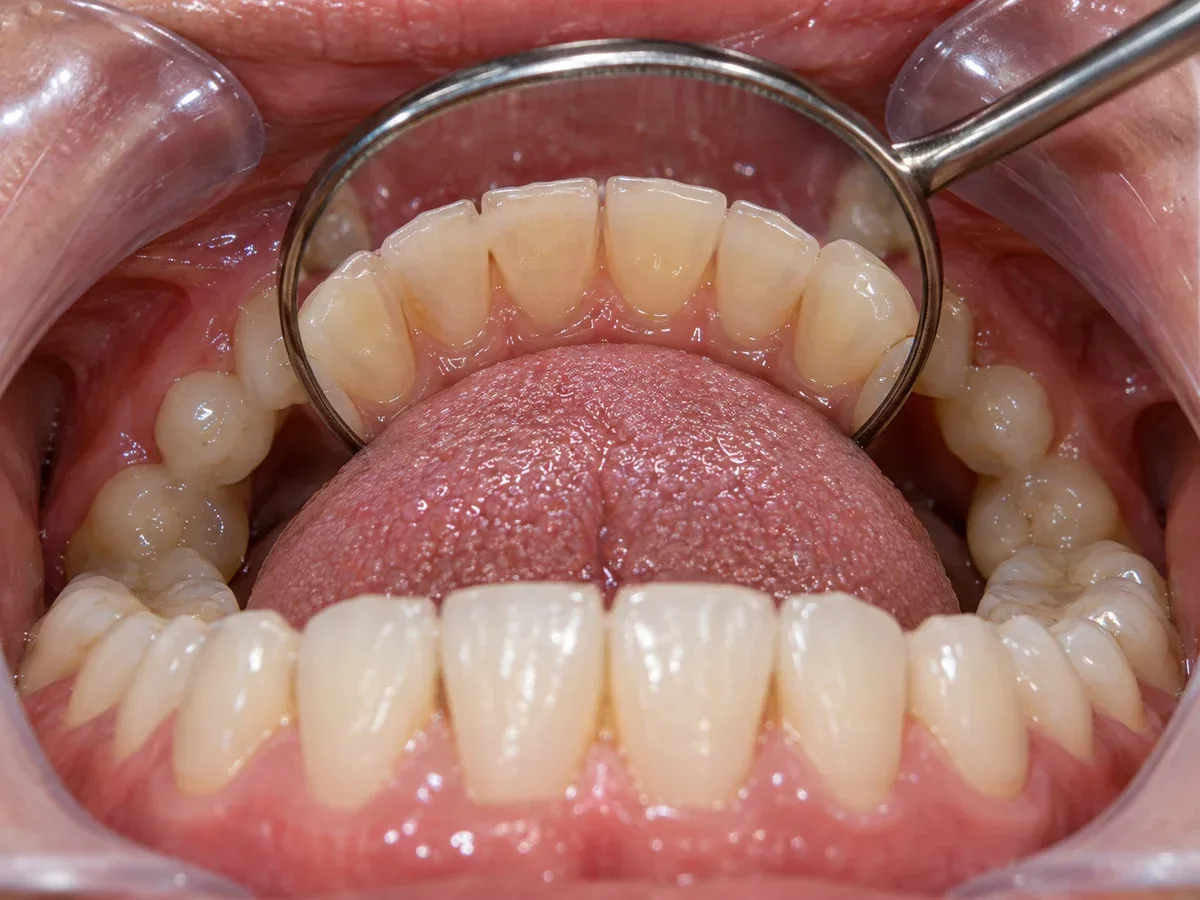
- What orthodontic treatment changes is the area around the mouth: the lip line, the strain when you close your lips and how your smile looks.
- What it does not change is the jawbone, the cheekbones and the face shape. In adults, these bones have finished growing.
- "My face got slimmer" is mostly how changes around the mouth are perceived.
- Asymmetry that comes from the skeleton is outside what braces can do. We tell you honestly which is which.
Will orthodontic treatment make my face smaller? We hear this question all the time at Reset Dental Clinic in Seomyeon, Busan, where patients can consult with 1:1 English interpretation. Our answer comes in two parts: some things clearly change, and some things clearly do not.
If we mix the two together, patients end up disappointed later. So this column separates them, one by one. It is written for anyone living in or visiting Korea who is thinking about straightening their teeth.
What changes around the mouth after orthodontic treatment?
The biggest change is the position of the lips.
Your front teeth are the pillars that support your lips from the inside. The upper lip rests on the upper front teeth, and the lower lip rests on the lower front teeth.
So when the front teeth move back, the lips follow them back. When the front teeth move forward, the lips follow them forward.
This is most noticeable from the side. Picture a line from the tip of the nose to the tip of the chin. Where your lips sit relative to that line shapes the impression your profile gives.

The strain of closing your lips changes too
When the front teeth stick out a lot, the lips do not close on their own at rest. To close them, you have to tense the chin muscles.
That tension creates a bumpy, wrinkled look on the tip of the chin. Many people have this without knowing where it comes from.
Once orthodontic treatment lines up the front teeth, this strain eases. That is why people often say the face looks more relaxed afterwards.
Three changes you can expect around the mouth
- The lip line in profile, because the lips follow the front teeth.
- The strain at the chin when you close your lips, which eases as the front teeth settle.
- The arrangement of teeth you show when you smile.
All three changes happen in the soft tissue and teeth around the mouth. None of them involves moving bone.
What does orthodontic treatment not change?
We want to be clear about this part.
| Area | With orthodontic treatment |
|---|---|
| Lip line (profile) | Changes |
| Chin strain when closing the lips | Changes |
| Tooth arrangement shown when smiling | Changes |
| Size of the jawbone | Does not change |
| Position of the cheekbones | Does not change |
| Left-right skeletal asymmetry of the face | Does not change |
| Length of the face | Does not change |
In adults, the jawbone has already finished growing. Orthodontic treatment moves teeth within the bone. It does not move the bone itself.
So problems that come from the skeleton cannot be solved with orthodontic treatment alone. When the size or position of the upper and lower jaws differs a lot, jaw surgery (orthognathic surgery) is usually considered alongside it.
Promising to fix such cases with braces alone would not be honest. We would rather tell you at the start what lies outside the scope of treatment.

Tooth problem or bone problem?
Many concerns about the face fall into one of two groups. Some start with how the teeth are arranged, and some start with the bones themselves.
| Where it starts | Examples | What orthodontic treatment can do |
|---|---|---|
| Tooth arrangement | Protruding, spaced or crowded front teeth; asymmetry from how the teeth line up | Can improve it by moving the teeth |
| The skeleton | A large difference in jaw size or position; one side of the jawbone differing from the other | Cannot solve it alone; jaw surgery may be reviewed |
An examination tells the two apart. That is why we check where a concern comes from before we talk about results.
Why do people say their face looks smaller?
Many people really do feel this way. There are three reasons behind it.
1. The area around the mouth becomes neater
When a protruding mouth moves back, the lower face looks less full. The bone stays the same, but the outline changes.
That change in outline is what many people describe as a smaller face.
2. The chewing muscles change
If you chew on one side or clench your teeth, the chewing muscle on that side develops more. Once orthodontic treatment gives you an even bite on both sides, the way you use those muscles changes.
Over time, your facial outline may look slightly different. This is, however, a by-product of treatment, not its goal. It is not a reason to start treatment.
3. Posture and expression change
Some people cover their mouth with a hand when they laugh. When they lower that hand and smile freely, their whole impression changes.
This change cannot be measured. Yet it is often the one that people around you notice first.

| Reason | What actually changes | Does the bone change? |
|---|---|---|
| The mouth area becomes neater | The outline of the lower face | No |
| Chewing muscles change | How the muscles are used, once both sides bite evenly | No |
| Posture and expression change | How freely you smile | No |
Does tooth extraction move the lips back further?
This is another question we hear a lot.
To move the front teeth back when space is short, room is needed. So in some cases, a small premolar is removed and the front teeth are moved into that space. In these cases, the lip line moves back clearly.
But extraction is not always the right choice. If your lips already sit far back, extraction treatment can make the face look sunken and older.
That is why the decision on extraction depends on three things together. It is not something to settle in advance with a rule like "extraction makes you prettier" or "never extract."
- where your lips sit now
- the angle of your front teeth
- how much space is missing

Why moving the teeth too far back can age a face
Some people say orthodontic treatment made them look older. This can happen when the front teeth are moved back more than needed.
When lip support is reduced, the lower face can look sunken. So we decide carefully whether to extract, and how far to move the teeth.
Why are the front teeth a result of the back teeth?
This is something we always explain during consultations.
How the back teeth (molars) bite shows up at the front. Front teeth that are spaced, overlapping or sticking out usually reflect something that started further back.
So if a plan looks at the front teeth alone, the result may not hold. Even after the front is lined up, pressure from the back can push it out again.
The same goes for the face. When the height of the back teeth is reduced, a chain of changes follows:
- the gap between the upper and lower jaws narrows
- the lips roll inward
- the lines from the nose to the mouth corners deepen
It is like a house whose pillars get shorter, so the roof sinks. In such cases, fixing the arrangement of the front teeth alone will not change how the face looks.

Can you see the change in advance before orthodontic treatment in Busan?
To some extent, yes.
A side-view X-ray of the head (a cephalometric X-ray) lets us estimate how far the lips will follow when the front teeth move a certain number of millimeters. It is not an exact prediction, but it shows the direction and the rough size of the change.
However, lip thickness and tension differ from person to person. Thick lips change less when the front teeth move back. Thin lips can change a lot with the same movement.
| Lip type | When the front teeth move back |
|---|---|
| Thicker lips | The profile changes less |
| Thinner lips | The same movement can change the profile a lot |
That is why we do not promise the numbers as your final result. We show you the side-view calculation and the expected direction together.
We do not, however, present a simulated photo as a fixed outcome. We believe it is better not to make promises that cannot be kept in the first place.
Questions to ask at a consultation
- "How far will my lips follow in my case?" A clinic that can answer this is calculating your profile.
- "Does my concern come from my teeth or from my jawbone?" An examination tells them apart.
- "Will I need an extraction, and why?" Listen for an answer based on your lips, tooth angle and space.
- "How do my back teeth bite?" The front teeth are often a result of the back.
Can orthodontic treatment fix asymmetry, a square jaw or a gummy smile?
These three concerns come up often. The answer to each depends on where the problem starts.
Asymmetry: asymmetry that comes from the tooth arrangement can improve. But when the jawbone itself differs from left to right, orthodontic treatment alone will not solve it. An examination tells the two apart, so find out which one you have first.
A square jaw: the bone does not change. However, if a clenching habit decreases, the size of the chewing muscles may change. The bone has not shrunk; the muscle has changed.
A gummy smile: it depends on the cause. The solution is very different depending on whether the teeth are short, the gums cover them, or the upper jaw itself is long.
| Concern | If it comes from | With orthodontic treatment |
|---|---|---|
| Asymmetry | The tooth arrangement | Can improve |
| Asymmetry | The jawbone differing left to right | Not solved by orthodontics alone |
| Square jaw | Chewing muscles from clenching | Muscle size may change; the bone does not |
| Gummy smile | Short teeth or gums covering them | Depends on the cause |
| Gummy smile | A long upper jaw | Difficult with orthodontics alone |
In every case, the first step is the same. We find out whether the concern comes from the teeth, the muscles or the bone.
If you want to straighten your teeth in Seomyeon, we will explain what can change in your profile, and how far.
Frequently asked questions
How long before I see a change?
The alignment starts to show within a few months. Changes to the lip line appear later, after the front teeth have actually moved. Taking photos along the way makes it easier to see the progress.
What if orthodontic treatment alone is not enough?
Orthodontics changes the position of the teeth you already have, so their shape, size and color stay the same. If teeth are worn or too narrow, we also look at restoring their shape after alignment.
Can you show me a photo of the result in advance?
We show you the side-view calculation and the expected direction together. We do not present it as a finished photo, because we prefer not to make promises we cannot keep.
Can I get orthodontic treatment in English in Busan?
Yes. We provide 1:1 English interpretation from your first consultation through the end of treatment. The clinic is near Seomyeon Station Exit 2 (5-min walk), opposite Lotte Hotel Busan; call 010-8555-2854 (+82-10-8555-2854 from abroad).
What orthodontic treatment changes is the area around the mouth.
What it does not change is the bone.
If we mix the two together,
you end up disappointed later.
If you are considering orthodontic treatment in Busan, we offer 1:1 English interpretation.
We will tell you what can change in your profile, and how far.
Call 010-8555-2854 to book a consultation.
References
- KDCA National Health Information Portal, "Orthognathic Surgery and Orthodontic Treatment" — telling skeletal problems apart from tooth-alignment problems, and cases orthodontics alone cannot solve
- KDA newspaper Dailydental (Chiui Sinbo), "What Came After Treatment Was a Bad Bite and Jaw Surgery" — what can happen when the method is chosen before a diagnosis
- KDA newspaper Dailydental (Chiui Sinbo), "Retreatment Strategies for Adult Orthodontic Complications Draw Attention" — problems seen in adult orthodontics and approaches to retreatment
- KDA newspaper Dailydental (Chiui Sinbo), "Clear Aligners: Interproximal Reduction, Explaining Limits and Keeping Records Are Essential" — why the possible scope of treatment should be explained in advance
- KDCA National Health Information Portal, "Gum Disease (Periodontal Disease)" — how the condition of the gums and bone affects tooth position and appearance
Written by Reset Dental Clinic Support Team
Medical review Dr. Kim Hyun-joo, Head Dentist · Esthetic Restorations
Last updated: September 19, 2026
This column is for general information and does not replace diagnosis or treatment for individual patients. If you have symptoms, please see a dentist.