

- A dental implant has no set expiry date. How you look after it matters more than how many years pass.
- Inflammation around an implant does not hurt. By the time it starts to hurt, it is often too late.
- The part placed in the bone can last a long time. The crown on top is closer to a wearing part, and early checks keep repairs simple.
- The surest step is a check-up every 6 to 12 months. If your gums are weak, every 3 to 4 months.
"How many years will this dental implant last?" is the question almost every patient asks at Reset Dental Clinic in Seomyeon, Busan. Our answer is always the same: there is no fixed number. For patients living in or visiting Korea, we provide 1:1 English interpretation from your first consultation through the end of treatment.
Some people use their implants for more than 20 years. Others need them redone within a few years. The same materials and the same dentist can still give different results.
This column explains what makes that difference. It also shows which parts of it are in your own hands.
How long does a dental implant last?
There is no set lifespan. A dental implant is not a product stamped with an expiry date.
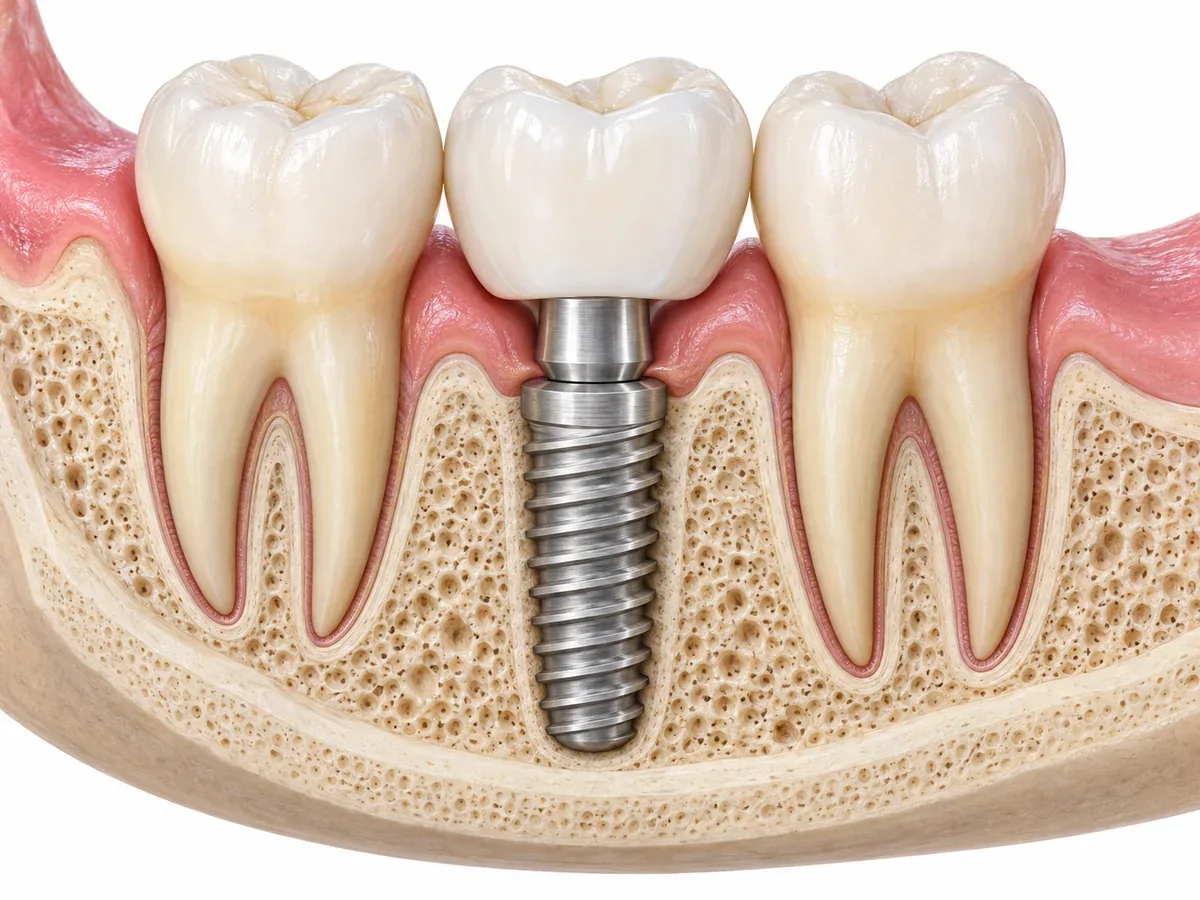
The titanium post, called the fixture, bonds to the bone. After that, the post itself is not a material that wears away. Almost every reason an implant fails comes from around it, not from the implant itself.
If the jawbone holding the implant melts away, even a well-made fixture cannot stay in place. So we ask a different question: what keeps a dental implant going for a long time?
At the first consultation, we always say this: plan as if this is your last dental implant.
Placing an implant is hard, but keeping it is ten times harder. Surgery is over in a few hours, but care continues for years.
Broadly, two groups of factors decide how long a dental implant lasts. Some are set before placement, and some are built after it.
| Stage | What affects it | Whose job it is |
|---|---|---|
| Before placement | The amount and quality of the remaining jawbone | Diagnosis and planning |
| Before placement | Number, position and a design that spreads the force | Diagnosis and planning |
| Before placement | How the upper and lower teeth meet (occlusion) | Diagnosis and planning |
| After placement | Daily gum care | The patient |
| After placement | Chewing habits and tooth grinding (bruxism) | The patient |
| After placement | Smoking | The patient |
| After placement | Coming in for regular check-ups | The patient |
The first group is our job, and the second is yours. To be honest, the second group makes the bigger difference.
All four of the bottom rows sit in the patient's column. The day the surgery ends is the day the real work begins.
More implants do not mean a longer life, either. Placed too closely in a narrow space, they cut off blood flow to the bone between them, and that bone melts away. What matters is placing them so the force is spread evenly.
Why can an implant get worse without any pain?
This is the point we most want to stress.
Between a natural tooth's root and the jawbone lies a thin layer called the periodontal ligament. It is just 0.2 mm thick. It works as both a cushion and a sensor.
This ligament lets you feel whether food is tough or soft. It also relaxes your jaw in an instant when you bite on a stone. Above all, it tells you something is wrong by hurting when inflammation starts.
A dental implant has no such ligament. The titanium bonds straight to the bone, a process called osseointegration. That makes it firm, but it also means there is no alarm system.
| Feature | Natural tooth | Implant |
|---|---|---|
| Link to the bone | Periodontal ligament, about 0.2 mm | Bonds straight to the bone (osseointegration) |
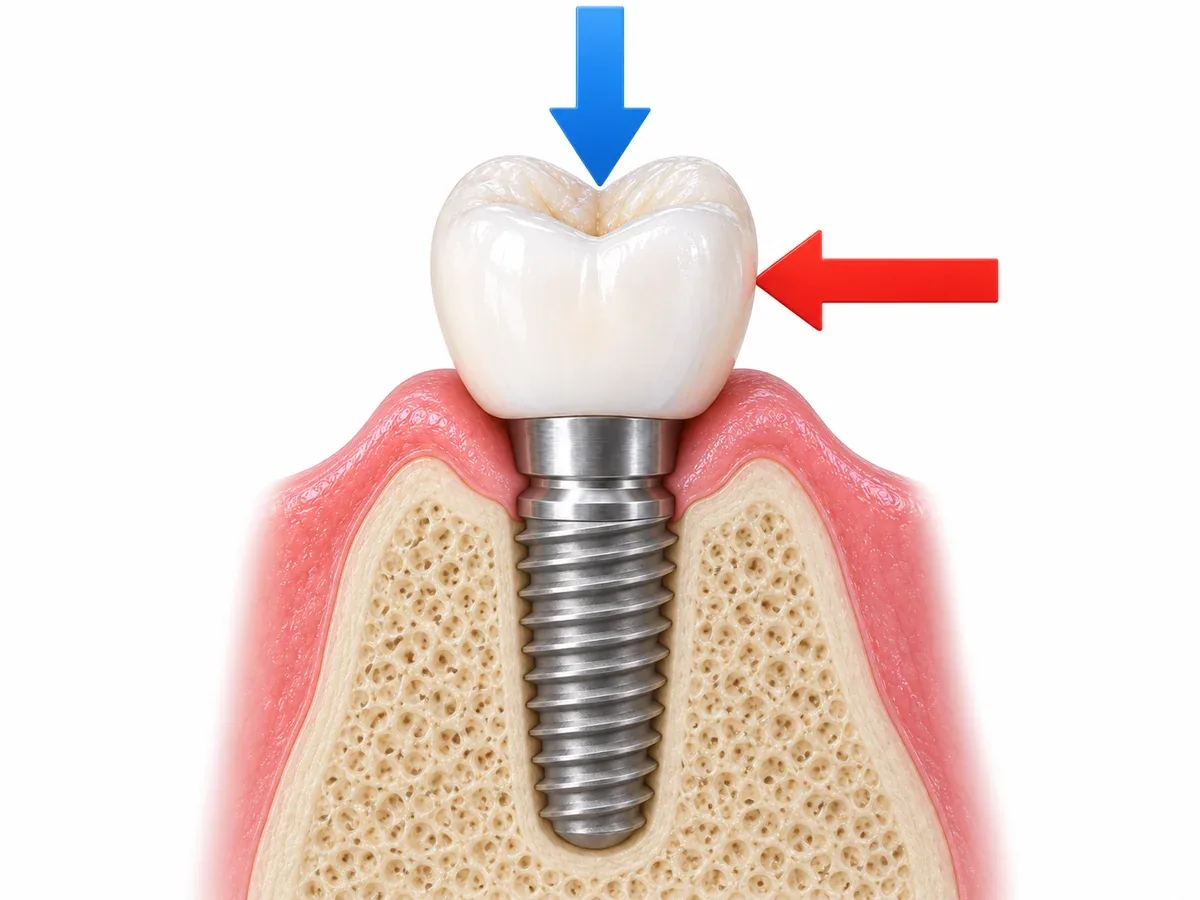
| Cushion for sideways force | Absorbs part of it | Passes it straight to the bone |
| Warning when inflamed | Usually hurts | Few or no symptoms |
| Can it decay? | Yes | No, but the gum and bone around it can be damaged |
That is why peri-implantitis, inflammation around an implant, has almost no symptoms. The bone around it can be melting away little by little while you feel nothing at all.
By the time discomfort appears, the problem has often gone quite far. "It does not hurt, so it must be fine" does not work for implants.

Does the crown on top last as long as the implant?
We want to be frank here. The part of a dental implant in the bone and the part on top have different lifespans.
The fixture can last a very long time as long as the bone stays healthy. The crown on top, though, is used for chewing every day. It can wear down or chip.
You drive a car for years, but you do not keep the same tyres the whole time. You replace the tyres now and then and keep driving the car. It helps to see an implant the same way.
| Part | What it does | What can happen |
|---|---|---|
| Fixture | Titanium post placed in the jawbone | Lasts a long time if the bone stays healthy |
| Abutment | Connects the fixture to the crown | Its screw can slowly loosen |
| Crown | The tooth you chew with | Can wear down or chip over time |
The abutment links the fixture to the crown, and its screw can slowly loosen. A loose screw lets the tooth move very slightly. This movement does not hurt either.
Left alone, the screw can break or put strain on the bone around it. Found at a check-up, it simply needs tightening. Missed, it can turn into a big problem.
The crown is the same. A small chip can be smoothed or filled. Left until it breaks badly, the whole crown has to be remade, and it can damage the opposing tooth too.
Caught early, it is a small job. Caught late, it becomes a big one. That is the whole point of regular check-ups.
How should you clean around a dental implant?
Some people relax their care after getting a dental implant, thinking an artificial tooth cannot decay.
That part is true, but the gum around the implant can still be damaged. If the gum is damaged, you can lose the implant.
So a dental implant needs more careful cleaning than a natural tooth. Because of its shape, food traps around it more easily and tartar builds up faster.
| Tool | Where to use it | How often |
|---|---|---|
| Soft toothbrush | Along the gum line, like a gentle massage | After every meal |
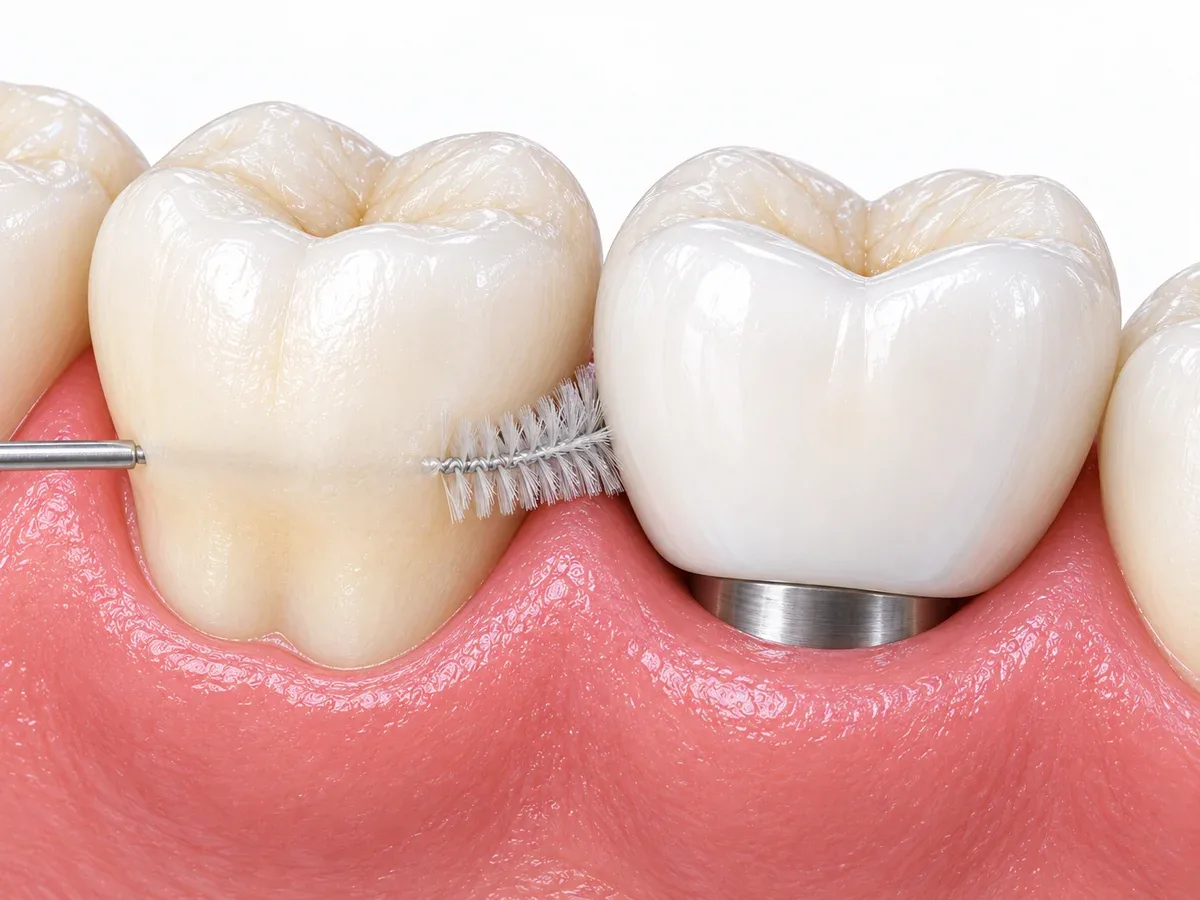
| Interdental brush | Between the implant and the next tooth | At least once a day |
| Floss | The narrow gap under the crown | At least once a day |
| Water flosser | Inner areas that tools struggle to reach | As an extra aid |
Brushing alone is not enough. The spaces between implants must be cleaned separately with an interdental brush or floss. This one habit can change the result.
Even with good cleaning, some areas are always out of your reach. Tartar that settles under the gum line, called subgingival calculus, cannot be removed at home.
That area needs cleaning at the clinic with special instruments, which differ from those used for natural teeth.
What should you watch when chewing, and does smoking matter?
A dental implant is strong, and you can eat most foods. But there is a direction in which it is weaker.
It handles force pressing straight down well. It is weaker against twisting force from the side. A natural tooth's ligament absorbs some sideways force, while an implant passes it straight to the bone.
So the foods to watch are not just hard ones but tough ones you have to tear. Here is what we suggest:
- Go easy on dried squid, jerky and similar dried snacks.
- Watch for fruit pits and bones that can catch you suddenly.
- Eat meat if you like, but cut it into small pieces.
- Chew on both sides, not just one.
Using one side puts all the force on the implants there. Over time, the shape of your face can shift a little too.
If you clench or grind your teeth, please tell us. Many people also bite down hard when lifting something heavy. A night guard while you sleep can greatly reduce this strain.
After surgery, avoid chewing on that spot until the implant has bonded to the bone. Once the crown is in place, you can use it normally.
Smoking matters a lot. We simply ask patients with implants to quit.
- It reduces blood flow in the gums, so healing after surgery is clearly slower.
- The suction of smoking can open the stitches.
- Over time, it clearly raises the risk of peri-implantitis and bone loss.
Many studies have reported this. Over 20 years in the clinic, we have seen smokers and non-smokers heal differently after the same surgery.
How often should you have your dental implant checked in Busan?
At least every 6 months, and every 3 to 4 months if possible. People with weak gums or diabetes need to come more often.
Figures from the Korean Academy of Periodontology's 17th Gum Day (reported by Dailydental) show why. 60% of implant patients were not having proper aftercare. For 89.4% of them, the reason was "no discomfort."
At the same event, the academy recommended the 3-2-4 rule. It means brushing at least three times a day, scaling twice a year, and cleaning between teeth with an interdental brush.
| Your situation | Check-up interval |
|---|---|
| Healthy gums | At least every 6 months |
| If possible | Every 3 to 4 months |
| Weak gums or diabetes | More often, set for you by the dentist |
A check-up may sound minor, but here is what it covers:
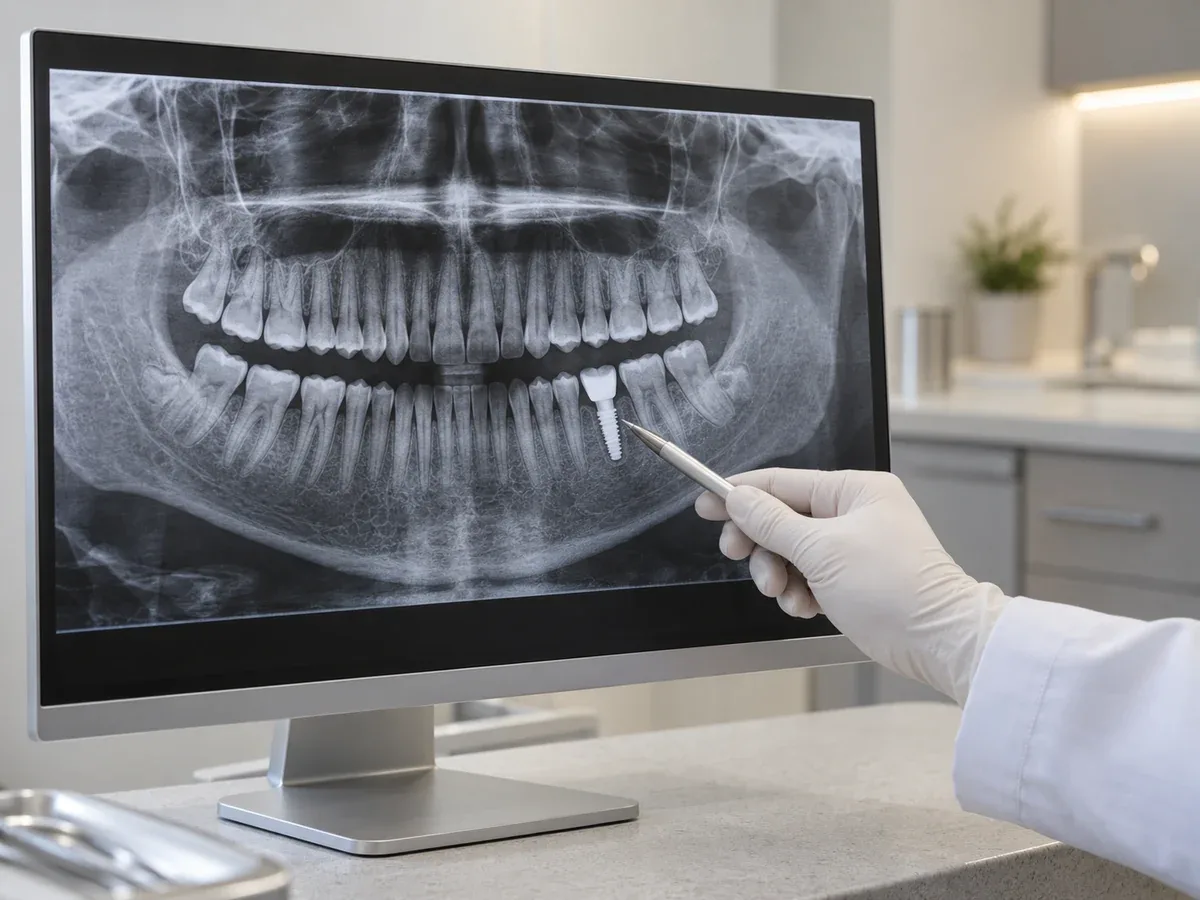
- An X-ray to confirm the implant is still bonded to the bone
- A look for early gum inflammation
- Cleaning around the implant with special instruments
- Checking the screw and tightening it if loose
- Looking for wear or chips on the crown
- Showing you which areas are being missed, and why
The last item matters more than you might think. Many patients brush hard every day but keep missing the same spot.
Scaling is not done every visit; we treat what is needed. A dentist checks your implants in person at every visit. One look now can prevent a second implant surgery later.
Once bone is lost, the next surgery is larger and more complex. The chance of success is also lower the second time.
When should you come in right away?
Even between check-ups, do not wait if you notice any of these signs:
- A bad smell around the implant
- Chewing feels different from usual
- Swollen gums, or bleeding when pressed
- The implant seems to move very slightly
- The crown has chipped, or something feels missing
If you come early, cleaning and simple care are usually enough. If you come late, treatment gets complicated, and the dental implant may need to be redone.
Like most conditions, peri-implantitis is far easier to treat early.
If you are about to have a dental implant placed, check these three things at your consultation:
- "What is the follow-up plan after surgery?" Ask whether there is a set schedule, whether they contact you, and whether the dentist sees you in person.
- "How often should I come in, given my gums?" If the answer is "every 6 months" for everyone, they have not looked at your gums yet.
- "What happens when the crown needs repair or remaking?" This will happen with long use, so get the answer now.
Frequently asked questions
Can a dental implant get cavities?
The implant itself does not decay. But the gum and bone around it can become inflamed, and that is the most common reason implants are lost. "It cannot decay" does not mean "it needs no care."
Does diabetes shorten the life of an implant?
Not necessarily. If your blood sugar is under control and you keep up with care, it can last a long time. Because your gums are more prone to inflammation, we set shorter check-up intervals, such as three or four visits a year instead of two.
I have had implants for years and never had a check-up. Should I come now?
Yes, come now, even if nothing hurts. A time without pain is a good time to check. One X-ray can show the state of the bone.
Can I get dental implant care in English in Busan?
Yes. We offer 1:1 English interpretation from the first consultation through the end of treatment. The clinic is near Seomyeon Station Exit 2 (5-min walk), opposite Lotte Hotel Busan, and you can call 010-8555-2854 (+82-10-8555-2854 from abroad).
A dental implant is not finished once it is placed well.
What matters more is protecting it afterwards.
Problems around an implant do not hurt.
So checking it before symptoms appear is the way to protect it.
Keep a check-up once or twice a year, and your implant can stay with you for a long time.
If you are considering a dental implant in Busan, Reset Dental Clinic explains the plan before surgery, and a dentist sees every check-up in person. We offer 1:1 English interpretation throughout, and you can call 010-8555-2854 to book a consultation.
References
- KDCA National Health Information Portal, "Dental Implants" — what an implant is, osseointegration, treatment time, care and complications
- KDA newspaper Dailydental (Chiui Sinbo), "65% of Implant Patients Have Experienced Peri-Implant Disease" (Korean Academy of Periodontology, 17th Gum Day) — how common peri-implant disease is, its risk factors and maintenance intervals
- KDCA National Health Information Portal, "Gum Disease (Periodontal Disease)" — how gum inflammation progresses to the jawbone
- KDCA National Health Information Portal, "Systemic Disease and Periodontal Treatment" — how smoking, diabetes and other whole-body factors affect the gums
- KDA newspaper Dailydental (Chiui Sinbo), "Implant Patients Aged 65 and Over Pass 800,000 Last Year" — the growing number of implant patients in Korea
Written by Reset Dental Clinic Support Team
Medical review Dr. Na In-chae, Head Dentist · Periodontics Specialist
Last updated: September 19, 2026
This column is for general information and does not replace diagnosis or treatment for individual patients. If you have symptoms, please see a dentist.


