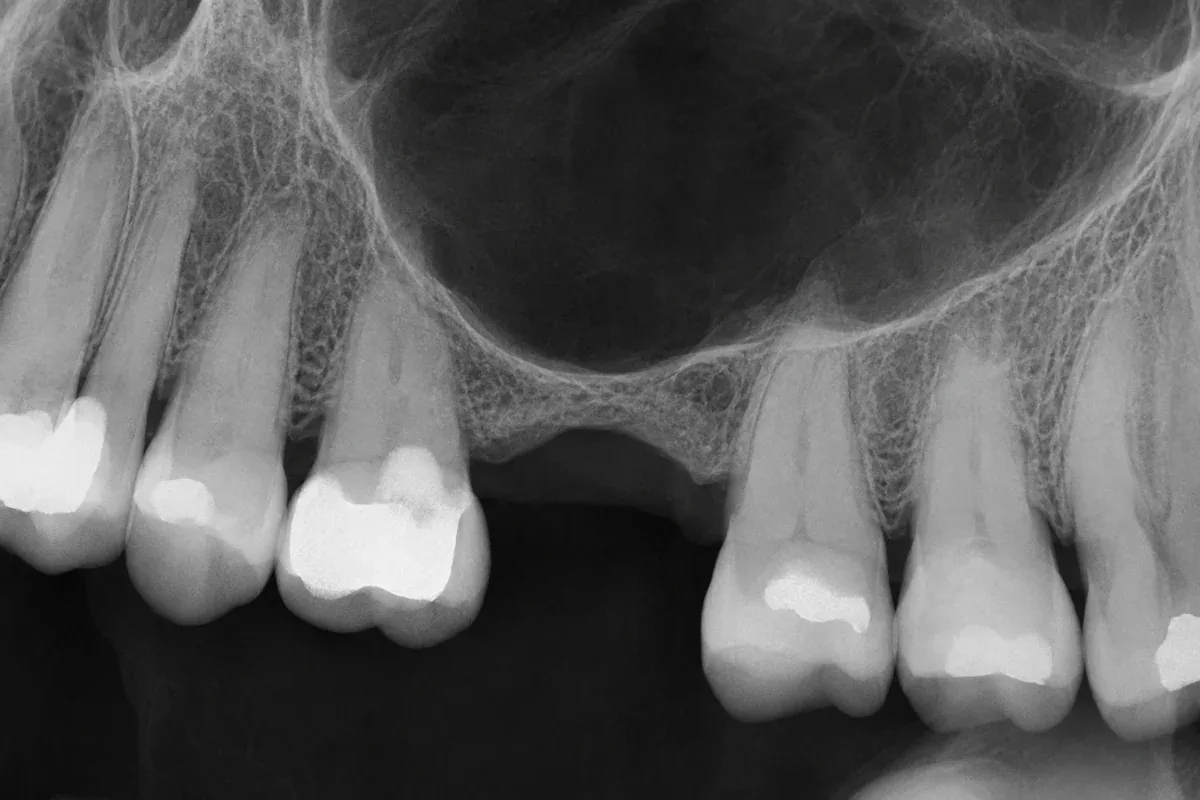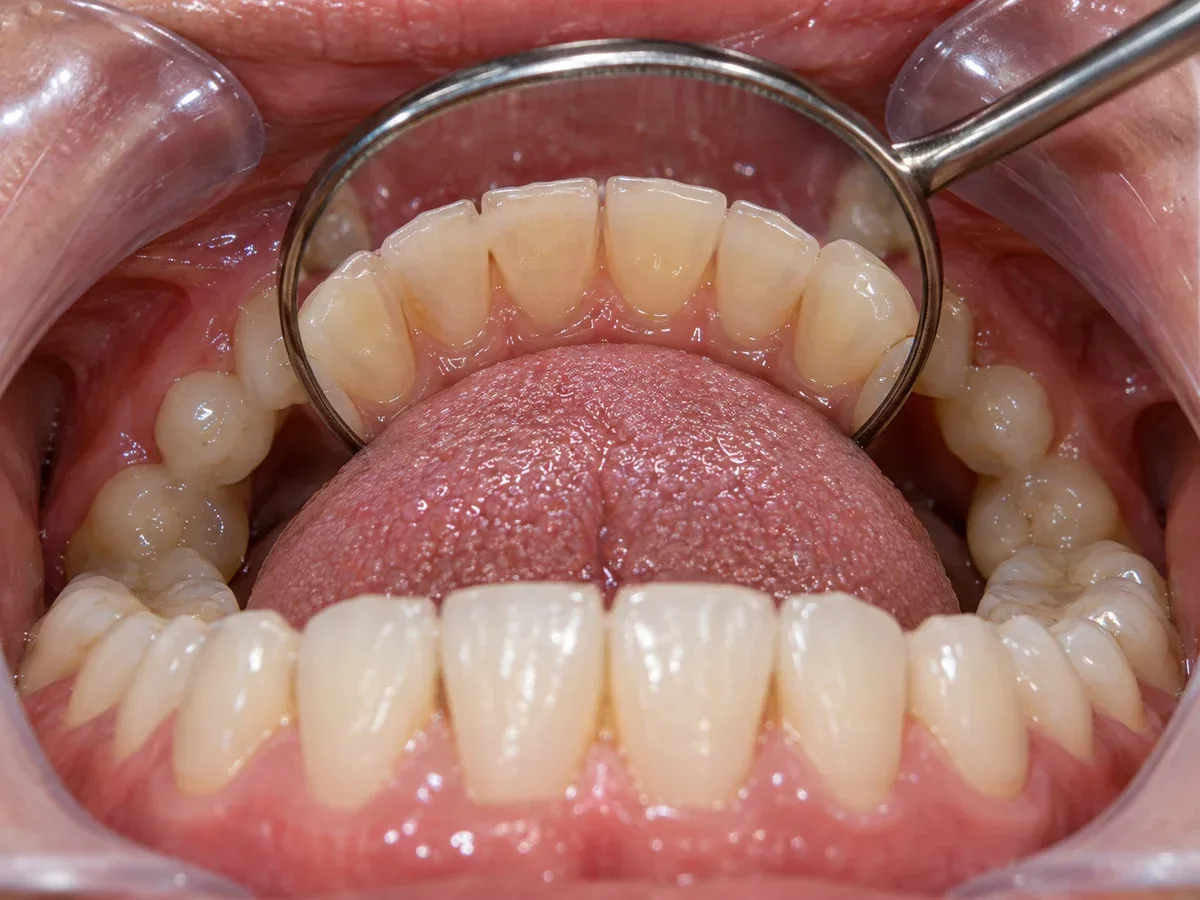
- Two front teeth can share the same shade number and still look different. The reason is translucency, how much light passes through a tooth.
- In this Minish case from Busan, one front tooth had an old resin filling and the other had a crown.
- The color of a root-canal-treated tooth under a crown cannot be known until the crown comes off.
- Shape is easier to match than color. Color and translucency have to be planned before the material is made.
Case review by Dr. Kim Hyun-joo
People fixing their front teeth think about color first, yet two teeth matched to the same shade can still look different side by side. This Minish case from Reset Dental Clinic in Seomyeon, Busan shows why: the amount of light passing through each tooth was not the same. For patients living in or visiting Korea, we provide 1:1 English interpretation from the first consultation through the end of treatment.
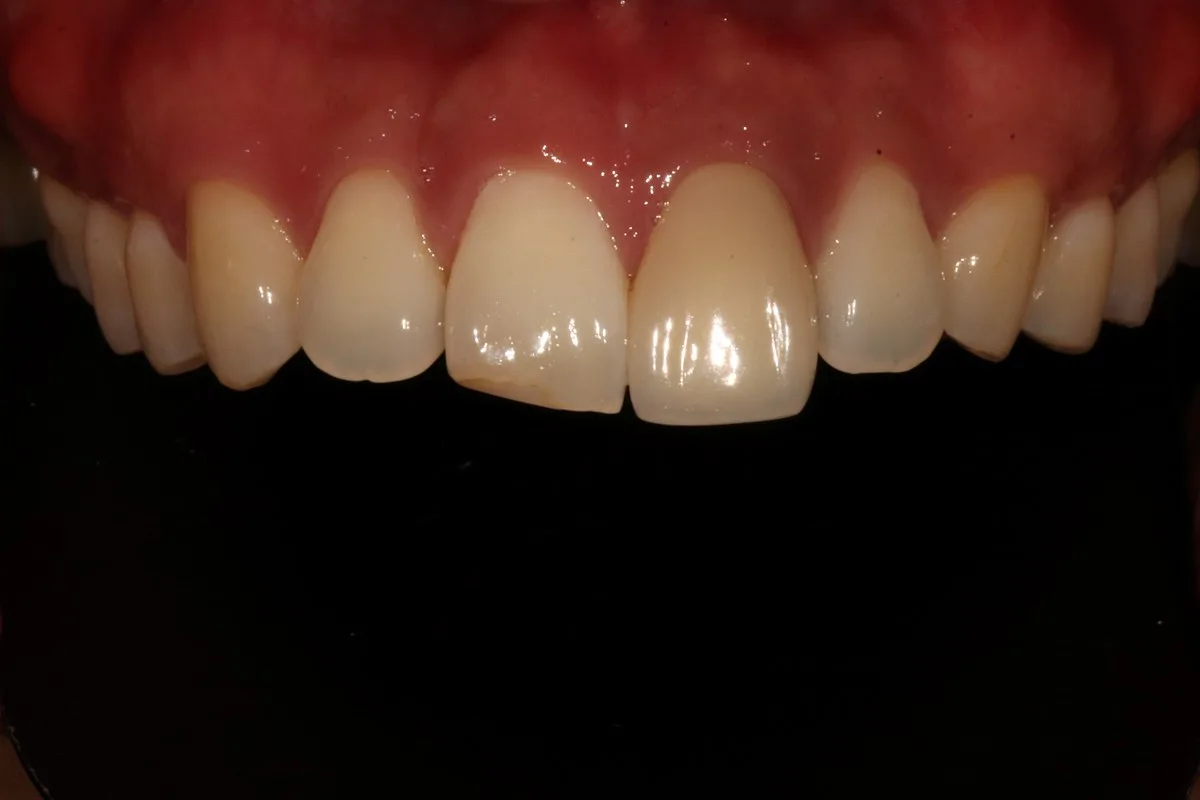
What had happened to these two front teeth?
This patient had injured both upper front teeth a long time ago. The two teeth were treated back then, but not in the same way.
The upper right central incisor (tooth #11) had been repaired with a resin filling. The upper left central incisor (tooth #21) had been covered with a crown.
Over the years, the colors of the two teeth drifted apart. Each material aged in its own way, so the gap between them grew little by little.
The shapes had also become slightly different. When the patient smiled, the two teeth in the middle were the first thing people noticed.
This is a common story with front teeth. Two neighboring teeth end up restored with different materials at different times. Years later, they no longer look like a pair.
| Tooth | Earlier treatment | What changed over time |
|---|---|---|
| #11 (upper right) | Resin filling after an injury | Color drifted away from the tooth beside it; shape slightly different |
| #21 (upper left) | Crown after an injury | Color drifted away from the tooth beside it; shape slightly different |
| Both together | Two different materials | The two middle teeth stood out when smiling |
What stood out before treatment came down to three things.
- the two teeth no longer had the same color
- their shapes were slightly different
- the difference showed most clearly in a smile, right in the middle of the face
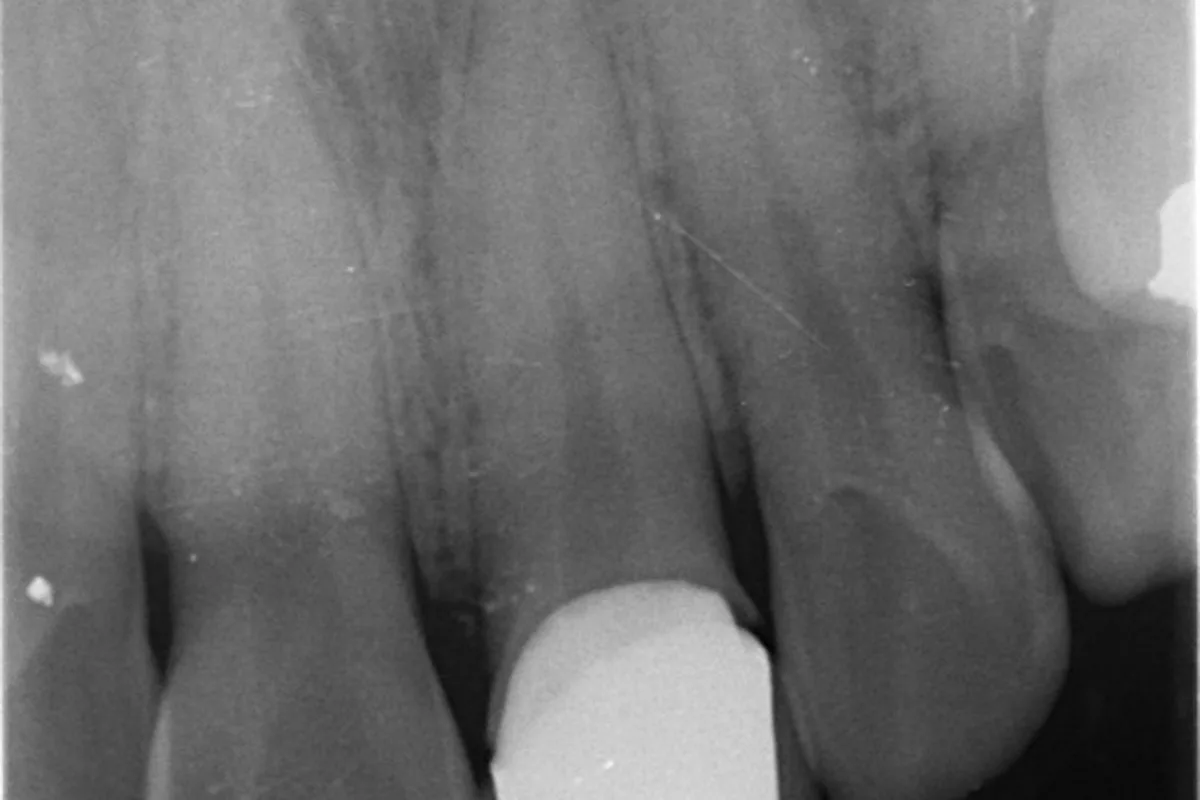
The X-ray confirmed the crown on #21. What it could not show was the color of the tooth underneath. That question became the center of the whole case.
What is translucency, and why does it matter for Minish?
A natural tooth is not solid white. Light passes through it to some degree.
That is why a natural front tooth looks clearer toward the biting edge. Toward the root, it looks deeper in color.
Translucency is the word for how much light a tooth lets through. It is separate from color, which dentists usually describe with a shade number.
Suppose two teeth are matched to the same shade number. If light passes through one and is blocked by the other, they will look different when they sit side by side.
This difference is hard to see in photos. When you sit across from someone in real life, though, it shows right away.
So matching the shade number is just half the work. Matching how light passes through is the other half. Minish is made thin and bonded to the tooth, so light can pass through it well.
| Color (shade) | Translucency | |
|---|---|---|
| What it describes | The hue and brightness of a tooth | How much light passes through the tooth |
| In a natural front tooth | Deeper toward the root | Clearer toward the biting edge |
| If two teeth differ | Easy to notice | Hard to see in photos, clear face to face |
| What it means for treatment | A matching shade number is needed | The material must let light through in the same way |
Here is how a natural front tooth handles light, which a Minish restoration aims to follow.
- it is not a solid, opaque white
- some light passes through it
- it looks clearer toward the edge
- it looks deeper in color toward the root
A restoration that looks natural needs to behave the same way. This is the idea behind matching translucency, not just shade, in Minish work on front teeth.
Why can't you know what is under a crown until it comes off?
This was the part of the case we worried about most.
A tooth that has had root canal treatment darkens over time. If a crown covers that tooth, no one can tell from the outside how dark it has become.
The crown hides the tooth completely. The X-ray shows the crown, but not the color of the tooth inside it.
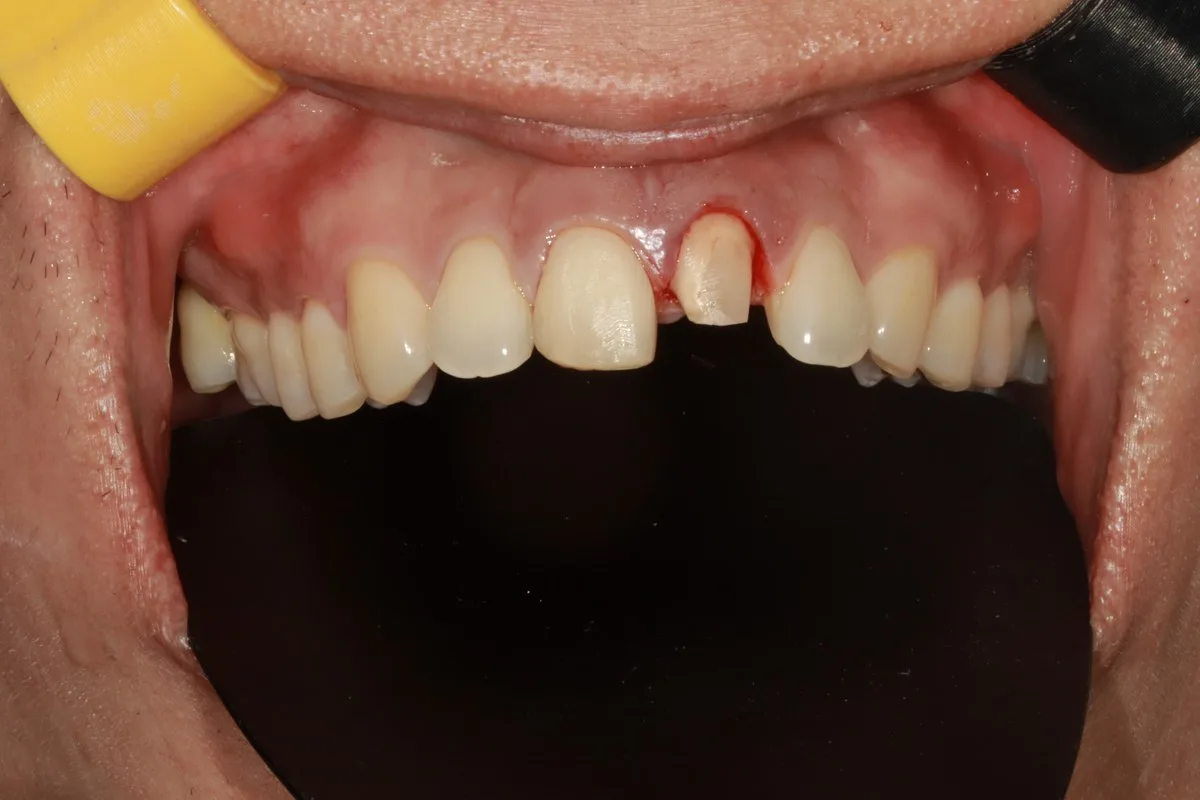
So the plan had two possible paths. Which one we took depended on what we would find once the old crown came off.
If the tooth had been very dark
To hide a dark tooth underneath, the new restoration must be made opaque. An opaque material blocks the dark color from showing through.
The catch is that light then cannot pass through it. The texture would no longer match the tooth next to it.
The neighboring tooth, #11, was to receive Minish, which is bonded as a thin layer and lets light through well. If one side alone were blocked, it could not keep up with the clarity of that Minish tooth.
Opaque restorations are still used when the base color must be hidden. When a thin Minish sits right beside one, though, the two can look different in texture. Which way to go is decided after seeing the tooth itself.
Fortunately, that was not the case
Once the crown was removed, the tooth inside was not very dark.
There was no need to hide it. That meant both teeth could be treated with a material that lets light through.
As a result, we could match the two teeth not just in color but in translucency too.
| What we find | Material needed | Effect beside a thin Minish tooth |
|---|---|---|
| The tooth is very dark | Opaque, to cover the dark base color | Light is blocked; the texture can look different |
| The tooth is not very dark (this case) | A material that lets light through | Both teeth can match in color and translucency |
How were both teeth matched with Minish in Busan?
Because the tooth under the crown was not very dark, both front teeth could be treated in the same way. The plan became Minish for both teeth, using a material that lets light pass through.
Treating them together mattered. The resin on #11 was old too, so redoing the crown on #21 alone would not have made the two teeth match.
For the Minish work, color was chosen by holding shade samples against the neighboring teeth. The shade is matched to the teeth beside it, not picked from a chart in the abstract.
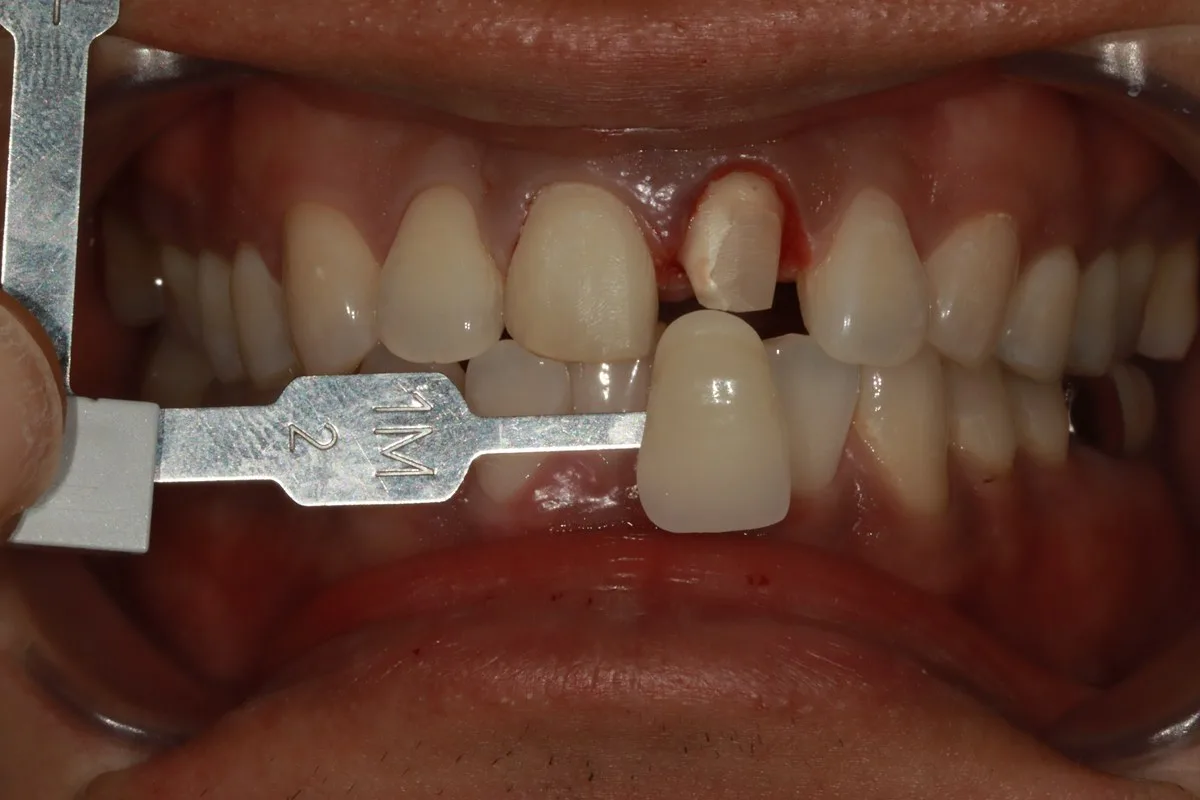
In this Minish case, the order of decisions looked like this.
- Look at both front teeth and the materials already on them.
- Remove the old crown from #21.
- Check the color of the tooth underneath for the first time.
- Decide whether an opaque material is needed, or whether a light-passing one will work.
- Hold shade samples against the neighboring teeth to choose the color.
- Refine the length, width and side contours of both teeth.
From the first consultation to the finish, treatment took about one month for this patient. How long it takes depends on the condition of the existing restorations.
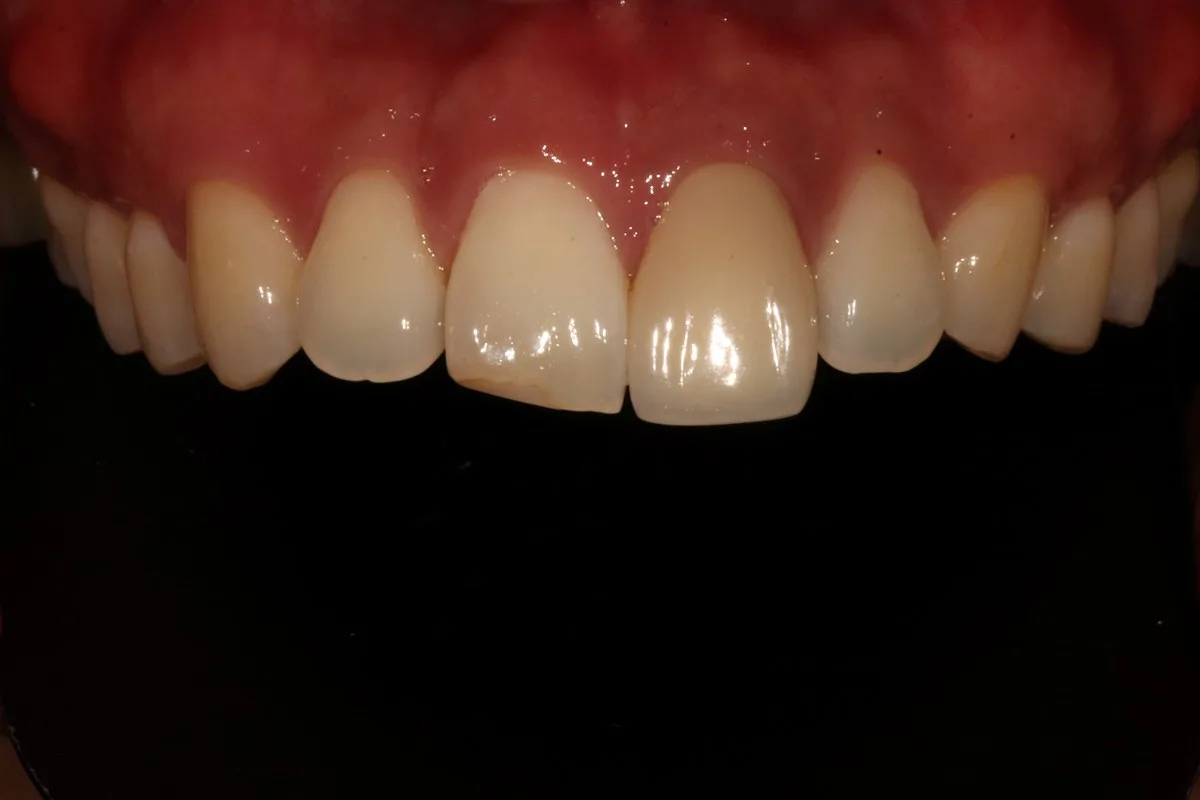
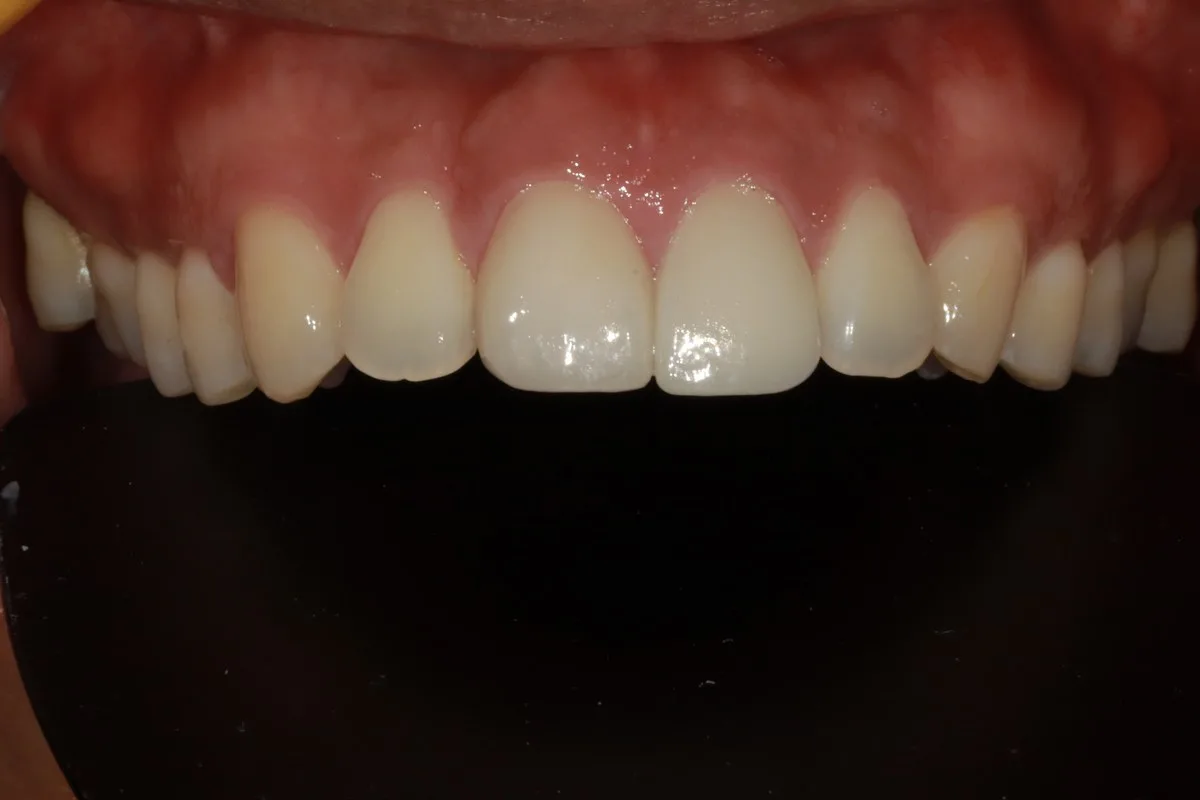
The two front teeth now match in color and translucency.
Why is shape easier to match than color?
It surprises many Minish patients, but matching the shape of front teeth is not the hard part.
Length, width and the curve of the side contours can all be seen with the eye. They can be refined, then checked again.
Color and translucency work differently. The final result shows once the material has been fired and bonded to the tooth, and not before.
That is why color and translucency have to be worked out in advance. By the time the result can be seen, most of the choices have already been made.
So can the shape be changed during the same Minish treatment? Yes. Because shape can be refined while looking at it, it is easier to match than color.
| Shape | Color and translucency | |
|---|---|---|
| What is adjusted | Length, width, curve of the side contours | Shade and how much light passes through |
| How it is checked | By eye, while refining | After the material is fired and bonded |
| When the plan is set | Can be fine-tuned along the way | Must be calculated beforehand |
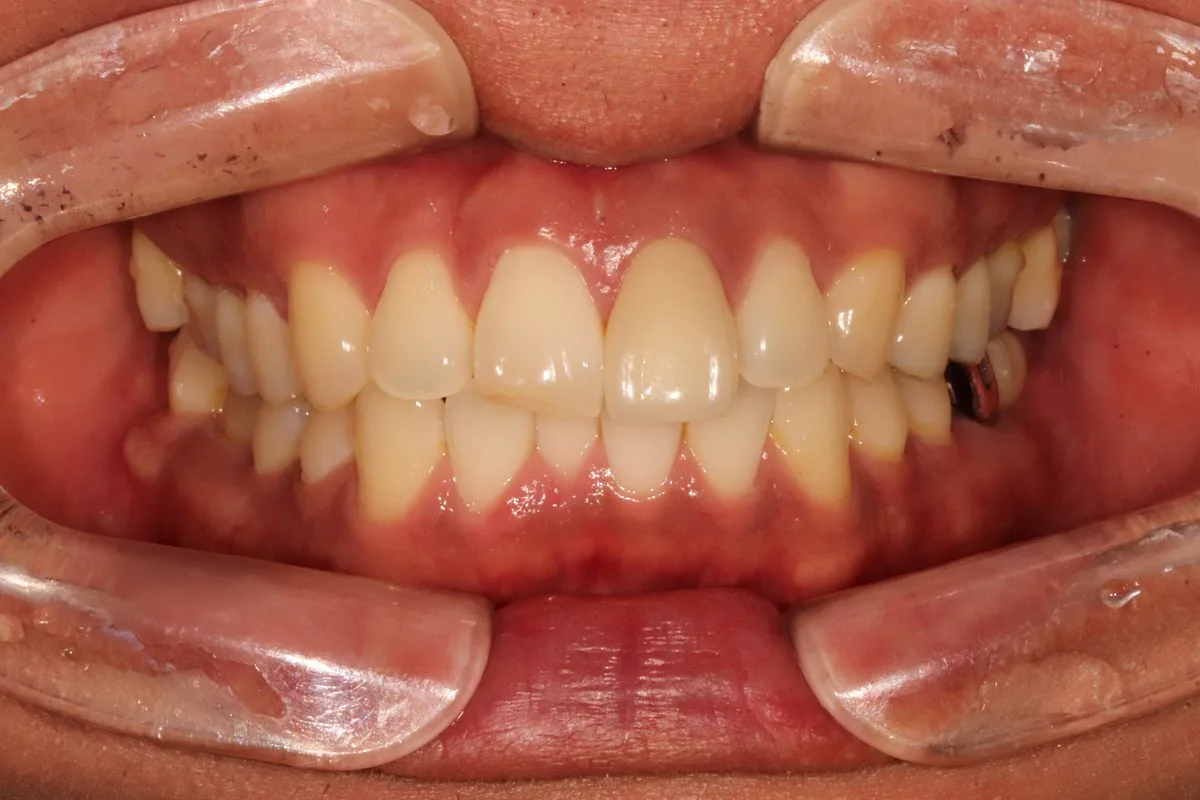
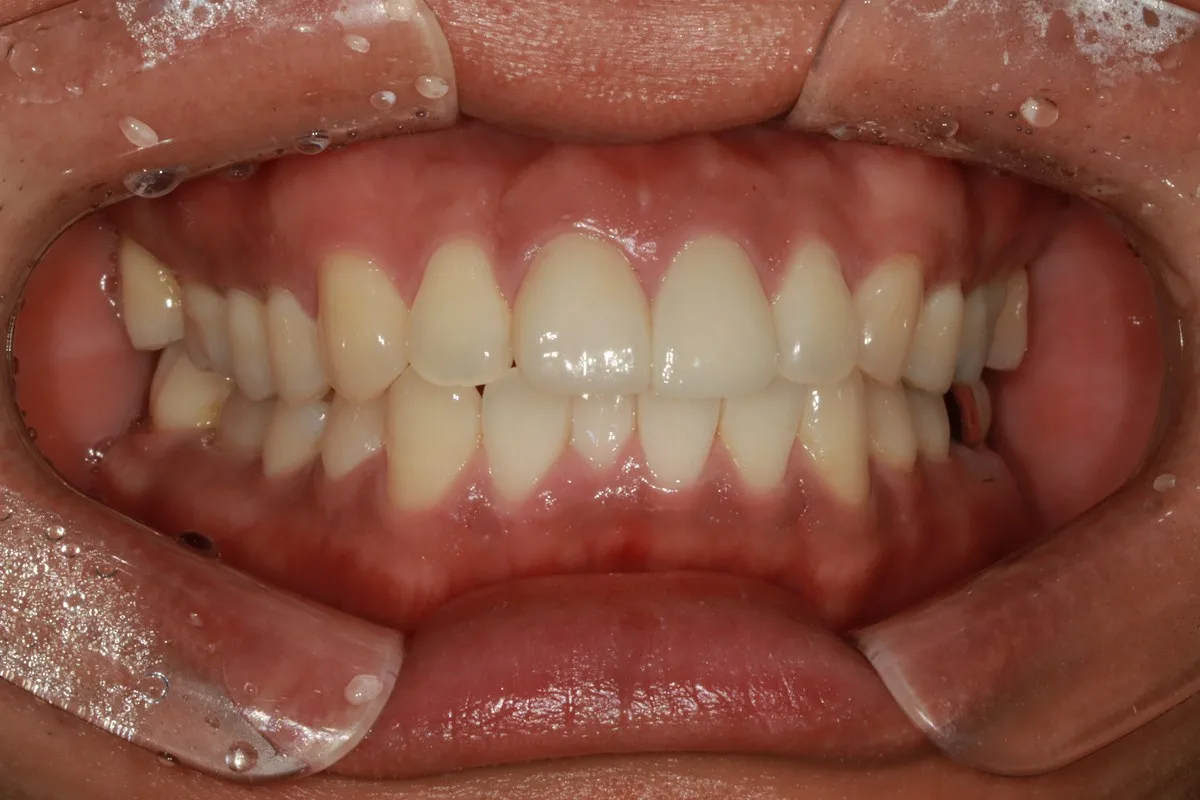
Before and after treatment
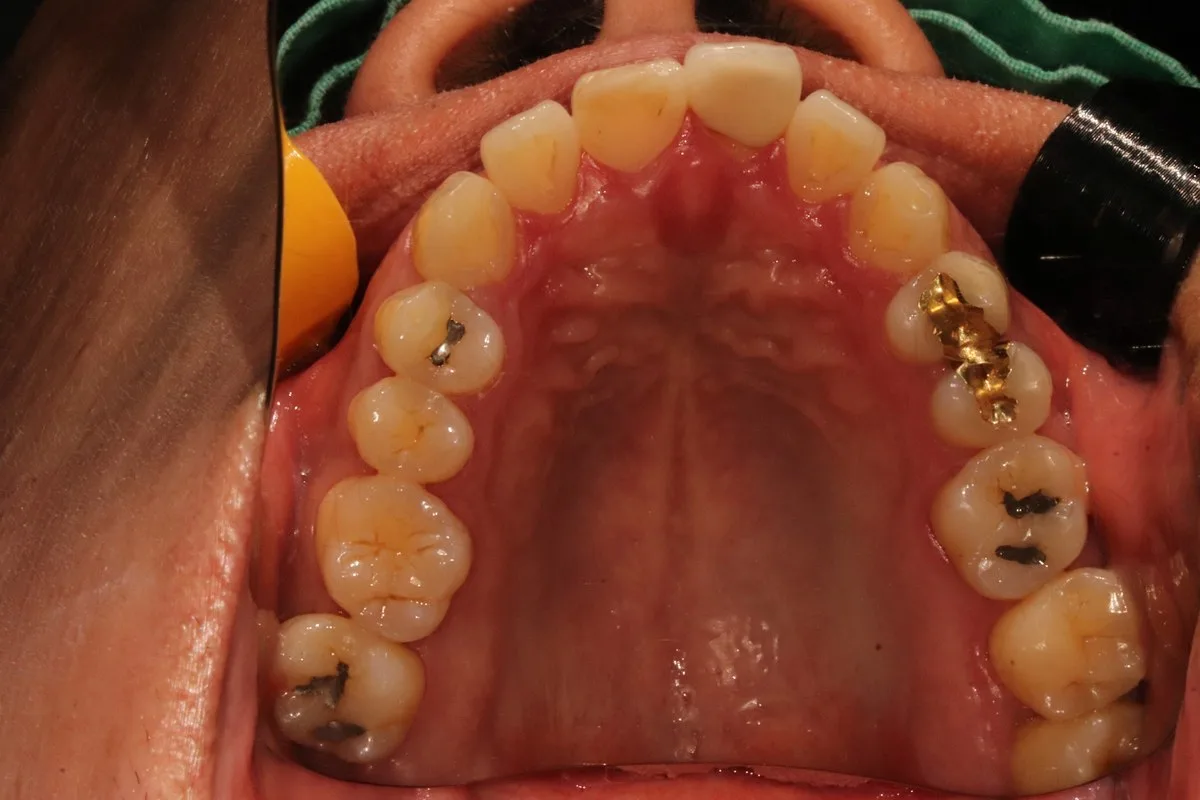
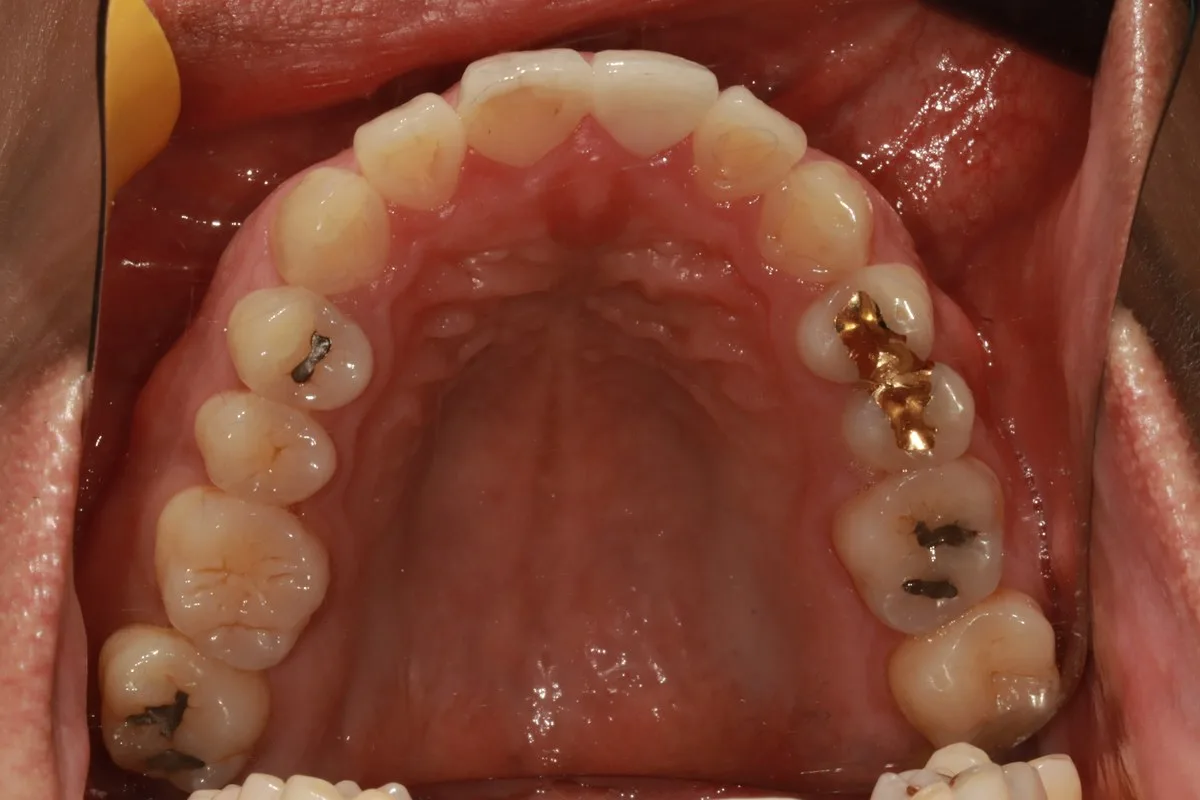
Upper jaw, before and after
What does this case mean if you are fixing a few front teeth?
When just a few front teeth need work, matching the color seems like enough. In practice, it is not.
The teeth look the same side by side when light also passes through them in the same way.
This matters most when redoing a crown on a root-canal-treated tooth. What is possible is decided after checking the color inside.
So in cases like this, it is more accurate to decide the direction after the crown comes off. Promising a result from the very start would not be honest.
Are you thinking about Minish for front teeth that already have old crowns or fillings? Keep these points in mind.
- A shade match alone does not make two teeth look alike.
- A tooth under a crown may have darkened after root canal treatment.
- Its color can be seen once the crown is removed, not before.
- The neighboring teeth may need treatment too, so that the pair matches.
At our clinic in Busan, we check the inside of old restorations first. Then we decide the material and method together with the patient.
Frequently asked questions
Why do my teeth look different when the color was matched?
Because different amounts of light pass through them. A natural tooth is clearer toward the edge. If one tooth blocks light, the two will look different side by side even with the same shade number.
Can I just redo my old crown?
It depends on the tooth next to it. This patient's other front tooth also had old resin, so the two had to be treated together with Minish for them to match.
Can the result be known in advance for a root-canal-treated tooth?
The inner color can be seen once the crown comes off, not before. The material that can be used depends on how dark the tooth is, so it is more accurate to decide after removing the crown.
Can I get Minish treatment in English in Busan?
Yes, we provide 1:1 English interpretation for Minish and other treatment, from the first consultation to the end. The clinic is near Seomyeon Station Exit 2 (5-min walk), opposite Lotte Hotel Busan. You can call 010-8555-2854, or +82-10-8555-2854 from abroad.
Front teeth look alike when color and translucency both match.
When an old crown is involved, we look at the tooth underneath
before we decide on the material and the method.
If you are considering Minish in Busan, Reset Dental Clinic offers 1:1 English interpretation for patients living in or visiting Korea. Call 010-8555-2854 to book a consultation.

References
- KDCA National Health Information Portal, "Laminate Treatment" — what laminates are, how much tooth they remove (0.5–1.0 mm) and when they are used
- KDCA National Health Information Portal, "All-Ceramic Crowns" — pros and cons of all-ceramic crowns and the tooth reduction they need
- KDA newspaper Dailydental (Chiui Sinbo), "Court Orders Damages for Excessive Tooth Reduction in Laminate Treatment" — how the court viewed the duty to explain when more tooth was removed than advertised
- KDCA National Health Information Portal, "Dentin Hypersensitivity" — causes and treatment of sensitive teeth
- KDCA National Health Information Portal, "Gum Disease (Periodontal Disease)" — how gum health affects esthetic results
Written by Reset Dental Clinic Support Team
Medical review Dr. Kim Hyun-joo, Head Dentist · Esthetic Restorations
Last updated: September 19, 2026
This column is for general information and does not replace diagnosis or treatment for individual patients. If you have symptoms, please see a dentist.