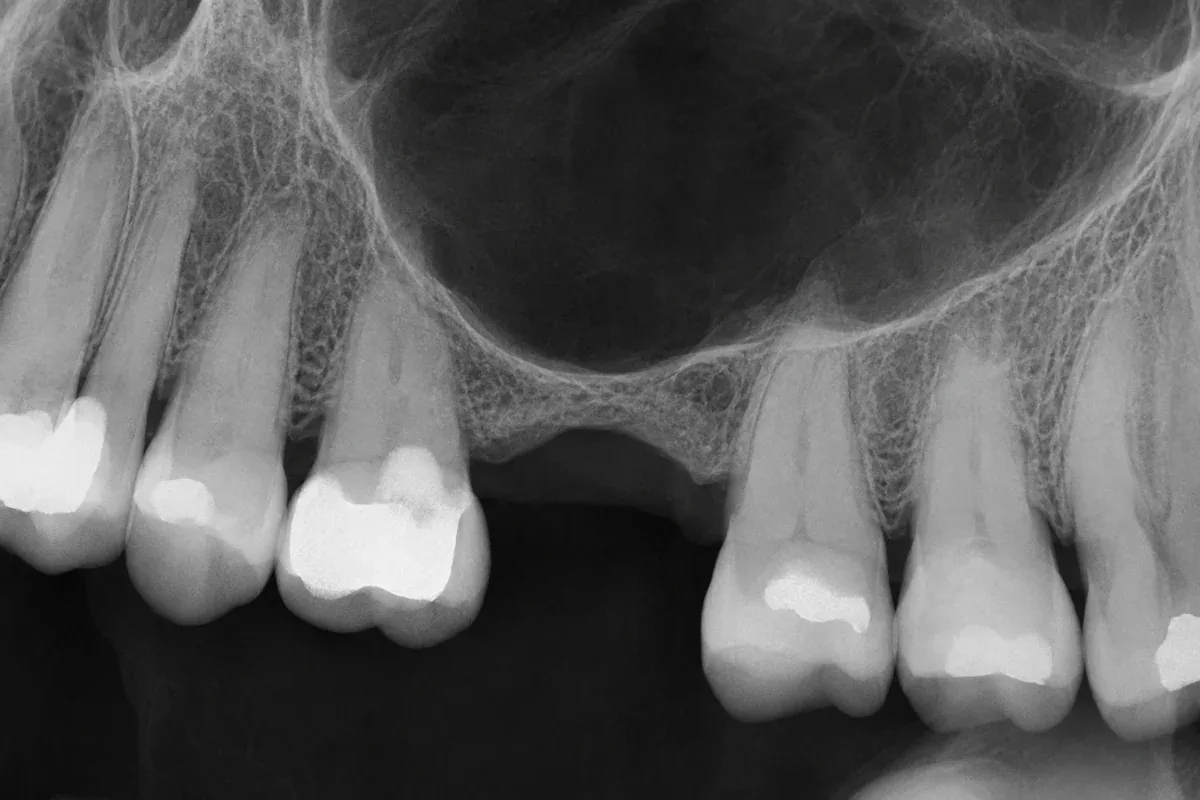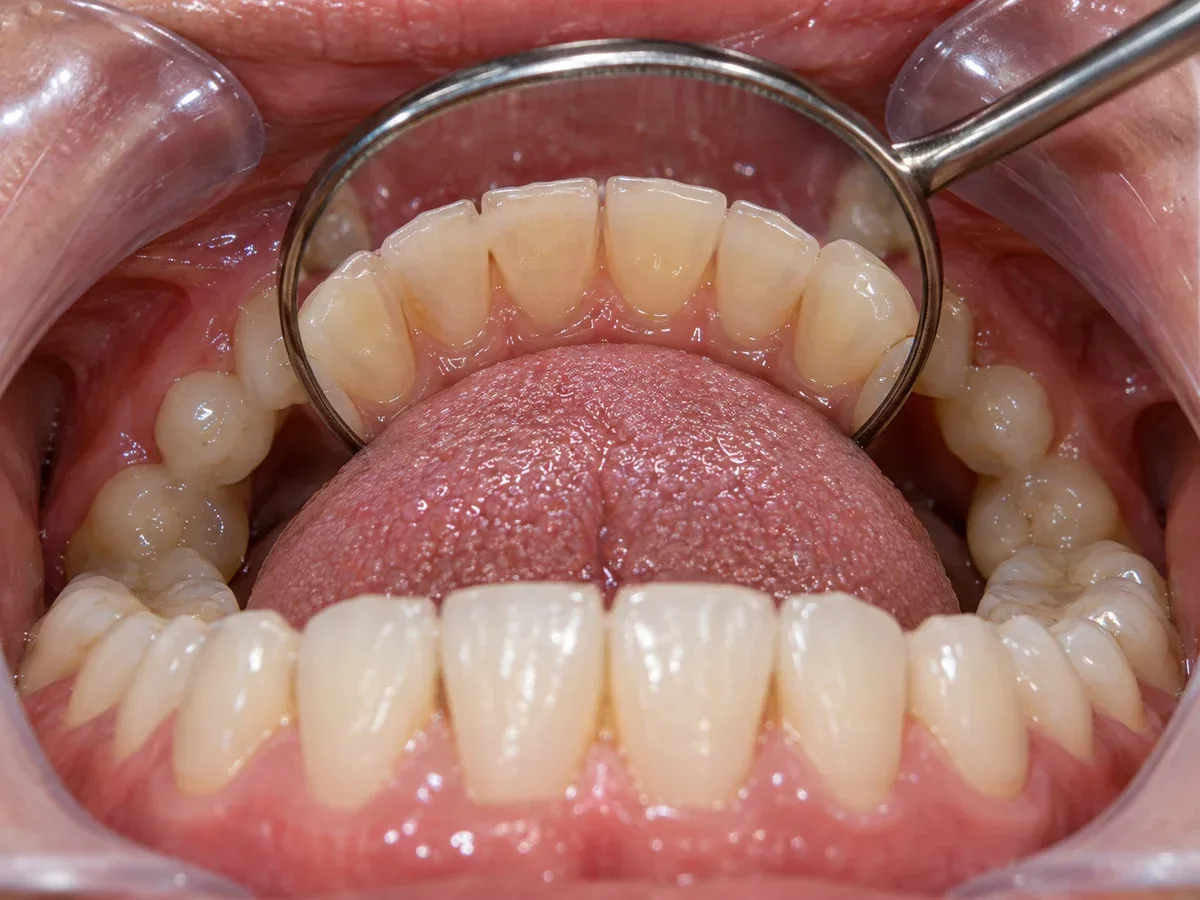
- If the edge of a front-tooth resin filling has turned yellow, polishing the surface often makes it fade.
- If a small piece has chipped off, we first look at repairing just that spot. Resin is an easy material to patch.
- If the missing part is large, the tooth itself is dark, or you grind your teeth, we also consider a laminate or a crown.
- The order is always the least tooth removal first. Tooth structure that is removed never comes back.
At Reset Dental Clinic in Seomyeon, Busan, patients with a yellowed or chipped front-tooth resin often ask whether they can simply have it done again. The answer depends on how large the current resin is and how much of your own tooth is left. For patients living in or visiting Korea, we provide 1:1 English interpretation from your first consultation through the end of treatment.
Why does front-tooth resin stain and chip?
The resin used on front teeth is composite resin, a filling material close to natural tooth color. It blends in well and can be added in just the amount needed, so it is widely used on front teeth.
However, it is not a material that lasts forever. According to the Korea Disease Control and Prevention Agency (KDCA), the reported lifespan of composite resin ranges from 3.3 to 16 years.
Such a wide range tells us something. How long a resin filling lasts depends heavily on where it sits, how large it is, how you chew and how you care for it.
Over years of use, these changes tend to appear:
- The edges turn yellow. Color from wine, green tea, black tea, curry, coffee and tobacco seeps in from the margins first.
- The tip chips off. The biting edge of a front tooth takes a lot of force, so the filling can fracture there.
- The surface wears down. The material is somewhat less resistant to wear than natural tooth.
- Decay starts in the gap. New decay can form along the margin, which is called secondary caries.
For these reasons, this is not a one-time treatment you can forget about. It is a treatment you use while keeping an eye on it.
When is polishing or a small repair enough?
Let us start with the good news. Resin is an easy material to touch up. Many problems can be solved without starting over.
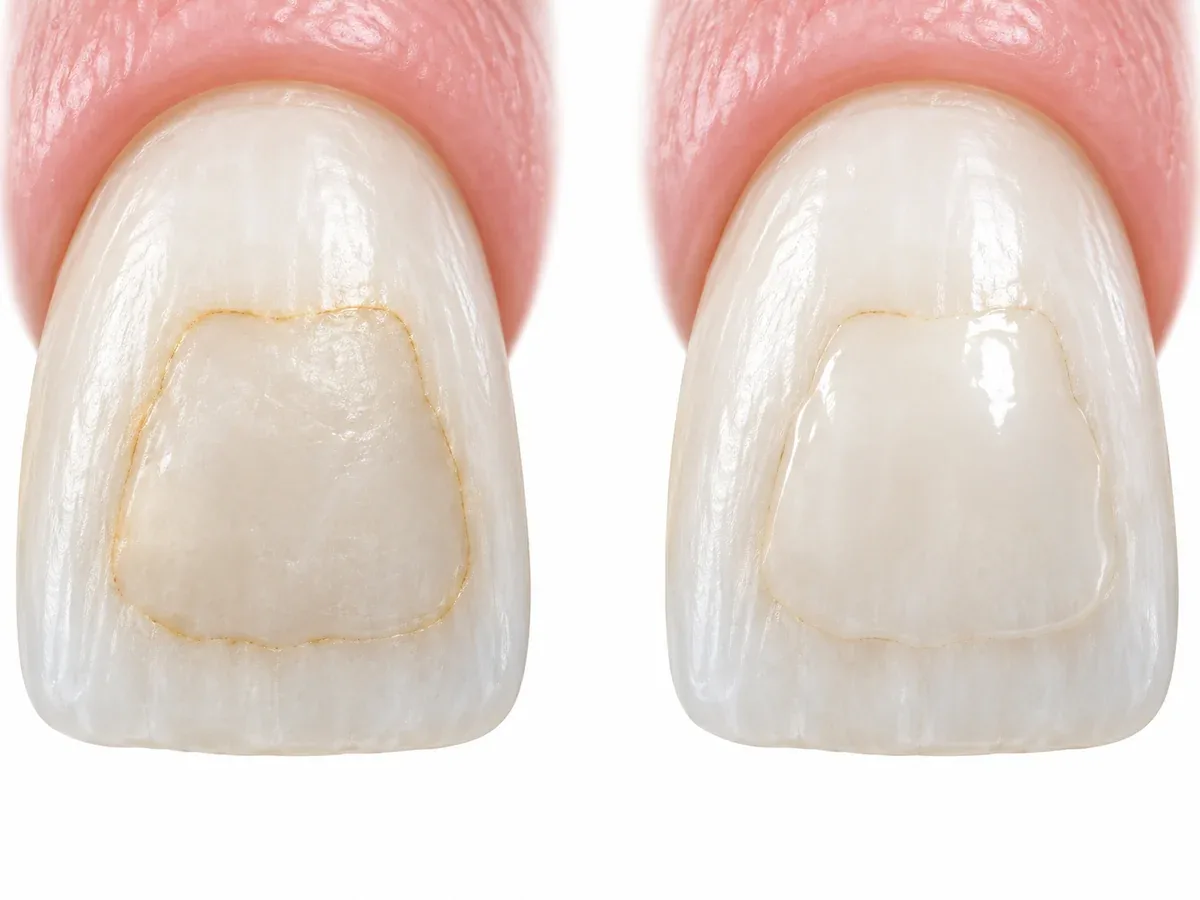
If just the edge has turned yellow
The KDCA notes that discoloration around a resin filling often comes off easily when the surface is polished. For this reason, it recommends regular maintenance.
If the color has soaked into the surface, polishing can change how the tooth looks. In that case, there is no need to redo the resin.
If a small piece has chipped off
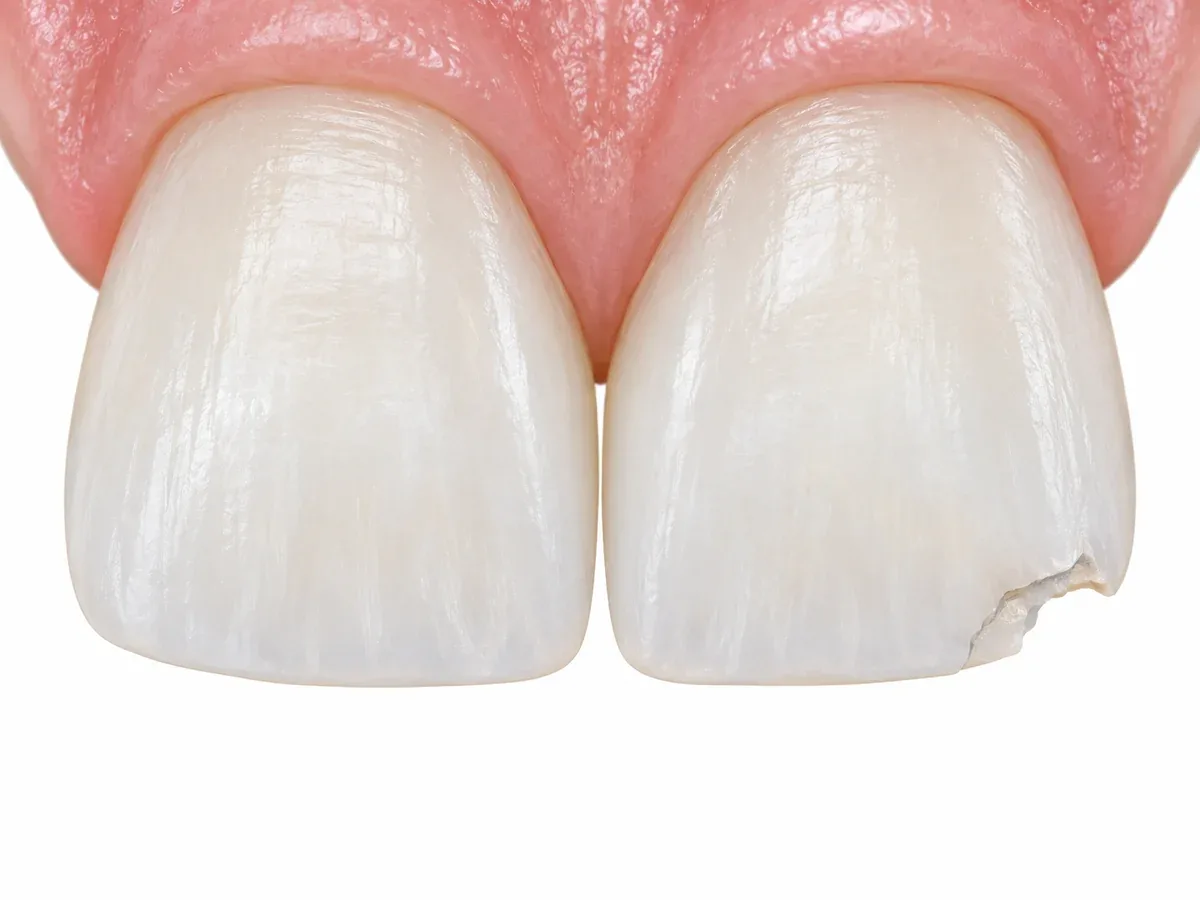
Resin is a material that is easy to repair by filling in just the missing part. If the rest of the filling is firmly attached and its color still looks fine, we first consider patching that one spot.
Redoing everything means removing the old filling first. During that process, a little of the natural tooth may be removed along with it.
So if a patch will do the job, patching is kinder to the tooth. We would rather keep what is still working well.
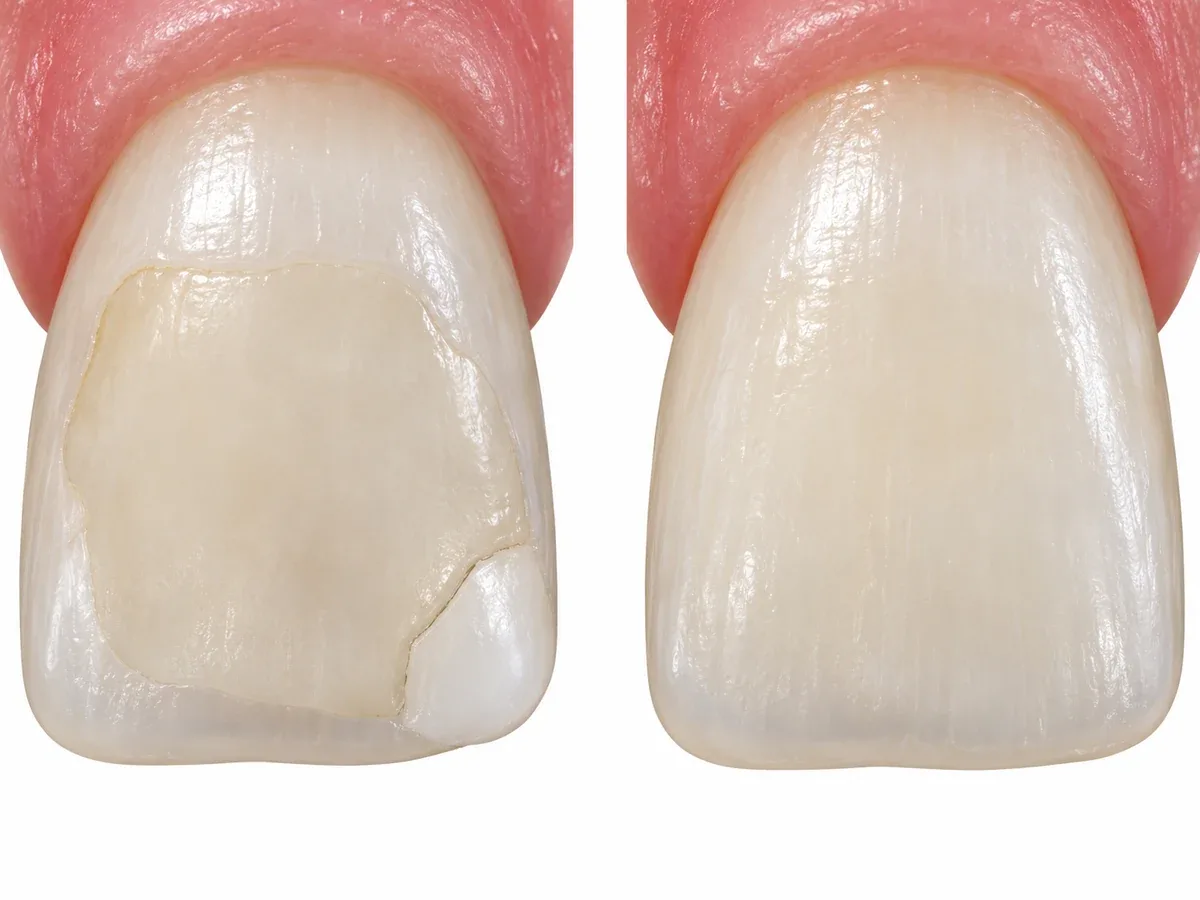
The table below shows how we usually match each situation with a first step.
| Current condition | What we look at first |
|---|---|
| Just the edge is slightly yellow | Polishing the surface |
| A small piece has chipped off | Repairing just the missing part |
| The whole filling has turned cloudy | Redoing the filling |
| Decay has formed in the gap at the edge | Removing the decay and refilling |
| Resin covers most of the front surface | Also reviewing a laminate or crown |
| The tooth itself is dark | Also reviewing a laminate or crown |
| The same spot keeps breaking | Checking the bite and grinding first |
From the last three rows, the story changes. Doing it again may not be the answer in those cases.
Should you redo the resin, or choose a laminate or crown?
If the filling does need to be redone, the next question is what to redo it with. The choices are resin, a laminate, or an all-ceramic crown that covers the whole tooth.
We look at four things before recommending one:
- How much of the tooth the filling covers — resin suits small areas well.
- How much natural tooth remains — the more tooth left, the wider your choices.
- Where the color problem comes from — the filling itself, or the tooth underneath.
- Your bite and grinding habits — under heavy force, no material lasts long.
The table compares the three options side by side, using the figures reported in KDCA materials.
| Item | Resin | Laminate | All-ceramic crown |
|---|---|---|---|
| Area covered | Just the part that needs it | The front surface of the tooth | The whole tooth |
| Tooth removed | The least | A thin layer of the front surface | The most |
| Material thickness | Filled as needed | A thin shell of about 0.5–1.0 mm | Wraps the entire tooth |
| Reported lifespan | 3.3–16 years | About 5–10 years on average | Around 10 years |
| If part of it breaks | Easy to patch that spot | Remade depending on the condition | Usually removed and replaced |
Each source measured lifespan in its own way. That makes it hard to compare the numbers directly, and in every case the result depends on care and habits.
When redoing the resin makes sense
Resin is a good fit when it covers a small area, enough natural tooth remains, and the tooth's own color is fine. The KDCA explains that most front teeth chipped in an accident can be restored with composite resin.
If the gap between teeth is not large, it can also be closed with resin in a single day.
When a laminate is also worth considering
A laminate is a thin shell, about 0.5–1.0 mm thick, bonded to the enamel surface of the tooth. According to the KDCA, laminates are used for discoloration, gaps between teeth, chipped tips, small teeth and mild problems with tooth position.
Sometimes the filling has been redone several times and now covers most of the front surface. In other cases, the real problem is the color of the tooth itself, not the filling. Then we put a laminate on the table as well.
If the tooth is badly out of position, however, a crown or orthodontic treatment may be the better fit.
When a crown comes into the picture
If the tooth is badly broken, or has already had large treatment and little tooth remains, we look at an all-ceramic crown. Because it contains no metal, the edge does not show a dark line, and it is fairly strong and durable.
The trade-off is that more tooth has to be removed. That is why we turn to a crown when the earlier options are hard to use.
If you grind or clench your teeth, a protective appliance may be needed after a crown.

Why start with the option that removes the least tooth?
There is one principle we consider more important than any other here.
Tooth structure does not grow back once it is removed. A filling can be redone, and a restoration can be remade. Removed tooth, however, cannot be restored by any means.
That is why the order is always the same:
- Polishing the surface — if the color sits on the surface, treatment can end here.
- Partial repair — just the missing part is filled in.
- Redoing the filling — when the whole filling has a problem.
- Laminate — when the color and shape of the whole front surface need changing.
- All-ceramic crown — when little tooth remains or the earlier options are hard to use.
The harm of removing too much tooth has even reached a court in Korea. Dailydental, the newspaper of the Korean Dental Association, reported on a laminate case where more tooth was removed than the advertising had described.
The court found that the clinic had failed its duty to explain. We take one lesson from that ruling. You should know how much tooth will be removed, and why, before you decide on treatment.
The more tooth is removed, the more easily the inner layer, dentin, becomes exposed. Once dentin is exposed, teeth can become sensitive.
Of course, the goal is not to avoid removing tooth at all costs. The goal is to remove just what is needed, and it is our job to explain why.
What do patients in Busan often ask about resin repair?
Here are the questions we hear most often at the chair, with short answers based on the KDCA materials.
Can whitening brighten yellowed resin?
No. Whitening does not lighten resin. In fact, the teeth around it may get brighter while the filling stays the same, making it stand out even more.
Staining at the edge can be polished first. If the filling itself has changed color, redoing it is the next step to look at.
Doesn't polishing make the filling thinner?
Polishing tidies up just the stained surface layer. If color remains after polishing, we look at other options at that point. There is no reason to redo everything from the start.
Will redoing the filling remove more tooth?
While the old filling is being removed, a little tooth may come off with it. That is why we recommend a repair first if filling in the missing part will be enough.
Can laminates also chip or stain?
They can. The KDCA lists debonding, partial fracture, staining at the margin and dentin hypersensitivity as possible side effects of laminates. Every material needs care.
Isn't a crown the stronger choice from the start?
A crown is strong and durable, but it needs more tooth removed. When part of a crown is damaged, it is usually removed and replaced. If a method that removes less tooth can work, that comes first.
The same spot keeps breaking. Why?
In that case, we look at the forces before the material. With a problem bite, grinding or clenching, any restoration can break again easily. A protective appliance can be used as well if needed.
How can you make your front-tooth resin last longer?
A few daily habits can keep a filling looking good for longer. None of them are difficult.
Deeply colored food and drink
The KDCA lists wine, green tea, black tea, curry, coffee and tobacco as causes of resin staining. You do not need to give them up. Rinsing with water or brushing after you have them helps.
If you have had a laminate bonded, it is wise to avoid cola, black tea and coffee for two to three days afterwards.

Polish the edges while the stain is small
Staining at the margin often comes off easily with polishing. So please ask us to check these edges at each check-up. Polishing early reduces the chance of needing a new filling.
Tell us before scaling
If you have porcelain restorations such as laminates or all-ceramic crowns, tell the dental hygienist before scaling. An ultrasonic scaler can damage porcelain.
| What to do | Why |
|---|---|
| Rinse after deeply colored food | Reduces staining at the edges |
| Have the edges checked at each visit | Polishing early reduces the need for a new filling |
| Mention porcelain work before scaling | Ultrasonic tools can damage porcelain |
| Check for grinding or clenching | A protective appliance can be used if needed |
| Avoid biting hard things with front teeth | Reduces chipping at the edge |
To sum up the daily routine, keep these points in mind:
- Rinse or brush after coffee, tea, wine or curry.
- Do not use your front teeth to bite through hard things.
- Ask for the edges to be checked at your regular visits.
- Let your dentist know if you grind or clench your teeth.
Frequently asked questions
Do I need to redo my resin just because it is stained?
Not always. Staining at the edge of a resin filling often fades with polishing. If the whole filling has turned cloudy, or decay has formed at the edge, redoing it is the next step.
Does laminate last longer than resin?
KDCA materials report about 5–10 years on average for laminates and 3.3–16 years for composite resin. The studies were done differently, so a simple comparison is hard. Care and chewing habits make a large difference.
Can I get resin repair in English in Busan?
Yes. We offer 1:1 English interpretation from the first consultation through the end of treatment. The clinic is near Seomyeon Station Exit 2 (5-min walk), opposite Lotte Hotel Busan, and you can call 010-8555-2854 (+82-10-8555-2854 from abroad).
A stained or chipped resin does not always need to be redone.
If polishing works, we polish.
If a patch works, we patch.
We look at the options that remove the least tooth first.
Let us check its condition before anything else.
If your front-tooth resin needs attention in Busan, Reset Dental Clinic offers 1:1 English interpretation from your first consultation through the end of treatment. Call 010-8555-2854 to book a consultation.
References
- KDCA National Health Information Portal, "Resin Treatment" — lifespan of composite resin, foods that cause staining, polishing and partial repair, and restoring chipped front teeth
- KDCA National Health Information Portal, "Laminate Treatment" — laminate thickness and uses, side effects, foods to avoid after bonding, and precautions before scaling
- KDCA National Health Information Portal, "All-Ceramic Crowns" — treatment time and lifespan, tooth reduction, what happens when part is damaged, and appliances for grinding
- KDA newspaper Dailydental (Chiui Sinbo), "Court Orders Damages for Excessive Tooth Reduction in Laminate Treatment" — how the court viewed the duty to explain when more tooth was removed than described
- KDCA National Health Information Portal, "Dentin Hypersensitivity" — sensitivity when enamel thins and dentin becomes exposed
Written by Reset Dental Clinic Support Team
Medical review Dr. Kim Hyun-joo, Head Dentist · Esthetic Restorations
Last updated: September 19, 2026
This column is for general information and does not replace diagnosis or treatment for individual patients. If you have symptoms, please see a dentist.