

- A badly broken front tooth does not always need a crown. Resin, a crown and Minish can all be considered.
- The choice depends on the size and position of the fracture, the tooth that remains, the pulp (nerve) and the bite.
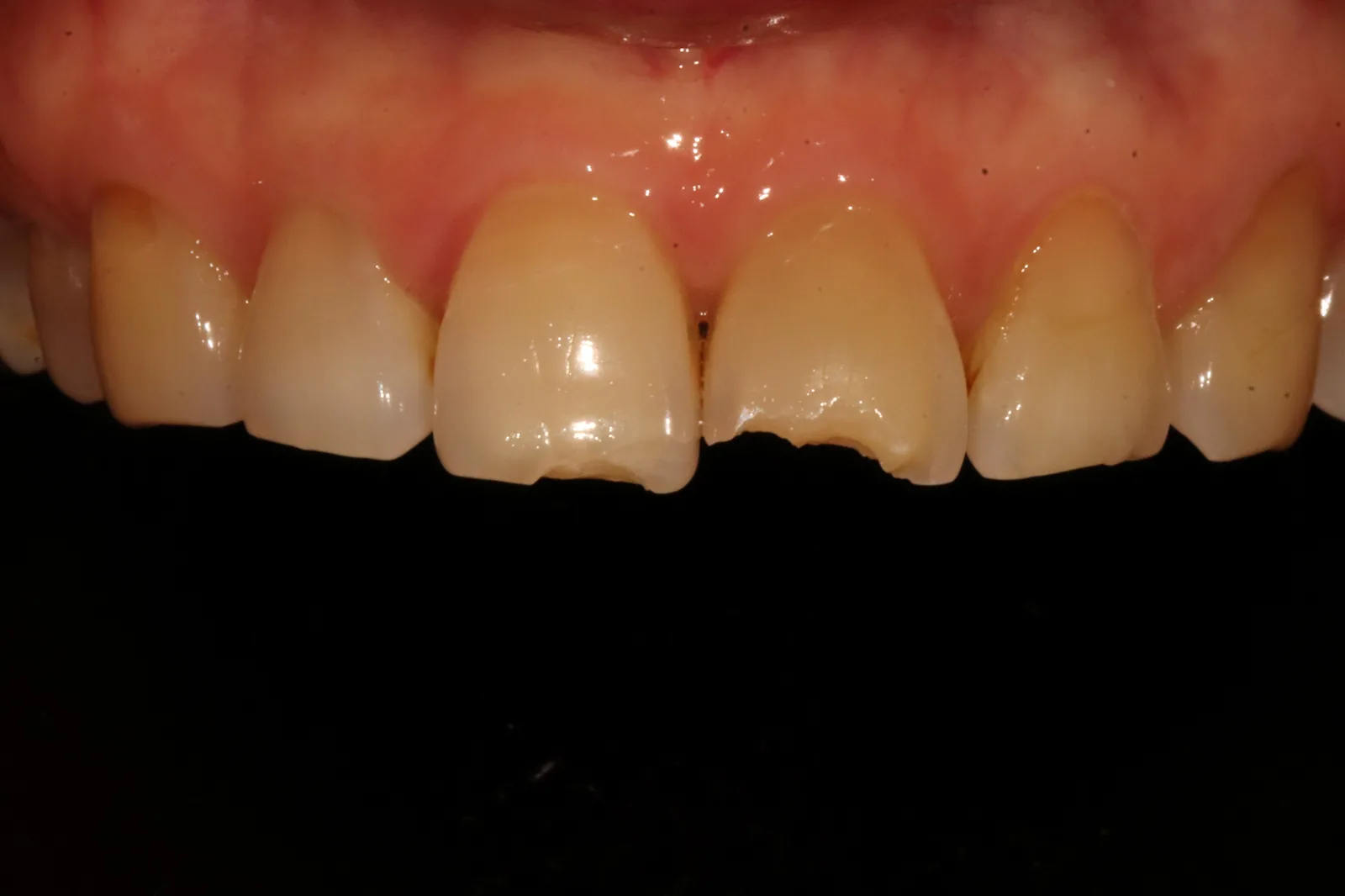
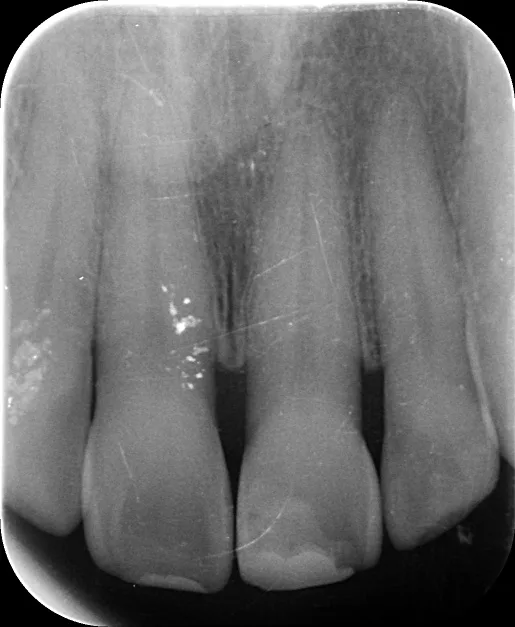
- In this case, the upper front tooth #21 was broken down to its biting edge after an accident.
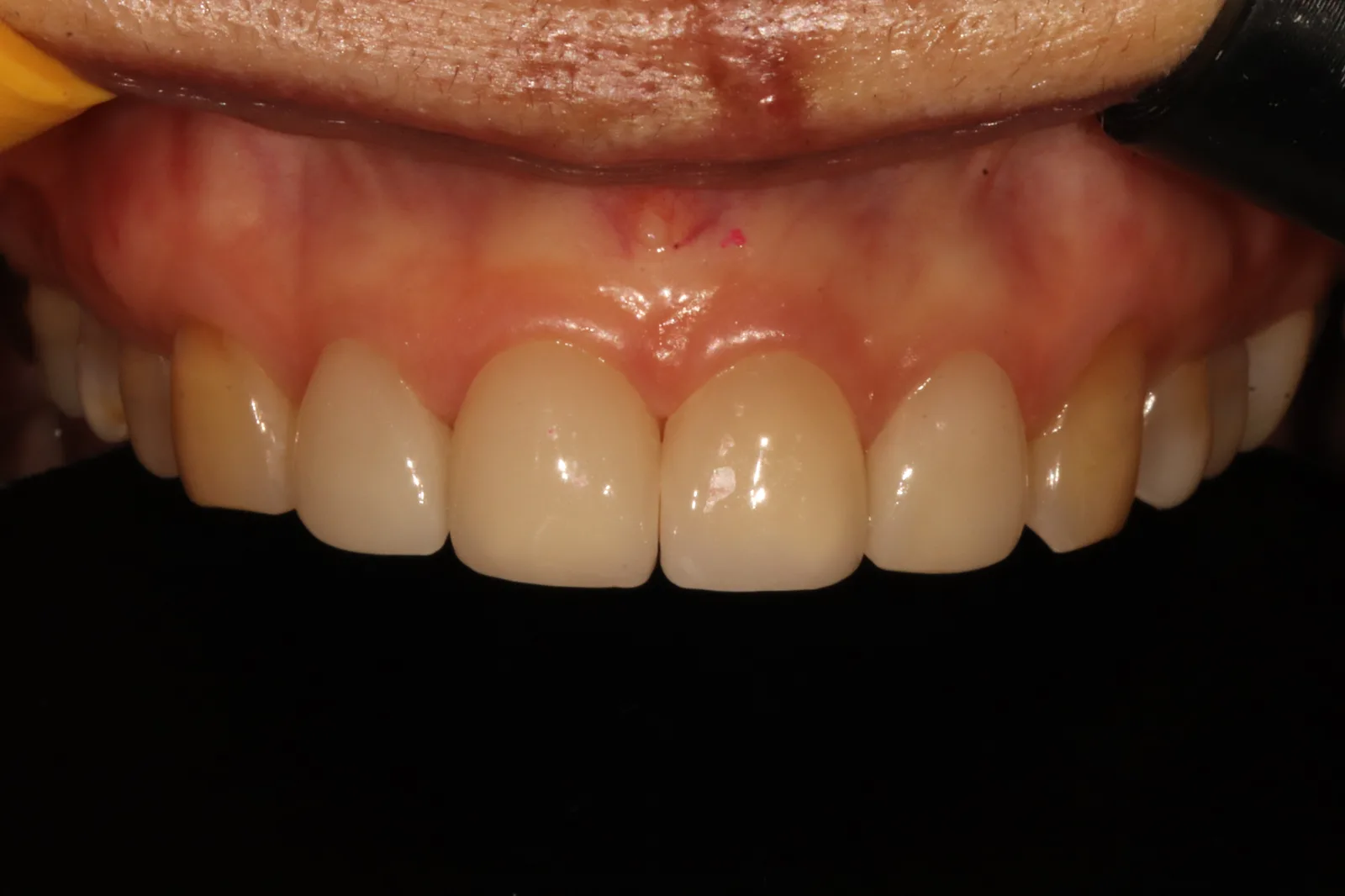
- After comparing resin and a crown, we chose Minish to keep as much natural tooth and pulp as possible.
Many people expect a crown after a front tooth breaks, but at Reset Dental Clinic in Seomyeon, Busan, we first ask how much natural tooth can be kept. This case review explains why a large fracture was restored with Minish instead of a crown. For patients living in or visiting Korea, we provide 1:1 English interpretation from the first consultation through the end of treatment.
Does a broken front tooth always need a crown?
No, not always. A large fracture on a front tooth does not automatically mean a crown.
Several treatments can be reviewed, including resin filling, a crown and Minish. Which one fits depends on the tooth, not on a fixed rule.
The patient in this case had been coming to our clinic for many years. A sudden accident injured the front teeth, and one tooth was hit especially hard.
Dentists often number teeth instead of naming them. In this numbering system, #21 is the upper left central incisor, the large front tooth just left of the midline.
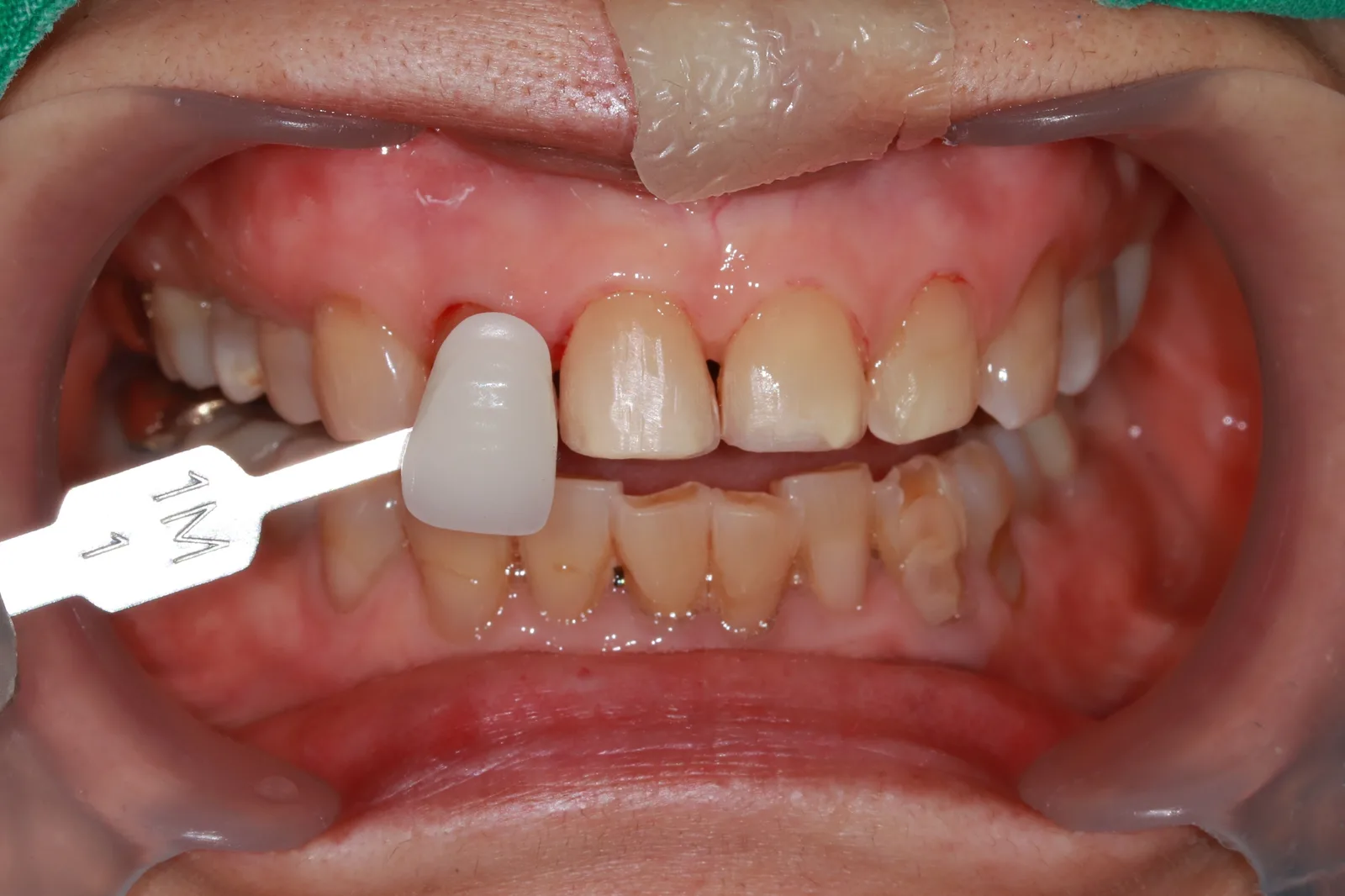
The fracture (FX) on #21 was large. The missing part ran all the way to the incisal edge, the thin biting edge of the front tooth.
In a situation like this, the first thing I look at is not which restoration to use. The first question is this: "How much of the remaining natural tooth can we protect?"
| Factor | What we look at | Why it matters |
|---|---|---|
| Size of the fracture | How much of the tooth is missing | A wide defect is harder to rebuild with resin alone |
| Position of the fracture | Whether it reaches the incisal edge | The edge takes repeated force when you bite |
| Remaining tooth structure | How much healthy tooth is left | A crown can mean removing more of it |
| Pulp (nerve) | Whether the fracture reached the pulp, or the pulp has a problem | Root canal treatment may be needed first |
| Bite | How the upper and lower front teeth meet | The restoration has to withstand that contact |
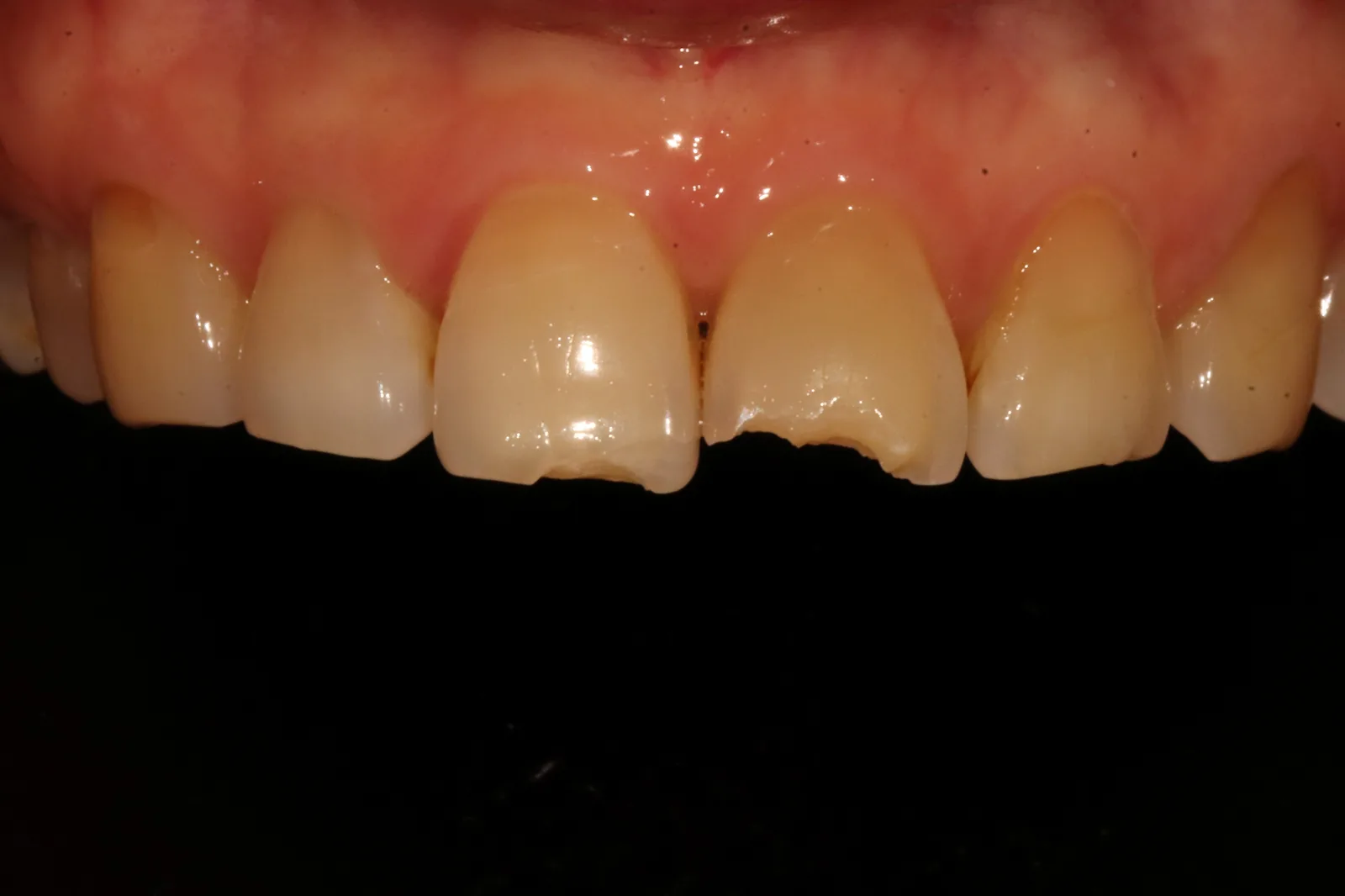
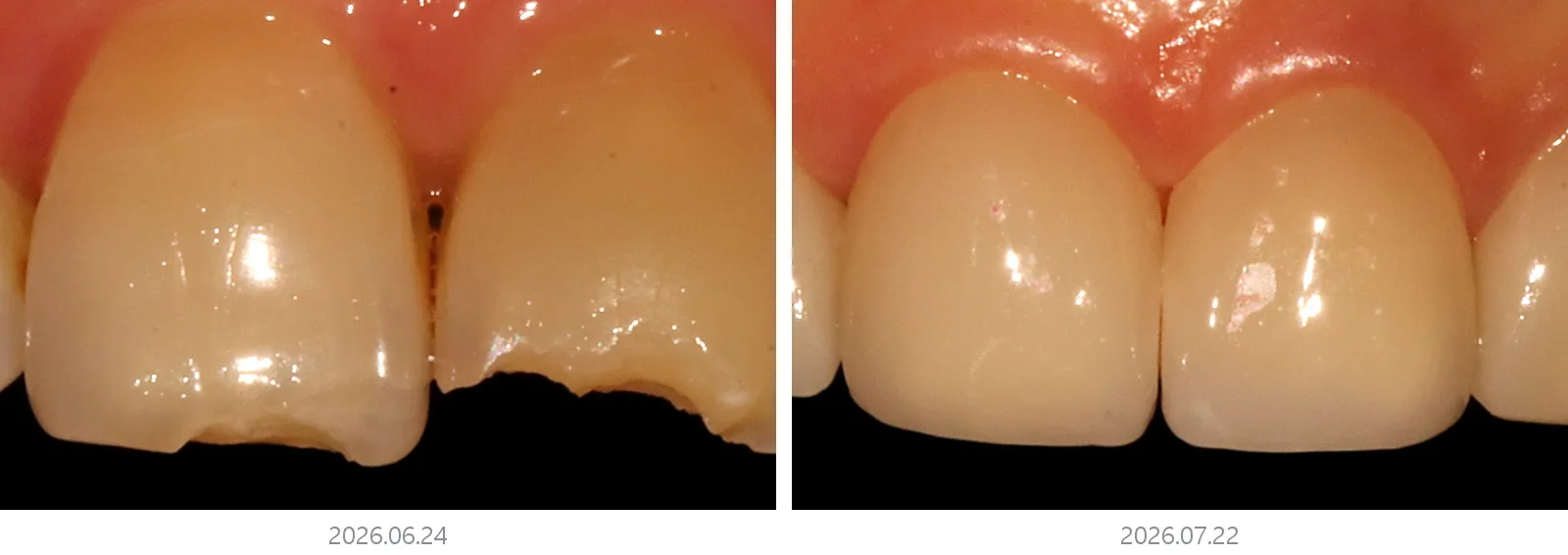
June 24, 2026 — #21 fracture reaching the incisal edge
Why was a resin filling not enough for this tooth?
The first option we considered was resin filling (RF). Resin is a tooth-colored material placed directly on the tooth.
For small chips, resin can be a sensible choice. When resin fits the tooth, resin is what we should choose.
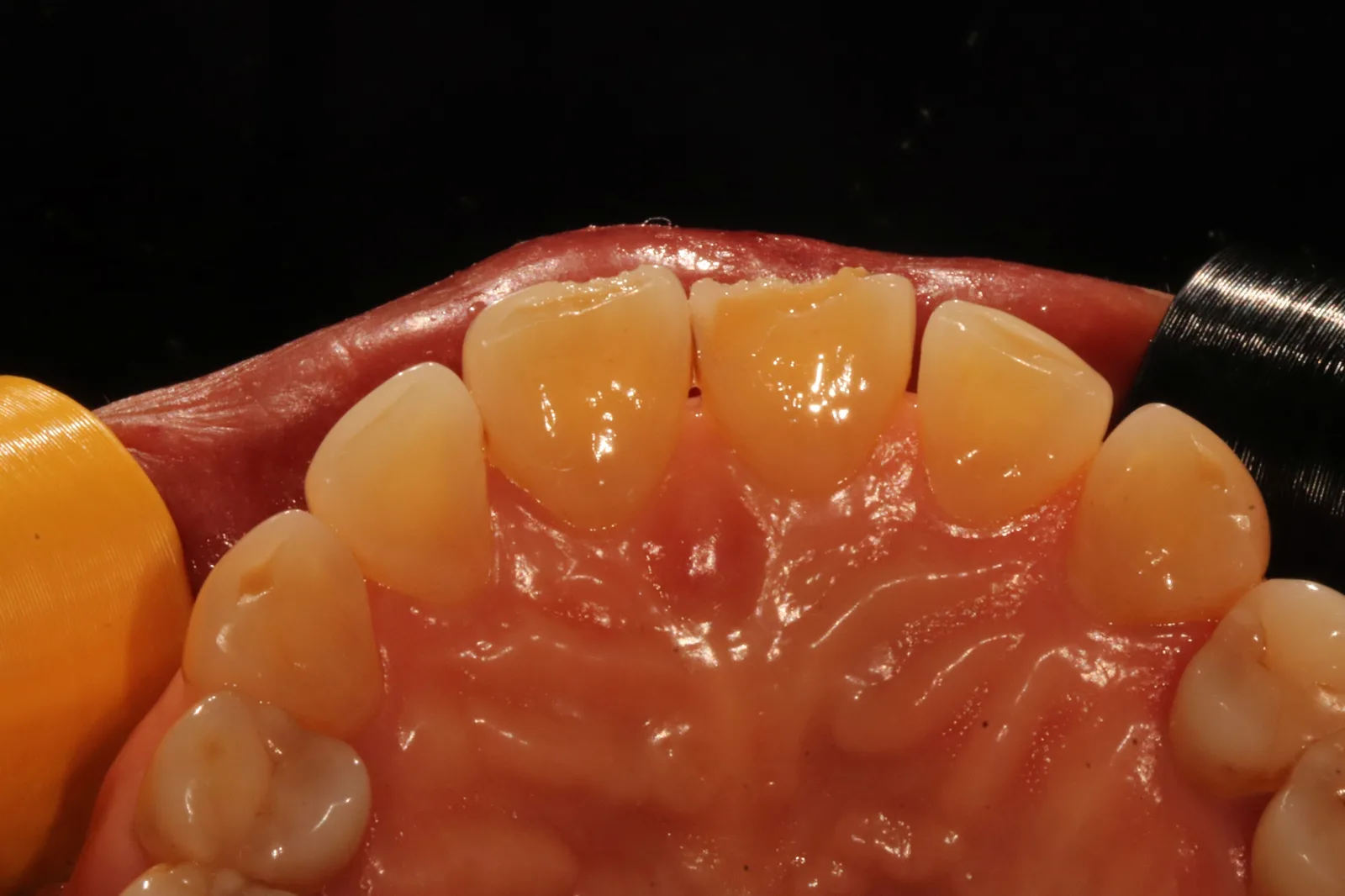
This time, however, the defect on #21 was large. The fracture also ran into the incisal edge, the very end of the front tooth.
The incisal edge takes force again and again. It is loaded when you bite into food and when the upper and lower front teeth meet.
If we rebuilt such a wide area with resin, we had to think ahead. The filling could break again or come off over time.
That is why we could not simply decide to "just fill it with resin for now". A quick fix that later breaks is not a small problem on a front tooth.
In short, resin was not ruled out because it is a poor material. It was set aside because this particular fracture was too large and sat on a spot that takes heavy use.
- The defect covered a wide area of the tooth.
- The fracture reached the incisal edge.
- The edge is loaded every time you bite and the front teeth meet.
- A large resin repair there carries a risk of breaking or coming off later.
Why did we decide against a crown?
For a front tooth with a large fracture, a crown is also a valid treatment. It covers the whole tooth like a cap.
However, depending on the tooth, a crown can mean removing a larger amount of tooth structure. In some cases, root canal treatment (endo) may also become necessary.
On a front tooth, there is one more thing to weigh after root canal treatment. The color of the tooth can change.
Over time, the prepared tooth under the crown or its root can darken. That dark color may show through at the neck of the tooth.
When this happens, the gum line can look dark. On a front tooth, this is easy to notice when you smile or talk.
So in this case we asked one more question. "If the pulp can be kept as it is, do we really need root canal treatment and a crown?"
For #21, the honest answer was no. The pulp could be kept, so we looked for a way to restore the tooth without giving it up.
| Option | What it involves | Concern in this case |
|---|---|---|
| Resin filling | Tooth-colored material placed directly on the defect | Wide defect reaching the edge; risk of breaking or coming off |
| Crown | A cap that covers the whole tooth | More tooth removal; root canal treatment may follow; darkening at the gum line |
| Minish | Restores the lost shape while keeping the remaining tooth | Chosen to keep natural tooth and pulp while restoring the fractured form |
How did Minish restore the broken tooth in Busan?
This Minish treatment was not chosen simply to make a front tooth look nicer. It was a decision about how to protect the tooth.
We compared two risks side by side. One was the chance of a large resin repair coming off. The other was the tooth removal that a crown can require.
As a result, we chose Minish as the way to restore the broken shape while keeping the remaining natural tooth and pulp.
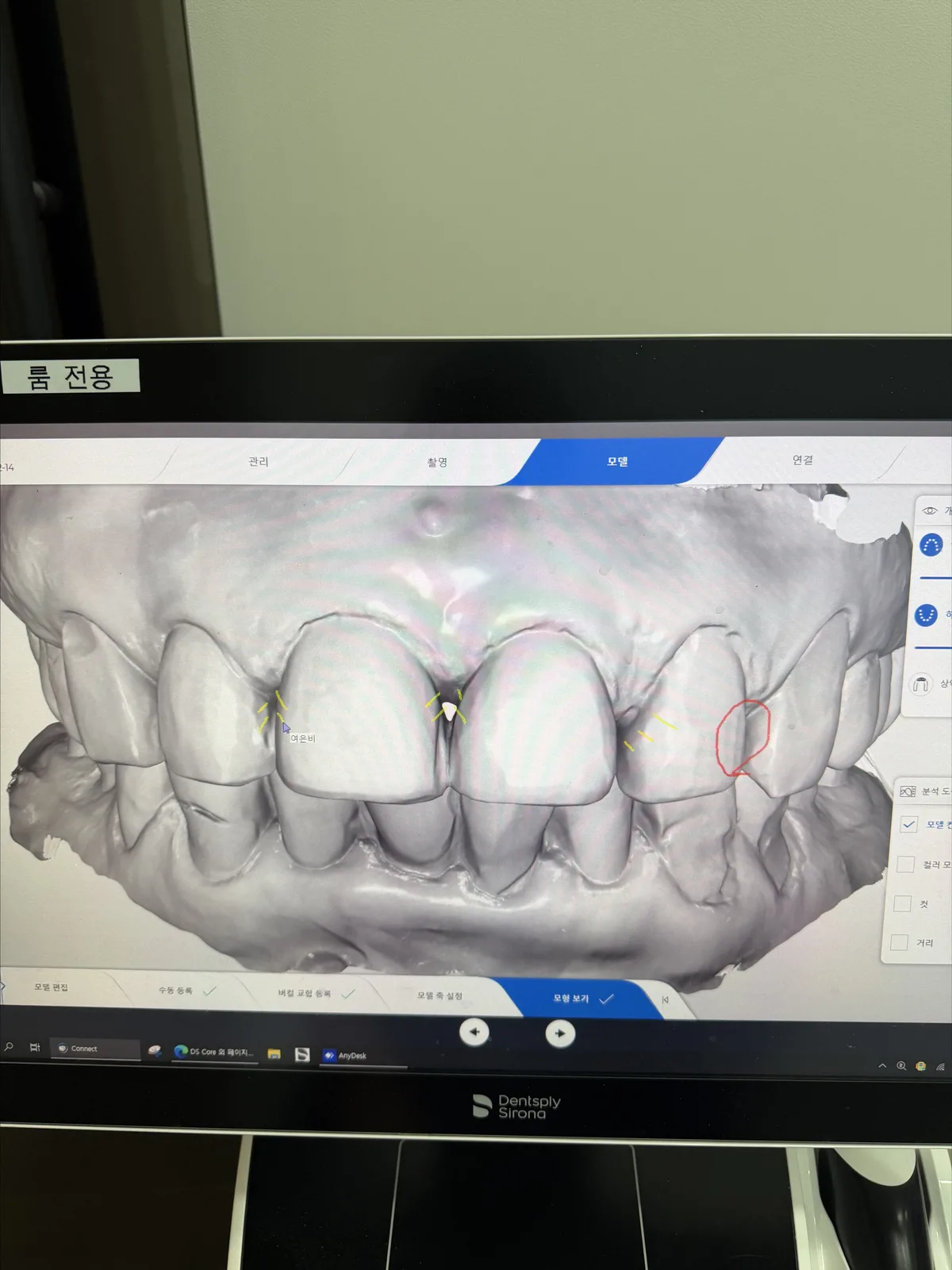
Many people think of Minish as something similar to a no-prep laminate. There is some overlap, but that is not how we frame the decision.
What matters to me is not Minish itself. What matters is the condition of the natural tooth.
If resin is suitable, we should choose resin. If a crown is needed, we should choose a crown.
For #21 in this case, we judged that Minish was suitable. It could bring back the missing part while preserving the natural tooth.
For readers comparing treatments, the KDCA National Health Information Portal describes laminates as removing about 0.5–1.0 mm of tooth. Its page on all-ceramic crowns also covers their pros and cons and the tooth reduction they need.
Numbers like these explain why we try to protect as much natural tooth as we can. Once removed, that part of the tooth is gone.
Why were #12 and #22 treated as well?
The tooth broken in the accident was #21. Even so, we also placed Minish on #12 and #22, the smaller front teeth on either side.
After the age of 60, teeth have been in use for a long time. With that long use, several changes tend to appear:
- The color of the teeth changes.
- The shape of the teeth changes.
- Small dark gaps called black triangles can appear between the teeth.
There was a catch, though. The canines, #13 and #23, were not being treated.
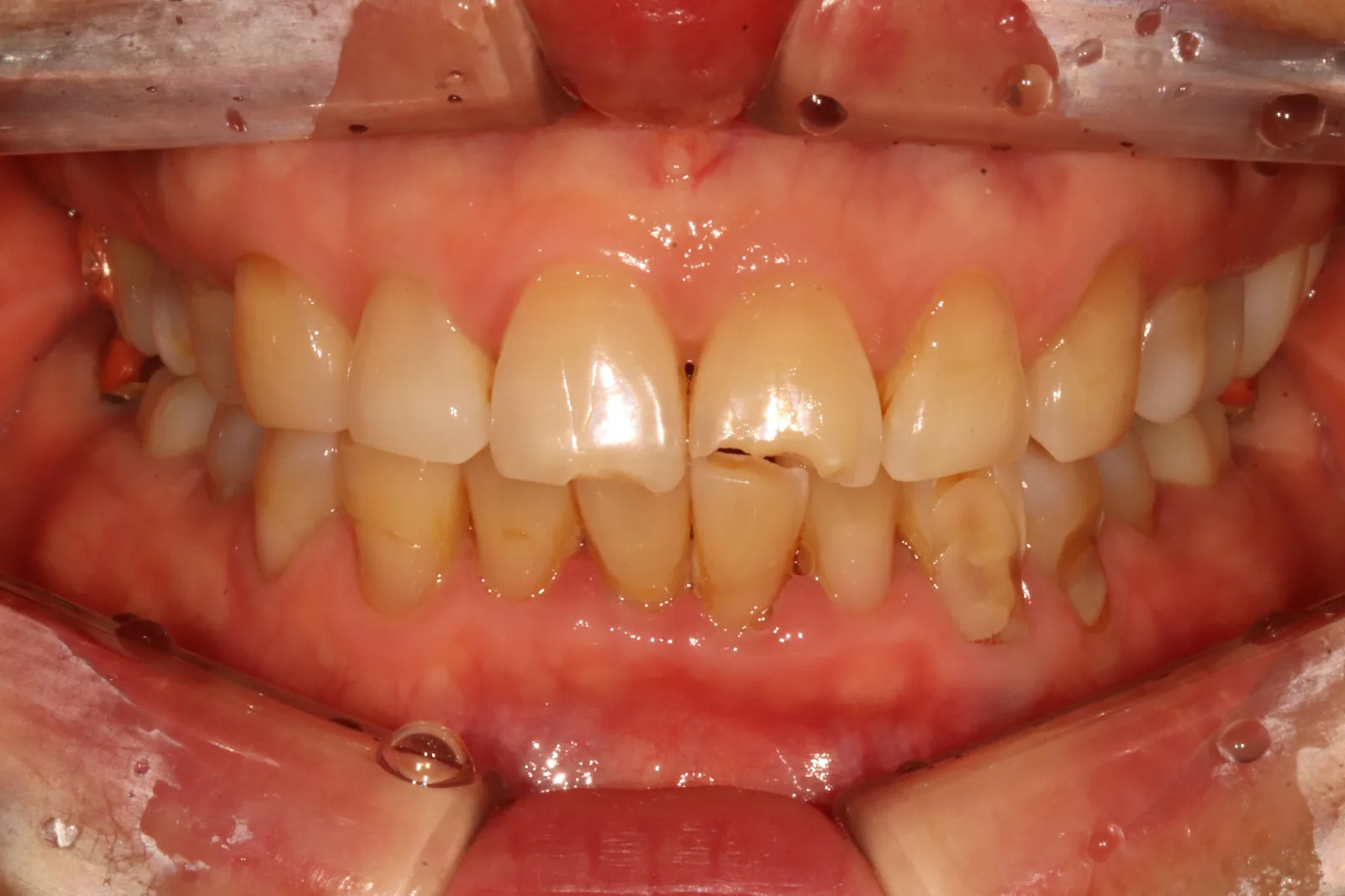
If we made #12, #21 and #22 too white, they would look out of place next to the canines. A bright result can look less natural, not more.
So we designed the shape and color to brighten the teeth within a range that blends with the natural teeth around them. We also aimed to reduce the black triangles.
In senior Minish, the goal is not simply bright white teeth. It is a result that suits the patient's age, face and the neighboring natural teeth.
| Tooth | Position | What we did |
|---|---|---|
| #21 | Upper left central incisor | Minish to restore the fractured shape while keeping the pulp |
| #12 and #22 | Upper lateral incisors | Minish to brighten the color and reduce black triangles |
| #13 and #23 | Upper canines | Not treated; used as the color reference |
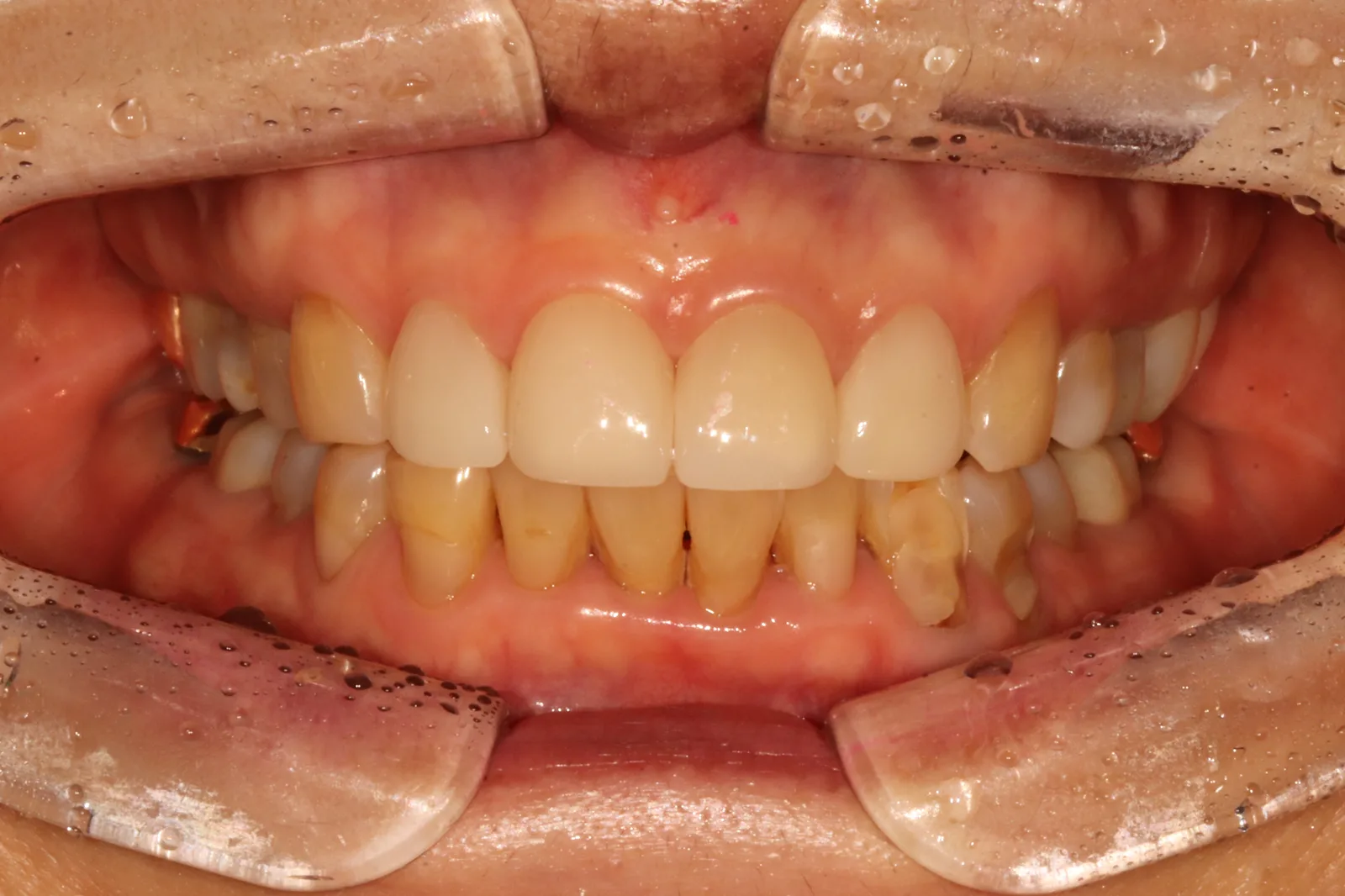
The photos below were taken on June 24, 2026, before treatment, and on July 15, 2026, after treatment. Compare the edge of #21 and the color of the three treated teeth next to the canines.
What principle guided this Minish case?
This case is not just "a broken front tooth treated with Minish." The order of the decisions matters more than the name of the treatment.
After #21 broke, we reviewed resin and a crown first. We then chose Minish based on the size of the defect, the damage to the incisal edge, the remaining tooth and the state of the pulp.
When we added #12 and #22, we also weighed two more things. One was color harmony with #13 and #23, and the other was the black triangles.
My standard for esthetic treatment stays the same from case to case. Keep natural teeth wherever possible, and restore just what is needed.
That principle came first in this senior Minish case too. Here is the order in which we made the decision:
- Check the size and position of the fracture, including the incisal edge.
- Check the remaining tooth structure and the state of the pulp.
- Review resin filling and its risk of breaking or coming off.
- Review a crown and the tooth removal and root canal treatment it may bring.
- Choose the option that keeps the most natural tooth and pulp, then plan the color with the neighboring teeth.
If you have broken a front tooth, you can bring a few questions to your consultation:
- How large is the fracture, and does it reach the biting edge?
- Has the fracture reached the pulp, or does the pulp have a problem?
- How much tooth would a crown remove, and could root canal treatment follow?
- How will the color be matched to my other front teeth?
Frequently asked questions
If a front tooth breaks, do I have to get a crown?
No. We check the size and position of the fracture, the remaining tooth and the state of the pulp. Then we decide on the right treatment, such as resin, a crown or Minish.
Can a broken front tooth get Minish without root canal treatment?
In some cases, yes. If the fracture has reached the pulp or the pulp has a problem, root canal treatment may be needed. That is why diagnosis comes first.
Is Minish possible in your 60s?
We do not decide by age alone. We check the teeth, gums and bite first, and we also consider color and shape against the neighboring natural teeth.
Can I get this treatment in English in Busan?
Yes. We offer 1:1 English interpretation from the first consultation through the end of treatment. The clinic is near Seomyeon Station Exit 2 (5-min walk), opposite Lotte Hotel Busan, and you can call 010-8555-2854 (+82-10-8555-2854 from abroad).
A broken front tooth does not always have to become a crown.
Resin, a crown and Minish each have their place.
The right choice depends on the fracture, the remaining tooth and the pulp.
If you are considering Minish in Busan after a front tooth injury, we are here to help. Patients in Korea can get 1:1 English interpretation from the first consultation through the end of treatment. Call 010-8555-2854 to book a consultation.
References
- KDCA National Health Information Portal, "Laminate Treatment" — what laminates are, how much tooth they remove (0.5–1.0 mm) and when they are used
- KDCA National Health Information Portal, "All-Ceramic Crowns" — pros and cons of all-ceramic crowns and the tooth reduction they require
- KDA newspaper Dailydental (Chiui Sinbo), "Court Orders Damages for Excessive Tooth Reduction in Laminate Treatment" — how the court viewed the duty to explain when more tooth was removed than advertised
- KDCA National Health Information Portal, "Dentin Hypersensitivity" — causes and treatment of sensitive teeth
- KDCA National Health Information Portal, "Gum Disease (Periodontal Disease)" — how the condition of the gums affects esthetic results
Written by Reset Dental Clinic Support Team
Medical review Dr. Kim Hyun-joo, Head Dentist · Esthetic Restorations
Last updated: September 19, 2026
This column is for general information and does not replace diagnosis or treatment for individual patients. If you have symptoms, please see a dentist.


