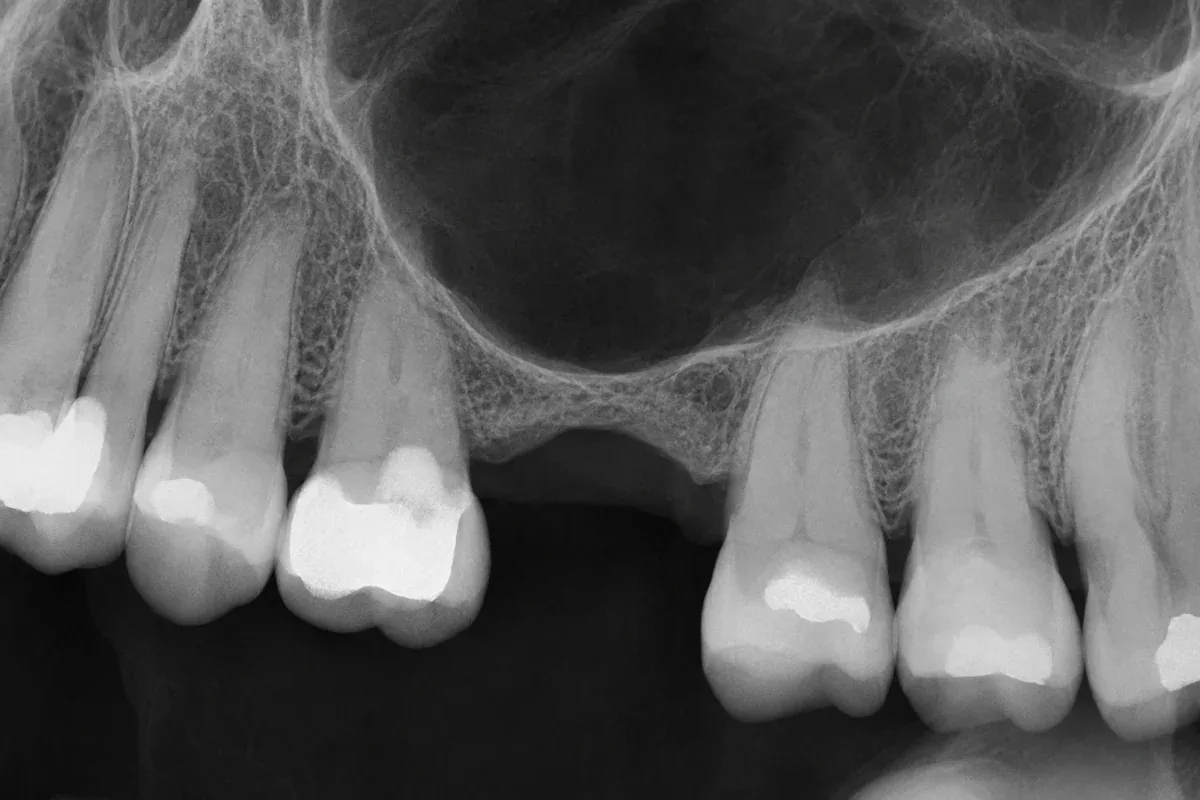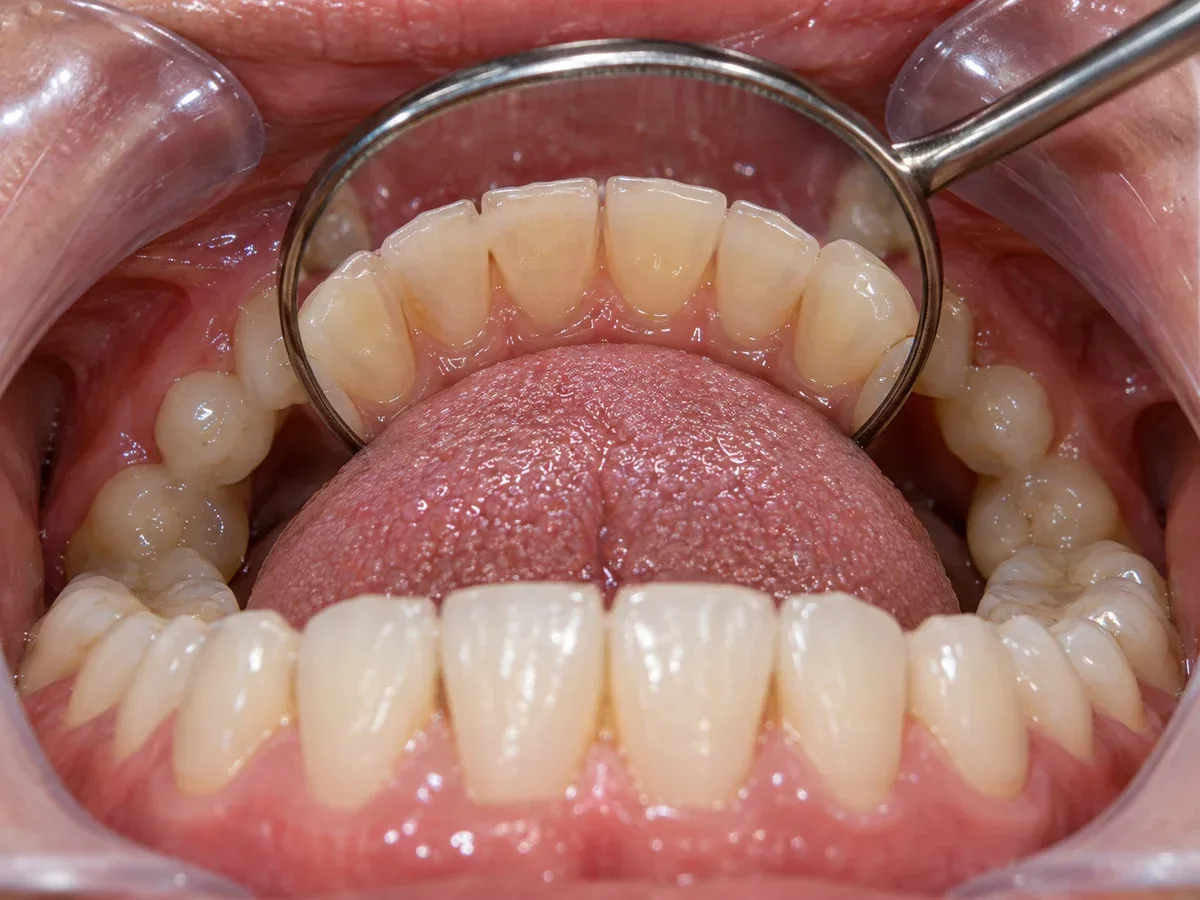
- Before whitening, staining and discoloration must be told apart. Stains lighten well; discoloration does not.
- Stains sit on the surface, so removing them brings back the white. Discoloration is a change in the color inside the tooth.
- If your teeth are uneven in tone, whitening can make the unevenness stand out more.
- Black tea stains teeth more strongly than coffee. Boiled kimchi stew stains far more than fresh kimchi.
Will whitening make my teeth white? For some people it works well, and for others it does not. At our clinic in Seomyeon, Busan, where patients can consult with 1:1 English interpretation, the answer starts with why your teeth look yellow.
The deciding factor is not the strength or brand of the whitening gel. It is the cause of the color.
This column starts with that distinction. It then explains when whitening is the answer and when it is not, for anyone living in or visiting Korea.
Is it staining or discoloration?
This is the first thing to sort out.
| Point | Staining | Discoloration |
|---|---|---|
| Where it is | Stuck to the tooth surface | The color inside the tooth has changed |
| Causes | Coffee, black tea, wine, tobacco and similar | Age, medication, nerve damage, genetics and similar |
| With whitening | Comes off well | Has limits |
| With scaling | Much of it comes off | Does not change |
With staining, removing what is stuck on the surface brings the white back. Discoloration cannot be solved that way.
When the color inside the tooth has changed, working on the surface does not help, however much you try.
So a whitening consultation does not start with "how white will my teeth get?" It starts with a different question: is my tooth stained, or discolored?

Why do teeth turn yellow with age?
This is the point many people wonder about.
A tooth is made of white enamel on the outside and yellow dentin on the inside. Enamel is semi-translucent, so the color of the dentin shows through it.
With age, two things happen at the same time:
- The enamel gets thinner. As it wears thin, more of the inside shows through.
- The dentin gets thicker and darker, because it keeps forming on the inside.
The outside gets thinner and the inside gets darker, so the tooth looks yellow. This is closer to discoloration than to staining.
That is why whitening alone has limits here.
Teeth like these also tend to have worn and chipped areas. However hard you work on your skin, worn, chipped and discolored teeth can make a smile look older.
Caring for your teeth is as much anti-aging as caring for your skin.

| Layer | Change with age | Effect on color |
|---|---|---|
| Enamel (outer layer) | Wears and gets thinner | More of the inside shows through |
| Dentin (inner layer) | Keeps forming, gets thicker and darker | The yellow tone deepens |
When does whitening work, and when does it not?
How well it works depends on your current condition.
| Your current condition | Expected result |
|---|---|
| Stains from coffee, black tea or tobacco | Works well |
| Evenly yellow overall | Usually works well |
| Discoloration from aging | Works up to a point |
| Tone differs from area to area | Unevenness may stand out |
| White spots | The spots may become more noticeable |
| Band-shaped discoloration from medication | Difficult |
| One tooth dark after root canal treatment | That tooth is treated separately |
| Existing crowns or bonded restorations | Restorations do not lighten |
The rows from the third one down are the important ones. In teeth with uneven tone, lightening can highlight the white areas even more. The unevenness then stands out instead of fading.
This happens because the whole tooth does not lighten evenly. The areas that lighten easily simply get lighter.
Also, crowns and bonded restorations do not lighten. If the natural teeth get lighter, an existing restoration can suddenly look dark and out of place.
That is why the order of treatment is decided in advance. If a restoration will be replaced, the natural teeth are usually lightened first, and the new restoration is then matched to them.
What to tell your dentist at the consultation
A few details help us tell staining from discoloration and plan the order. It is useful to mention them at your first visit.
- whether you often drink coffee, black tea or wine, or smoke
- whether your teeth were sensitive before
- any crowns, veneers or fillings on your front teeth
- any tooth that darkened after root canal treatment
- whether you are pregnant or breastfeeding

What are the three types of teeth whitening?
There are three main ways to lighten teeth.
| Type | Where | Approximate concentration |
|---|---|---|
| Professional whitening | Done at the dental clinic | 15–35% |
| At-home whitening | At home, with a tray made from an impression at the clinic | 8–10% |
| Over-the-counter whitening | Bought at a pharmacy or shop and used at home | 3% or less |
The active ingredients are mainly hydrogen peroxide or carbamide peroxide. As they break down, they release reactive oxygen, which breaks down the pigments in the tooth.
A higher concentration works faster, but sensitivity increases with it. So treatment at a dental clinic protects the gums and is adjusted while the dentist watches your condition.
We usually aim for the teeth to become about two shades lighter. The exact result depends on your starting color and the cause.
Products for home use each come with their own directions. Gels and strips differ in how they are used and in their cautions. Check the package before you use one.
Keeping it up is the hard part
To be honest, the biggest weakness of home methods is consistency. Many people use them for three days and then put them in a drawer.
It is a hassle, and hardly anything gets done consistently.
Think of it like expensive skin creams at home compared with a single in-clinic procedure. Sensitivity and gum health still have to be checked, so the right option is chosen after looking at your teeth.

How do you keep teeth from turning yellow again?
Lightening your teeth is not a one-time fix. Stains build up again.
Coffee is not the worst offender
Many people point to coffee. But the drink that stains most strongly is black tea.
There is one more interesting fact. Fresh kimchi stains relatively little, but boiled kimchi stew stains more than five times as much.
The reason is oil and heat. Hot food makes the tooth expand very slightly, which lets pigments soak in more easily.
Fresh kimchi is eaten cold, while the stew is served hot and has oil in it. The same ingredients can therefore stain very differently.
So it matters whether you eat food cold or hot, and whether it is oily.
Tobacco in particular
You might think one cigarette cannot change much. But that one cigarette can undo the whitening you have done.
Right after treatment, the tooth surface takes up pigment easily. This is also why the first two days need extra care.
The first 48 hours after whitening
For about two days right after whitening, it is better to avoid strongly colored foods and drinks like these.
- coffee, black tea and wine
- curry and kimchi stew
- chocolate and cola
Brushing right after meals is a very reliable way to keep the result. It removes pigment before it has time to settle on the surface.
These habits matter beyond the first two days as well. Stains build up again over time, so the same care helps the color last longer.

What should you check before teeth whitening in Busan?
Lightening teeth is not right for every situation. A few points are checked before starting at our clinic in Busan.
Cavities and cracks: these need treatment first. If whitening gel gets into a cavity or a cracked area, it can be very painful. That is why we check your mouth first.
The gums: whitening gel should not touch them. When it does, the gums turn white and sting. At the clinic, the gums are covered and protected before whitening starts.
The same reason explains why the tray must fit well when you whiten at home.
Pregnancy: we do not recommend whitening during pregnancy. It is not urgent treatment, so it can wait. The same applies while breastfeeding.
How often: there is no fixed number of times, but we do not recommend repeating it endlessly. The more you repeat it, the more sensitivity grows and the less the teeth lighten. It is better to focus on maintenance.
Whitening toothpaste: it reduces surface stains to some degree. Its concentration is around 1–3%, so it cannot change the color inside the tooth. It helps with maintenance, but it does not replace treatment.
| Situation | What we advise |
|---|---|
| Cavities or cracked teeth | Treat them first |
| Existing sensitivity | Tell the dentist in advance |
| Pregnancy or breastfeeding | Postpone whitening |
| Repeated whitening | Not endlessly; focus on maintenance |
| Whitening toothpaste | Helps with surface stains; does not replace treatment |
What if whitening does not work for you?
When discoloration is severe or the tone is uneven, we look at other options together.
However, the order always starts with the least invasive step.
- Scaling and surface cleaning: if stains are the cause, much of the problem is solved here.
- Whitening: this works well when teeth are evenly yellow.
- Restoring shape and color together: for uneven tone, or when wear or chipping is also present.
Even if you end up at step 3, whitening first can sometimes mean less tooth needs to be removed. When the color to be covered is lighter, the restoration can be made thinner.
That is why the order is often whitening first, then restoration.
Once tooth structure is removed, it does not grow back. If there is a way that works without removing tooth, that comes first.
Frequently asked questions
How white will teeth whitening make my teeth?
We usually aim for about two shades lighter, but it varies a lot with your starting color and the cause. We do not promise celebrity-white teeth. Paper-white teeth are not the goal either.
Is sensitivity unavoidable?
Some sensitivity is common during whitening, and in most cases it settles within a few days. If it is strong, we lower the concentration or space out the sessions. If your teeth were sensitive before, tell us in advance.
Can one dark tooth be treated on its own?
Yes. When a tooth darkens after root canal treatment, there is a separate approach from inside that tooth. The cause is different, so the method is different too.
Can I get whitening treatment in English in Busan?
Yes. We provide 1:1 English interpretation from your first consultation through the end of treatment. The clinic is near Seomyeon Station Exit 2 (5-min walk), opposite Lotte Hotel Busan; call 010-8555-2854 (+82-10-8555-2854 from abroad).
First, find out whether it is staining or discoloration.
If it is stuck on the surface, it can be removed.
If the color is inside, it is a different story.
If you are considering whitening in Busan, Reset Dental Clinic offers 1:1 English interpretation.
We will check where your tooth color comes from, and start with the least invasive option.
Call 010-8555-2854 to book a consultation.
References
- Ministry of Food and Drug Safety via Korea Policy Briefing, "How to Use Tooth Whitening Products Correctly" — professional, at-home and over-the-counter whitening, hydrogen peroxide concentrations and directions for each product type
- KDCA National Health Information Portal, "Dentin Hypersensitivity" — symptoms when enamel thins and dentin is exposed
- KDCA National Health Information Portal, "Resin Treatment" — why restorations do not change color with whitening
- KDCA National Health Information Portal, "Laminate Treatment" — the scope of esthetic restorations considered for severe discoloration
- KDA newspaper Dailydental (Chiui Sinbo), "If Your Teeth Feel Sensitive, Suspect Tooth Wear" — changes that appear when wear thins the enamel
Written by Reset Dental Clinic Support Team
Medical review Dr. Kim Hyun-joo, Head Dentist · Esthetic Restorations
Last updated: September 19, 2026
This column is for general information and does not replace diagnosis or treatment for individual patients. If you have symptoms, please see a dentist.