

- There is no set waiting time after a tooth extraction. At our clinic in Busan, some implants go in the same day, and some wait a few months.
- Placing it right away needs three things: enough bone, no acute infection, and a firm grip at the start.
- "Same day, no matter what" is a risky promise. A post forced into a collapsed site can come loose a few years later.
- Leaving the gap too long also shrinks the bone. The longer you wait, the bigger the surgery. It helps to talk with us before the tooth comes out.
"How long should I wait after a tooth extraction before the implant?" We hear this at Reset Dental Clinic in Seomyeon, Busan, as soon as we mention removal. For patients living in or visiting Korea, we provide 1:1 English interpretation from your first consultation through the end of treatment.
The short answer is that there is no fixed period after a tooth extraction. Some patients have the implant placed the same day, and others wait four months.
This column explains what makes that difference. It also explains why "we will finish it fast" is not always good news.
Can an implant go in on the day of a tooth extraction?
Often, yes. When conditions are right, we do the tooth extraction and the implant placement in one visit. In our clinic, a large share of cases go this way.
But "it is possible" and "it works for everyone" are completely different things. You may see ads such as "Implant right after extraction" or "Done in one day."
We understand why they are tempting. Fewer visits and a faster finish sound ideal.
Yet this decision is made by the state of the bone at that site, not by an ad. Two people can have the same molar removed, and one gets the implant right away while the other waits four months.
Broadly, there are three timings:
| Type | When it is placed | When it fits |
|---|---|---|
| Immediate placement | The same day as the tooth extraction | Enough bone around the site and no acute infection |
| Early placement | About one to two months later | Infection means the gum must heal first |
| Delayed placement | About four to six months later | Heavy bone damage, or bone must be built first |
None of the three is better by default. The right one is the one that fits this site now.
Forcing an implant into collapsed bone on the day is a loss. Waiting four months when it could have gone in right away is also a loss.
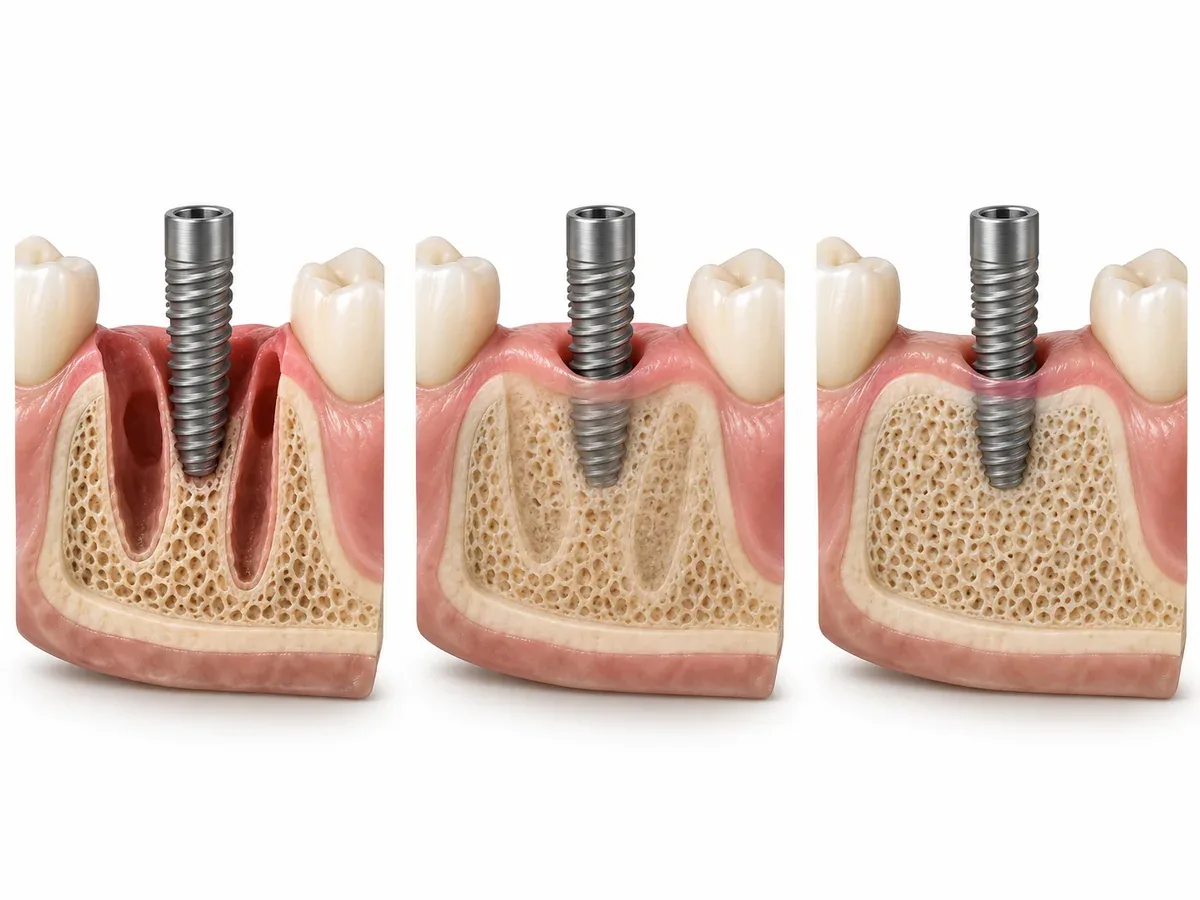
What must be right to place an implant the same day?
Three things. We recommend placing the implant at the tooth extraction visit when all three are met.
| Condition | What we check | If it is not met |
|---|---|---|
| Bone amount and thickness | Enough bone around the socket to hold the post | Add bone during placement, or build bone first |
| No acute infection | Whether infected tissue can be fully removed | Let the gum heal and place it one to two months later |
| Initial stability | Whether the post locks firmly into the bone | Wait rather than place a post that moves |
1. The amount and thickness of the jawbone
There must be bone left to hold the post, called the fixture. After a tooth extraction, the socket is as empty as the root that filled it. We check whether the bone around it can grip the implant firmly.
In the lower jaw, the inferior alveolar nerve canal runs through the bone. The key is to find exactly how much usable bone lies above it.
The upper jaw has an air space called the maxillary sinus, so the bone is often thin. We look especially carefully at the upper molar area.
Where bone is short, we add bone while placing the implant. The real judgment is whether adding some is enough, or bone must be built first.
2. No acute infection
We want to stress this part. When a tooth is removed from an infected site, infected tissue stays at the root tip.
If we clear just what is visible and place an implant, it will not last long. The remaining infection keeps going inside.
So at an infected site, we spend longer removing the infection than placing the implant. Once the site is truly clean, the implant can bond to bone in a stable way.
When the acute infection is severe, we avoid same-day placement where possible. Letting the gum heal first and placing the implant a month or two later gives better results.

3. A firm grip at the start
This is called initial stability. At the moment of placement, the implant must lock into the bone like gears meshing, with no movement.
From that stable state, the bone can grow onto it, which is called osseointegration. If it moves even slightly at first, the bone will not attach.
So the heart of this surgery is reading the socket's shape to find the angle and depth that give the firmest hold. Finding that point in weak bone is where skill makes a difference.
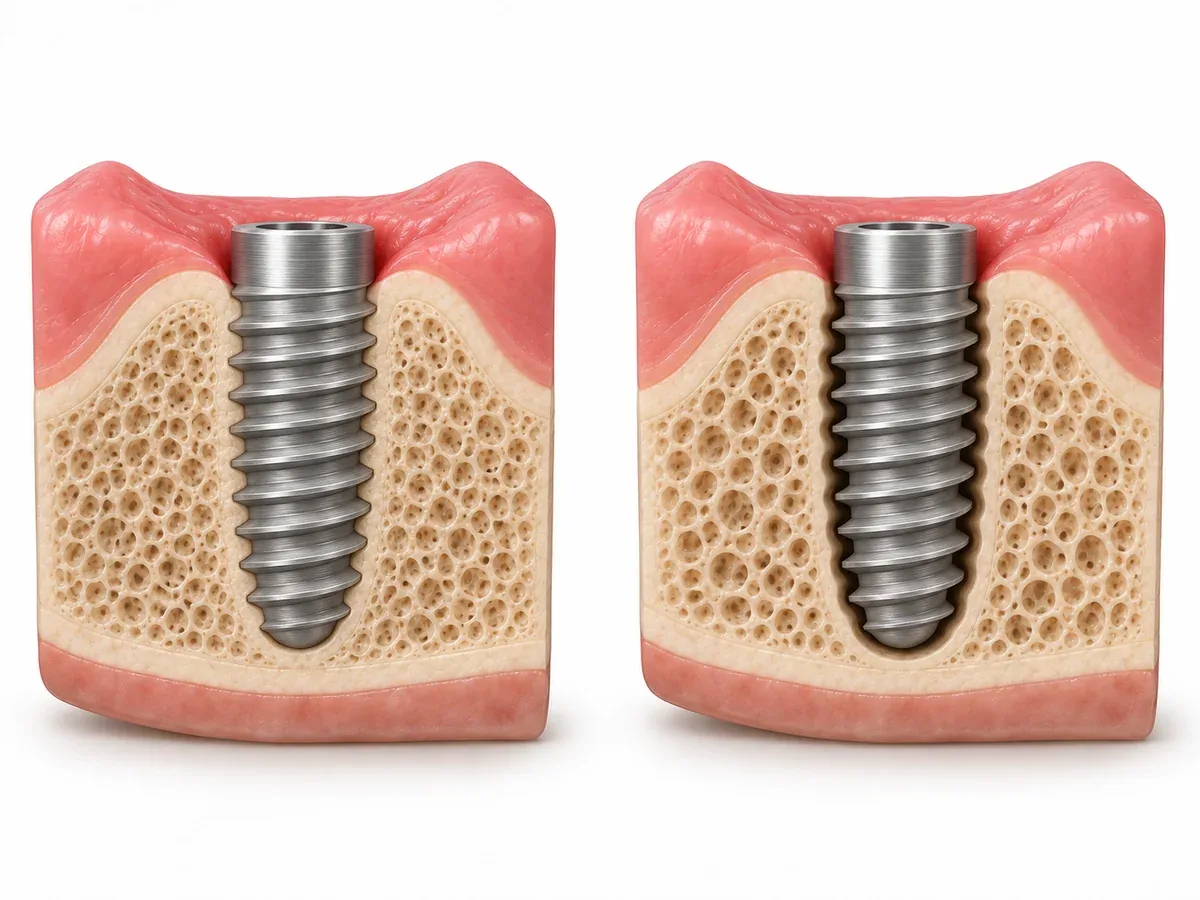
What are the benefits of placing it right away?
When the conditions fit, placing the implant on the day of tooth extraction is a very good option. Here is what it offers:
- One surgery instead of two
- One round of anesthesia
- A shorter period of discomfort than two separate surgeries
- A much shorter overall treatment time
- The implant goes in before a gap forms, which helps prevent bone loss
For patients who travel a long way, or who find it hard to take time off, this difference is especially large. This includes many patients visiting Korea for a limited time.
When the conditions are met, we recommend it with confidence.
The word that matters is "when." The next section explains why skipping that check is risky.
Why is "same day, no matter what" risky?
Some sites are full of gum infection and pus. The bone has melted and become crumbly, with holes in it. An implant can still be placed there.
But it is like driving a steel post into a house whose foundation has collapsed. It stands for now, perhaps for months or even years.
Yet that bone cannot handle the force of chewing every day. Infection builds inside, the bone holding the implant melts, and in the end the post slips out.
The patient loses more than the implant. They must go through the whole process again, with worse bone than the first time.
It is fair to assume no treatment is both quick and cheap without trade-offs. Same-day placement is not good in itself; what is good is knowing whether a site can take it.
To be clear, this is not about criticizing other dentists. It is simply to help you protect yourself.
| Choice | What happens | What it can lead to |
|---|---|---|
| Forcing same-day placement into poor bone | Infection continues inside; bone cannot bear chewing | The implant loosens and the process starts over |
| Placing at the time that fits the site | Bone and gum are ready | A stable base for the implant |
| Leaving the gap for a long time | Bone width shrinks; nearby teeth shift | Bone graft, larger surgery, longer recovery |
What happens if you leave the gap after a tooth extraction too long?
A long gap after a tooth extraction is a problem too. While you put it off out of fear or a busy schedule, the jawbone keeps shrinking.
After a tooth extraction, chewing force no longer reaches that spot. Like a muscle that wastes away when unused, the alveolar bone is slowly absorbed.
Width shrinks before height. The gum may look normal from outside while the bone inside has become as thin as a blade.
Then there is no room to place an implant, and a bone graft is needed. Surgery gets larger, treatment gets longer and recovery takes more time.
- The bone narrows first, then loses height.
- The teeth on either side tilt into the gap.
- The opposing tooth drifts down toward the empty space.
- The space for an implant becomes smaller.
Putting it off now can come back later as a bigger surgery. When a longer wait is needed, we plan for these changes too.
A bone graft can also be done at the time of tooth extraction. Right after removal, before the bone collapses, is a good time for it. Even when the implant is not placed that day, we sometimes graft first to hold the site.

How do we decide the timing at our clinic in Busan?
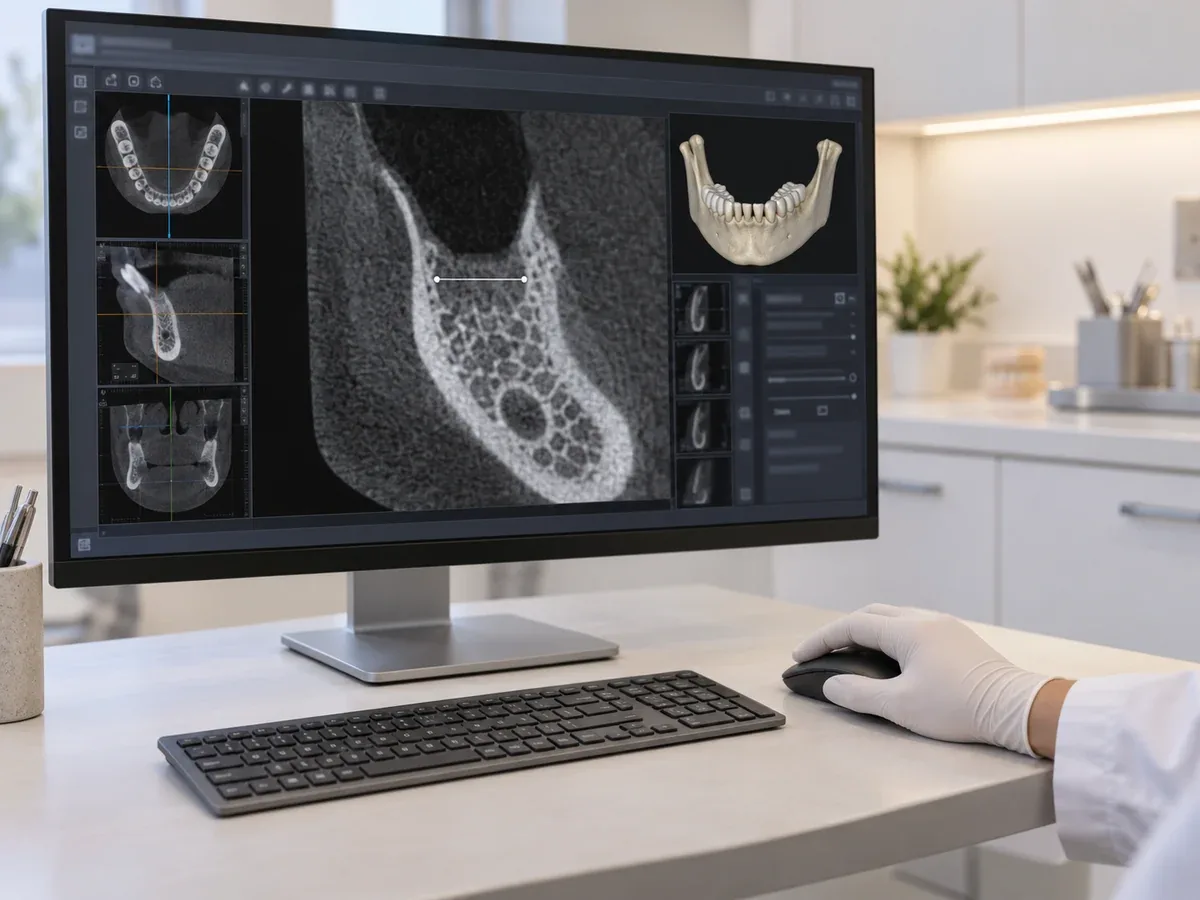
One X-ray is not enough to decide. We look in this order:
- A panoramic X-ray for the whole picture. We check the bone height, how far infection has spread and the state of the nearby teeth.
- A 3D CT scan for real measurements. We confirm the bone thickness in millimeters and where the nerve canal and sinus lie. We do not decide after opening up.
- Your chewing force and habits. For heavy grinders, we plan more cautiously, even with the same bone.
- Your life and schedule. Do you live far away, find visits hard, or have an important event coming? When both options are medically sound, this decides it.
We go through the same screen with you and point out each area and why. Starting once you understand the reason is how we work.
If you have not had the tooth removed yet, talk with us before the tooth extraction. You have far more options than when deciding afterwards.
If another clinic removed a tooth and told you to wait, it depends on the case. Waiting is often the right call, not an overly cautious one, and we can check your images again.
Ask these three questions at any consultation:
- "Why is my bone suitable for same-day placement?" Listen for reasons based on bone thickness and nerve position, not just a yes.
- "How will you deal with the infection?" If there is no clear answer, the site may be cleaned on the surface alone.
- "If same-day placement turns out not to work, how does the plan change?" Some things cannot be known until the site is opened, so a clinic should tell you the backup plan in advance.
Frequently asked questions
My tooth extraction was years ago. Can I still get an implant?
In most cases, yes. The bone will have shrunk over time, so a bone graft is more likely to be needed. A 3D CT scan will show how much.
What about a front tooth? I cannot go around with a gap.
A front tooth is visible, so leaving it empty is hard, and we plan a temporary tooth. Bone there is often thin, so we look at the gum shape too instead of forcing same-day placement.
If the implant goes in the same day, can I chew on it right away?
Usually not. Placing and chewing are different things. While the bone attaches, you should not put force on that spot, and we tell you when you can use it after checking.
Can I get implant treatment in English in Busan?
Yes. We offer 1:1 English interpretation from the first consultation through the end of treatment. The clinic is near Seomyeon Station Exit 2 (5-min walk), opposite Lotte Hotel Busan, and you can call 010-8555-2854 (+82-10-8555-2854 from abroad).
A fast finish is not the same as good treatment.
Placing the implant at the right time is what counts.
Put a post into a collapsed site first,
and a few years later the whole process may start over.
If you are facing a tooth extraction in Busan, Reset Dental Clinic measures your bone with a panoramic X-ray and 3D CT before deciding. We offer 1:1 English interpretation throughout, and you can call 010-8555-2854 to book a consultation.
References
- KDCA National Health Information Portal, "Dental Implants" — what an implant is, osseointegration, treatment time, care and complications
- KDA newspaper Dailydental (Chiui Sinbo), "65% of Implant Patients Have Experienced Peri-Implant Disease" (Korean Academy of Periodontology, 17th Gum Day) — how common peri-implant disease is, its risk factors and maintenance intervals
- KDCA National Health Information Portal, "Gum Disease (Periodontal Disease)" — how gum inflammation progresses to the jawbone
- KDCA National Health Information Portal, "Systemic Disease and Periodontal Treatment" — how smoking, diabetes and other whole-body factors affect the gums
- KDA newspaper Dailydental (Chiui Sinbo), "Implant Patients Aged 65 and Over Pass 800,000 Last Year" — the growing number of implant patients in Korea
Written by Reset Dental Clinic Support Team
Medical review Dr. Na In-chae, Head Dentist · Periodontics Specialist
Last updated: September 19, 2026
This column is for general information and does not replace diagnosis or treatment for individual patients. If you have symptoms, please see a dentist.


