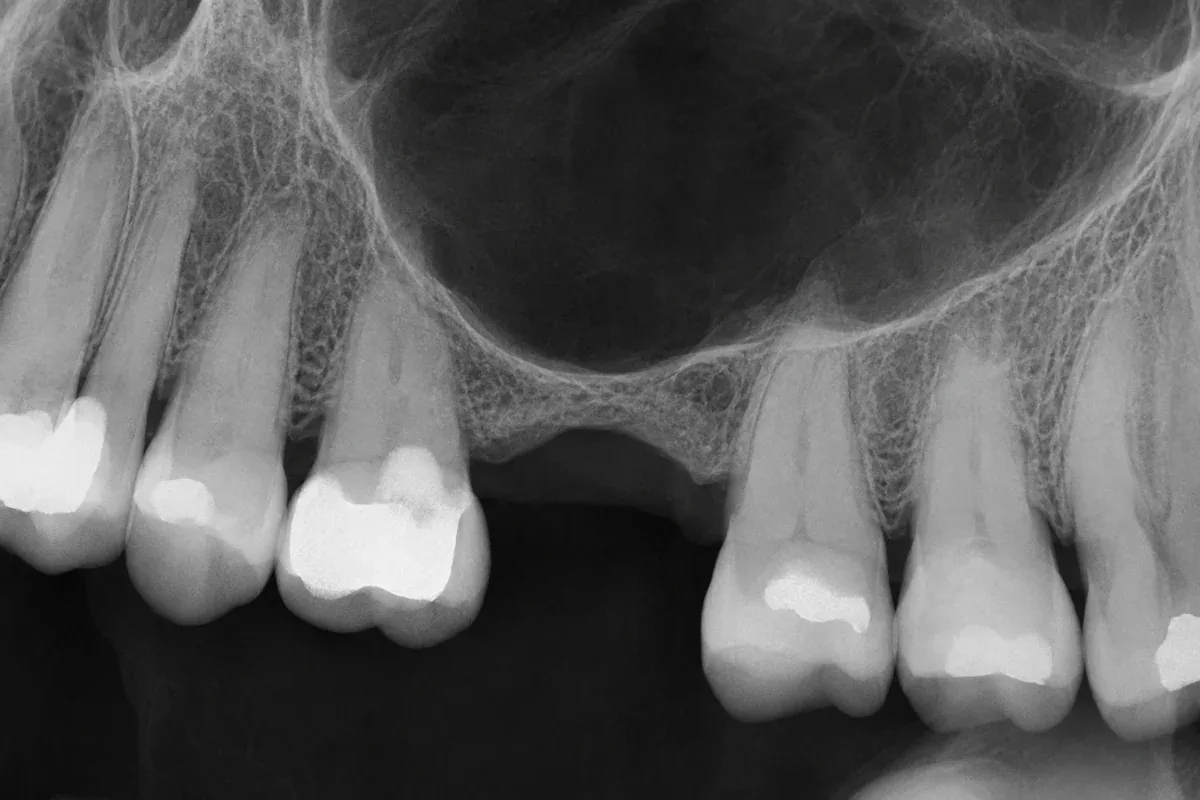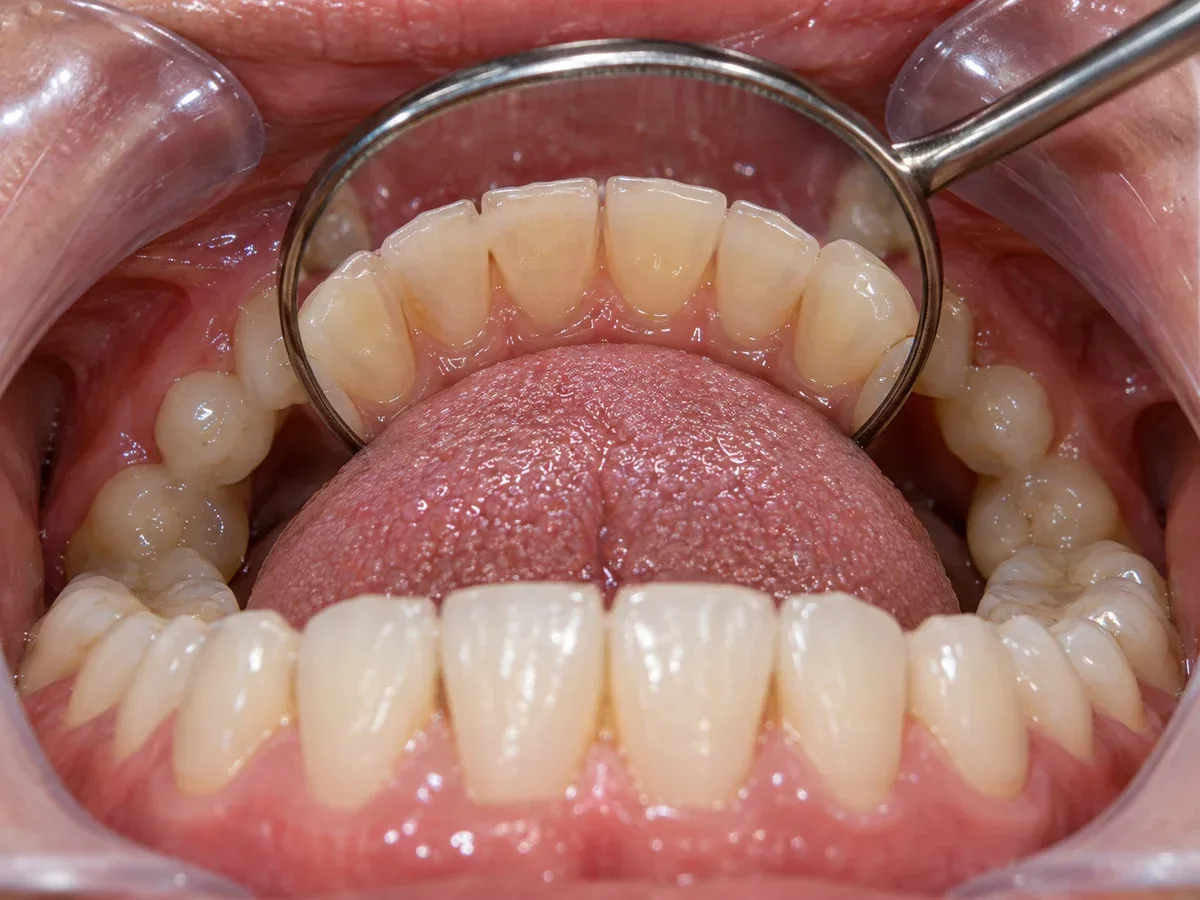
- Yes, Minish can be used on molars. In fact, removing less tooth matters even more on molars, because they take chewing forces every day.
- Molars wear in a set order: pointed, then flat, then hollow. Once they start to hollow out, the edges crumble.
- Crowning a worn molar means removing 60–70% of its outer surface, which often leads to root canal treatment.
- As molars lose height, the space between the upper and lower jaws shrinks, and the face can look older.
"I get it for front teeth, but can Minish work on molars too?" is a question we hear often at Reset Dental Clinic in Seomyeon, Busan. In fact, the place where removing less tooth matters most is often the molars. For patients living in or visiting Korea, we provide 1:1 English interpretation from the first consultation through the end of treatment.
In what order do molars wear down?
This column explains how molars wear, why crowning a worn molar can turn into a bigger problem, and what it means to restore lost height with Minish.
As you keep using your molars, the pointed chewing surfaces slowly become flat. Up to this point, it happens to everyone with age.
The trouble comes next. Once the surface is flat, the center starts to hollow out.
This happens because the hard outer enamel has worn away, exposing the softer dentin underneath.
Dentin is much weaker than enamel. So once it is exposed, wear suddenly speeds up.
If it took twenty years for the surface to become flat, hollowing out takes far less time.
| Stage | What you see | What is happening |
|---|---|---|
| 1. Pointed | Sharp cusps on the chewing surface | Enamel intact |
| 2. Flat | The cusps are worn level | Normal wear with age |
| 3. Hollow | A dip forms in the center | Enamel worn through; soft dentin exposed and wearing faster |
| 4. Crumbling edges | Small chips break off the rim | The enamel rim has lost its support |

Why do the edges crumble first?
When the center hollows out, a thin rim of enamel is all that remains around it.
Enamel is hard, but it cannot hold up to force by itself. It needs dentin underneath to support it.
Once that dentin has worn away, the remaining rim becomes an empty shell. So even light forces make it chip off, little by little.
People who say "my molar broke, but I wasn't even biting anything hard" are usually in this situation.
- The chewing surfaces of your molars look flat.
- There is a dip or hollow in the middle of a molar.
- Small pieces chip off the edges without biting anything hard.
- Your molars feel sensitive to cold.

What happens when a worn molar gets a crown?
A crown is certainly a sound treatment. But in this situation it carries one serious contradiction.
To place a crown, room has to be made for its thickness. Ironically, that means removing 60–70% of the healthy outer surface that is left.
The hard cap may protect the outside for now, but the tooth inside becomes thin.
With a worn molar, there is one more problem. If a tooth that has already lost height is cut down further, almost nothing is left.
So root canal treatment (endo) is often needed to build a post. And the more worn the teeth, the higher the chance of finding a crack in the root once root canal treatment begins.
A root that has taken heavy forces for many years may already be cracked. Once a crack is confirmed, the tooth becomes hard to save.
Work that began as a crown can end in an extraction. That is why we treat a crown as the last resort, for when no other method will work.
Minish takes a different route on the same worn molar. The table below sets the two approaches side by side.
| Point | Crown | Minish |
|---|---|---|
| Approach | Cuts the tooth to make room for a cap | Covers the worn area to rebuild it |
| Tooth removed | 60–70% of the outer surface | Aims to keep reduction to a minimum |
| On a tooth that has lost height | Little is left; root canal treatment often follows | The lost height itself is restored |
| Our view | A last resort | Considered first where the tooth allows |

Can Minish be used on worn molars?
Yes. And in principle, Minish suits molars even better.
What a worn molar has lost is the height of its chewing surface. So what it needs is not more cutting, but building back up what has worn away.
Minish does not fill space that was cut away. It covers the worn area and restores it, which fits this situation well.
With Minish, the molar is covered rather than cut down. What remains of the natural tooth stays in place underneath.
The material is chosen to be close to enamel in color and strength. So once restored, the tooth comes close to regaining its original chewing surface.
Molars differ from front teeth in one way, though: they take much greater chewing forces. So for molars, we look at how the upper and lower teeth meet before we look at shape.
Teeth are not decorations. Beauty without function behind it is a sandcastle.
Planning molar Minish around your chewing forces
People with a strong bite often worry that Minish will break. For molars, that is the first thing we calculate.
We adjust the material, its thickness, and the points where the upper and lower teeth touch. This keeps the force from landing on one spot.
The number of teeth is decided by looking at how worn they are and how the upper and lower teeth meet. Sometimes one or two teeth are enough; sometimes several must be done together to restore height.
Our rule is not to treat more teeth than needed.
Why does the height of your molars matter so much?
This is the part many people miss.
When molars wear down, the space between the upper and lower jaws shrinks too. Dentists call this the vertical dimension.
Put simply, when the pillars of a house get shorter, the roof sinks. Restoring molar height means bringing back that lost space, not just the look of one tooth.
Then a chain of changes follows:
- The lips roll inward.
- The lines from nose to mouth deepen.
- The chin moves forward and looks wrinkled.
- Chewing forces pile onto the few teeth that are left.
- The jaw joint (TMJ) comes under strain.
However well you care for your skin, worn, chipped or stained teeth in your smile can make you look older. Caring for your teeth is anti-aging, just as much as caring for your skin.

What if you grind your teeth?
Many people with badly worn molars grind or clench their teeth.
They are often people who push through stress all day at work and at home. Then, the moment they fall asleep, a battle begins in their mouth without their knowing.
So when we restore molars, we build grinding into the plan. If the cause is left alone, the restored teeth wear down in the same way. A night guard worn during sleep does that job.
One point is worth making clearly. Injections into the jaw muscles may ease jaw pain, but teeth that have already worn away do not grow back.
Reducing the cause and restoring what was lost are two different things. Both are needed.
Chewing on one side matters too. That side wears faster, and the bite on the other side drifts out of line. So we look at both sides together when restoring.

Which worn molars can be restored in Busan, and which cannot?
Not every molar is a good candidate for Minish. We will be honest about that.
| Current state | How we see it |
|---|---|
| Chewing surface has become flat | A good time to cover it and restore height |
| Center has hollowed out | Possible, but it is wise not to wait |
| Edges have chipped a little | The chipped part can be restored on its own |
| Deep decay inside | The decay is treated first, then we decide |
| Root canal already done | Depends on how much tooth is left |
| Crack in the root | Covering the tooth will not solve it |
The further down the table you go, the fewer options remain. That order is also the order in which time passes.
Coming in when the surface is flat and coming in after it has broken leave you with different choices. The earlier you come in, the more natural tooth there is to work with.
Before planning molar Minish, we check a few things first:
- how your upper and lower teeth meet
- grinding or clenching habits
- decay deep inside the tooth
- the health of your gums, and your general health if you are older
Age itself is not a barrier. In fact, molar wear is often further along as people get older.
Sensitivity is not a barrier either. Exposed dentin feels sensitive, and covering it often reduces that sensitivity. We first check whether the cause lies in decay or the gums.
Three questions to ask at your consultation
- "Can my molar be restored without cutting it down?" Ask this if a crown comes up first, and if the answer is no, ask why.
- "Do I really need root canal treatment?" If so, check whether it is for decay or to make room for a crown. These are different things.
- "Has my bite height become lower?" This shows whether the clinic looks at one molar or at the whole upper and lower arch.
This is not about finding fault with other dentists. It is simply to give you a basis for your own decision.
Frequently asked questions
No one sees my molars. Do I really need to treat them?
Many people put it off for that reason. But molars are there for chewing, not for show, and their height affects your front teeth and your face. Changes in places you cannot see end up showing where you can.
How long does Minish on molars take?
It usually takes two visits over two to three weeks. If the gums are unhealthy or there is decay, we take care of that first. Laying marble over a weak foundation does not make a strong house.
Will it break if I grind my teeth?
Grinding is built into the plan from the start. We adjust the material, thickness and contact points, and plan a night guard to wear while you sleep.
Can I get Minish in English in Busan?
Yes. We offer 1:1 English interpretation from the first consultation through the end of treatment. The clinic is near Seomyeon Station Exit 2 (5-min walk), opposite Lotte Hotel Busan, and you can call 010-8555-2854 (+82-10-8555-2854 from abroad).
Molars are where removing less tooth matters most.
Cutting a shortened tooth down for a crown leaves little behind.
That often leads to root canal treatment,
and the more worn the tooth, the more likely a root crack is found.
What has been lost is height.
It should be restored, not cut away.
We will first see whether your molars can be restored without cutting.
If you are considering Minish for worn molars in Busan, Reset Dental Clinic offers 1:1 English interpretation from your first consultation through the end of treatment. Call 010-8555-2854 to book a consultation.
References
- KDCA National Health Information Portal, "Dentin Hypersensitivity" — wear at the neck of the tooth, dentin exposure, and how excessive chewing force and abnormal habits contribute
- KDCA National Health Information Portal, "All-Ceramic Crowns" — the tooth reduction a crown requires, and the pros and cons of porcelain restorations
- KDA newspaper Dailydental (Chiui Sinbo), "If Your Teeth Are Sensitive, Suspect Tooth Wear" — how tooth wear progresses and how it relates to sensitivity
- KDA newspaper Dailydental (Chiui Sinbo), "Using Botox for Bruxism and TMJ Treatment" — why grinding needs to be managed, and the scope of treatment
- KDCA National Health Information Portal, "Gum Disease (Periodontal Disease)" — why gum health should be checked before restorative treatment
Written by Reset Dental Clinic Support Team
Medical review Dr. Kim Hyun-joo, Head Dentist · Esthetic Restorations
Last updated: September 19, 2026
This column is for general information and does not replace diagnosis or treatment for individual patients. If you have symptoms, please see a dentist.