

- Placing an implant and fitting a tooth on it are different steps. Placing it the day the tooth comes out is usually possible, but fitting a tooth that day has its own conditions.
- At our clinic in Busan, what makes a same-day implant possible is not fast hands but 3D diagnosis and an in-house dental lab.
- The deciding factor is how firmly the implant grips the bone at the start. If it is loose, we do not fit a tooth that day.
- The honest rule is not "one day, no matter what" but "one day when the site allows it."
"If my front tooth comes out, how do I get through the months without it?" Many patients at Reset Dental Clinic in Seomyeon, Busan, worry about this more than surgery. For patients living in or visiting Korea, we provide 1:1 English interpretation from your first consultation through the end of treatment.
This column explains what a same-day implant, or "one-day implant," actually means. It also explains why it does not apply to everyone.
What does a same-day implant actually mean?
It is what the name says. The tooth is removed, an implant is placed, and a tooth is fitted on top, all in one day.
You come in the morning for removal and placement. In the afternoon, a temporary tooth is fitted and you go home.
A standard implant is a series of waits. You wait for the gum to heal after removal, then for the implant to bond to bone. After that, an impression is taken and the tooth is made.
Even at its fastest, this takes around six months. It is like a building project where you level the ground and wait for concrete to set.
| Step | Standard implant | Same-day implant |
|---|---|---|
| Tooth removal | First visit, then wait for the gum to heal | Morning of the same day |
| Implant placement | A later visit, then wait for it to bond | Same day, right after removal |
| Temporary tooth | Not fitted on the implant while it bonds | Afternoon of the same day, if conditions allow |
| Final tooth | After bonding, around six months at the earliest | Later, once bone and gum have settled |
A same-day implant packs those steps into a single day. But that is possible under certain conditions, and those conditions are what most of this column is about.

Why do it all in one day?
There are two reasons. One is daily life, and the other is bone.
1. Half a year without a front tooth is hard
We hear less about fear of surgery than about the long stretch of living without a tooth. Patients tell us about problems like these:
- Without a front tooth, it is hard to take off a mask.
- For people who meet others for work, even talking becomes a burden.
- Not being able to bite into a favorite food is a real frustration.
A same-day implant is one way to avoid those months without a tooth.
The difference is also large for patients who live far away or abroad and cannot visit often. For them, a same-day implant can mean fewer trips.
2. Right after removal is a good time for the bone
This is the medical reason. When a tooth is removed and the site is left empty, the jawbone loses its job and is slowly absorbed. It is like a muscle that wastes away when unused.
Right after removal, the site's healing power is at its peak. Placing a post at that moment helps keep the shape of the jawbone and prevents the gum line from collapsing.
For a visible spot such as a front tooth, this can make a big difference to the result. So the same-day implant began as a way to get a more natural result, not just a faster finish.
Is placing the implant the same as getting the tooth?
No, and this is the most common misunderstanding. So we explain it on its own.
Placing an implant on the day and fitting a tooth on the day are very different things. Ads often blur the two together as "done in one day."
| Step | Possible the same day? | What decides it |
|---|---|---|
| Removal and infection cleaning | Almost always | — |
| Implant placement | Usually | The amount and position of the remaining bone |
| Temporary tooth | When conditions are met | How firmly the implant grips at the start |
| Final crown | Usually later | How well it has bonded and how the gum has settled |
In our experience, placement itself can be done on the same day in most cases. The rare exception is when the bone has melted so far that the nerve canal is exposed, and then we wait for healing.
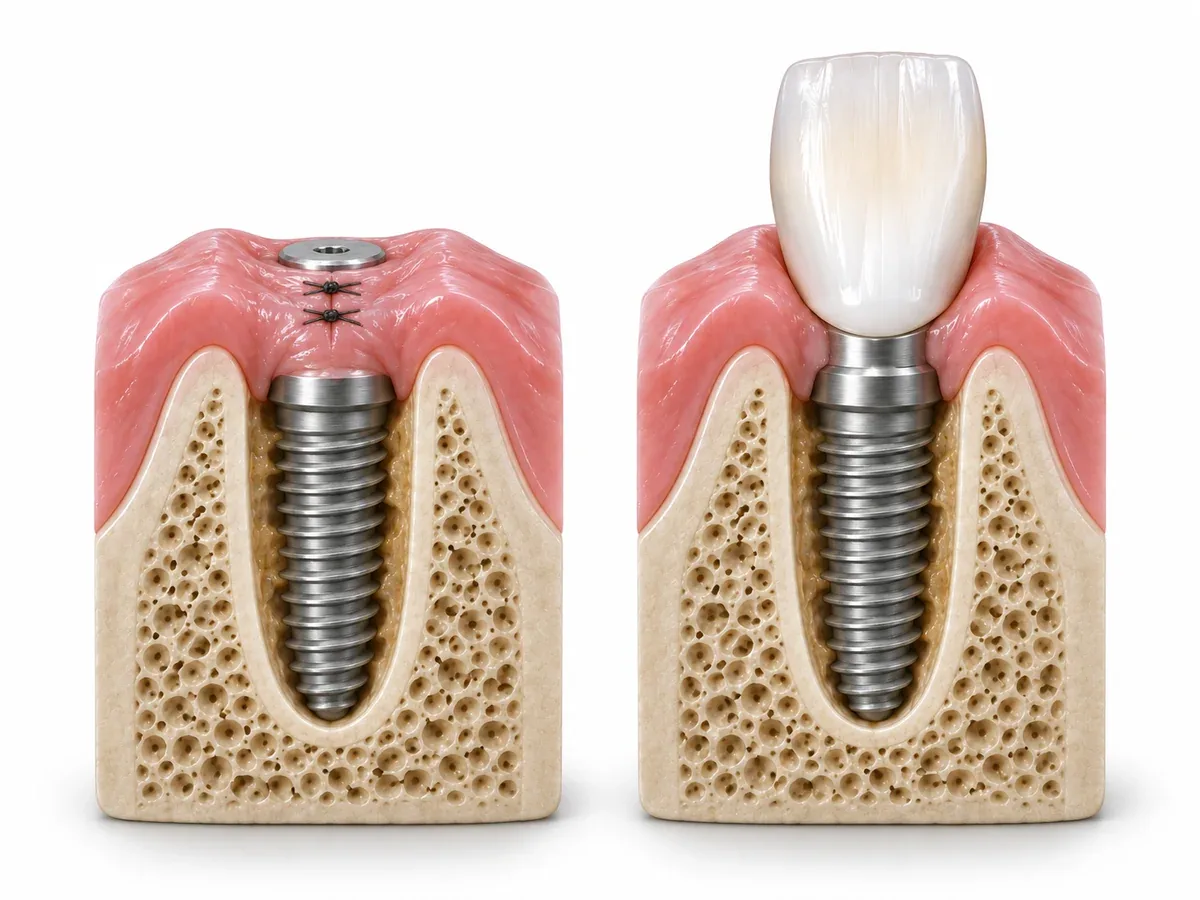
But whether a tooth can go on that day is a separate question. It means putting load on an implant that has not yet bonded to the bone.
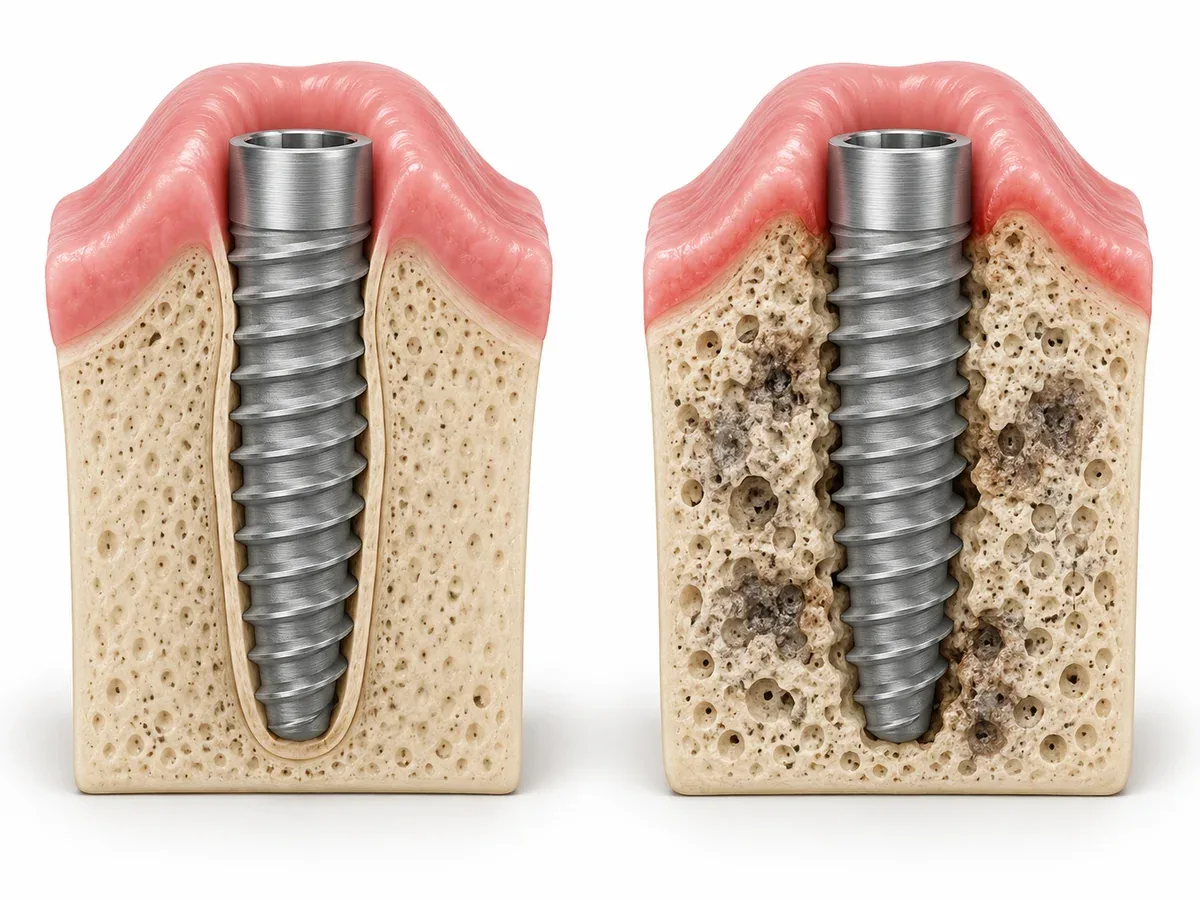
If the implant does not grip firmly at the start, even tiny movements stop the bone from attaching.
What has changed since dentists avoided it?
To be honest, 20 years ago we did not attempt it either.
Back then, there was little evidence, and the technology was not what it is now. Dentists looked at one X-ray, opened the gum and judged the bone by eye.
Sometimes an implant was forced in on the same day into weak bone, and it failed. The belief that "waiting a long time is safer for implants" came from that period, and by the standards of the time it was right.
Two things have changed since then, and they are why we can now suggest a same-day implant.
1. We find the site with data, not by eye
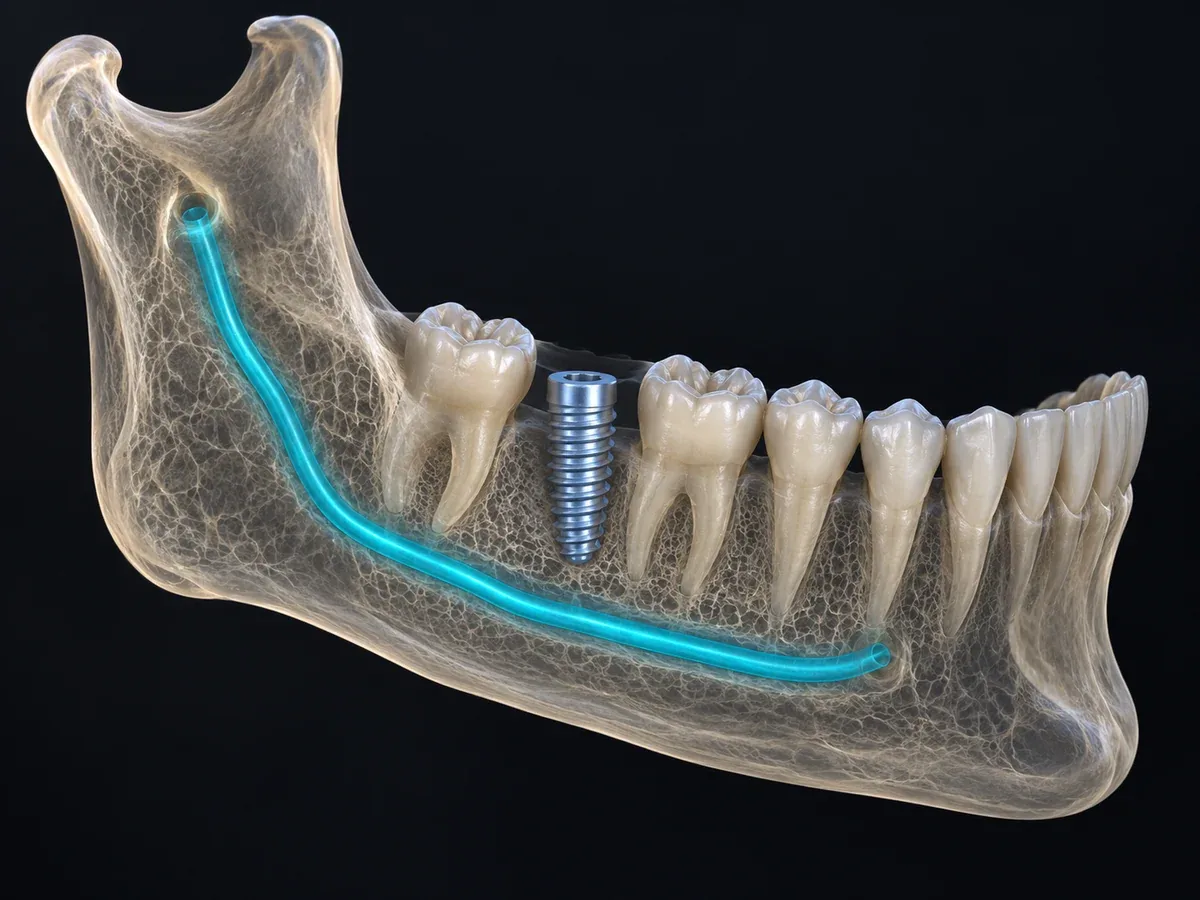
We analyze 3D CT data to find the firmest point in the bone and a safe path that avoids the nerve canal. The site is set before opening, not judged after.
Think of the difference between driving with a navigation system and driving without knowing the way. On the same road, knowing it in advance is much safer.
2. There is a dental lab inside the clinic
This part is actually more decisive. Usually, an impression is sent to an outside dental lab, and it takes several days to come back.
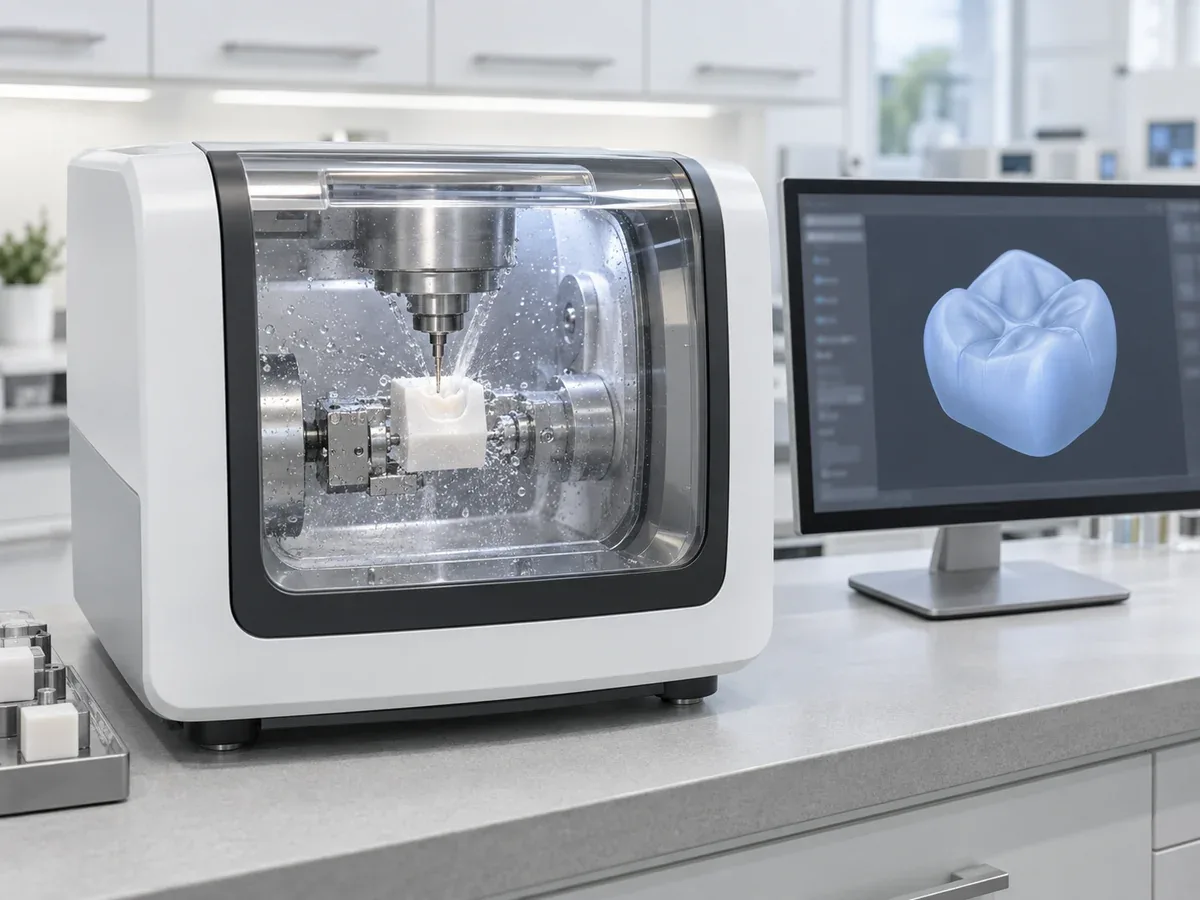
In that case, however well the surgery goes, a tooth cannot be fitted that day. We handle everything in-house and digitally, from impression to fabrication, and our lab manager works on site.
- After surgery, the site is scanned digitally.
- The data goes straight to the lab next door.
- The temporary tooth is designed and milled right there.
- While you rest after surgery, a temporary tooth that fits your mouth is completed.
This setup, with no outside step, is the core of a same-day implant. It does not happen because someone works fast.
Who can have a same-day implant in Busan?
The most common worry is this one. "If the implant has not bonded yet, won't a tooth on top make it wobble or fall out?"
That is a fair point. It is exactly why a same-day implant is not for everyone.
| Condition | Placement | Same-day temporary tooth |
|---|---|---|
| Enough bone and no infection | Possible | Usually possible |
| Gum bone lost, but the deeper bone is firm | Possible | Decided by how firmly it grips |
| Bone as thin as paper | Possible with a graft | Difficult |
| Bone made crumbly by infection | Possible with a graft | Difficult |
| No bone over the nerve canal, nerve exposed | We wait | — |
Even if you fall into the lower rows, you will not be left without a tooth. We make a separate temporary appliance for you to use while the implant bonds, so you can eat and meet people.
It is common for the gum bone to be lost so much that a tooth wobbles, while the bone below is still firm. This is a matter for measurement, not for giving up at first glance.
For a same-day implant, molars are assessed more carefully than front teeth. A molar carries much more chewing force, so we do not rush unless the grip is clearly firm.
With several implants, the site and bone matter more than the number. Linking them so they support each other can help, but the plan must be precise.
Can you chew on it, and does it hurt more?
You cannot chew on it yet. We want to be clear about this.
The tooth fitted that day is for appearance and for shaping the gum. It is not meant to take chewing force.
- Do not put force on that spot while the implant bonds to the bone.
- Eat normally on the other side.
- We tell you when you can chew there after checking how well it has bonded.
- The temporary tooth is used for a few months while the gum settles.
Does doing it all in one day hurt more? Often it hurts less. Because the site is set in advance, the gum is not opened, or opened as little as possible.
Less opening usually means less swelling and discomfort. Two separate surgeries mean two recoveries, while one surgery means one.
If a bone graft or sinus work is part of the surgery, recovery takes a few more days. That depends on the size of the surgery, not on doing it in one day.
On the day, plan to come in the morning and stay into the afternoon. This includes resting while the tooth is made, and we give you the exact time when we plan it.
Ask these three questions at any consultation:
- "Is it placement on the day, or a tooth on the day too?" See whether the two are answered separately.
- "Is the dental lab inside the clinic?" If work goes to an outside lab, a tooth cannot be ready that day.
- "What shows that my bone can take a tooth the same day?" Listen for reasons based on grip and bone thickness, not just a yes.
Frequently asked questions
How long is the same-day temporary tooth used?
It is used while the implant bonds, usually a few months. During that time the gum settles, and the final crown is made to match its shape.
Does a same-day implant cause more problems later?
Not when the conditions are respected. Problems come from placing a tooth on a site that should not take one that day. That is why we check first whether it is possible.
Another clinic said same-day was not possible for me. Can you check again?
Yes, but that judgment is often correct. We can look at the images together and explain why. Being told to wait is often an accurate call, not an overly cautious one.
Can I get a same-day implant consultation in English in Busan?
Yes. We offer 1:1 English interpretation from the first consultation through the end of treatment. The clinic is near Seomyeon Station Exit 2 (5-min walk), opposite Lotte Hotel Busan, and you can call 010-8555-2854 (+82-10-8555-2854 from abroad).
"Done in one day" is not a promise.
It is done in one day when the site allows it.
Placing the implant is usually possible that day.
Whether a tooth goes on top is a separate decision.
Skipping that decision can mean doing it all again years later.
If you are considering a same-day implant in Busan, Reset Dental Clinic checks your bone and nerve with 3D data first. We offer 1:1 English interpretation throughout, and you can call 010-8555-2854 to book a consultation.
References
- KDCA National Health Information Portal, "Dental Implants" — how implants bond to bone, treatment time, care and complications
- KDA newspaper Dailydental (Chiui Sinbo), "65% of Implant Patients Have Experienced Peri-Implant Disease" (Korean Academy of Periodontology, 17th Gum Day) — risk factors that shape how implants do over time, and maintenance
- KDCA National Health Information Portal, "Gum Disease (Periodontal Disease)" — gum inflammation and jawbone loss that can lead to tooth removal
- KDCA National Health Information Portal, "Systemic Disease and Periodontal Treatment" — how smoking, diabetes and other whole-body factors affect healing after surgery
- KDA newspaper Dailydental (Chiui Sinbo), "Implant Patients Aged 65 and Over Pass 800,000 Last Year" — the growing number of implant patients in Korea
Written by Reset Dental Clinic Support Team
Medical review Dr. Na In-chae, Head Dentist · Periodontics Specialist
Last updated: September 19, 2026
This column is for general information and does not replace diagnosis or treatment for individual patients. If you have symptoms, please see a dentist.


