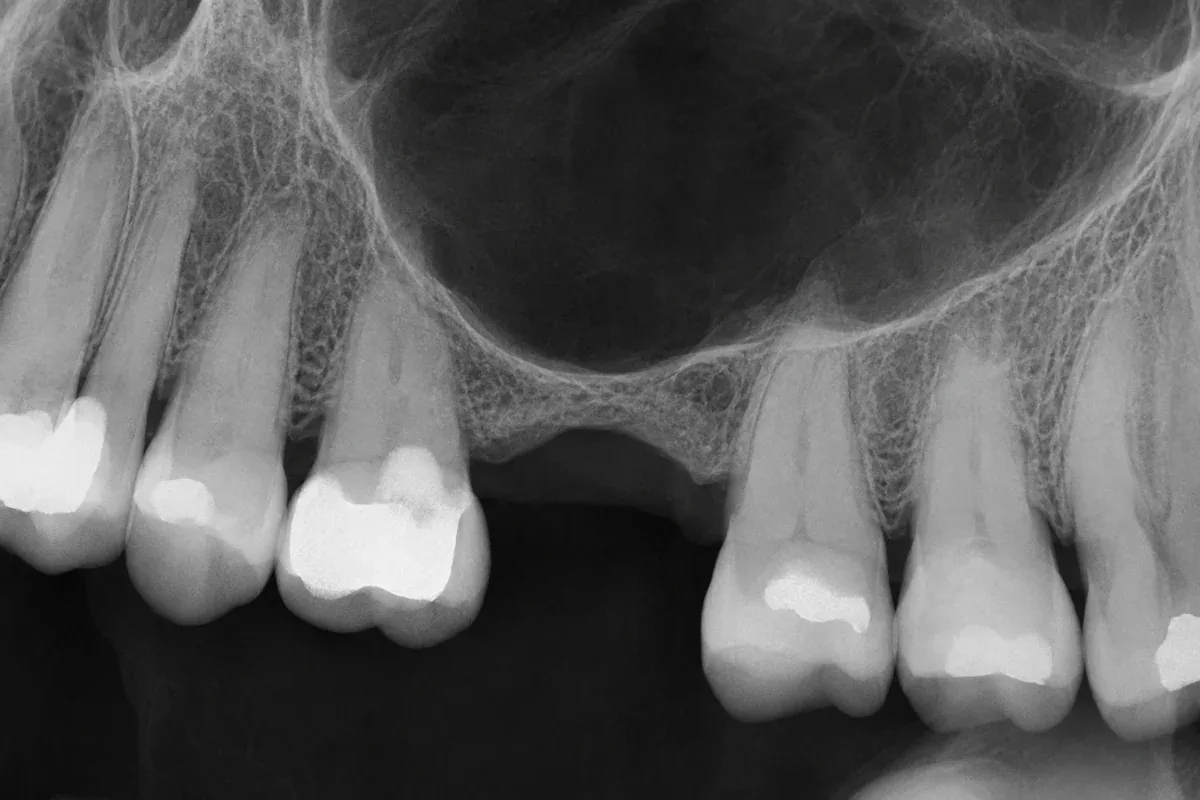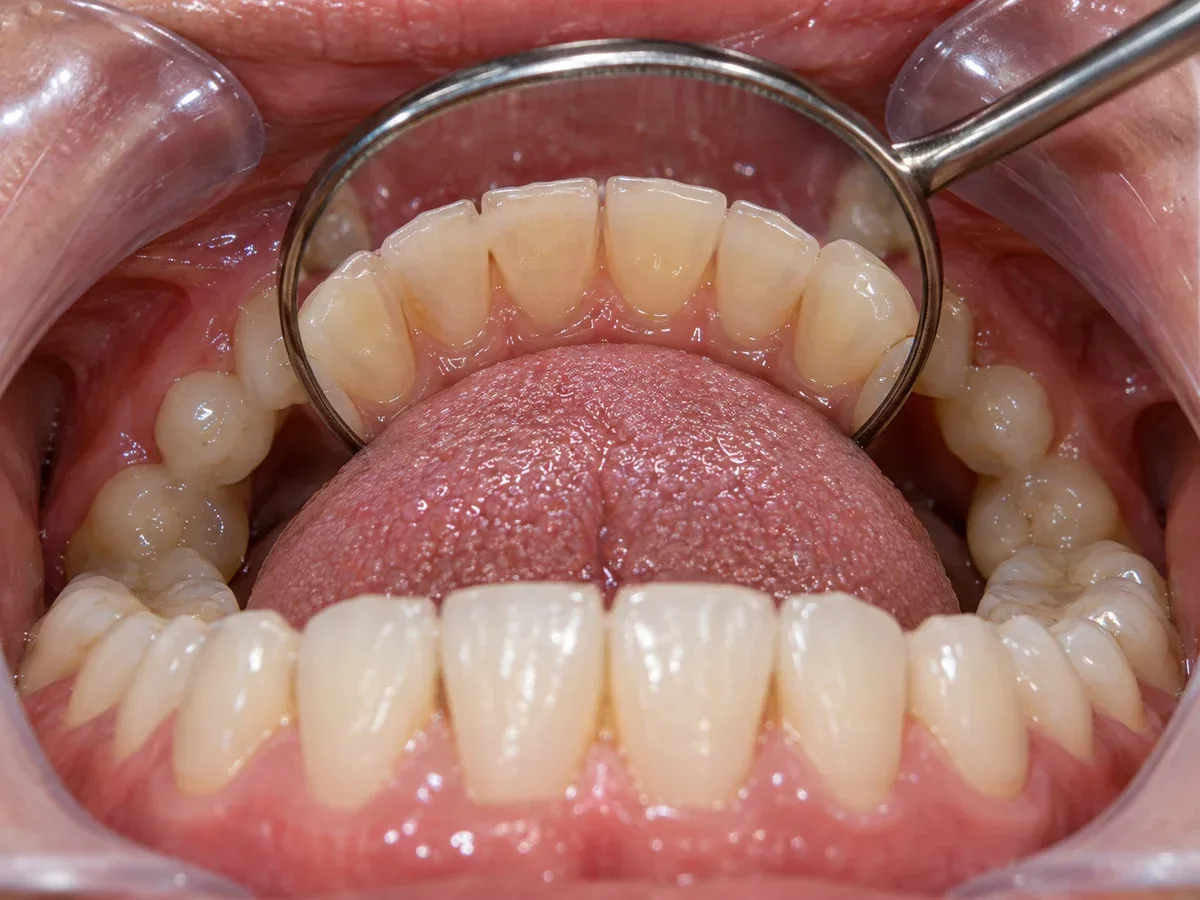
- Minish is not a treatment that starts with a set number of years. How long it lasts depends on what was kept and how.
- Its lifespan is decided not by the material, but by four things: the margin, the bite, habits and the gums.
- A 0.1 mm step at the margin is enough to become an ideal playground for bacteria.
- If your tongue catches on a ledge when you run it along the edge, that is already a warning sign.
"How many years will Minish last?" is the question we hear most in consultations at Reset Dental Clinic in Seomyeon, Busan. We do not answer it with a number, because a number is not the real answer. For patients living in or visiting Korea, we provide 1:1 English interpretation from the first consultation through the end of treatment.
Why don't we promise Minish will last a set number of years?
This column explains the four things that decide how long Minish lasts, and how you can check them yourself.
The same material, made by the same person in the same way, lasts a long time for some people and not for others.
The reason is simple. Anything bonded to a tooth takes force in the mouth every day.
Think of shoes. Two people can buy the same pair, yet each wears them out at a different pace. Teeth are used three times a day, for decades.
So be careful with advertised numbers of years. Those numbers come from a material company's laboratory, not from your mouth.
What we tell you instead is what makes Minish last, and whether those conditions are in place for you now.
Thinking ahead to the next replacement
How long Minish lasts also depends on what was kept at the start. Your options at replacement time depend on how much natural tooth is left.
If a lot of tooth is removed now, those next options disappear. Removing less at the start is how we plan for ten years from now.
| Factor | Why it matters | How to check now |
|---|---|---|
| Margin | A 0.1 mm gap becomes a playground for bacteria | Run your tongue along it and feel for a ledge |
| Bite | Force lands on it thousands of times a day | Move your jaw side to side and feel for catching |
| Habits | People who grind rarely know it | Notice whether your jaw feels stiff in the morning |
| Gums | If they recede, the margin is exposed | Notice whether you bleed when brushing |
You can check all four at home in a few minutes. None of this replaces an examination, but it tells you when to come in.
- Tongue test: run the tip of your tongue along the edge where your teeth meet the gums. A ledge or catch is a sign to have it checked.
- Jaw test: slide your jaw slowly to the left and right. If the front teeth catch or bump, the bite may need adjusting.
- Morning test: notice whether your jaw feels stiff when you wake up. That can point to grinding at night.
- Brushing test: notice whether your gums bleed when you brush. Bleeding means the gums need attention.
Why is the margin the first thing that decides how long Minish lasts?
Let us start with the most important factor: the margin, where your tooth meets the restoration.
Esthetic treatment is a game of 0.1 mm. Removing 0.1 mm more or less, or fitting the margin within 0.1 mm or not, changes the result a great deal.
Why? Because a tiny 0.1 mm gap is an ideal playground for bacteria. It is too narrow for toothbrush bristles, yet wide enough for bacteria.
When plaque builds up in that gap, problems follow in order:
- The gums turn red.
- Bad breath develops.
- The margin starts to show as a dark line.
- In the end, decay forms underneath.
The outside looks fine while the tooth decays underneath.
| Point | Continuous margin | Margin with a step |
|---|---|---|
| To the tongue | Smooth, like one surface | Catches on a small ledge |
| Cleaning | The brush can reach it | The gap is too narrow for bristles |
| What follows | Easier to keep clean over time | Plaque, red gums, bad breath, a dark line, then decay |
That is why we believe the two should become one. When you touch it with your tongue, you should not be able to tell where your tooth ends and the restoration begins.

Check it yourself right now
If you have already had treatment, you can try this today.
- Stand in front of a mirror.
- Gently run the tip of your tongue along the line where your front teeth meet the gums.
- Notice whether the surface feels smooth and continuous.
If your tongue catches on something like a small ledge, that spot is already hard to keep clean. It is worth having it checked.
How does your bite affect Minish?
The second factor is the bite, or how your upper and lower teeth meet.
Teeth are not decorations. They are structures that take force every day. Beauty without function behind it is a sandcastle.
Front teeth in particular act like a steering wheel. They guide the jaw as it moves side to side and forward and back.
If front teeth are made too long or too thick, they act as a brake every time the jaw moves. That brake is applied thousands of times a day.
Then it is just a matter of time before the restoration chips or comes off. The cause is not weak material, but the wrong design.
That is why we design Minish around how your jaw moves, not just how your teeth look.

Which habits shorten the life of Minish?
The third factor is in the patient's hands. We will be honest about it.
The biggest one is grinding and clenching. People who push through stress all day often start a battle in their mouths the moment they fall asleep, without knowing it.
Grinding is hard to notice in yourself. A stiff jaw in the morning can be one clue, which is why we ask about it before planning Minish.
For patients who grind, we plan a night guard as part of treatment. Without it, even well-made Minish will not last long.
Other habits to watch out for:
- chewing ice
- opening bottle caps or cutting thread with your front teeth
- biting your nails
- chewing on one side
- cracking hard nuts with your front teeth
These habits are not good for natural teeth either. They are not bad because of the restoration; they were bad habits to begin with.

Daily care at home
There is no special brushing method for Minish. What matters is not missing the margin.
- Use floss and interdental brushes together.
- Angle the bristles so they reach the gumline.
- Care for it just as you would for a natural tooth.
Why do healthy gums matter for Minish?
The last factor is the gums, and it is the one most often ignored.
When gums recede, the margin is exposed. However well a margin was fitted, receding gums expose the root surface below it.
That area has a different color, and decay forms there easily.
So we check the gums before any esthetic treatment. Laying marble over a weak foundation does not make a strong house.
It would be like a house that looks like a palace outside, yet leaks from the ceiling every time it rains.
Gums can also change long after treatment ends. That is why we look at them again at every check-up, not just before treatment.
Bleeding when you brush is one of the easiest signs to notice. If it happens around teeth treated with Minish, it is worth mentioning at your next visit.

What do regular check-ups in Busan do for your Minish?
A check-up is not just about confirming nothing is wrong. It is about catching problems before they start.
Small changes are easy to fix when they are caught early. Left for a year or two, the same changes can mean remaking the restoration.
At each check-up, we look at the same four factors:
- the margin, for staining or a new step
- the bite, for any catching as the jaw moves
- signs of grinding, and whether the night guard is being worn
- the gums, for redness, bleeding or recession
| Early change | If caught early | If left for 1–2 years |
|---|---|---|
| Slight staining at the margin | Cleaned off | May need to be remade |
| Bite starting to drift | Adjusted slightly | May need to be remade |
| Gums turning a little red | Cleaned and settled | May need to be remade |
That is why we say the day treatment ends is not the end, but the beginning.

If it chips, stains or comes off
Problems do not always mean starting over. What matters is finding out why they happened.
| Situation | What we usually do | What we check |
|---|---|---|
| It chipped | Often remake the broken part | Bite, grinding or habits |
| It came off | Rebond it if it came off cleanly and undamaged | The bonding surface and the bite |
| The margin is stained | Clean it up at a check-up | Whether the margin is smooth |
If Minish comes off, that in itself is a signal. It means there was a problem with the bonding surface or the bite, so we find the cause before rebonding.
Whatever the problem, the same rule applies. Repairing it without fixing the cause means the same thing is likely to happen again.
That is why a chip or a restoration coming off is treated as information, not just damage. It tells us which of the four factors needs attention.
Frequently asked questions
What happens if Minish chips?
In many cases, just the broken part can be remade. But we look for why it broke first, whether it was the bite, grinding or a habit. If the cause is left alone, the same spot breaks again.
Will coffee or wine stain it?
The material itself tends to resist staining better than natural teeth. The margin is different, though. If it is not smooth, color builds up there, and we check and clean it at check-ups.
Will you check Minish done at another clinic?
Yes. The aim is not to tell you it must be redone, but to explain its current state and what you should look after. This is not about finding fault with other dentists.
Can I get Minish in English in Busan?
Yes. We offer 1:1 English interpretation from the first consultation through the end of treatment. The clinic is near Seomyeon Station Exit 2 (5-min walk), opposite Lotte Hotel Busan, and you can call 010-8555-2854 (+82-10-8555-2854 from abroad).
How long it lasts is set by conditions, not by the material.
Is the margin continuous?
Does the jaw move without catching?
Are you grinding at night, and are your gums holding up?
We will look at these four things together, starting with how your teeth are now.
If you have Minish or are considering it in Busan, Reset Dental Clinic offers 1:1 English interpretation from your first consultation through the end of treatment. Call 010-8555-2854 to book a check-up.
References
- KDCA National Health Information Portal, "Laminate Treatment" — when esthetic restorations are used and what to watch for in maintaining them
- KDCA National Health Information Portal, "All-Ceramic Crowns" — the properties of porcelain restorations, and fractures and debonding
- KDCA National Health Information Portal, "Gum Disease (Periodontal Disease)" — how gum health affects how well restorations hold up
- KDA newspaper Dailydental (Chiui Sinbo), "If Your Teeth Are Sensitive, Suspect Tooth Wear" — how wear and sensitivity progress
- KDA newspaper Dailydental (Chiui Sinbo), "Color-Coded Splint for Diagnosing Bruxism Draws Attention" — an approach to checking and managing how hard a person grinds
Written by Reset Dental Clinic Support Team
Medical review Dr. Kim Hyun-joo, Head Dentist · Esthetic Restorations
Last updated: September 19, 2026
This column is for general information and does not replace diagnosis or treatment for individual patients. If you have symptoms, please see a dentist.