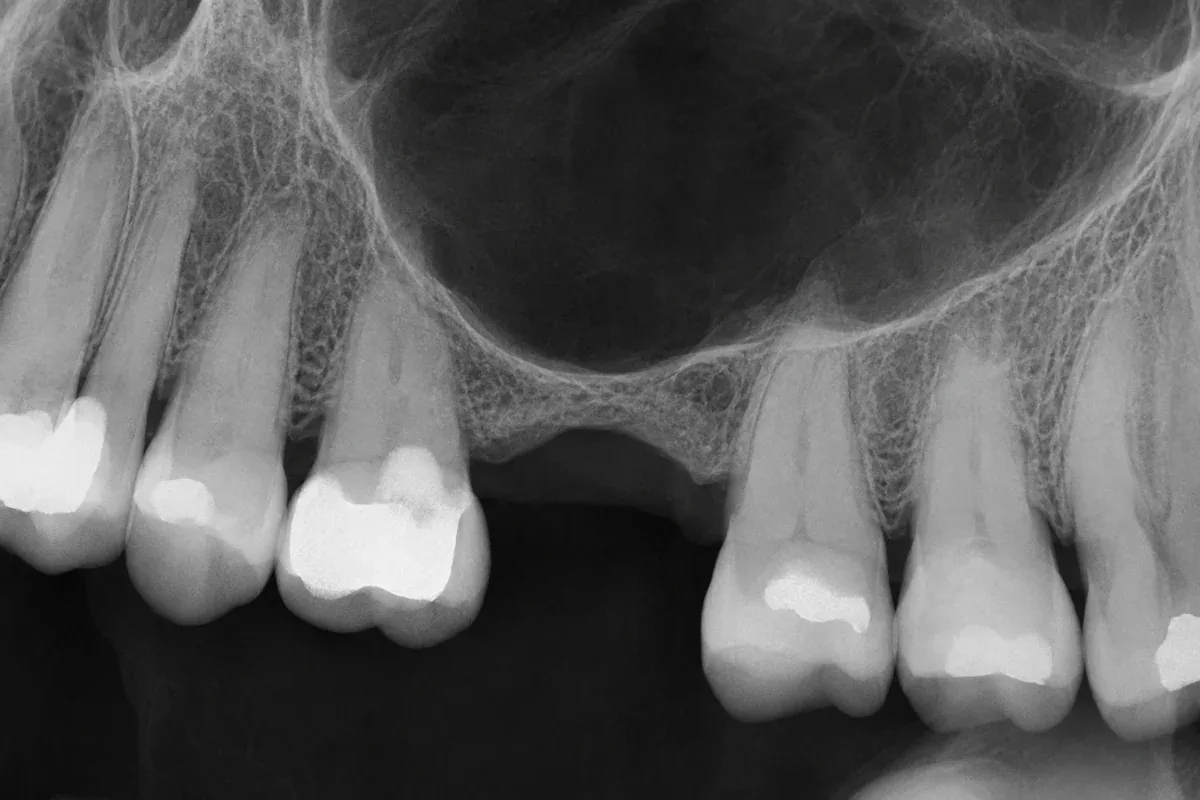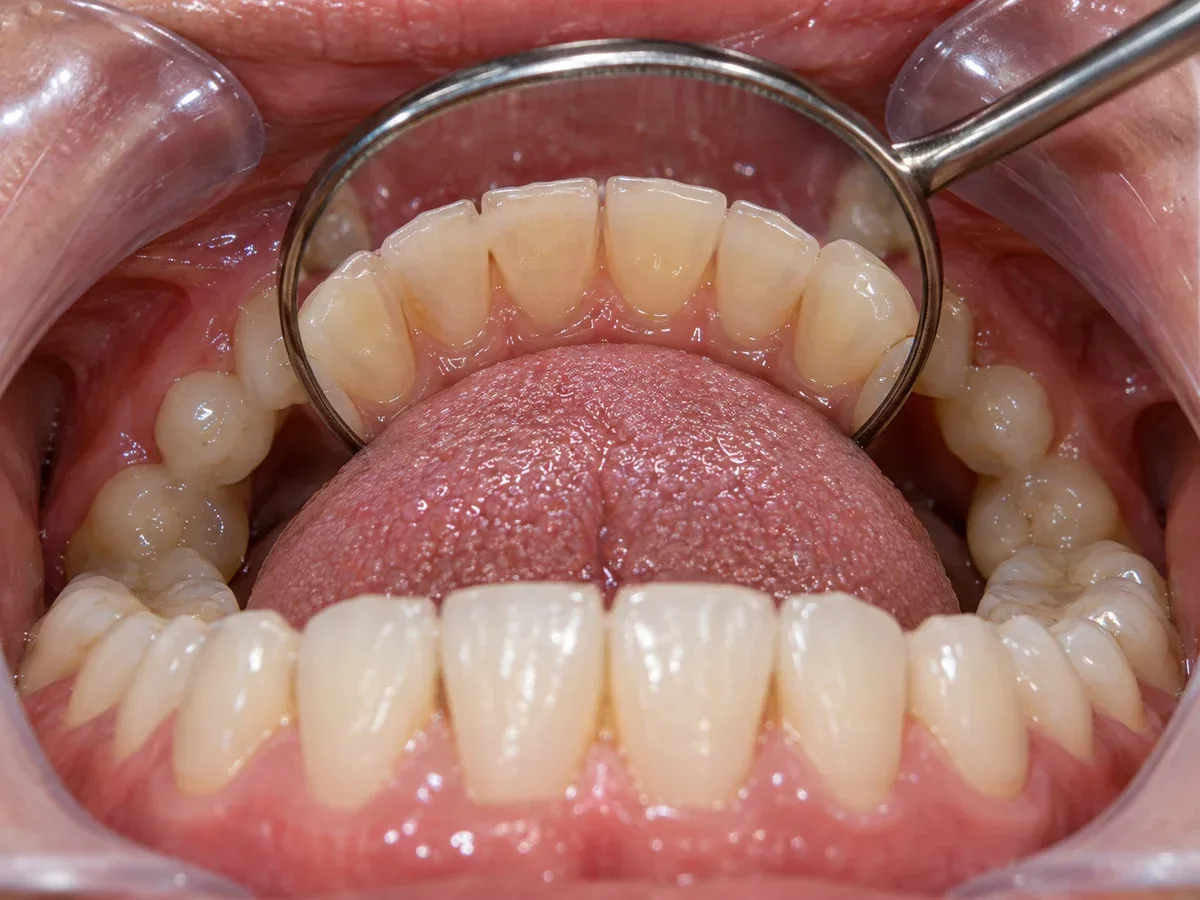
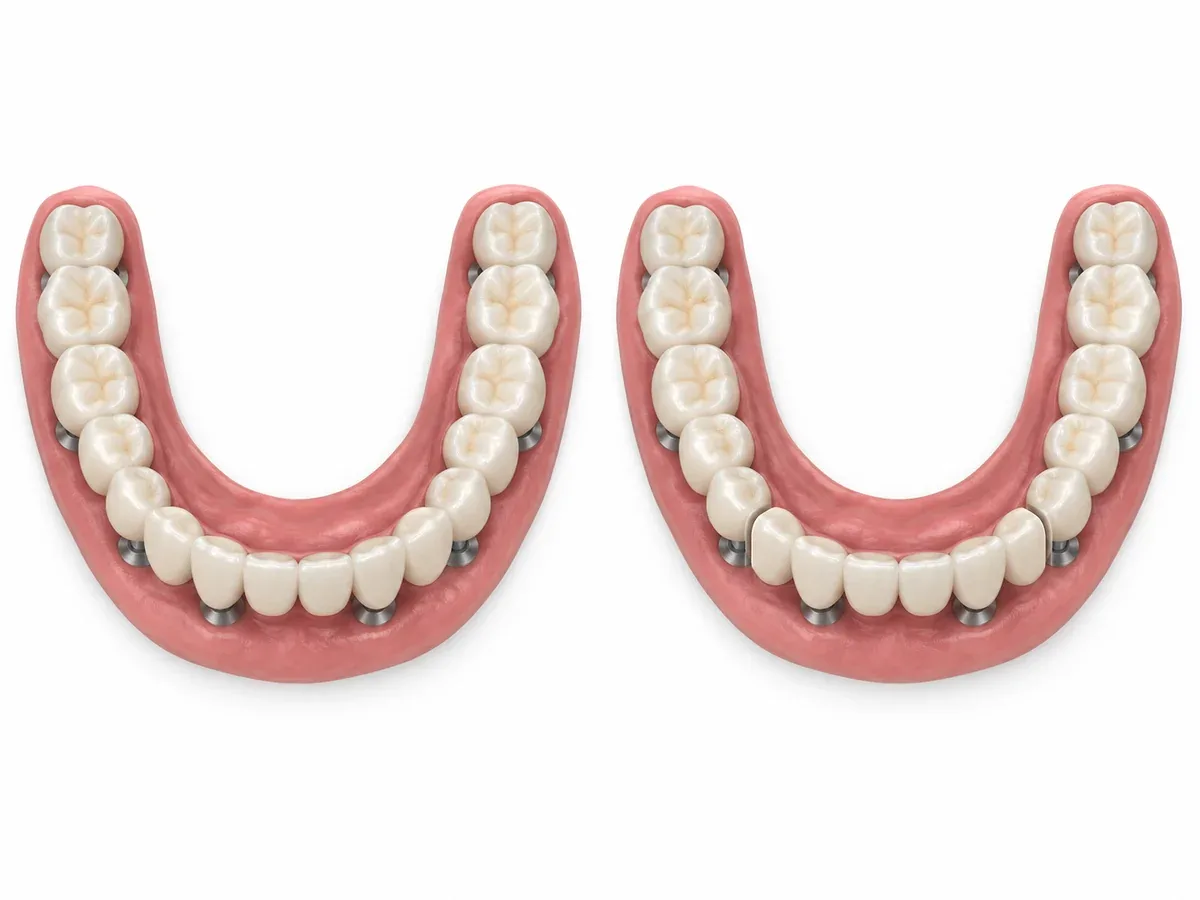
- We do not make the 14 teeth of one jaw as a single piece. A full-arch implant bridge is usually made in three or four sections.
- The main reason for splitting it is repair. If one area has a problem, that section alone can be removed and fixed.
- Splitting also means implants were placed all the way to the back. There is no floating section.
- When the teeth are screwed in rather than cemented, they can be removed at any time to check underneath. That is what helps them last.
In full-arch implant consultations in Seomyeon, Busan, patients ask a lot about the number of implants. Few ask how the teeth on top are made, yet that is what makes the real difference 10 or 20 years later. For patients living in or visiting Korea, we offer 1:1 English interpretation from your first consultation through the end of treatment.
This column explains why we make an implant bridge in sections, where we split it, and how screwing it in differs from cementing it.
What happens if an implant bridge is made as one piece?
It can be done, and many clinics do make it that way. But one piece means one body.
With a one-piece implant bridge, a single problem affects everything. Any of these can mean the whole bridge has to come off:
- one area chips or cracks
- a screw comes loose
- an implant underneath develops a problem
One back molar can mean removing everything, front teeth included.
Remaking it works the same way. A one-piece implant bridge has to be made again as a whole.
In other words, one small problem can lead to remaking the entire bridge.
Picture a chipped back molar on each design. The difference in what follows is large.
- With one piece, every screw is undone and the whole implant bridge comes out, front teeth included.
- If the chip cannot be repaired, the entire arch is made again.
- With sections, the back section alone comes out, while the front teeth stay in place.
- That section is repaired or remade, then screwed back in.
This is why we think about repair before the first tooth is designed. A full-arch implant bridge is meant to be used for many years, and something will need attention at some point.
How many sections is an implant bridge split into?
Our standard is three sections, and four when needed.
- the front teeth
- the left back teeth (molars)
- the right back teeth (molars)
Split into these three zones, each section carries its own share of the force.
The molar zones take the strongest chewing force. Once they are separate from the front teeth, the load on the front teeth drops too.
| Point | One piece | Three or four sections |
|---|---|---|
| One area fails | The whole bridge has to come off | That section alone is removed |
| Remaking | The whole thing is made again | The problem part alone is made again |
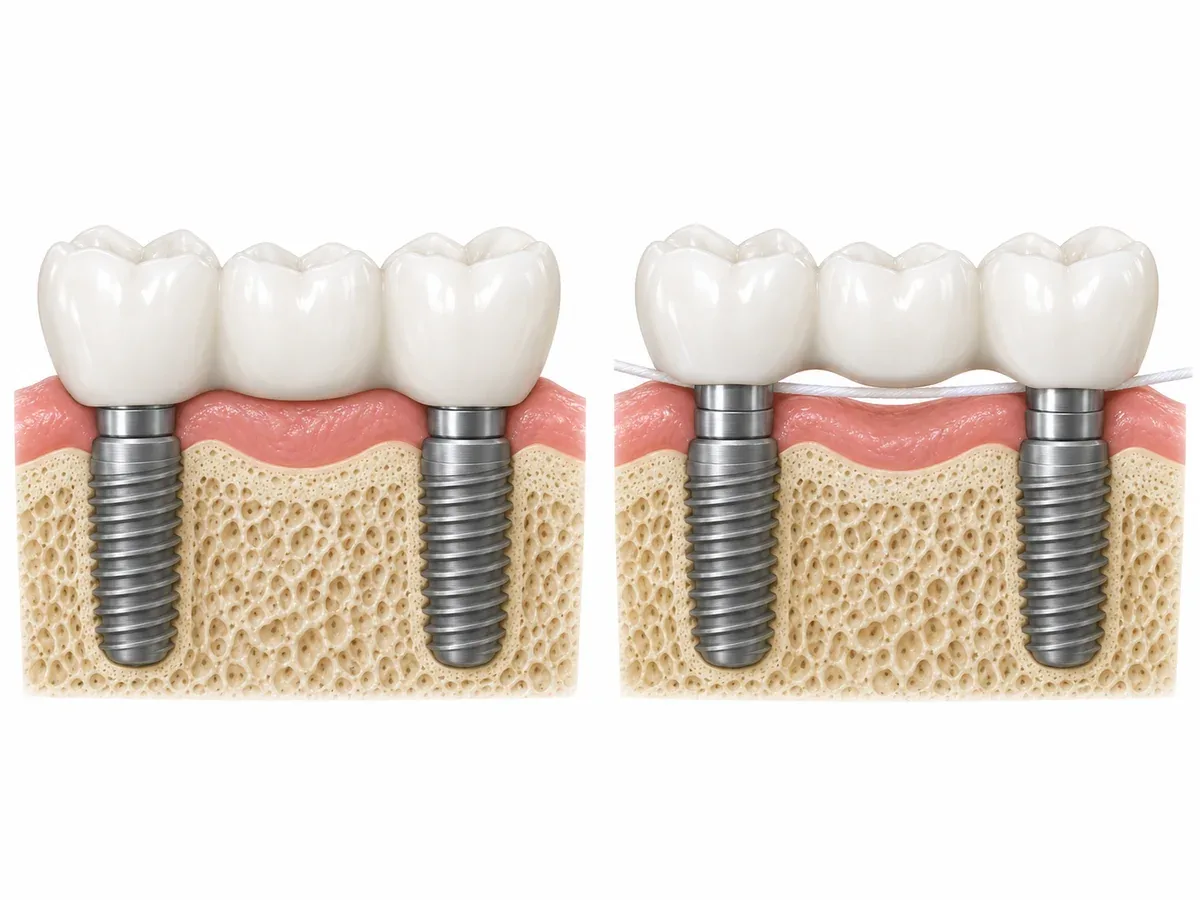
| Cleaning | Gaps are blocked, so tools do not pass easily | Floss passes between the sections |
| Chewing force | Force in one spot spreads to the whole | Each zone carries its own share |
| Look | Tends to look like one block | Each tooth looks more individual |
Some patients worry that the sections will look like gaps. They do not.
Natural teeth are not one block either; each one stands on its own. In fact, sections bring out the shape of each tooth and look more natural.
The splits sit where the gaps between natural teeth would be, so they are hard to notice.
You may notice a little food catching between sections at first. But floss passes through those spots, so it is easy to remove, and an open gap is far better than a blocked one.
Why does splitting it mean implants reach the back?
This point matters. An implant bridge cannot be split whenever you like.
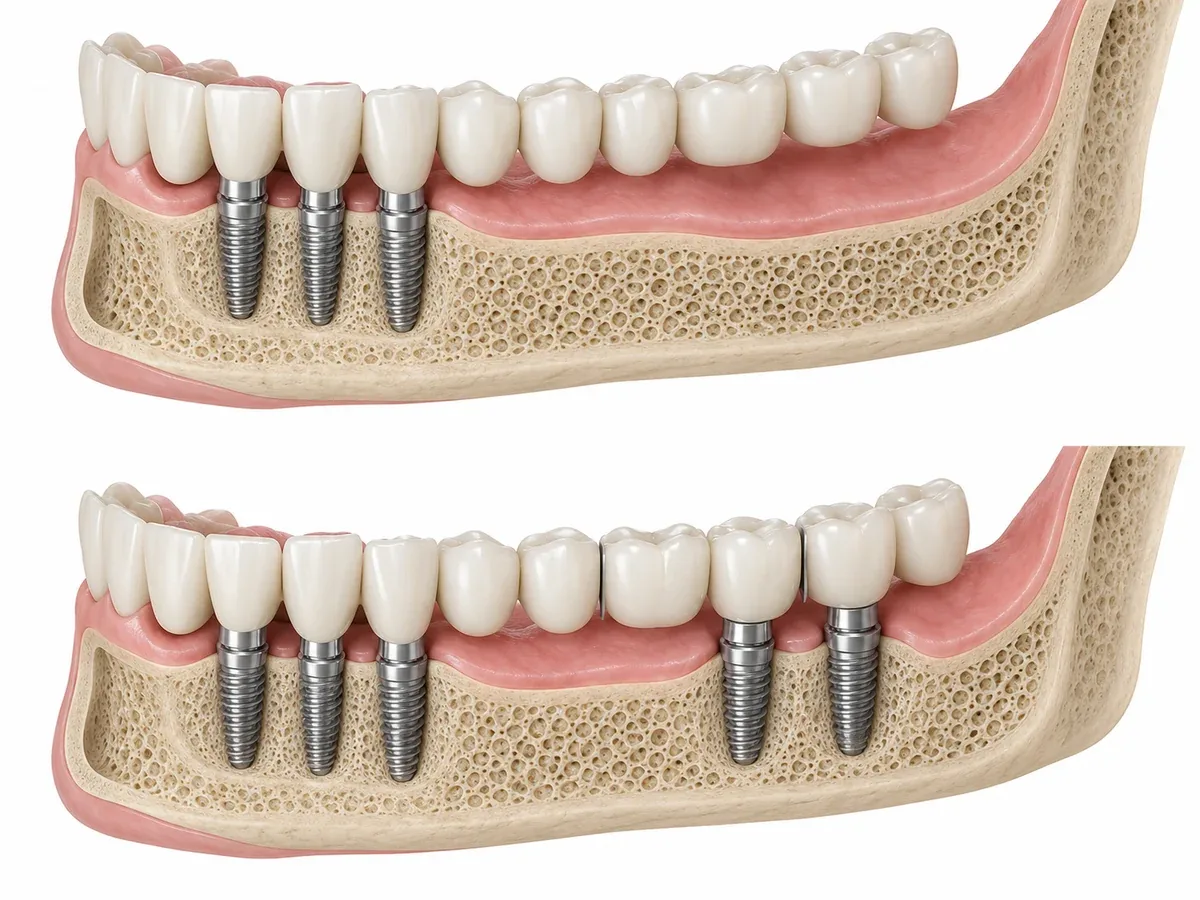
To make a separate back section, there must be pillars beneath it. In other words, implants must be placed all the way to the molar area before the bridge can be split.
If pillars stand at the front alone, it cannot be split. The back teeth have to hang out from the front pillars.
So it naturally has to be one piece, and the back end floats. In bridge terms, the deck stretches out with no pier beneath it.
When you bite hard on that floating part, it acts like a lever. The force gathers on the last pillar.
So where possible, we place pillars toward the back, and splitting follows from that. Splitting is not the goal; it is the result of placing the implants well.
A split design therefore tells you something about what lies beneath. When a clinic plans your implant bridge in sections, it also means the implants are planned to reach the molar area.
Should an implant bridge be screwed in or cemented?
There are two main ways to fix the teeth to the implants. This choice also has a big effect on how long they last.
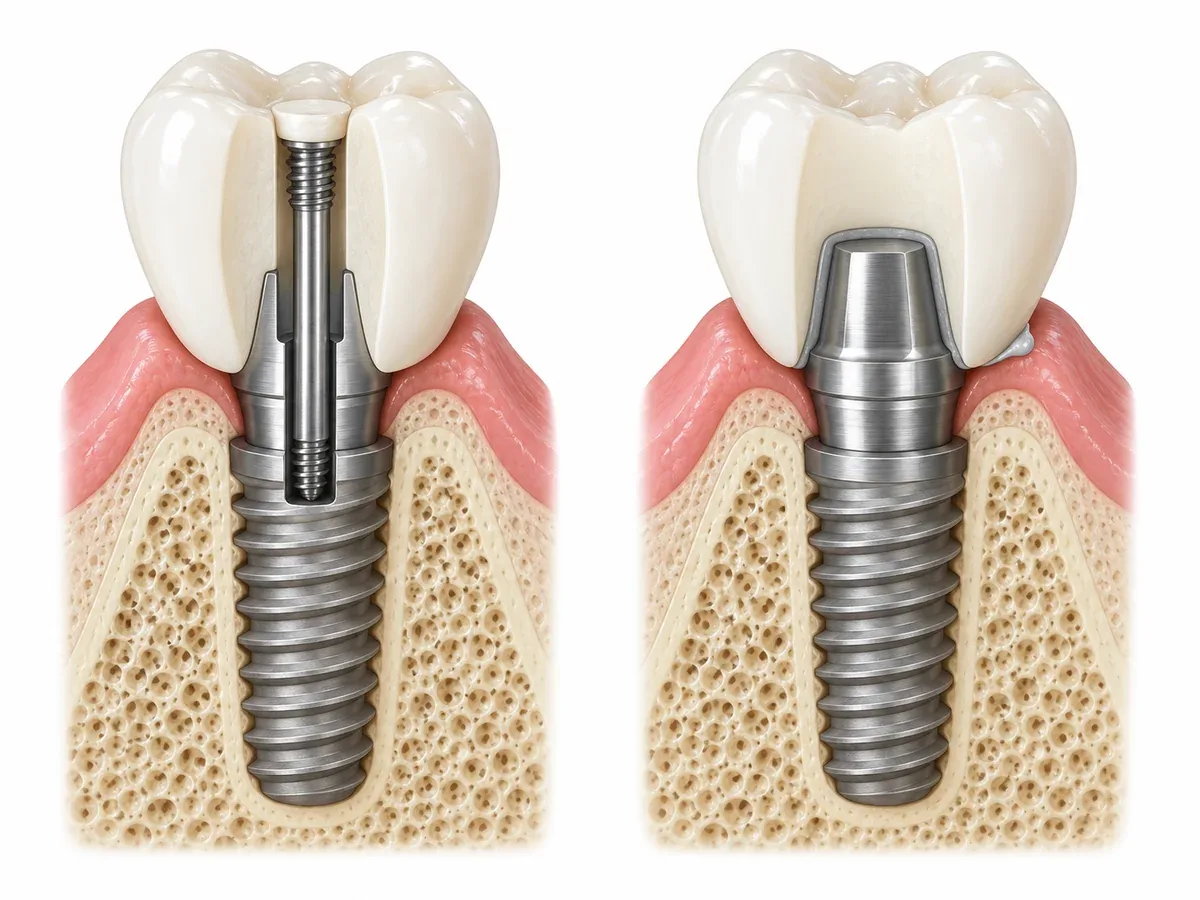
Screw-retained
The restoration has a small hole, and a screw holds it in place. On the outside, the hole is filled with tooth-colored material, so you cannot see it.
The advantage is clear. When needed, the screw can be undone and the section removed.
We can see and clean underneath directly. A loose screw can be tightened again, and one section can be repaired and put back.
If the bridge ever needs to come off, we simply reopen that small filled spot. The rest of the implant bridge stays untouched.
This also makes regular check-ups more thorough. When needed, we can look directly at the implants and the gum beneath the teeth, not just at the surface you see.
Cemented
The restoration is glued onto the abutment. This can help in shaping the teeth, so it is used in some situations.
There is a caution, though. If even a little excess cement stays under the gum, that spot can become the starting point of inflammation.
A cemented bridge is also hard to remove intact later.
So for a full-arch implant bridge, which needs care for many years, we favor screwing it in. Being able to open it at any time matters that much.
| Point | Screw-retained | Cemented |
|---|---|---|
| Removal | Undo the screw and take it off | Hard to remove intact |
| Checking underneath | Can be opened and cleaned directly | Difficult |
| Main caution | The screw hole is filled with tooth-colored material | Leftover cement under the gum can start inflammation |
Why leave space under the implant bridge?
The bridge and the gum should not sit tightly against each other. Neither should there be a wide gap.
If they touch, there is no room for cleaning tools. Whatever gets trapped underneath has no way out, so it builds up.
If the gap is too wide, food keeps getting stuck and speech can sound airy. Both extremes cause trouble, so the channel is shaped with care for each patient.
So we leave a channel wide enough for floss and interdental brushes. If this space is not planned when the implant bridge is made, some spots stay out of reach however hard you brush.
If the jawbone has sunk a lot, the empty space may be filled with gum-colored material. This keeps the teeth from looking too long, and helps speech and the shape of the cheeks.
The choice of material depends on your bite force, how the teeth meet and the shape of the remaining gum. A harder material is not always right, since it can wear down the natural teeth on the other jaw, so we look at both jaws together.
How do you clean under an implant bridge?
It is fair to say that with full-arch implants, cleaning under the bridge is everything.
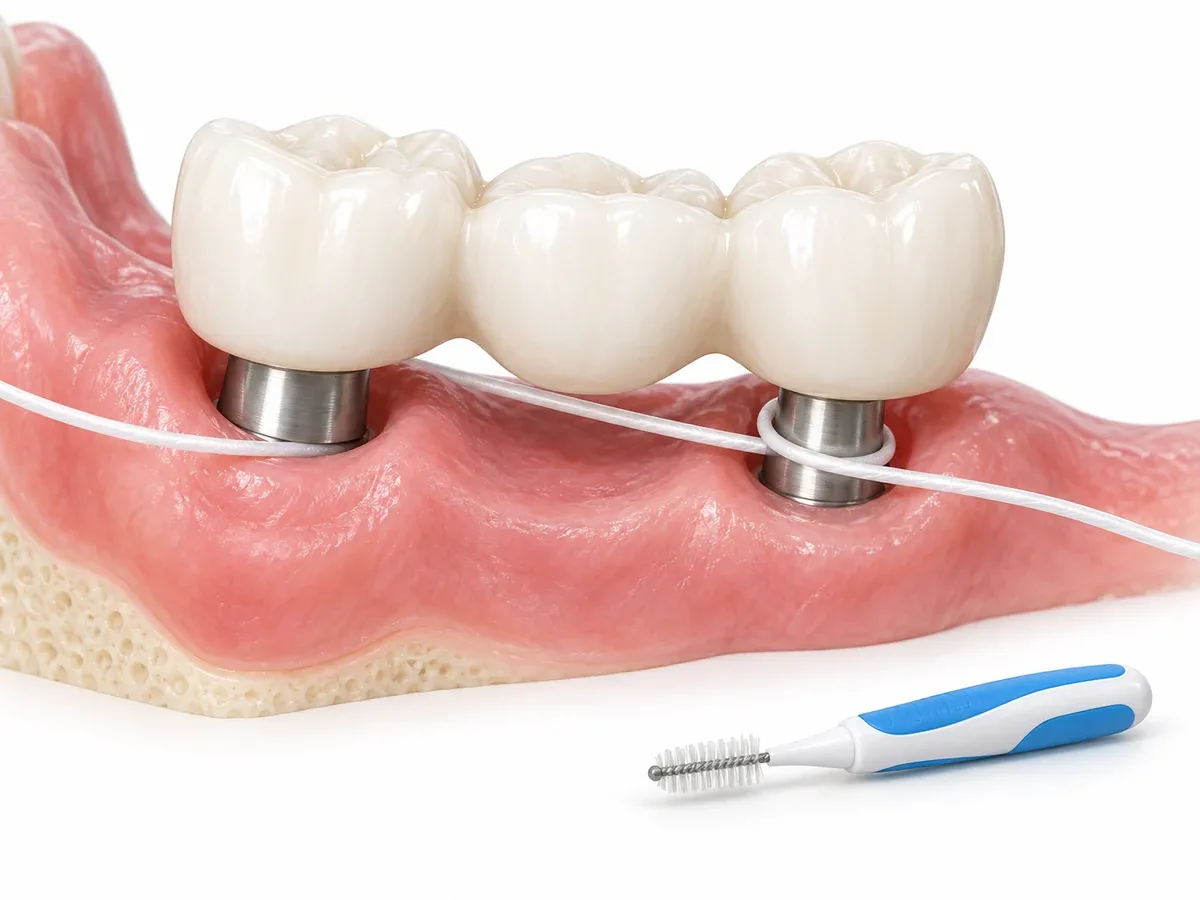
- Use superfloss or a floss threader to pass under the bridge and rub.
- Use interdental brushes between each pillar.
- Use a water flosser as a helper, since it cannot remove plaque on its own.
- Do not poke in and out like a toothpick; rub along the surface instead.
A simple routine for the space under the bridge can look like this.
- Thread superfloss under the implant bridge from the cheek side.
- Rub it gently along the underside of each section.
- Pass an interdental brush between each pillar.
- Finish with a water flosser to rinse out what has loosened.
However well you clean, some spots will always be out of reach. Please come in regularly so we can clean them with special tools.
| Period | Visit interval |
|---|---|
| First year | Every 3 months |
| After the first year | Every 6 months |
The Korean Academy of Periodontology recommends the same intervals. These visits are where hidden buildup under an implant bridge is found and cleared early.
If you already have a one-piece bridge and it works well, you can keep using it. Come for check-ups a little more often, because one problem area affects the whole.
What should you ask about an implant bridge in Busan?
Before treatment starts, these three questions tell you a lot about how the teeth will be made.
- "How many sections will you make it in?" If the answer is one piece, ask what happens later if one area has a problem.
- "Will it be screwed in or cemented?" If cemented, ask why, and how it will be removed if that is ever needed.
- "How should I clean under it?" A clinic that can answer before making it is planning the cleaning space too.
This is not meant as criticism of other dentists. It is simply there to protect you as a patient.
Temporary teeth are worn during the healing period, so how they are made depends on the case. The final bridge, however, is made in sections as our standard.
Making it in sections takes a slightly more precise process. But compare that with remaking the entire bridge because of one problem, and we believe doing it properly at the start is the faster path.
Frequently asked questions
Will an implant bridge in sections look gappy?
No. The splits sit where the gaps between natural teeth would be, so they are hard to notice. Each tooth also looks more individual and natural.
Can the screw hole be seen from outside?
No. It is filled and finished with tooth-colored material. If the bridge needs to come off later, just that spot is reopened.
Can I get this treatment in English in Busan?
Yes. We provide 1:1 English interpretation from the first consultation through the end of treatment. The clinic is near Seomyeon Station Exit 2 (5-min walk), opposite Lotte Hotel Busan, and you can call 010-8555-2854 (+82-10-8555-2854 from abroad).
How the teeth on top are made matters as much as the number of implants.
One piece is one body, so one failure means removing it all.
In three or four sections, the problem part alone is removed and repaired.
And being able to split it means implants reach the back.
We screw it in rather than cement it, so it can be opened at any time,
and we leave a channel for floss to pass through.
This is where the difference shows ten years later.
If you are considering a full-arch implant bridge in Busan, Reset Dental Clinic offers 1:1 English interpretation from your first consultation through the end of treatment. Call 010-8555-2854 to book a consultation.
References
- KDCA National Health Information Portal, "Dental Implants" — the parts of an implant restoration, maintenance and complications
- KDA newspaper Dailydental (Chiui Sinbo), "65% of Implant Patients Have Had Peri-Implant Disease" (Korean Academy of Periodontology, 17th Gum Day) — a survey finding that poor oral hygiene raises the risk of peri-implant disease 3.8 times, and maintenance intervals
- KDCA National Health Information Portal, "All-Ceramic Crowns" — the properties, care and complications of porcelain restorations
- KDA newspaper Dailydental (Chiui Sinbo), "Mastering Peri-Implantitis with the Korean Academy of Periodontology" — the academy's training on restoration maintenance and non-surgical care
- KDCA National Health Information Portal, "Gum Disease (Periodontal Disease)" — how plaque and tartar lead to gum inflammation
Written by Reset Dental Clinic Support Team
Medical review Dr. Na In-chae, Head Dentist · Periodontics Specialist
Last updated: September 19, 2026
This column is for general information and does not replace diagnosis or treatment for individual patients. If you have symptoms, please see a dentist.