- What people call "sleep dentistry" is closer to lowering tension than falling asleep. You stay able to respond when someone speaks to you.
- Even with sedation, local anesthesia is what handles pain. The two are used together; one does not replace the other.
- There is more than one method: gas breathed through the nose, medicine by mouth, or medicine through a vein, among others.
- Before sedation, we first check your general health and your airway. That check is half of safe sedation.
At Reset Dental Clinic in Seomyeon, Busan, we fairly often meet patients who put off the dentist for years out of fear. Sometimes a small problem has grown larger in the meantime. For patients living in or visiting Korea, we provide 1:1 English interpretation from your first consultation through the end of treatment.
For patients like this, one option we discuss is dental sedation. Its nickname causes a lot of misunderstanding, so this column calmly explains what it is, who it suits and what we check first.
Does dental sedation mean you sleep through treatment?
The KDCA National Health Information Portal describes dental sedation as a method that reduces anxiety and fear about treatment. It also helps control pain, so patients can be treated in comfort.
The key word is calming. The goal is not to be fully asleep and unaware of everything. In fact, it is closer to the opposite.
The KDCA explains that complications increase when it becomes very deep. It states that sedation should preferably not be kept so deep that you cannot respond when asked to open your eyes.
So the goal is this: you respond when called, but your tension and fear are lowered. Staying within that range is the real skill.

Many people say afterwards that they do not remember much. The medicines used tend to soften negative memories of the treatment to some degree. Being asleep and having a hazy memory are not the same thing.
How is sedation different from local anesthesia?
This is where the most confusion arises. We are often asked whether numbing is still needed, and the answer is yes.
The KDCA describes local anesthesia as placing medicine near the nerves of the treatment area to block pain and sensation. It makes clear that local anesthesia does not affect consciousness.
It also notes that local anesthesia is usually given as well during general anesthesia or sedation. Here is how the two divide the work:
| Item | What it does | Consciousness |
|---|---|---|
| Local anesthesia | Blocks pain and sensation in that area | Unchanged |
| Sedation | Lowers anxiety and tension | Varies with the depth |
In short, anesthesia handles pain, and sedation handles fear. For some patients one alone is not enough, so we use both.
The effect of local anesthesia depends on the medicine and technique. According to the KDCA, it takes from a few seconds to a little over ten minutes to start working. A commonly used product lasts about an hour, and more can be added during a long treatment.
If you feel discomfort during treatment, just say so or raise your hand. You can still communicate with us, and we can add more anesthetic.
Who is dental sedation recommended for?
The KDCA lists the following cases where it may be recommended.
- strong anxiety or fear about dental treatment
- conditions such as angina, where stress can worsen symptoms
- intellectual disability that makes it hard to cooperate with treatment
- local anesthesia that does not work well, so extra pain control is needed
Some people also have a strong gag reflex when instruments enter the mouth, which can make impressions or X-rays difficult. The KDCA notes that the breathing-gas method is mainly used in such cases.
Some people are afraid of the needle itself. For them too, we first look at methods that do not use a needle.
To put it the other way round, sedation is not something we recommend for everyone. We first try to ease tension through explanation and trust, and we consider sedation when that is not enough or there is a lot of treatment to do.
What types of dental sedation are there?
The methods are grouped by the route the medicine takes into the body. The KDCA describes five routes, and the figure shows three of them.

Breathing through the nose
With this method, you breathe nitrous oxide through a small mask over the nose. According to the KDCA, it is absorbed quickly in the lungs and leaves through the lungs without being broken down, so recovery is very fast.
When the level is right, your hands and feet may tingle, your limbs may feel heavy, or you may feel as if you are floating. Because no needle is used, it can suit people who fear needles.
Taking medicine by mouth
This is the oldest method. It needs no special equipment and is easy on the patient, so it is often used for children.
The KDCA explains that after taking the medicine, the patient stays in a quiet place with a guardian for about 30–40 minutes while their condition is checked often.
Through the nose or into a muscle
These are used when someone has trouble swallowing medicine or finds cooperation very difficult. They work faster than medicine by mouth, but a blocked nose can make the nasal route hard to use.
Through a vein
This is intravenous (IV) sedation, where medicine goes in through a vein in the arm. Its main advantage is that the depth of sedation can be adjusted. Recovery is quick, and it suits doing a lot of treatment in one visit.
On the other hand, a line into the vein is needed, and the effect can change quickly. That means your condition must be watched closely throughout.
| Method | Main features |
|---|---|
| Breathing through the nose | Very fast recovery; no needle |
| By mouth | No equipment needed; easy on children |
| Nasal or into a muscle | Used when swallowing medicine is difficult |
| Through a vein | Depth can be adjusted; suits long treatment |
No method is simply better than another. The choice is matched to how much treatment you need, how long it takes and your health.
What do we check before dental sedation?
This is the most important part. The KDCA also puts a general health assessment beforehand first.
Your health conditions and medicines
We check which conditions you have and whether they are well controlled. We also ask about your regular medicines and any side effects or allergies to medicines.
Having diabetes or high blood pressure does not by itself rule it out. Good control is the standard, and for a serious condition we first ask for your doctor's opinion.
Your airway
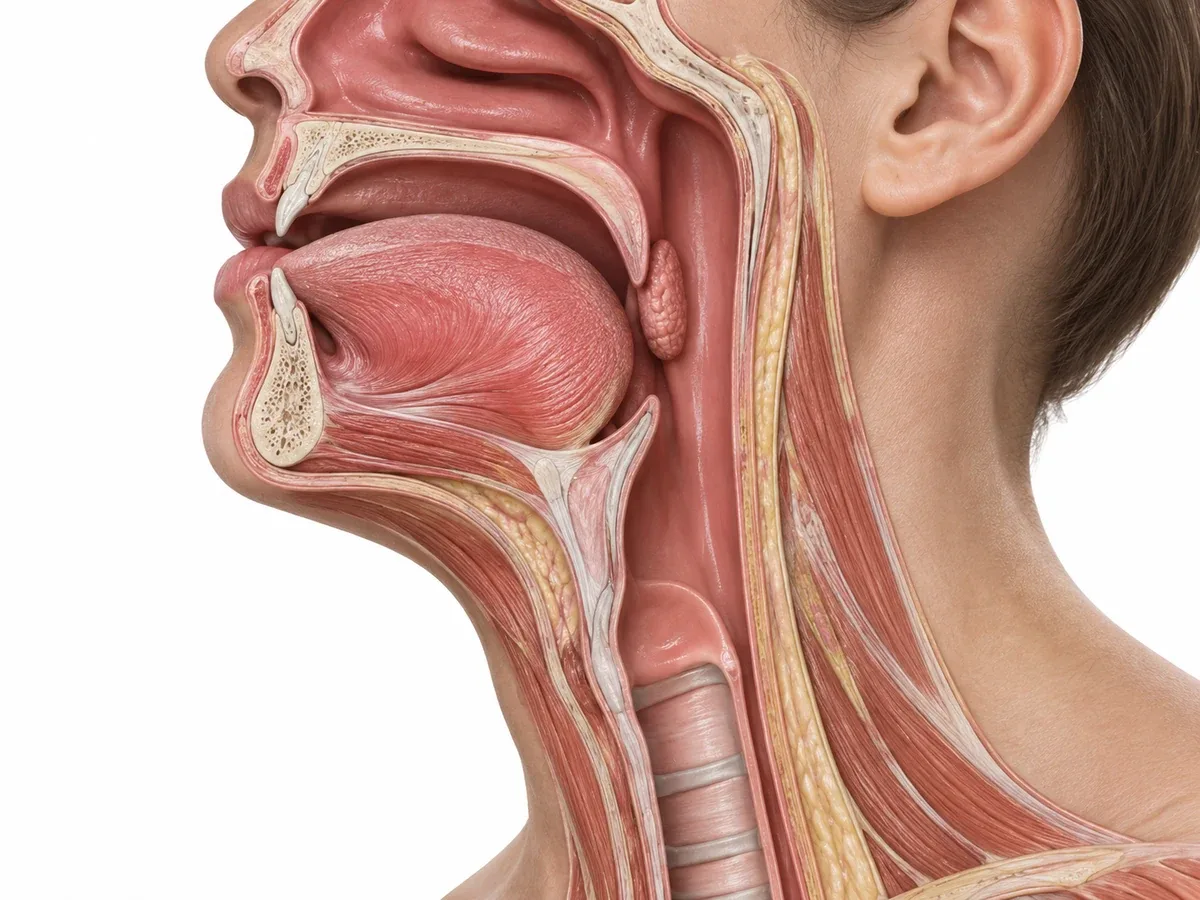
The KDCA stresses that checking the airway is especially important. It lists seven points.
- whether the neck is thick and short
- whether you can tilt your head back easily
- whether your tonsils are enlarged
- whether you have sleep apnea
- whether your lower jaw is small
- whether your tongue is relatively large
- whether you can open your mouth well
If you have been told you snore heavily or seem to stop breathing in your sleep, please tell us in advance. It may seem minor, but it strongly affects the plan.
Who can receive it
The KDCA describes the main candidates as people in classes 1 and 2 of the American Society of Anesthesiologists physical status system, meaning people in good general health.
For class 3 or higher, with serious general illness, it says advice from an internal medicine doctor is needed. It recommends receiving it at a general hospital with emergency facilities.
We follow the same standard. If we judge that sedation here is not right for you, we will tell you so, because not forcing treatment is a core principle of safety.
What happens during and after sedation?
The KDCA explains that most complications related to sedation involve the airway and breathing. As sedation deepens, the tongue and soft tissue can fall back and narrow the airway.
So everything we watch during treatment comes down to one question: are you breathing well?

We continuously check oxygen saturation (SpO2), blood pressure and pulse. A small clip on the finger and a cuff on the arm do this work.
Children are more likely than adults to have breathing problems. According to the KDCA, children aged 4–10 often have enlarged tonsils and a relatively large tongue, so the airway narrows more easily.
Other reactions such as nausea, vomiting and drowsiness can occur. They are not rare, so we mention them in advance.
After you leave
Treatment does not end when you walk out of the treatment room. First, you rest in the recovery room until your awareness, movement, blood pressure and breathing have fully returned.
You must not drive yourself home. The KDCA recommends going home by taxi or car with a guardian, and if a parent drives after a child's sedation, another adult should come to look after the child.

| Type | Details |
|---|---|
| Please do | Rest well |
| Drink water often and eat light meals | |
| Take prescribed and regular medicines as directed | |
| Please avoid | Driving and cycling |
| Using cooking equipment or a hot kettle | |
| Alcohol and medicines that cause drowsiness | |
| Leaving children alone | |
| Hard exercise |
The KDCA notes that body temperature can rise after treatment. It advises contacting the clinic and seeing a nearby doctor in the cases below.
- a fever of 38°C or higher that continues
- pain that painkillers do not control
- repeated vomiting, so that you cannot even keep water down
In these cases, please do not wait it out; let us know right away, even late in the day.
What should you ask at a sedation consultation in Busan?
Feel free to ask these questions word for word.
- Which method suits me, and why that one?
- Is it safe for me to receive it here, given my health? If not, you should hear that clearly.
- What will you monitor during sedation?
- Will I be fully asleep, or just able to respond when called?
- Will local anesthesia be given separately?
- How long will I rest afterwards, and do I need someone to take me home?
- Until when can I eat and drink beforehand?
A clinic that answers these in advance, and in detail, is one that has prepared. That is worth more than any promise about comfort.
Please also plan for someone to come with you. We explain the details at booking, since they differ by method.
If fear is what has kept you away, you can say so plainly at the first visit. It helps us plan the pace of treatment with you.
Frequently asked questions
Is dental sedation safe?
No medical procedure is absolutely safe. Most problems the KDCA describes involve the airway and breathing, and they become more likely when sedation gets too deep. So we keep sedation light, monitor you throughout, and check in advance whether you are a suitable candidate.
Can I have sedation for wisdom tooth removal or implants?
Yes, it can be considered when treatment is long or several areas need work at once. Sedation does not change the conditions of the surgery itself, though. We still check things like the distance to the nerve and the state of the bone before planning.
I put off treatment out of fear, and now it has grown. Is it too late?
No, and many people are in the same position. We are not here to blame you, so tell us how long you have put it off. We can set priorities, starting with what is urgent, and split the treatment into stages.
Can I get sedation treatment in English in Busan?
Yes. We offer 1:1 English interpretation from the first consultation through the end of treatment. The clinic is near Seomyeon Station Exit 2 (5-min walk), opposite Lotte Hotel Busan, and you can call 010-8555-2854 (+82-10-8555-2854 from abroad).
Being afraid is a fair reason
to have put things off.
Sedation does not put you to sleep;
it lowers your tension.
Whether it suits you right now
is something we will check with you calmly.
If you are considering dental sedation in Busan, Reset Dental Clinic offers 1:1 English interpretation from your first consultation through the end of treatment. Call 010-8555-2854 to talk it through.
References
- KDCA National Health Information Portal, "Dental Sedation" — definition and recommended cases, methods by route, airway assessment and physical status classes, complications, and precautions for 24 hours after going home
- KDCA National Health Information Portal, "Dental Local Anesthesia" — why local anesthesia does not affect consciousness, why it is used with sedation or general anesthesia, onset and duration, and notes for pregnant and breastfeeding women
- KDCA National Health Information Portal, "Dental Implants" — checking general health and medicines before surgery, and preparation such as blood sugar control and quitting smoking
- KDCA National Health Information Portal, "Wisdom Teeth" — when removal is considered and recovery after surgery
- KDCA National Health Information Portal, "Systemic Disease and Periodontal Treatment" — how general health and oral health affect each other
Written by Reset Dental Clinic Support Team
Medical review Dr. Na In-chae, Head Dentist · Periodontics Specialist
Last updated: September 19, 2026
This column is for general information and does not replace diagnosis or treatment for individual patients. If you have symptoms, please see a dentist.