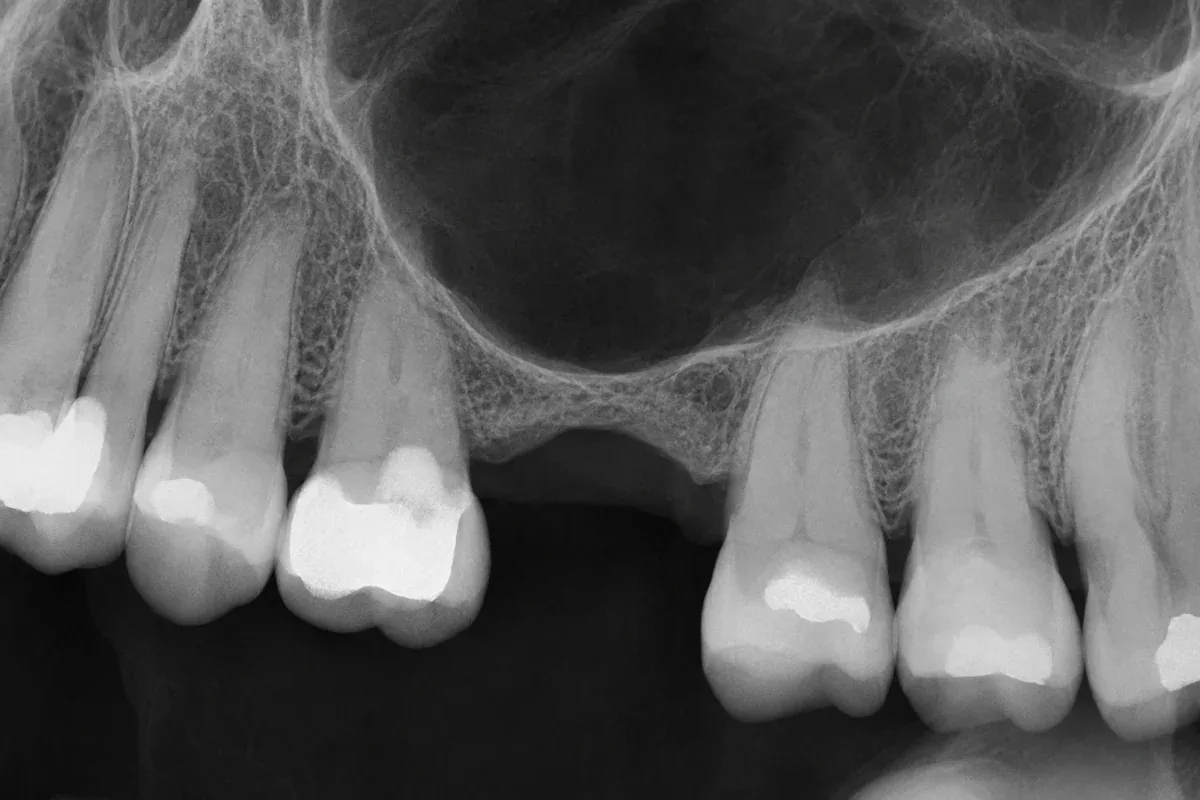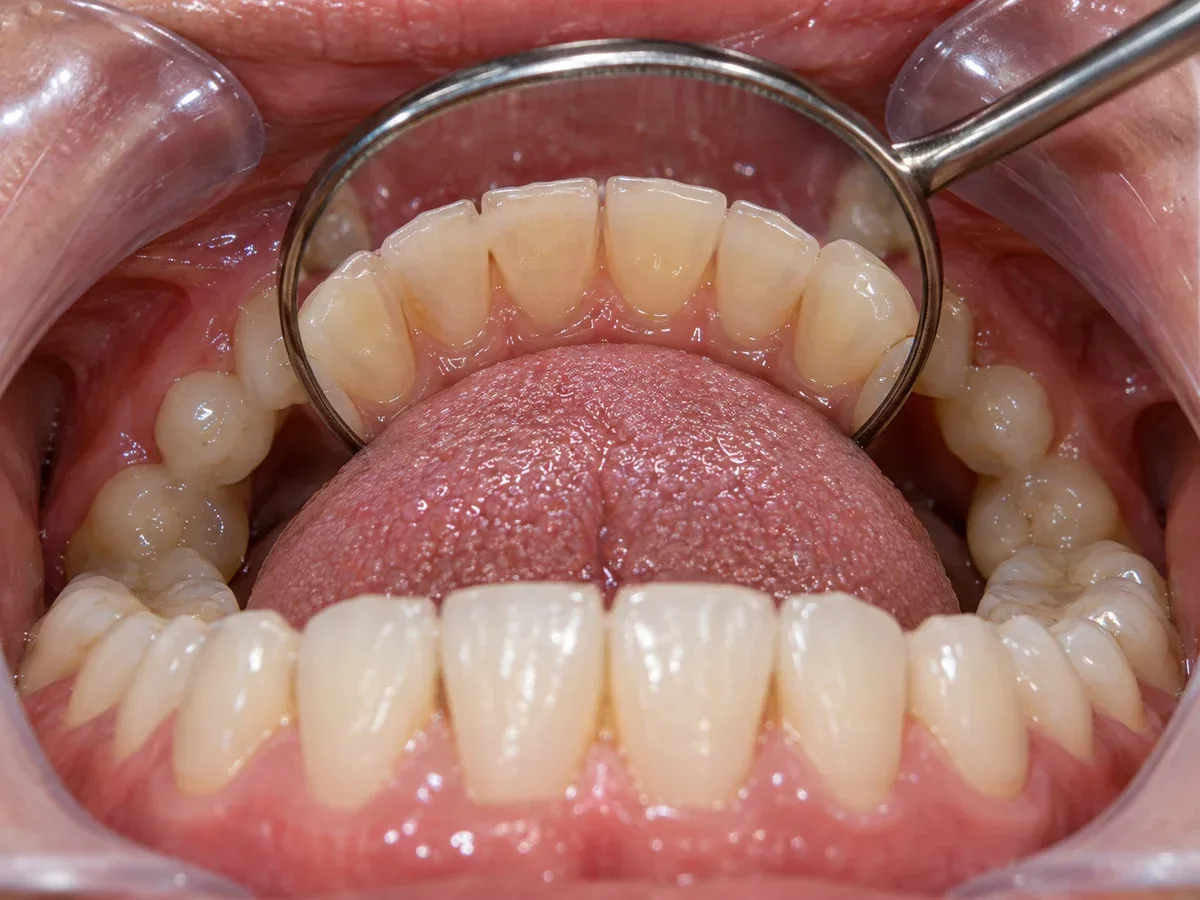
- Yes, All-on-4 can work. But it does not suit everyone. It is a very good method when four implants are all the bone allows.
- A full-arch implant is like a bridge across a river. The number of piers, their spacing and the ground beneath decide how long it lasts.
- The biggest risk is a one-piece structure that cannot be partly repaired. One failing pier means taking the whole thing apart.
- Crowding in too many implants is also risky. The rule is not more, not fewer, but evenly spread.
"I heard four implants can replace a whole jaw." Many patients at our clinic in Seomyeon, Busan ask about All-on-4 after seeing ads. The short answer is that it is a real, valid method. For patients living in or visiting Korea, we offer 1:1 English interpretation from your first consultation through the end of treatment.
But applying the same plan to every case is a different story. This column explains what the number of implants decides in a full-arch case, and why we look at the design before the number.
Why is a full-arch implant like building a bridge?
The clearest way to picture a full-arch implant is a bridge across a river.
| Bridge | Full-arch implant |
|---|---|
| The ground under the bridge | Your jawbone |
| Piers (pillars) | Each fixture placed in the bone |
| Deck | The full set of teeth on top |
| The weight of passing traffic | The chewing force of every meal, for years |
All-on-4 is one way to build this bridge, with four piers. For any bridge to last, everything depends on three things. How firm is the ground, how many piers are there, and how far apart do they stand?
A full-arch implant works the same way. Success depends on how evenly the implants share the force of every meal you eat.
That is why the number of implants by itself says little. A plan with four implants and a plan with eight can each succeed or fail, depending on the ground and the layout.

Is the All-on-4 approach a bad treatment?
No. We want to be clear about this. All-on-4 is not a bad treatment.
Some patients have lost so much bone that four implants are all that can be placed. For them, the All-on-4 approach can be a very good solution.
We have treated patients with All-on-4 in this situation, and they have regained the use of their teeth.
The problem comes when every case is handled with this one method. Some patients have plenty of bone, and some have a very strong bite.
If they too receive the same All-on-4 plan, strain begins from that point. The method itself is not the issue; the fit between the method and the patient is.
What goes wrong when there are too few implants?
When All-on-4 is used where more implants would fit, two problems can appear.
- the four implants may struggle to carry the chewing force
- the one-piece teeth on top cannot be partly repaired
1. The implants struggle to carry the force
Imagine a ten-lane bridge with heavy traffic every day, held up by four piers, as in All-on-4. At first it stands straight.
But it cannot keep up with the daily weight. It may shift little by little, and one day it may give way all at once.
Diet matters too. Many people in Korea enjoy kimchi, kkakdugi (radish kimchi), chewy vegetables and dried squid. These foods place a different kind of chewing force on the teeth.
The All-on-4 method was first developed in the West for people who had no bone in the back of the jaw. Moved directly onto this kind of diet, an All-on-4 design can become a mechanically unstable structure.
2. It cannot be partly repaired
This second problem is the more serious one.
In a typical All-on-4 design, all the teeth are joined as one solid piece. If one of the four pillars fails, everything on top has to come off, and the bridge has to be rebuilt from the start.
In other words, one small problem can turn into a failure of the whole.
That is why we do not make a full-arch restoration as one piece. We make it in three or four sections. A problem section can then be removed and repaired alone, and cleaning is much easier too.

Are more implants always better?
No. If All-on-4 can mean too few, packing in too many is not the fix. Surprisingly, this can be even riskier.
Think of trees planted close together in a small plot. They shade each other, and underground their roots tangle and cannot get enough nutrients. In the end they wither together.
Implants are similar. Between one fixture and the next, there must be healthy bone that supplies blood and holds them in place.
Some clinics pack implants tightly into limited bone to make the result stronger. But then blood cannot reach the bone between them, and that bone slowly dissolves. Inflammation also sets in more easily.
Instead of supporting each other, they can then fail together, all at once. The front teeth need enough space in particular, and too many implants there also spoil the look.

| Plan | What can happen |
|---|---|
| Too few implants | They struggle with the load, and one failure can mean redoing the whole arch |
| Too many, too close | Bone between them loses its blood supply and dissolves |
| Evenly spread in firm bone | The force is shared, and sections can be repaired alone |
So how many implants are right?
Not too few and not too many can sound frustrating. Here is the standard we work from.
It is generally known that six to eight implants per jaw, placed in the firmest bone, give a stable result. We usually plan around six in the lower jaw. The upper jaw has softer bone, so we look at seven or eight.
So in our planning, All-on-4 is kept for cases where the bone allows no more. Six to eight is a starting point, not the answer. The answer lies in position and angle, not in the number.
Even with the same six implants, the angle and position decide whether the force spreads evenly or gathers in one spot.
| What | Why it matters |
|---|---|
| Remaining bone and its firmest points | This decides where pillars can stand |
| Bite force and tooth grinding | The same bone can carry loads several times apart |
| The opposing jaw | How the upper and lower teeth meet sets the direction of force |
| General health, such as osteoporosis | When bone quality differs, we leave more margin |
| Gum shape at the front | Visible areas need more space between implants |
For patients with a strong bite or soft bone, we sometimes place one or two more implants than planned.
To avoid any misunderstanding, this is not about charging more. For us it takes more time and more materials.
But one extra implant can shape how the next 20 or 30 years go.
How do we plan the positions at our clinic in Busan?
We do not decide by rough guesswork. We use 3D CT to analyze the amount and density of the remaining jawbone in detail.
From that data we confirm a few key points:
- which spots are firmest and take force well
- how much bone there is at each site
- the ideal distance between fixtures
- the angle that spreads the force evenly
AI diagnosis adds objective support to this judgment. Still, AI is an analyst, and the dentist makes the final call.
We add 20 years of clinical experience to what the data suggests. That is how we finish a design for each patient.

Watch out for back teeth that float
In some designs, pillars are placed at the front, and the back teeth extend out with nothing beneath them. This is called a cantilever.
In bridge terms, the deck stretches out with no pier under it. When you bite hard on that floating part, it works like a lever and the force gathers on the last pillar.
The back teeth take the strongest chewing force, so this strain is considerable. Where possible, we place pillars toward the back to avoid this design.

Three questions to ask at any consultation
- "How many implants suit my bone, and why that number?" Listen for an answer based on your X-rays and where your bone is. If a clinic gives the number first, ask again.
- "Will the teeth be joined as one piece or made in sections?" This decides what must come off if one area has a problem later.
- "Do the back teeth sit on pillars, or do they float?" If they float, ask how far and why.
This is not meant as criticism of other dentists. It is simply there to protect you as a patient.
What should you know before and after full-arch treatment?
If you have been told there is almost no bone, there are still options. Space is often created first with a bone graft or a sinus lift, and then the implants are placed.
Even if another clinic said it would be difficult, we can review your X-rays again. Upper and lower jaws can be treated together or one at a time, depending on your condition and routine.
Treating both at once shortens the total period, but recovery is harder. Treating them in turn lets you eat on one side meanwhile, and we decide together which suits you.
Chewing becomes far better than with dentures. But a natural tooth has a sensing tissue, the periodontal ligament, so an implant feels a little different.
Implants also lack the reflex that relaxes the jaw when you suddenly bite something hard. So take care with very chewy food and hard seeds.
Care after treatment matters even more, whether you have All-on-4 or more implants. You will need a few tools of your own.
- special floss that passes under the teeth
- interdental brushes for the gaps around each implant
- regular check-ups at the clinic
| Period | Check-up interval |
|---|---|
| First year | Every 3 months |
| After the first year | Every 6 months |
The Korean Academy of Periodontology recommends the same intervals. If you live far away, we can group stages to reduce the number of visits, but please do not skip check-ups.
Frequently asked questions
I already have All-on-4 and it works well. Should I change it?
No. If it works well, keep using it. If it is a one-piece structure, though, keep up regular check-ups carefully, because one problem area affects the whole.
Is surgery harder with more implants than with All-on-4?
Not much harder. The implants are placed in one session, so there is one round of anesthesia and one recovery. Having to redo the work later is a far bigger burden.
Can I get this treatment in English in Busan?
Yes. We provide 1:1 English interpretation from the first consultation through the end of treatment. The clinic is near Seomyeon Station Exit 2 (5-min walk), opposite Lotte Hotel Busan, and you can call 010-8555-2854 (+82-10-8555-2854 from abroad).
The number of implants does not decide success.
A design that fits your jawbone does.
Too few cannot carry the force,
and too many too close can dissolve the bone between them.
The rule is not more, not fewer, but evenly spread.
We find the firmest bone with 3D data first,
and we make the teeth in sections so they can be repaired.
This replaces your last teeth, so we look closely before we decide.
If you are considering All-on-4 or full-arch implants in Busan, Reset Dental Clinic offers 1:1 English interpretation from your first consultation through the end of treatment. Call 010-8555-2854 to book a consultation.
References
- KDCA National Health Information Portal, "Dental Implants" — when implants are used, osseointegration, care and complications
- KDA newspaper Dailydental (Chiui Sinbo), "65% of Implant Patients Have Had Peri-Implant Disease" (Korean Academy of Periodontology, 17th Gum Day) — risk factors for peri-implant disease and maintenance intervals (every 3 months in the first year, then every 6 months)
- KDCA National Health Information Portal, "Systemic Disease and Periodontal Treatment" — how diabetes, osteoporosis and other conditions affect the jawbone
- KDCA National Health Information Portal, "Gum Disease (Periodontal Disease)" — how all the teeth can be lost and how jawbone is lost
- KDA newspaper Dailydental (Chiui Sinbo), "Implant Patients Aged 65 and Over Top 800,000 Last Year" — the growing number of implant patients in Korea
Written by Reset Dental Clinic Support Team
Medical review Dr. Na In-chae, Head Dentist · Periodontics Specialist
Last updated: September 19, 2026
This column is for general information and does not replace diagnosis or treatment for individual patients. If you have symptoms, please see a dentist.