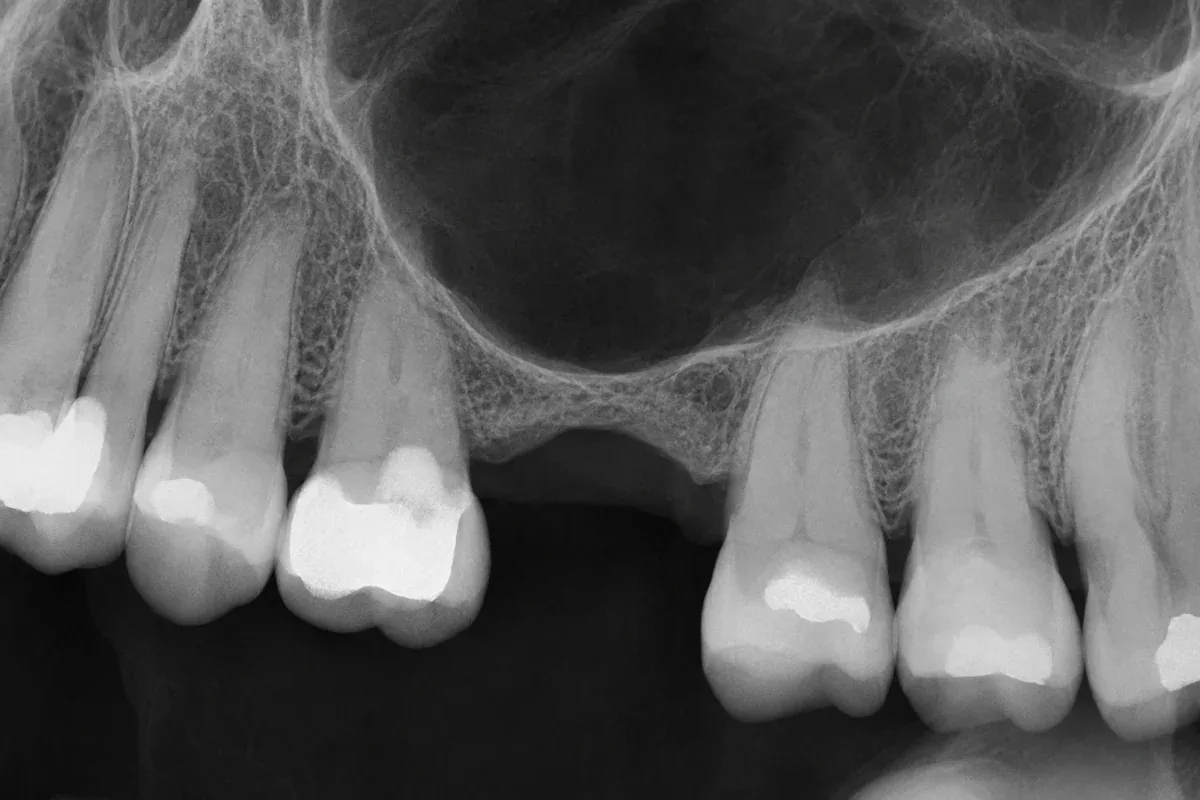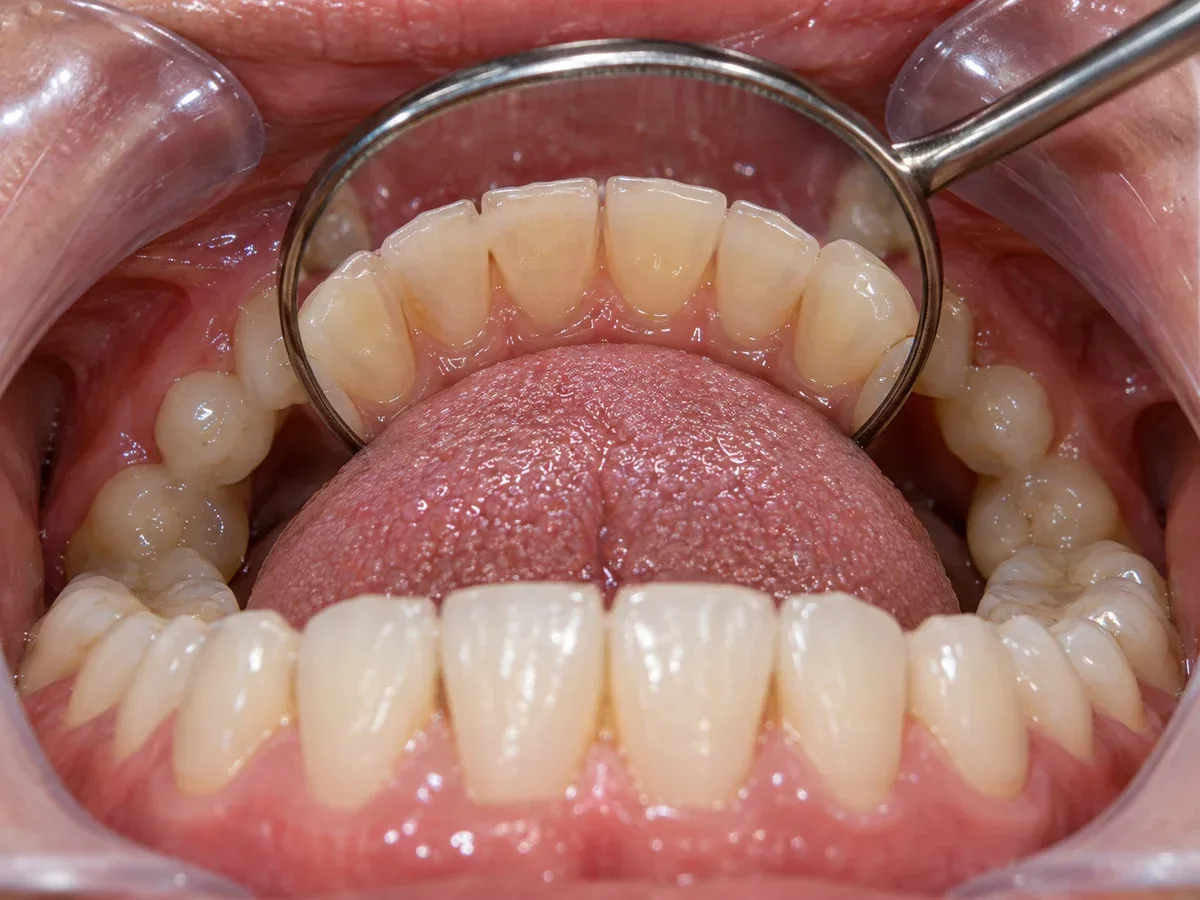
- Tooth eruption is the journey a tooth makes through the jawbone to its proper place. If that path is blocked, the tooth comes in late or stops.
- Late is not the same as stuck. Doctors separate delayed eruption, ectopic eruption and impaction.
- Most cases cause no pain, so they are hard to spot before an X-ray. A quick check in Busan can settle the question.
- Whether to wait or act depends on the cause and the position. Missing the right time can affect the neighboring teeth.
"All the other kids have their new teeth, but ours hasn't come in yet." Parents tell us this often at our clinic in Seomyeon, Busan. Children develop at different speeds, so being a little late is common. For families living in or visiting Korea, we provide 1:1 English interpretation from the first consultation through the end of treatment.
Still, some cases simply need time, and others get harder the longer you wait. Based on Korea's national health information portal, this column explains tooth eruption problems, when an X-ray is worth taking and what changes if nothing is done.
How does tooth eruption actually work?
The Korea Disease Control and Prevention Agency (KDCA) defines tooth eruption as the whole process of a tooth moving from the jawbone into the mouth. It ends when the tooth reaches a working position.
It divides this process into three stages. Each stage has its own job.
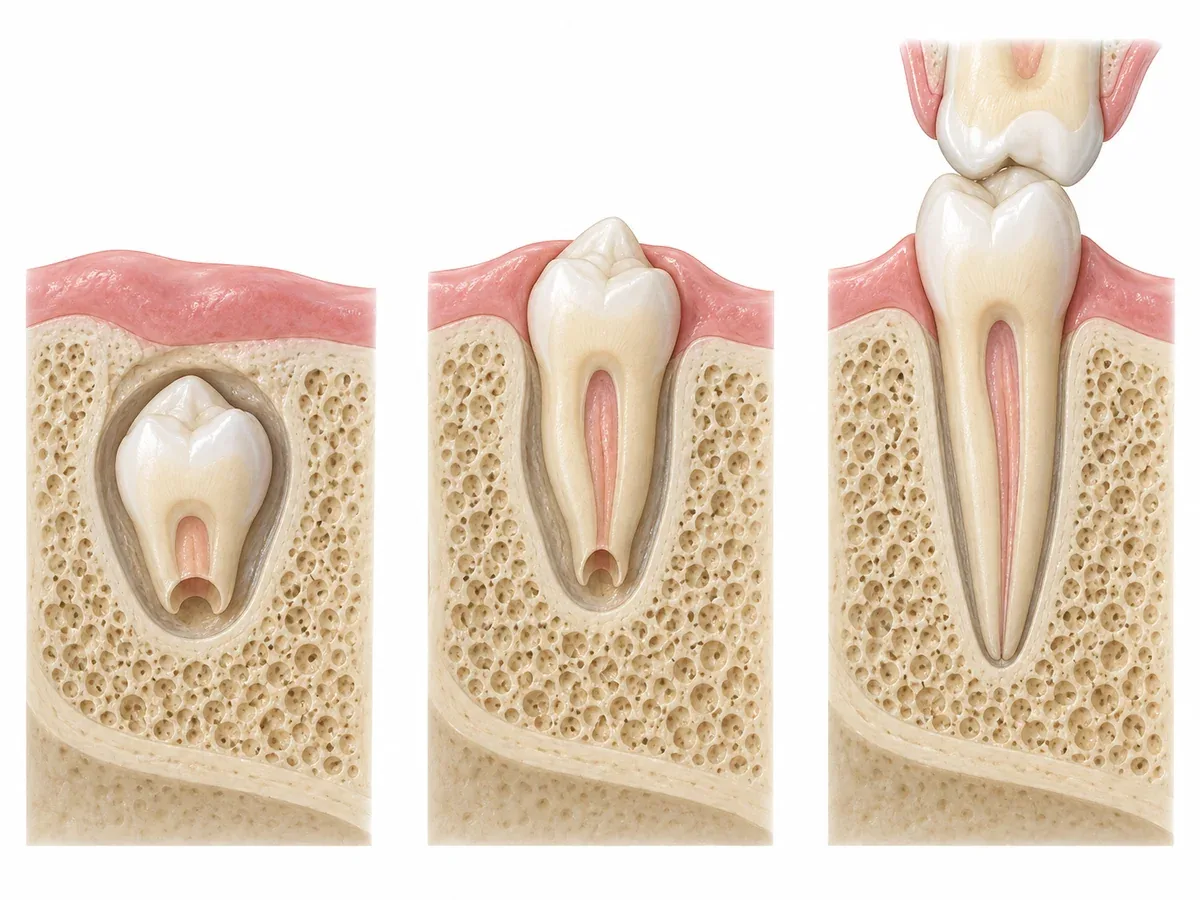
| Stage | What happens |
|---|---|
| Pre-eruptive stage | The tooth germ, the bud of the tooth, starts to move inside the jawbone |
| Pre-functional eruption | The tooth breaks into the mouth and rises until it meets the opposing tooth |
| Functional eruption | After the teeth meet, the tooth keeps settling as the jaw grows |
The KDCA goes on to explain that each tooth comes in with its own timing, order and position.
When the surrounding conditions upset that balance, eruption can stop or be held back. A tooth that comes in at the wrong position, or cannot come in at all, has a tooth eruption disorder.
In other words, a missing tooth in the mouth is not always a missing tooth. Often it is there, waiting inside the bone.
Is a late tooth the same as one that cannot come in?
No. The KDCA divides tooth eruption problems into three kinds. They can look alike from the outside, but each is handled differently.
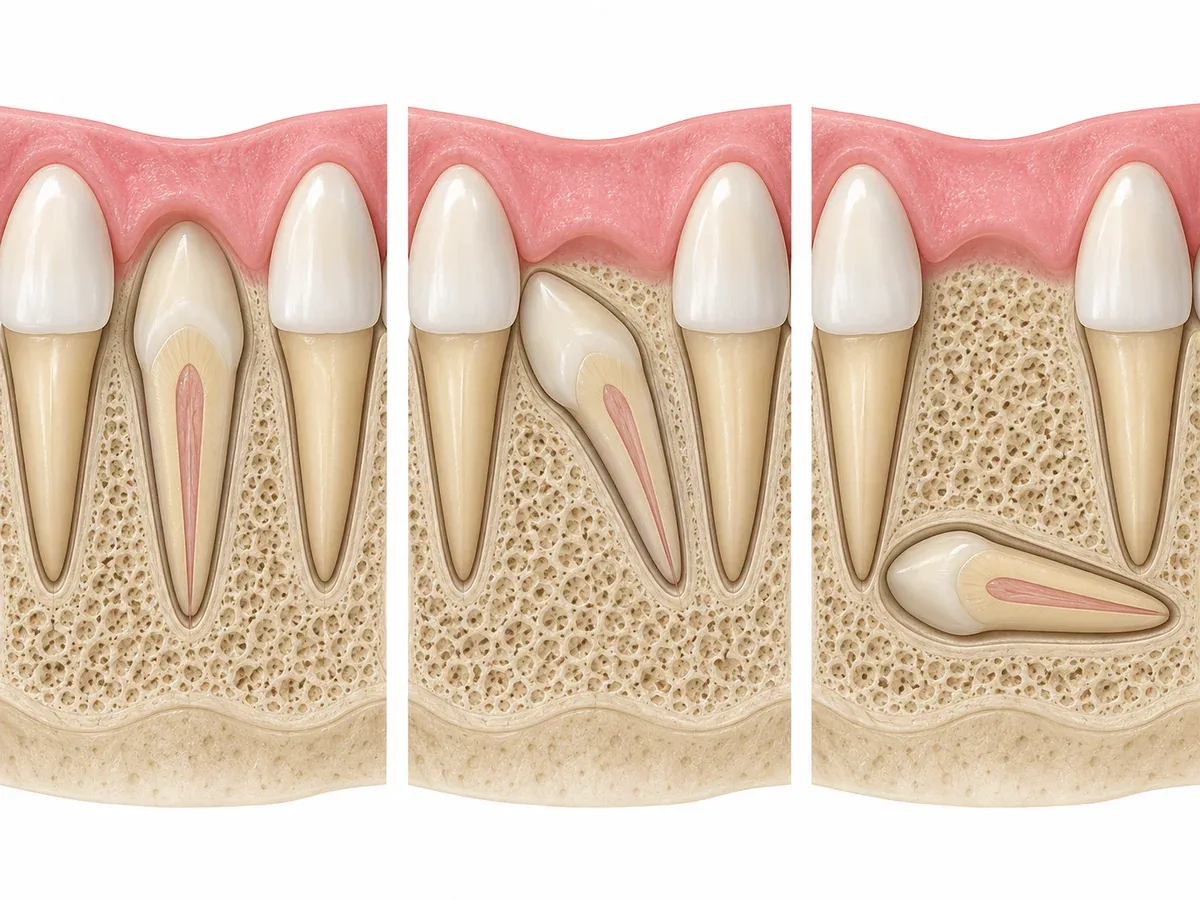
Delayed eruption means a tooth has not come in after the normal time has passed. According to the KDCA, it is common for one or a few adult teeth to be late. Sometimes all teeth are late because of a whole-body cause, while delay in baby teeth is relatively rare.
Ectopic eruption means a tooth comes in at the wrong position. The KDCA says it happens most often in the upper first molars, the lower lateral incisors and the upper canines.
Impaction means the tooth stays buried in the gum or jawbone after its time has passed. A tooth that is not yet buried can also count as impacted if its shape, position, direction and space make normal eruption unlikely.
| Type | What it means | Common examples |
|---|---|---|
| Delayed eruption | The tooth has not come in after the normal time | One or a few adult teeth |
| Ectopic eruption | The tooth comes in at the wrong position | Upper first molars, lower lateral incisors, upper canines |
| Impaction | The tooth stays buried in gum or bone | Upper front teeth and canines |
Why do some teeth fail to come in, and how common is it?
The KDCA divides the causes into local causes and whole-body causes.
Local causes apply to that spot in the mouth. The KDCA lists several of them.
- the tooth germ sits off its normal path
- there is not enough space for the tooth
- an extra tooth (supernumerary tooth) blocks the way
- a tooth-like growth called an odontoma, or a cyst, is in the path
- a baby tooth has fused to the bone and will not fall out
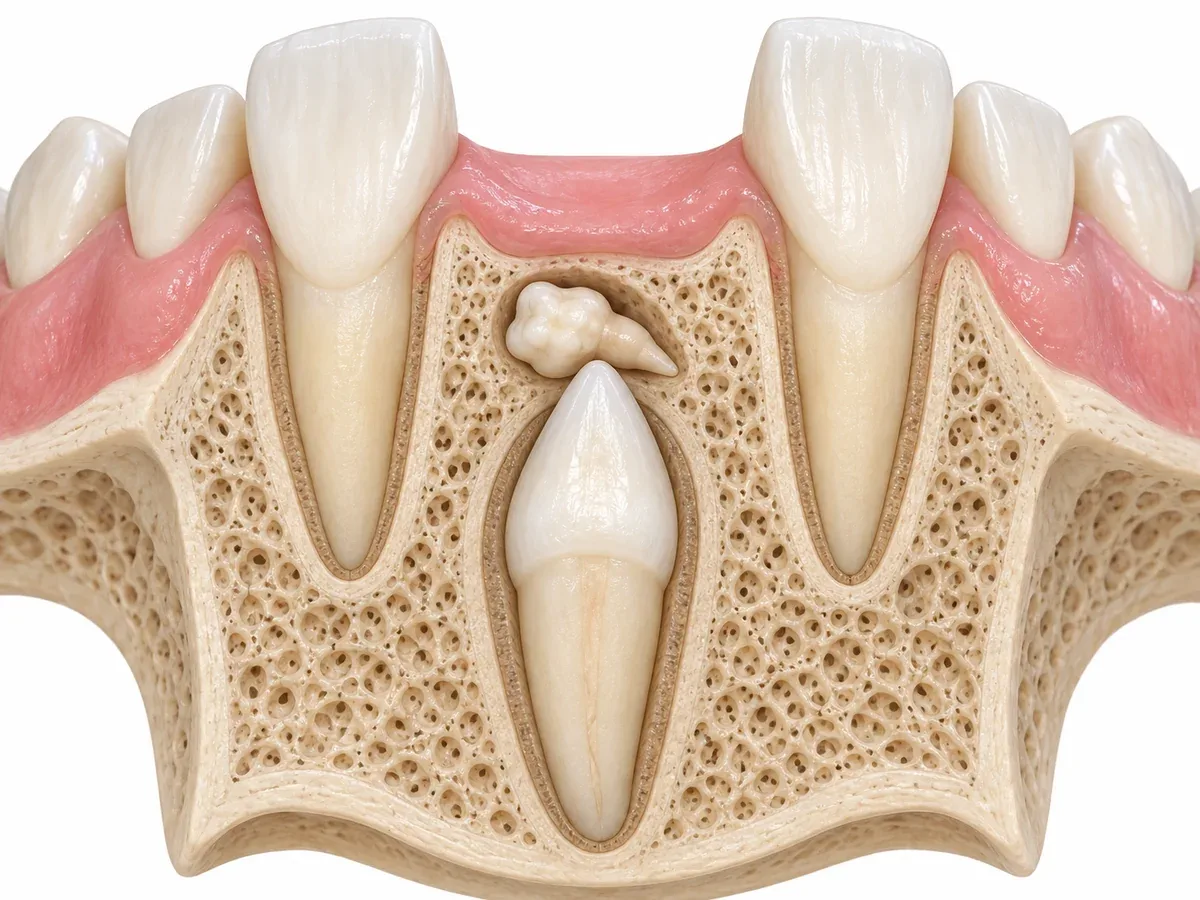
When the path is blocked, the tooth stops or rises in the wrong direction.
There are whole-body causes too. The KDCA says these should be considered when no local cause is found, and it mentions hormonal and metabolic disorders and certain syndromes. In those cases, it is not a dental problem alone, so a pediatrician should be involved.
How common is it? A Korean survey cited by the KDCA found that about 4.5% of patients visiting pediatric dentists had tooth eruption problems in adult teeth.
Of those, impacted upper teeth made up 75%. The front teeth (central incisors) and the canines were impacted most often. Tooth eruption problems of the upper canine, which can have serious effects, were reported in about 2%.
So it is not rare, yet it does not affect most children either. Rather than worrying, it makes more sense to check once.
When should your child have an X-ray in Busan?
According to the KDCA, diagnosis starts with a few checks.
- whether the left and right sides match
- how many adult teeth have already come in
- the order in which they came in
The KDCA then gives two clear signs that an X-ray is needed.
| Situation | What to look for |
|---|---|
| A baby tooth stays | The baby tooth has not fallen out after the usual time |
| Left and right differ | In the same jaw, one side has come in but the other has not for 4 months or more |
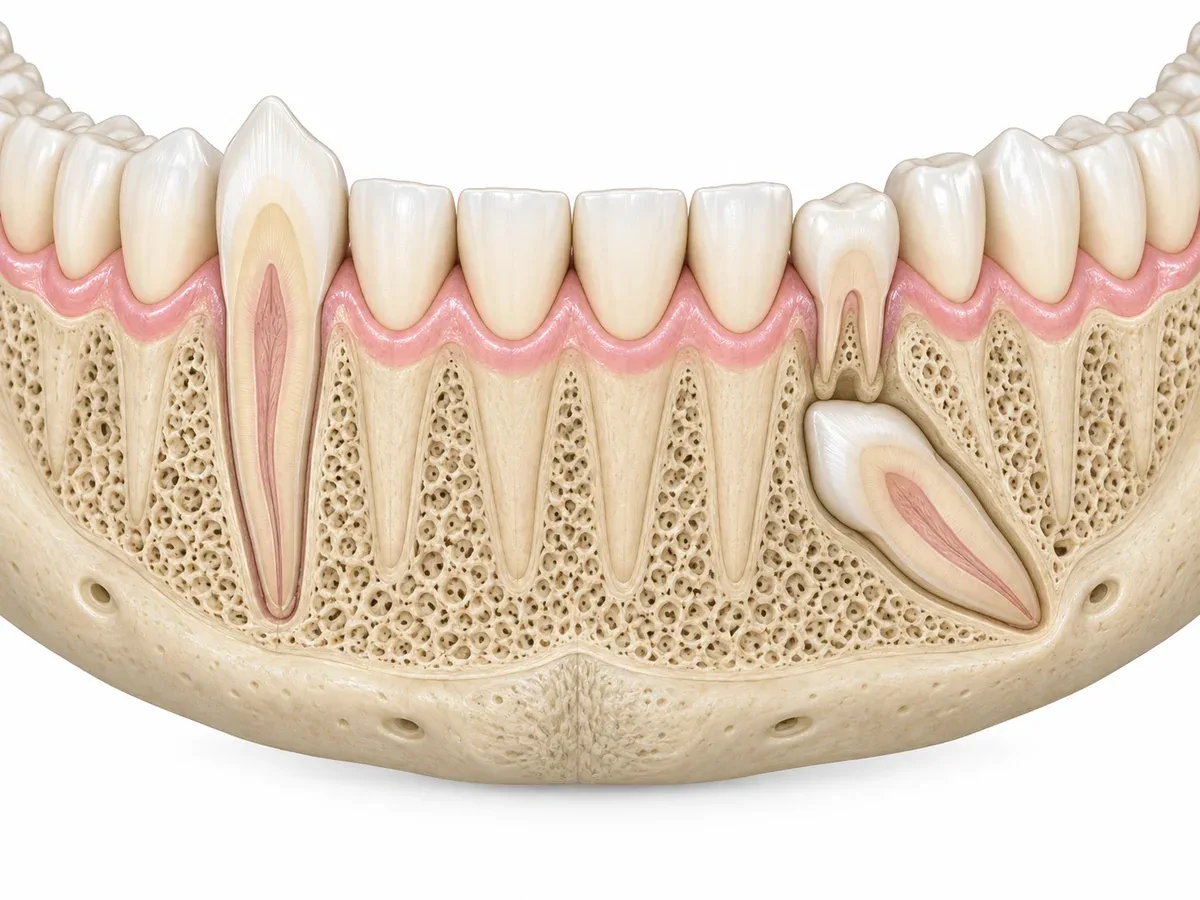
A panoramic X-ray and an occlusal X-ray are the main images, often with small X-rays taken inside the mouth.
Sometimes we need to see the exact position of the tooth, how much the neighboring roots have worn away, or the state of nearby structures. Then a CT scan may be added.
The KDCA's wisdom tooth guide also says a CT helps when a tooth lies close to the nerve canal. It allows a more accurate decision.
The KDCA stresses one period in particular. Elementary and middle school years are when teeth change, so regular X-rays help catch tooth eruption problems early.
This overlaps with the KDCA's fluoride guidance. It treats the years up to about age 14 or 15 as the key period and recommends professional fluoride every 3 to 6 months. You can check tooth eruption during those regular visits.
What happens if an unerupted tooth is left alone?
The KDCA repeats that tooth eruption problems usually progress without any clear symptoms. No pain does not mean no problem. It lists the following risks.
- neighboring teeth tilt, space is lost and the midline shifts
- neighboring teeth move and their roots wear away (root resorption)
- the dental arch gets shorter, leading to a poor bite
- a cyst forms
- infection and referred pain
The KDCA gives concrete examples. If an upper first molar gets caught behind the baby molar in front of it, the baby molar's root can wear away. When this becomes severe, the nerve gets infected and pain follows.
If that baby tooth then has to come out early, treatment to regain and hold the space is needed afterwards. Left empty, the gap shrinks as the neighboring teeth tilt in.
When an upper canine rises in the wrong direction, the root of the upper front tooth next to it can wear away. If the nerve becomes infected, root canal treatment may be needed.
If resorption goes far, the front tooth can loosen and may have to be removed. In effect, a healthy front tooth is lost, not the tooth that caused the trouble.
A fluid-filled sac can also form around a buried tooth. The KDCA's wisdom tooth guide explains that an impacted tooth can cause a dentigerous cyst, which destroys the surrounding jawbone.
If it spreads further, it can reach the neighboring molar and cost that tooth its future. A large cyst can even let the jaw break with a small impact, so prompt treatment is needed.
How are tooth eruption problems treated?
The KDCA says treatment depends on the cause, how far the tooth has developed, the position and path of the tooth germ, and how well the child can cooperate. There is a set order.
- Remove the local cause, such as an extra tooth, odontoma, cyst or overdue baby tooth.
- Watch regularly to see whether the tooth comes in by itself.
- Expose the tooth surgically to clear its path.
- Guide it into place with gentle orthodontic traction.
- Consider transplanting the tooth, or removing it.
First comes removing what blocks the path, usually with minor surgery. Regular observation follows.
The KDCA explains that once the cause is gone and the tooth has enough eruptive force, normal tooth eruption may follow without further treatment. Waiting can be a treatment too.
If it still does not rise, the tooth is surgically exposed. Gum, bone and sometimes part of the tooth sac are removed to open the way.
Teeth tend to move where resistance is lowest. The KDCA notes that an upper canine impacted on the palate side can sometimes be guided out by exposure alone.
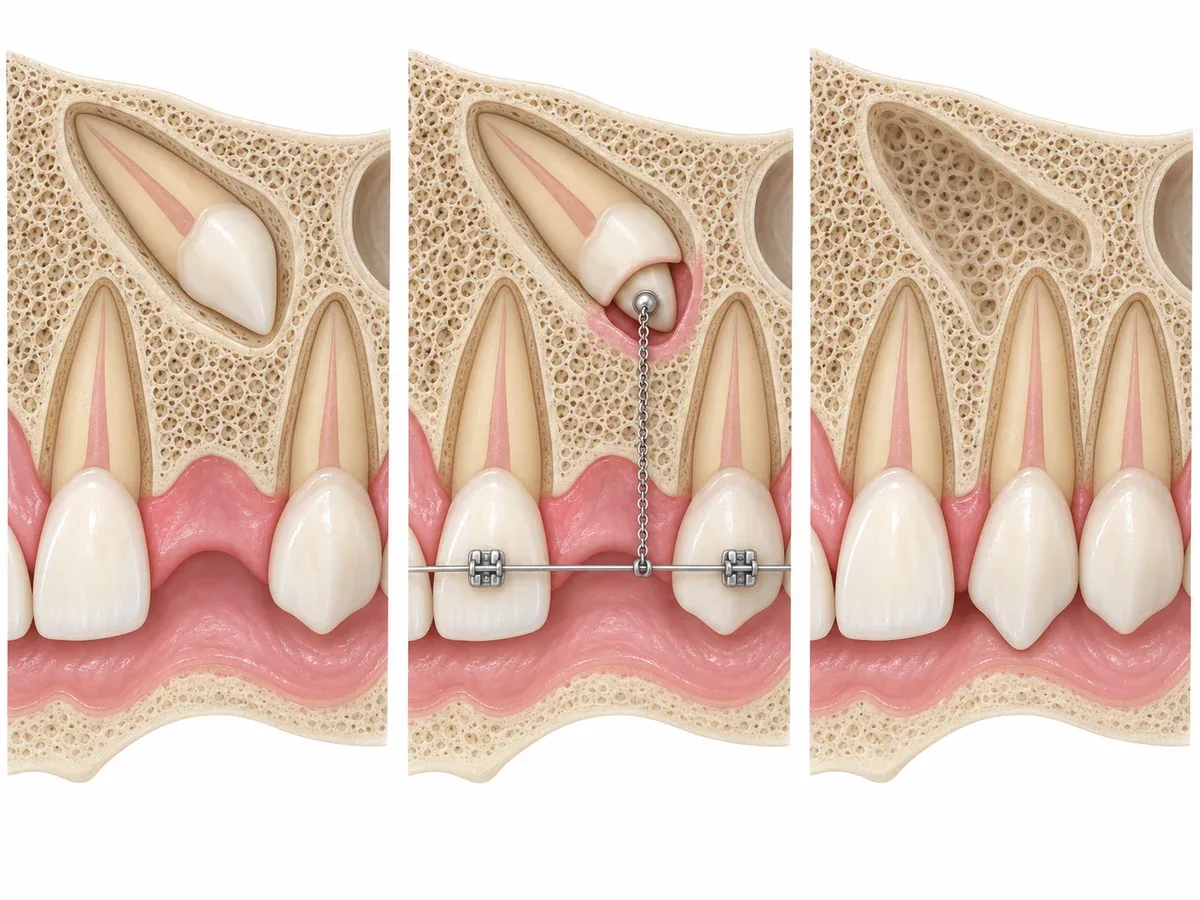
If exposure is not enough, orthodontic traction is used. After the crown of the tooth is uncovered, a small attachment is bonded to it to guide it into the normal position.
The KDCA stresses applying light force gradually so the tooth stays alive. Speed is not the goal.
If the tooth eruption path is far off or the structure does not suit traction, autotransplantation may be considered. This means moving the tooth to the right spot. The KDCA says it is usually done once about three-quarters of the root has formed.
Teeth that have not fully developed tend to have better success rates, so timing shapes the result. If none of these methods work, or the tooth disturbs the growth of nearby teeth and bone, removal is considered.
What if there is not enough space, or you find out as an adult?
The KDCA names lack of space for the teeth as a risk factor. This happens when the jaw is small or the teeth are large.
To prevent it, early orthodontic treatment that widens the dental arch may be needed. Timing comes up again here.
The KDCA's jaw surgery guide notes that growing children can sometimes improve skeletal problems with orthodontics and avoid surgery. Adults who have stopped growing may need surgery to correct a skeletal mismatch. Some options exist during childhood alone.
Some people learn about an impacted tooth as adults. The KDCA's wisdom tooth guide explains that removing an impacted tooth gets harder with age. The bone becomes denser, and general health conditions become more likely.
Yet if a tooth is buried very deep and removal risks nerve damage, it is sometimes left in place and watched. Removing every buried tooth is not the answer, and neither is leaving every one alone.
For adults with an impacted tooth, we start by checking the tooth's position and nearby structures on X-ray. What to do depends on those findings, so a consultation is needed.
Frequently asked questions
My child is later than friends. How long can we wait for tooth eruption?
Children develop differently, so age alone cannot decide it. The KDCA says an X-ray is needed if a baby tooth stays past its time. The same applies if one side has come in and the other has not for 4 months or more.
There is no pain. Does it really need checking?
The KDCA stresses that tooth eruption problems often progress without symptoms. Regular checkups, including X-rays, are important for early detection. Since there is no pain, an X-ray is how you find out.
Can a buried tooth be saved?
Sometimes. The KDCA describes guiding it into place with surgical exposure and orthodontic traction. The further the tooth germ is from its normal position, though, the more likely the outlook is poor.
Can we get this checked in English in Busan?
Yes. We offer 1:1 English interpretation from the first consultation through the end of treatment. The clinic is near Seomyeon Station Exit 2 (5-min walk), opposite Lotte Hotel Busan, and you can call 010-8555-2854 (+82-10-8555-2854 from abroad).
A tooth that has not come in
is often found late because it does not hurt.
Some cases can wait,
and some get harder the longer you wait.
If your child's teeth are changing and you are in Busan, Reset Dental Clinic can check tooth eruption with one X-ray, with 1:1 English interpretation throughout. Call 010-8555-2854 to book a check.
References
- KDCA National Health Information Portal, "Tooth Eruption Disorders" — definition and three stages of eruption, delayed and ectopic eruption and impaction, local and whole-body causes, frequency in a Korean survey (4.5%, 75%, 2%), symptoms and complications, when an X-ray is needed (retained baby tooth, 4+ months difference), the order of removing the cause, observation, surgical exposure, orthodontic traction, autotransplantation and extraction, and regular checkups during school years and lack of space
- KDCA National Health Information Portal, "Wisdom Teeth" — impaction from lack of space, dentigerous cysts and jawbone damage, why extraction gets harder with age, watching deeply impacted teeth, and the role of panoramic X-rays and CT
- KDCA National Health Information Portal, "Orthognathic Surgery and Orthodontic Treatment" — skeletal problems can sometimes be improved with orthodontics during growth, while surgery may be needed after growth ends
- KDCA National Health Information Portal, "Fluoride Application" — the care period from the first baby teeth until 2 years after the last adult teeth (age 14–15) and the professional fluoride interval (3–6 months)
Written by Reset Dental Clinic Support Team
Medical review Dr. Kim Hyun-joo, Head Dentist · Esthetic Restorations
Last updated: September 19, 2026
This column is for general information and does not replace diagnosis or treatment for individual patients. If you have symptoms, please see a dentist.