- There is no single interval that suits everyone. The source suggests a dental checkup every year if you have no disease, and every 6 months if you were recently treated.
- Gum disease changes things. The sources recommend checks every 3–6 months and scaling at least once every 6 months.
- Adults aged 19 and over who are covered by Korea's National Health Insurance can get scaling once a year under the insurance. An unused turn does not carry over to the next year.
- By the time symptoms appear, oral disease is often hard to reverse. That is why a fixed checkup interval matters.
"Nothing hurts, so do I really need a dental checkup?" We hear this often at Reset Dental Clinic in Seomyeon, Busan. We provide 1:1 English interpretation from the first consultation to the end of treatment.
Another common question is whether it is too late after years without a dental checkup. Neither question has a one-line answer, because the interval is set differently for each person. What the dentist looks at to set it, however, is written down clearly.
This column draws on KDCA National Health Information Portal pages on preventing oral disease, scaling, gum disease and tooth decay. It also uses an article from Dailydental, the Korean Dental Association's newspaper.
How often should you get a dental checkup?
The page on preventing oral disease puts it clearly. How often you need a dental checkup differs from person to person.
If you have no disease, it recommends a checkup every year. If you were recently treated for a disease, it recommends a checkup every 6 months.
Elsewhere, the same page says you should have a dental checkup once or twice a year. The aim is to find hidden oral disease and treat it.
The other pages also mention intervals from their own angle. The tooth decay page answers a question about how often to visit the dentist.
It says the interval varies a lot with oral hygiene and how far decay has progressed. Usually, though, a visit every 6 months after treatment ends is a good idea.
The gum disease page says the disease comes back easily whenever ongoing care slips. So it calls for checks every 3–6 months, with gum exams and regular scaling even without symptoms.
| Your situation | Interval in the sources |
|---|---|
| No disease | A dental checkup every year |
| Recently treated for a disease | A checkup every 6 months |
| After decay treatment is finished | Usually a visit every 6 months |
| Gum disease (periodontal disease) | Checks every 3–6 months; scaling at least once every 6 months |
| Severe gum disease that is hard to manage | Repeated scaling every 3 months |
As the table suggests, the interval is not set by age. It is set by the current state of your mouth and your treatment history.
What decides your checkup interval?
The scaling page divides the factors clearly. How often you need scaling depends on three things.
- How well you keep your mouth clean
- How advanced any gum disease is
- Whether you have restorations or implants in your mouth
So the question "How often do other people come in?" has no real answer. Your own mouth sets the pace.
The same page explains why daily care matters so much. With poor oral hygiene, the harmful bacteria in plaque can build up again within 1–2 months.
In other words, a clean state after scaling does not simply stay that way. How fast plaque comes back depends on how you brush at home.
The prevention page makes the same point. The right time for scaling depends on each person's ability to care for their mouth.
So it is better to set the interval after a dental checkup at a clinic. The page adds that learning oral care methods at the clinic helps a great deal in building that ability.
Read this as a sign that a checkup is not just a quick look. It is also a chance to learn how to look after your teeth between visits.
What does national health insurance cover in Korea?
A widely used covered treatment is scaling, the removal of tartar. The scaling page says people aged 19 and over can get scaling once a year under national health insurance.
The gum disease page says the same thing in more detail. Anyone aged 19 or over can get one insured scaling between January 1 and December 31 each year.
A Dailydental article passed on more detailed guidance from the National Health Insurance Service (NHIS). Insured people aged 19 or over and their dependents can use this preventive benefit.
- It is offered once a year.
- If you do not use it by the end of that year, it does not carry over and simply expires.
- The NHIS calls scaling basic preventive care for dental health.
- It asks people not to wait until the end of the year, when clinics can get crowded.
If you cannot remember whether you have had it this year, you can check yourself. According to the article, you can look up your scaling record on the NHIS website or in the NHIS mobile app.
One point is worth stressing. Once a year is the number of times insurance covers, not the right interval for everyone.
That is why the scaling page states two things separately. Use the yearly insured scaling, and if you have gum disease, get scaling at least once every 6 months.
What happens at a dental checkup?
The prevention page lists six ways to assess oral health. Together they show what a dental checkup looks at.
| Exam | What it checks |
|---|---|
| Tooth exam | How far any decay has progressed |
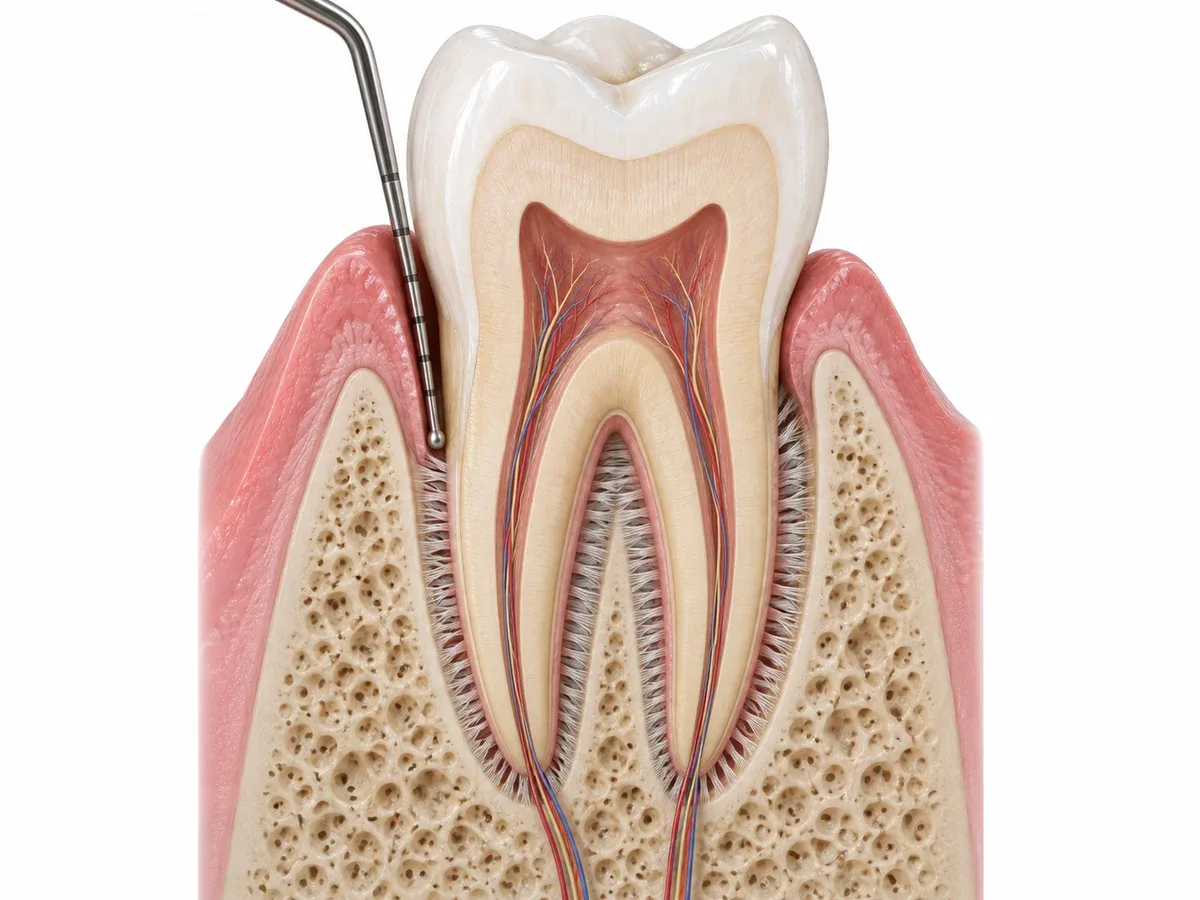
| Periodontal exam | Gum inflammation, pocket depth (periodontal pocket) and tooth looseness (mobility) |
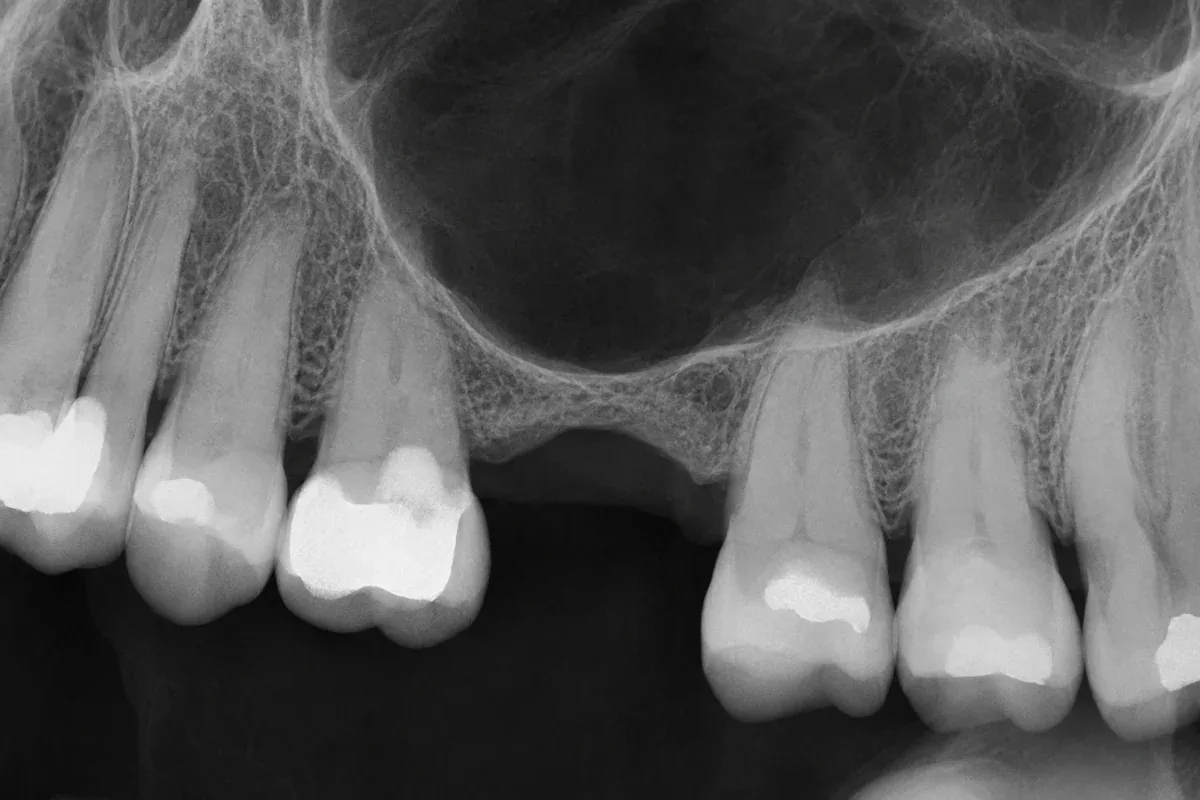
| X-rays | The condition of the teeth and jawbone |
| Jaw joint exam | Jaw movement and any problems with function |
| Bite exam | Chewing force between the upper and lower jaw |
| Risk factor tests | Saliva tests, decay activity tests and oral bacteria tests |
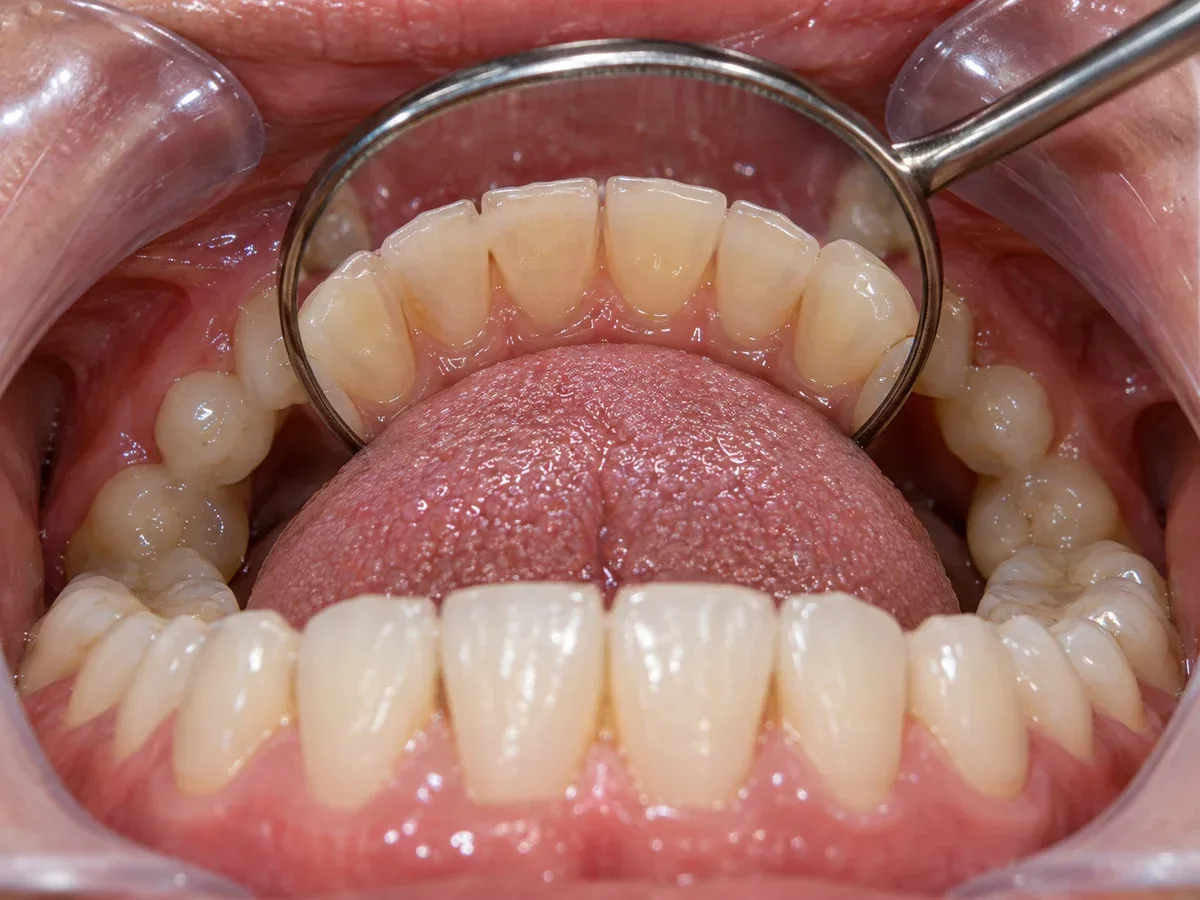
The gum disease page describes the gum exam in more detail. The tooth surface is dried, and the amount and spread of plaque and tartar are checked.
- The dentist looks at the color, size, shape and firmness of the gums, and whether they bleed.
- A thin periodontal probe is slipped in and moved bit by bit to measure pocket depth.
- An instrument is pressed against each tooth to see how loose it is.
The page is firm on one point: X-rays alone cannot diagnose gum disease. A clinical exam is always needed as well, and that is part of every dental checkup.
The scaling page adds that tartar is checked by eye. A panoramic X-ray is taken as well, to assess the overall condition of the teeth and jawbone.
So can you come in just for scaling and skip the rest? The scaling page says early gum disease can be treated with scaling alone. Advanced gum disease, however, needs further gum treatment after scaling, so it is wiser to have the checks as well.
How do dental checkup needs change with age?
The interval itself is set by the state of your mouth. What the dentist watches for, however, changes with age.
Children and teenagers: the focus is decay and sealants, which fill the grooves of back teeth. The prevention page says 66.4% of 5-year-olds have already had decay, and 58.4% of 12-year-olds have had it too.
So the page advises sealing the molars as soon as a regular dental checkup shows they have come in. It says sealants work very well against decay on the chewing surface, and encourages them from age 5.
People in their 20s and 30s: this is when gum problems begin. The gum disease page says gum disease usually starts from the mid-30s, so regular checkups and good brushing matter from your 20s and 30s.
People in their 50s and older: the curve gets steeper. The page says prevalence rises with age overall, and climbs sharply from age 50.
| Age group | Men | Women |
|---|---|---|
| 20s | 5.2% | 2.9% |
| 30s | 19.3% | 9.1% |
| 40s | 39.2% | 16.0% |
| 50s | 49.7% | 32.8% |
| 60s | 55.2% | 39.5% |
Older adults: reduced saliva adds another concern. The prevention page says professional fluoride should be applied more often for children, teenagers and older adults with low saliva flow.
On the other hand, people with no decay and low risk often do not need fluoride at all. Even at the same age, what each person needs can differ.
What happens if you put off your dental checkup?
We are not trying to scare you. We are simply passing on what the sources describe when a dental checkup is delayed.
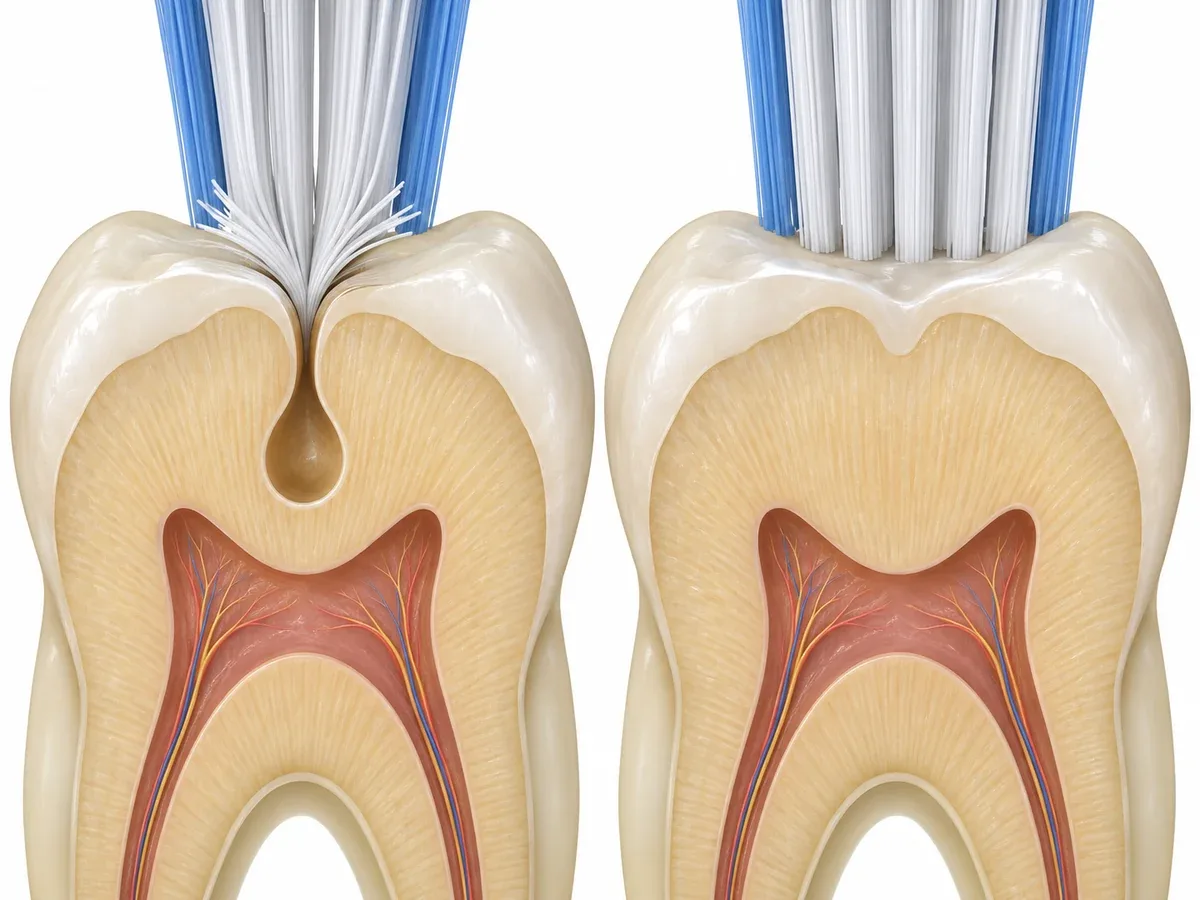
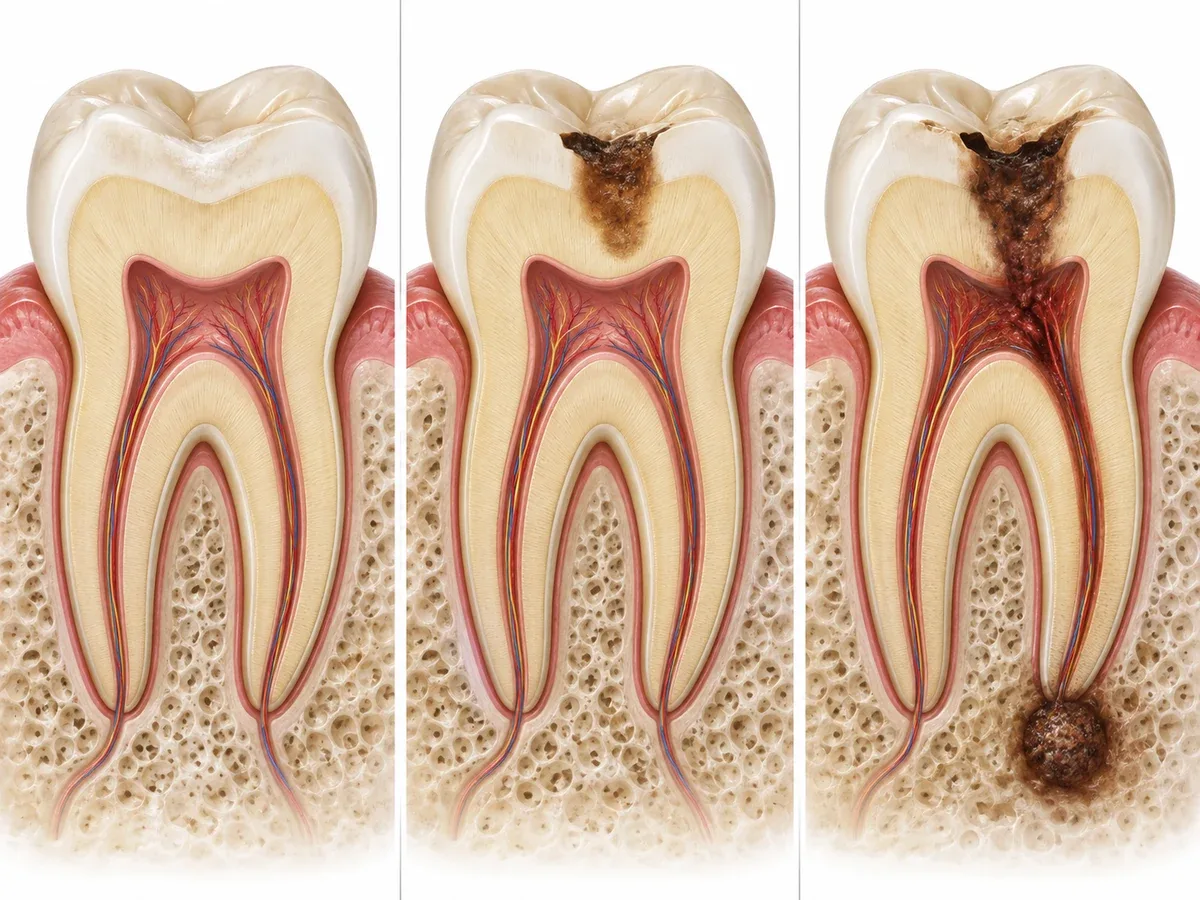
Tooth decay starts silently. The tooth decay page describes how the symptoms change as decay goes deeper.
- Decay in the outer layer (enamel): almost no pain.
- Decay in the inner layer (dentin): sensitivity to cold food and sweet tastes.
- Decay reaching the nerve inside the tooth: tooth pain that is hard to bear.
The prevention page says the earliest stage causes almost no symptoms, but a white spot can appear on the tooth. With good care at this point, the tooth can return to its original state.
The hard part is that the reversible stage overlaps with the stage that has no symptoms. A regular dental checkup is how that stage gets noticed.
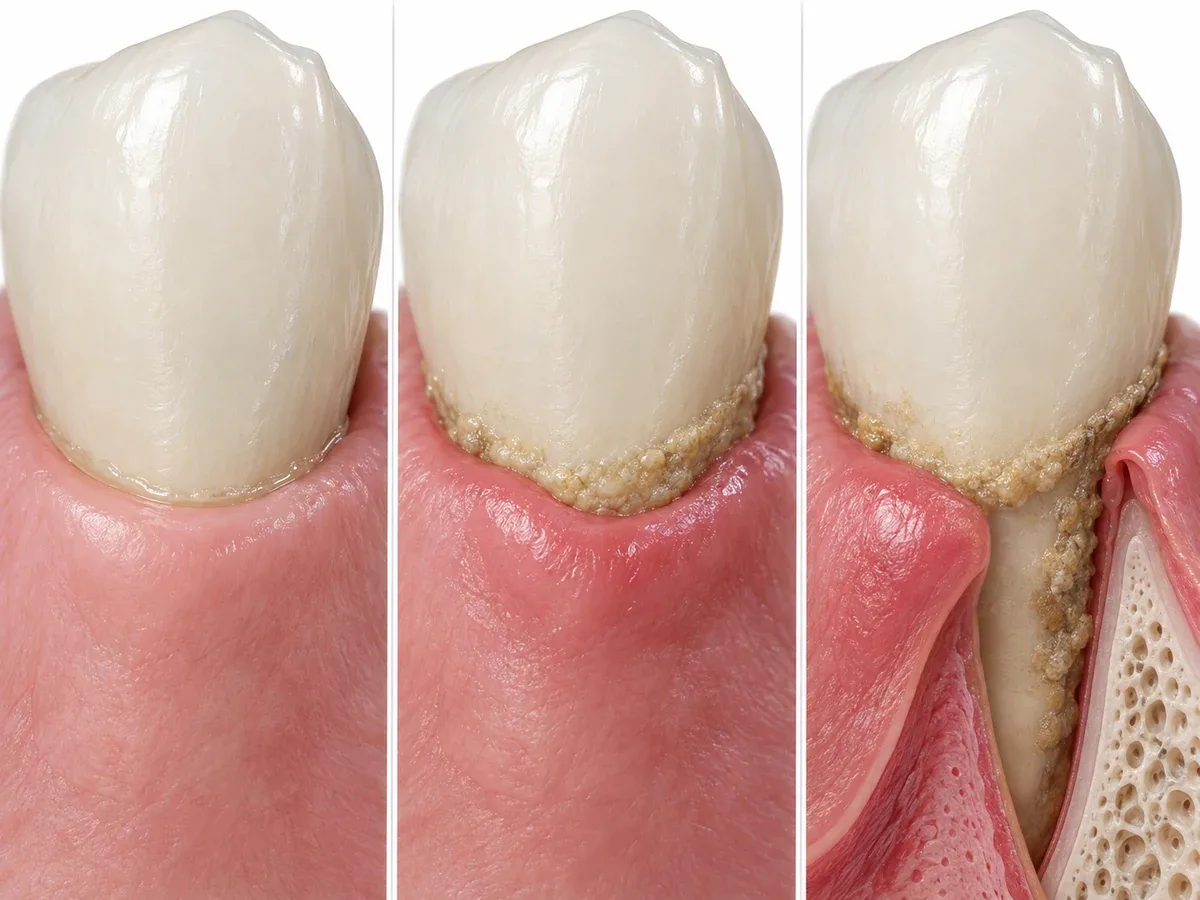
Gums follow the same pattern. The gum disease page calls it a chronic disease that progresses silently. When people come in after symptoms appear, treatment is often no longer possible.
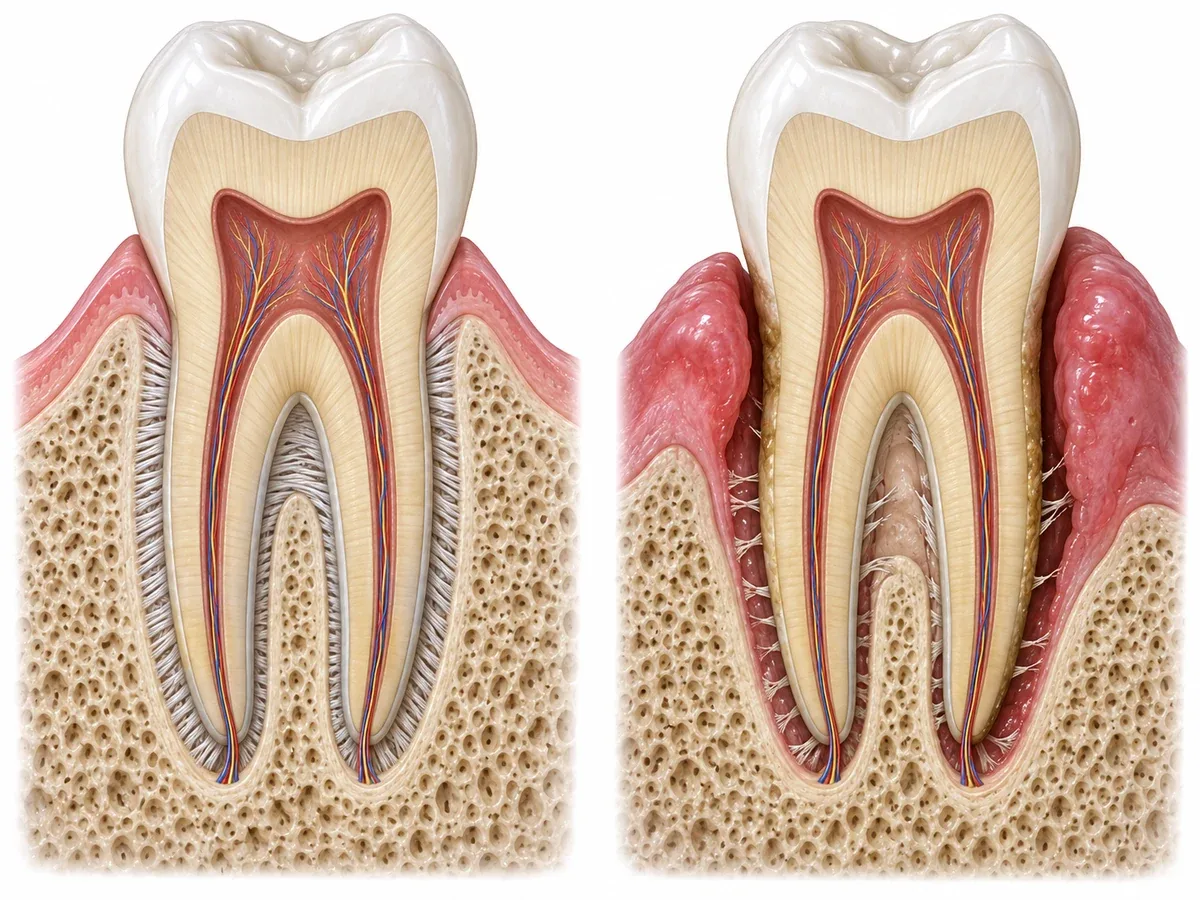
Once it reaches periodontitis, where the bone around the teeth breaks down, the page says recovery to the original state is difficult. If the right time for treatment is missed, the tooth often has to be removed.
The prevention page sums it all up. Oral disease shows symptoms after some time, and by then it is often hard to reverse, so early detection and proper treatment matter.
It adds that teeth and jawbone cannot return to their original state once destroyed. Changes inside them are hard to see by eye, so regular X-rays are needed.
Staying with one clinic also helps. The decay page says regular exam records and long-term X-rays let dentists track how decay starts and develops. When today can be compared with last time, changes show up earlier.
Finishing treatment is not the end, either. The decay page says decay can come back if hygiene or diet is not controlled, and the gum disease page says gum disease can return whenever care slips.
Frequently asked questions
Do I need a dental checkup if nothing hurts?
According to the sources, yes. The gum disease page says gum exams, scaling and gum care are needed every 3–6 months even without symptoms. The prevention page adds that teeth and gums are hard to observe yourself, so problems are often noticed late.
It has been years since my last visit. Will I be scolded?
Not at all. If you have put it off for a long time, the first step is to see your current state clearly. After visual exams, X-rays and gum depth checks, we explain what needs care now and what can be watched, and then set your interval.
Is there anything I should tell the dentist before scaling?
Yes. The scaling page says to tell the clinic if you take blood thinners such as aspirin, Plavix or warfarin, or have a condition that lowers platelets. Also mention artificial heart valves or joints that call for preventive antibiotics, and uncontrolled high blood pressure or diabetes.
Can I get a dental checkup in English in Busan?
Yes, we provide 1:1 English interpretation from the first consultation to the end of treatment. The clinic is near Seomyeon Station Exit 2 (5-min walk), opposite Lotte Hotel Busan. Call 010-8555-2854 (+82-10-8555-2854 from abroad).
There is no single interval
that suits everyone.
The sources set these guides:
every year with no disease,
every 6 months after treatment,
every 3–6 months with gum disease.
Coming in before anything hurts
is how problems are found while they can still be reversed.
If you are due for a dental checkup in Busan, Reset Dental Clinic offers 1:1 English interpretation from your first consultation to the end of treatment. Call 010-8555-2854 to book a visit.
References
- KDCA National Health Information Portal, "Preventing and Managing Oral Disease" — checkups every year with no disease and every 6 months after recent treatment; why early detection matters because oral disease is often hard to reverse once symptoms appear; teeth and jawbone cannot return to their original state once destroyed; six ways to assess oral health; setting the scaling interval after a checkup; fluoride frequency by risk; sealing molars from age 5; decay experience of 66.4% at age 5 and 58.4% at age 12; and early decay appearing as a white spot that can recover with care
- KDCA National Health Information Portal, "Scaling" — insured scaling once a year from age 19; scaling frequency depending on hygiene, gum disease and restorations or implants; at least once every 6 months with gum disease; bacteria returning within 1–2 months with poor hygiene and scaling every 3 months for severe cases; panoramic X-rays with the visual exam; further gum treatment for advanced gum disease; and conditions to tell the dentist about before scaling
- KDCA National Health Information Portal, "Gum Disease (Periodontal Disease)" — gum disease as a silent chronic disease; checks every 3–6 months even without symptoms; limited recovery once periodontitis sets in; how the gum exam is done and why X-rays alone cannot diagnose it; adult prevalence of 23.4% (2018) and prevalence by age and sex, rising sharply from age 50; gum disease usually starting from the mid-30s; and one insured scaling per calendar year from age 19
- KDCA National Health Information Portal, "Tooth Decay" — a visit every 6 months after treatment as the usual interval; regular visits, exam records and long-term X-rays for tracking decay; how symptoms change as decay reaches enamel, dentin and the nerve; and decay as a disease that can come back
- KDA newspaper Dailydental (Chiui Sinbo), "Don't Miss This Year's Insured Scaling" — NHIS guidance that insured scaling is a yearly preventive benefit for insured people aged 19 and over and their dependents, that an unused turn expires at the end of the year, the NHIS request to book early before the year-end rush, and how to look up your scaling record on the NHIS website or app
Written by Reset Dental Clinic Support Team
Medical review Dr. Na In-chae, Head Dentist · Periodontics Specialist
Last updated: September 19, 2026
This column is for general information and does not replace diagnosis or treatment for individual patients. If you have symptoms, please see a dentist.