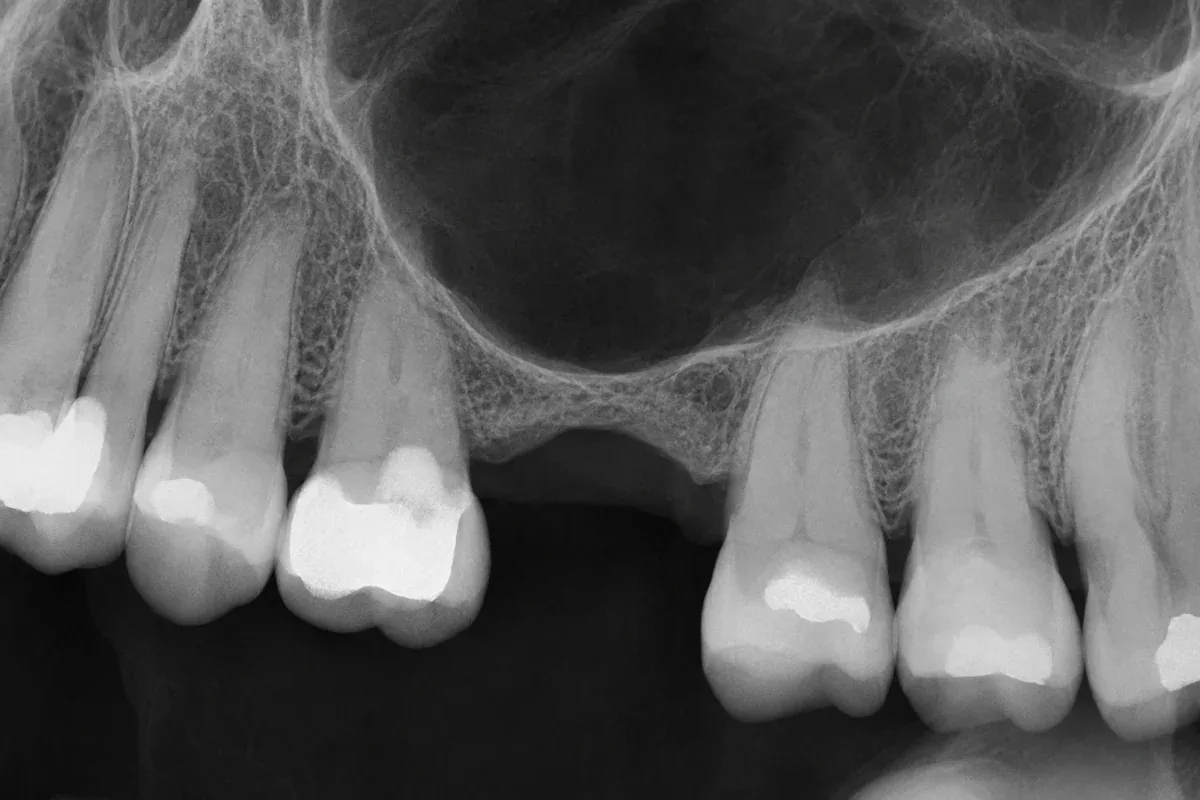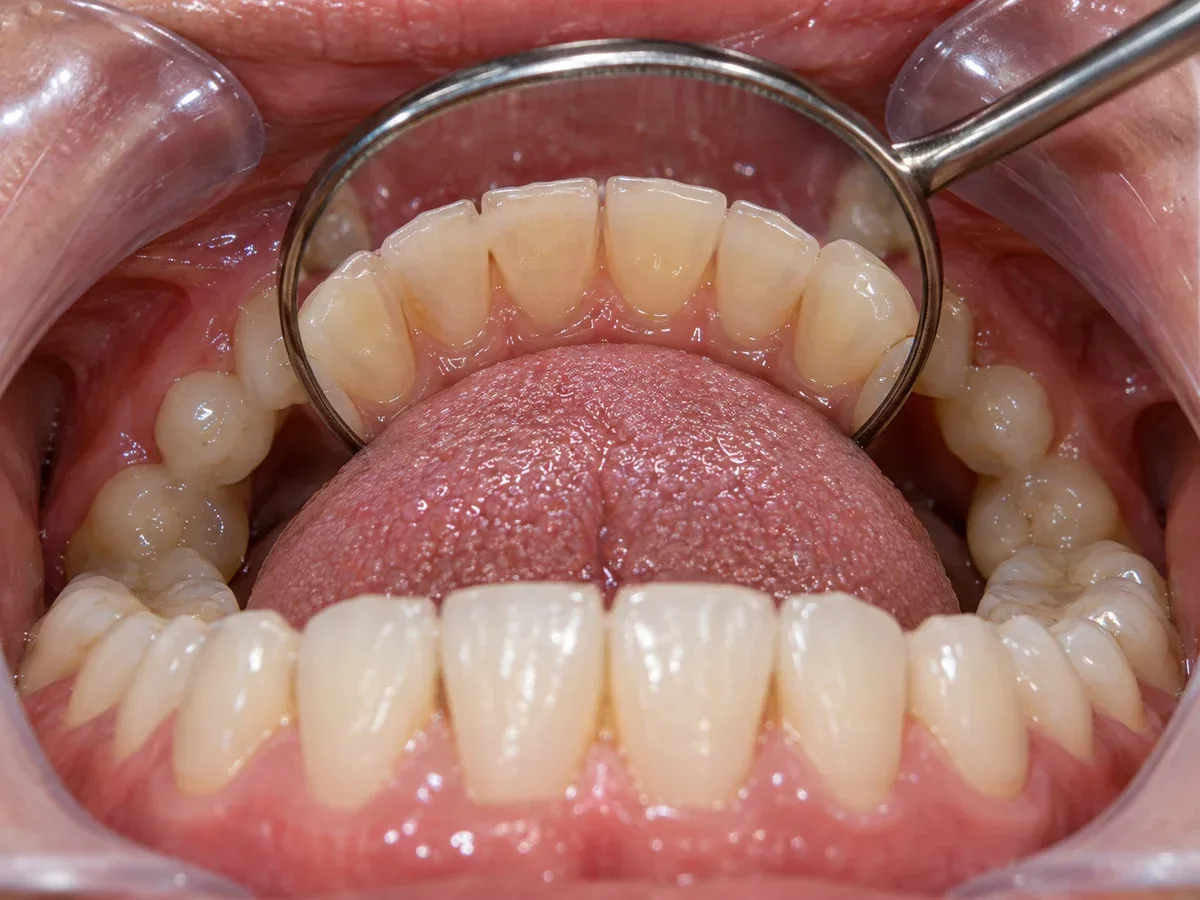
- Bad breath usually starts in the mouth. About 85–90% of cases have a cause inside the mouth; the other 10–15% come from the body, nose or airways.
- Three places come first: the back of the tongue, the gaps between teeth, and a dry mouth.
- Mouthwash is a helper, not a cure. It hides the smell for a while but has no lasting treatment effect.
- Some people notice a smell that tests cannot find. The KDCA material calls this subjective bad breath.
"I think my breath smells." Patients say this quietly at Reset Dental Clinic in Seomyeon, Busan, often after mouthwash helped for a few minutes. For patients living in or visiting Korea, we provide 1:1 English interpretation from the first consultation through the end of treatment.
This column draws on the Korea Disease Control and Prevention Agency (KDCA) health portal. Its pages on halitosis, bad breath, dry mouth, oral disease prevention and scaling are our sources. We explain where bad breath comes from and what to check first.
How common is bad breath?
The KDCA material describes bad breath, or halitosis, as a very common health problem. It affects more than about 50% of people.
If you include everyone who has ever had it, reports range widely, from 25% to 90% of the population. It is not a fatal disease and it does not cause pain.
Yet the material says the distress it causes can be as great as that of serious illnesses. So it is worth taking seriously.
Here is how the smell forms. Bacteria in the mouth break down proteins and amino acids in food debris, saliva and shed cells from the lining of the mouth. This produces gases called volatile sulfur compounds (VSCs).
According to the material, methyl mercaptan and hydrogen sulfide make up 90% of these compounds. They give off smells like rotten eggs and rotten onions.
Where does bad breath usually come from?
This is the most important number in the column. The material says about 85–90% of bad breath has a cause inside the mouth.
The remaining 10–15% comes from outside the mouth. Causes include general medical conditions and inflammation of the nasal cavity or upper airways.
For this reason, the material sets a clear order. When the cause is in the mouth, a dental visit should come first.
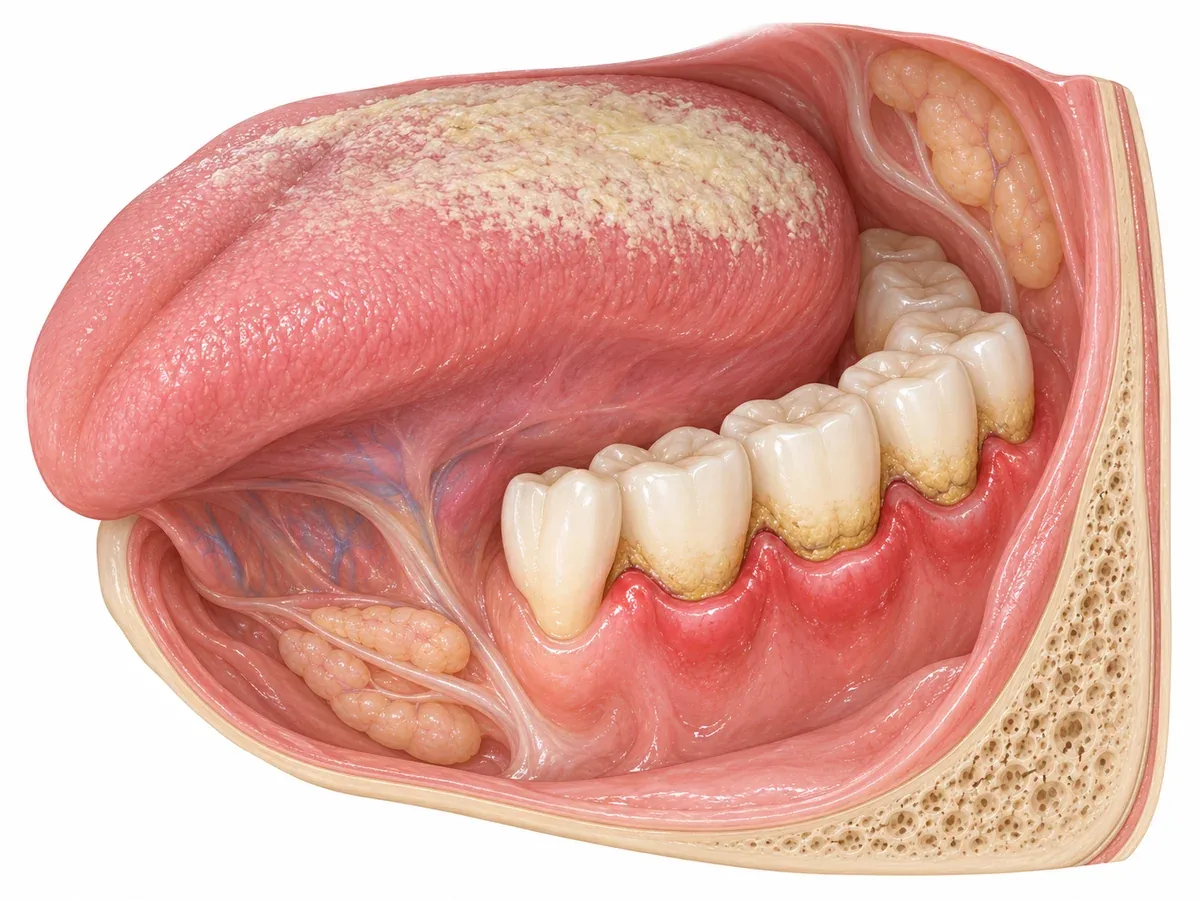
The material lists these causes inside the mouth:
- heavy plaque and tartar
- tongue coating
- wisdom teeth that are hard to keep clean
- trapped food and tooth decay
- gum disease and soft-tissue infections of the mouth
- oral cancer and oral candidiasis (a yeast infection)
- dentures or old restorations
- dry mouth
If you brush well and still notice a smell, check these places in order. Start with the gaps a toothbrush cannot reach, then the tongue, saliva, old or poorly fitting restorations, and wisdom teeth.
Why check the back of the tongue first?
The KDCA material says large numbers of bacteria usually live on the back of the tongue. They are a source of bad breath.
The bad breath page gives more detail. Tongue coating is a thick white or yellow-white film on the back of the tongue. It is made of shed cells, food debris, saliva and bacteria.
Anaerobic gram-negative bacteria are common on the back third of the tongue. They break down proteins and peptides in the coating and produce sulfur compounds.

There is a method for cleaning it. The bad breath page suggests a tongue cleaner used like this:
- Clean the tongue twice a day.
- Start at the back of the tongue and move forward.
- Stroke gently three or four times.
It adds a warning straight away. Scrubbing too hard or too often can cause inflammation or damage taste bud cells.
The oral disease prevention page agrees that the tongue is soft tissue, like skin. If the tongue moves freely, you do not need to clean it on purpose. Clean it when a thick film covers the bumps for a long time.
The rule is simple. Clean the back gently, not harder or more often.
How do gums and gaps between teeth cause bad breath?
Bad breath is on the list of gum disease symptoms. The oral disease prevention page lists bleeding when brushing, red and swollen gums, and food stuck between teeth. A bad smell from the mouth sits on the same list.
The scaling page also says advanced gum disease, called periodontitis, can cause a strong smell.
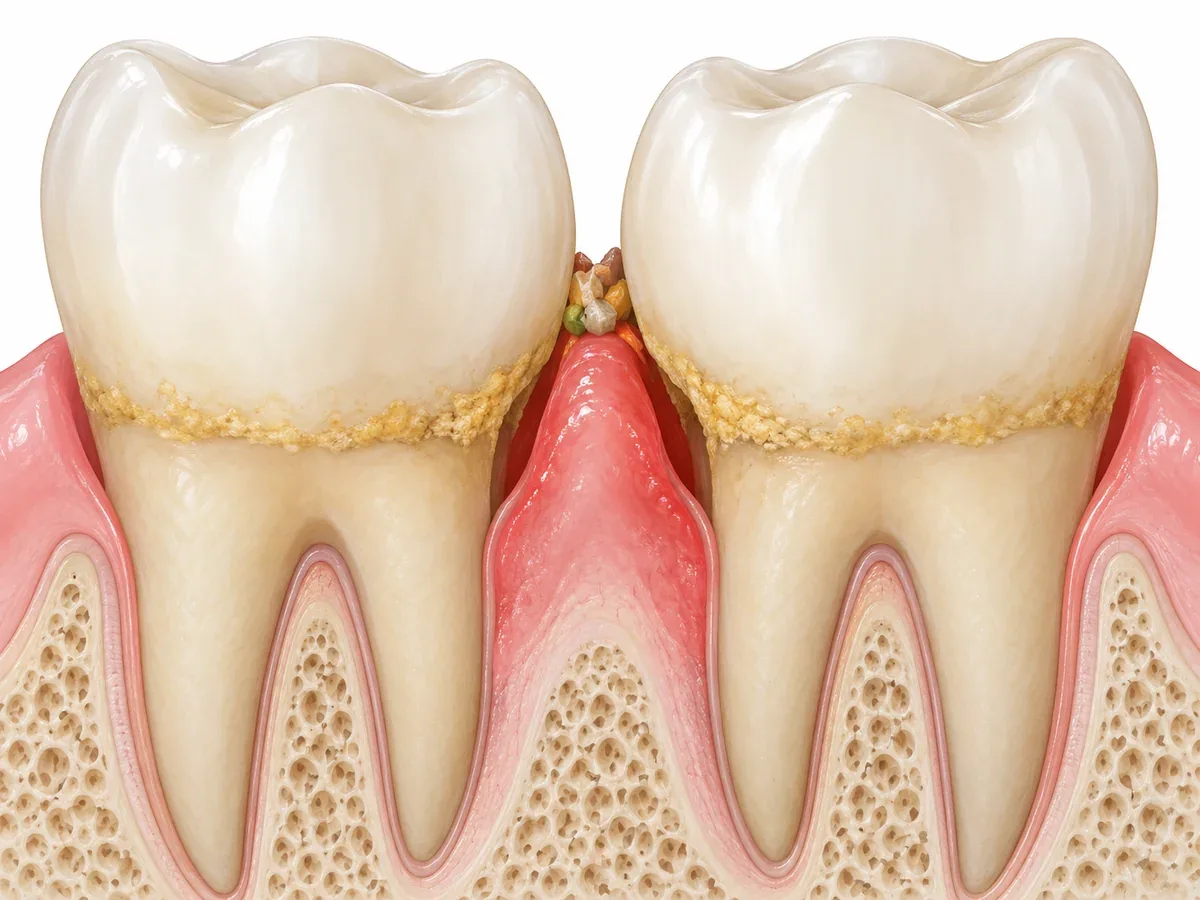
The substances behind it are the same. Plaque is a film of bacteria mixed with saliva. When calcium and phosphate build up in its deep layers, it hardens into tartar.
The bad breath page says plaque and tartar lead to decay and gum disease, and so to bad breath. It adds that replacing poorly fitting restorations can also help.
This is why regular cleaning matters. The scaling page recommends scaling at least every six months if you have gum disease.
With poor oral hygiene, bacteria in plaque can build up again within one to two months. For severe, poorly controlled gum disease, tartar removal every three months may be needed.
Why does a dry mouth make bad breath worse?
This cause is often missed. Saliva contains enzymes called lysozyme and lactoferrin, which break down bacterial cell walls. Together with immunoglobulin A, they hold back the growth of microbes.
Saliva also keeps the mouth from becoming acidic and washes away odor-causing substances. So when saliva is short, the mouth's self-cleaning weakens, bacteria grow, and bad breath follows.
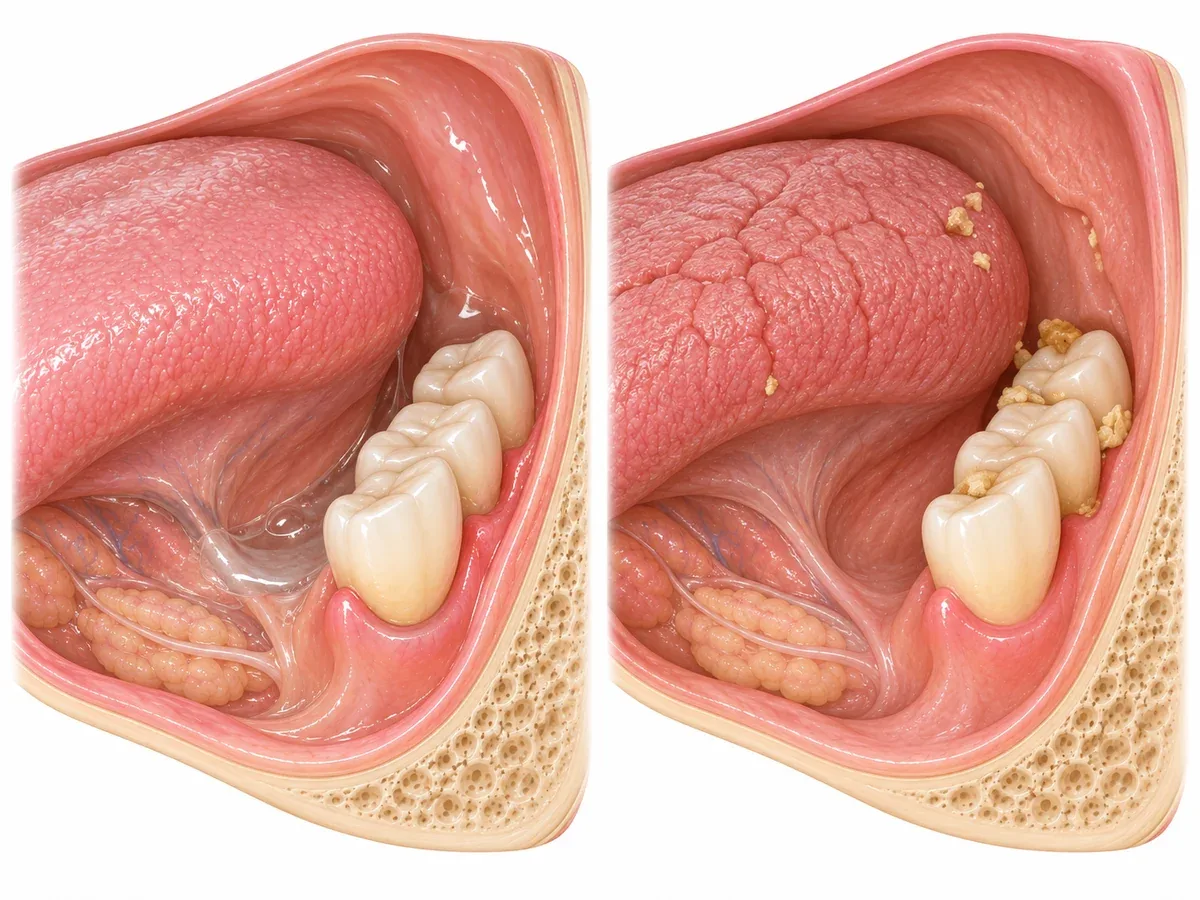
According to the KDCA dry mouth (xerostomia) page, medication is the most common cause. About 500 drugs are known to reduce saliva or change its make-up.
The page names antihistamines for allergies and drugs that act on the central nervous system, such as those for depression or insomnia. It also lists these causes:
- radiation treatment to the head and neck
- Sjögren's syndrome
- aging and smoking
- uncontrolled diabetes
- breathing through the mouth because of a blocked nose
Dry mouth affects 30% of people aged 65 and over. The page says this is thought to come from medication or chronic disease rather than aging itself.
Salivary glands have a lot of spare capacity. So people usually feel little discomfort until saliva drops below half of normal. If your mouth feels dry enough to bother you, the flow has likely dropped a lot already.
Daily life dries the mouth too. It happens after waking up, after going long without food, under stress, and with heavy snoring or mouth breathing. Smoking and alcohol also dry the mouth and help anaerobic bacteria grow.
The material calls this physiological bad breath. It is temporary and goes away.
The bad breath page recommends about 1.5 liters of water a day. The dry mouth page adds that small, frequent sips work better than a lot at once, and that caffeinated drinks like coffee or green tea can dry the mouth.
| Place | What the material says | What it recommends |
|---|---|---|
| Back of the tongue | Anaerobic gram-negative bacteria on the back third produce sulfur compounds | Twice a day, gently, back to front, three or four strokes |
| Gaps between teeth and gums | Plaque and tartar cause decay and gum disease, leading to bad breath | Scaling at least every six months with gum disease |
| Dry mouth | Without enough saliva, self-cleaning weakens and bacteria grow | About 1.5 liters of water a day, in small, frequent sips |
Why doesn't mouthwash fix bad breath?
The KDCA material is direct. Store-bought mouthwash is convenient, but it hides bad breath for a short time and has no lasting treatment effect.
Misusing products with ethanol or antibacterial ingredients can even make bad breath worse. The dry mouth page adds that mouthwash with alcohol can dry the mouth further.
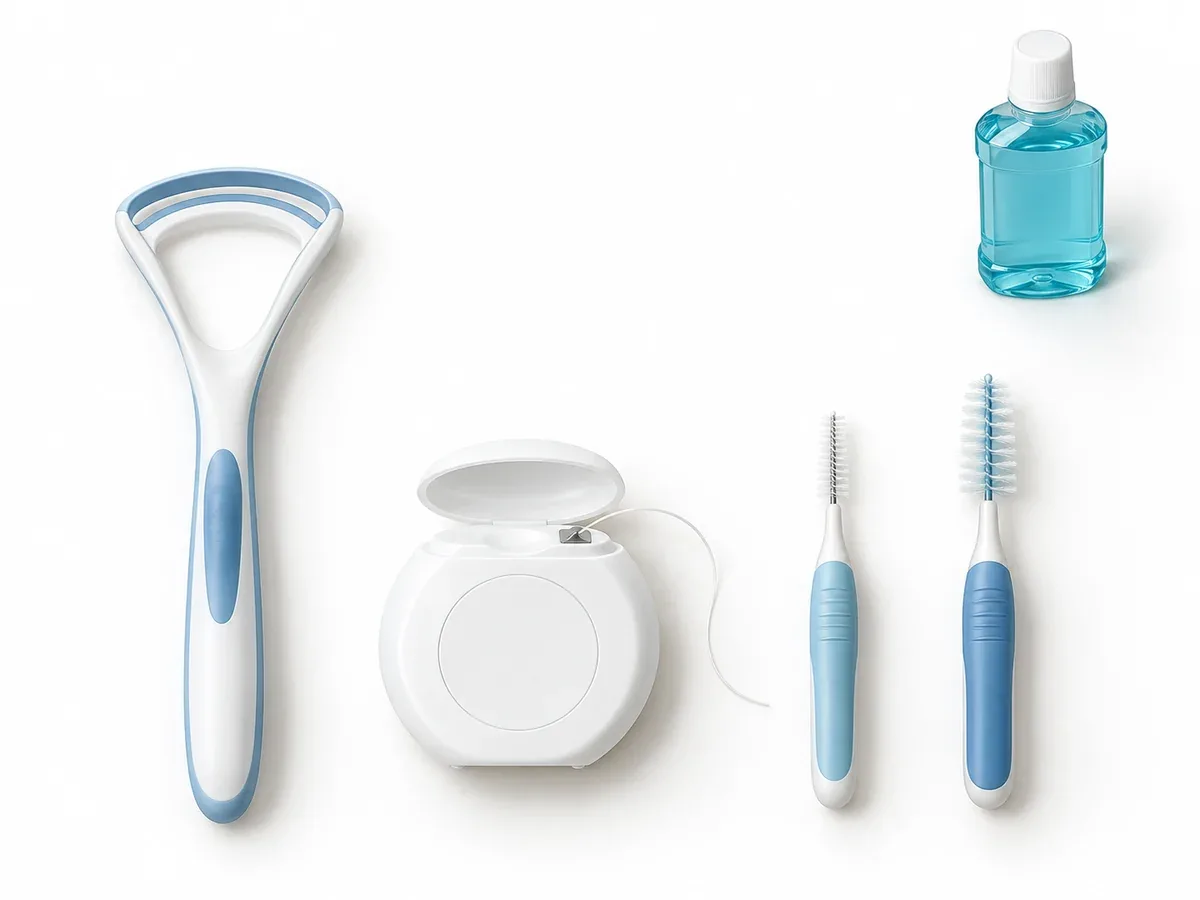
Rinses with zinc turn sulfur compounds into non-volatile forms, but they also have no lasting effect. Antibacterial rinses such as chlorhexidine kill bacteria, yet should be used after talking with a specialist.
The halitosis page puts physically removing plaque and microbes as the first step of treatment. Chemical methods come after that.
So the advice comes back to the basics. The oral disease prevention page recommends:
- brushing at least twice a day with fluoride toothpaste, for two minutes or more
- brushing in front of a mirror to check for missed spots
- always brushing before bed
- spitting out leftover toothpaste instead of rinsing it away
- using floss between teeth, and adding interdental brushes if gum loss has widened the gaps
The halitosis page singles out flossing. It notes that not flossing clearly raises the rate of bad breath.
Food matters too. The material advises cutting back on sulfur-rich foods such as onion, garlic, green onion, bracken, eggs and mustard. Their odor comes from sulfur compounds that are absorbed, processed by the liver and breathed out through the lungs.
How is bad breath measured at a clinic in Busan?
The KDCA material describes several tests. Some rely on a trained nose, and some on a machine.
| Test | What the material says |
|---|---|
| Organoleptic test | Two or more trained doctors smell the breath and score it from 0 to 4; it can be somewhat subjective |
| Winkel tongue coating index | The tongue is divided into six parts, scored 0 for none, 1 for thin and 2 for thick coating |
| Halimeter | Measures total sulfur compounds; 75 ppb or more is bad, 120 ppb or more is very severe |
| OralChroma | Measures three gases separately, which helps find the cause |
Before a Halimeter test, the material lists some preparation. Avoid garlic, green onion and onion from the evening before. Do not brush, smoke or chew gum for two hours before the test.
Some people notice a smell that tests cannot find. The bad breath page calls this subjective bad breath, when a person feels it and becomes anxious, though no problem is found.
The halitosis page cites reports that about 30% of people who complain of bad breath show no objective evidence. Fear of bad breath is said to affect about 1% of adults. Even then, repeated objective measurement helps reduce the worry.
When the cause is outside the mouth
The remaining 10–15% of cases belong here. Causes include the nose, sinuses, throat and lungs, such as sinusitis, bronchiectasis, lung cancer or a foreign object in the nose. General conditions include diabetes, kidney failure and liver failure, and reflux esophagitis in the gut.
The bad breath page adds more detail. Chronic sinusitis can cause postnasal drip, and its protein-rich mucus feeds bacteria that make sulfur compounds. Mucus and bacteria can also harden into tonsil stones, often felt as small white or yellow grains coming up from the throat.
Other causes named are Helicobacter pylori infection, liver cirrhosis, uremia and the ketones produced in diabetes. Each can give breath a distinctive smell.
| Where the cause lies | Examples named in the material | Who to see |
|---|---|---|
| Nose, sinuses, throat, lungs | Sinusitis, postnasal drip, tonsil stones, bronchiectasis, lung cancer, a foreign object in the nose | Ear, nose and throat doctor |
| General conditions | Diabetes, kidney failure, liver failure or cirrhosis, uremia | Internal medicine doctor |
| Digestive tract | Reflux esophagitis, Helicobacter pylori infection | Internal medicine doctor |
The material concludes that diagnosis may need input from dentists, ENT doctors, psychiatrists and internal medicine specialists. The sensible order is to check the mouth at the dentist first, then move on if the mouth does not explain it.
Frequently asked questions
Should I scrub my tongue hard every day?
No. The material recommends cleaning twice a day, gently, from back to front, three or four strokes. Scrubbing too hard or too often can cause inflammation or damage taste bud cells.
Is bad breath in the morning a disease?
The material classes it as physiological bad breath. Saliva drops during sleep, so leftover food breaks down and bacteria grow, and the smell is temporary. Bad breath that lasts beyond this is seen as a medical problem.
Can I get bad breath treatment in English in Busan?
Yes. We offer 1:1 English interpretation from the first consultation through the end of treatment. The clinic is near Seomyeon Station Exit 2 (5-min walk), opposite Lotte Hotel Busan, and you can call 010-8555-2854 (+82-10-8555-2854 from abroad).
Nine out of ten cases of bad breath start in the mouth.
And rinsing does not reach the cause.
The back of the tongue, the gaps between teeth,
and how much saliva flows:
these are the three places to check first.
If bad breath worries you in Busan, Reset Dental Clinic offers 1:1 English interpretation from your first consultation through the end of treatment. Call 010-8555-2854, and if the mouth does not explain it, we will tell you which specialist to see next.
References
- KDCA National Health Information Portal, "Halitosis" — affecting more than about 50% of people and reports of 25–90% ever having it, how volatile sulfur compounds form, 85–90% oral and 10–15% non-oral causes, physiological, pathological and imagined halitosis, bacteria on the back of the tongue, about 30% of complaints without objective evidence and fear of bad breath in about 1%, saliva tests and the Halimeter, physical plaque removal as the first step, referral to ENT and internal medicine, higher rates without flossing, sulfur-rich foods and five self-checks
- KDCA National Health Information Portal, "Bad Breath" — physiological, pathological and subjective bad breath, antibacterial action of lysozyme, lactoferrin and immunoglobulin A in saliva, methyl mercaptan and hydrogen sulfide making up 90% of sulfur compounds, tongue coating and anaerobic gram-negative bacteria on the back third of the tongue, plaque and tartar, postnasal drip, tonsil stones, Helicobacter, cirrhosis, uremia and diabetic ketones, the Winkel index and organoleptic test, Halimeter thresholds of 75 and 120 ppb and test preparation, OralChroma, mouthwash as temporary and harmful if misused, zinc and chlorhexidine rinses, tongue cleaner use, and 1.5 liters of water a day
- KDCA National Health Information Portal, "Dry Mouth (Xerostomia)" — the role of saliva and definition of dry mouth, medication as the most common cause with about 500 drugs affecting saliva, antihistamines and central nervous system drugs, radiation, Sjögren's syndrome, aging, smoking, uncontrolled diabetes and mouth breathing, 30% of people aged 65 and over, little discomfort until saliva drops below 50% of normal, bad breath as a symptom, care with alcohol mouthwash, small frequent sips and caffeinated drinks
- KDCA National Health Information Portal, "How to Prevent and Manage Oral Disease" — a bad smell from the mouth as a symptom of gum disease, brushing at least twice a day with fluoride toothpaste for two minutes in front of a mirror and always before bed, spitting instead of rinsing, floss and interdental brushes, gentle tongue cleaning when a thick film stays, and check-up intervals
- KDCA National Health Information Portal, "Scaling" — a strong smell as a symptom of periodontitis, how plaque and tartar form, yearly national health insurance coverage from age 19 and at least every six months with gum disease, bacteria returning within one to two months with poor hygiene, and three-month intervals in severe cases
Written by Reset Dental Clinic Support Team
Medical review Dr. Na In-chae, Head Dentist · Periodontics Specialist
Last updated: September 19, 2026
This column is for general information and does not replace diagnosis or treatment for individual patients. If you have symptoms, please see a dentist.