

- A denture gets loose not because it stretches, but because the jawbone under the missing teeth keeps shrinking. What fit well at first gradually stops fitting.
- So it is not a device you make once and forget. Even if it never wears down or breaks, the bone keeps changing, so regular check-ups and adjustments are needed.
- A tooth that holds a partial denture's clasp can become prone to decay and gum disease, and its life may be shortened.
- Do not repair it yourself. The source says home tools and glue usually make the problem worse.
At Reset Dental Clinic in Seomyeon, Busan, many denture wearers tell us theirs keeps slipping, adhesive does not last, or the lower one lifts. This column explains why false teeth you already wear get loose, and what comes next. International patients can go through all of this with us with 1:1 English interpretation.
This is not a column about whether to get new false teeth. It is about the set you wear now.
It draws on the national health portal's pages on removable dentures, tooth extraction, dry mouth and oral disease prevention. It also uses an opinion series on oral frailty in Dailydental, the Korean Dental Association's newspaper.
Why does a denture get loose over time?
Let us start with something reassuring. In most cases, loose false teeth are not caused by poor care or by poor workmanship.
A removable plate, the kind you take out and put back in, usually rests on the gums. When what lies underneath changes, the fit changes too.
The national health portal puts it plainly. The jawbone in areas without teeth is absorbed over time, so false teeth that fit well at first gradually stop fitting after a few years.
The jawbone here means the bone that once surrounded and held the teeth. When a tooth is lost, that bone no longer has a job, and it shrinks over time.
The same source describes what happens after long use. As the gums shrink, a gap can open between the plate and the gums, and irritation can cause pain.
It adds that the plate may fall out while eating or talking. What many wearers are going through is written right there in the source.
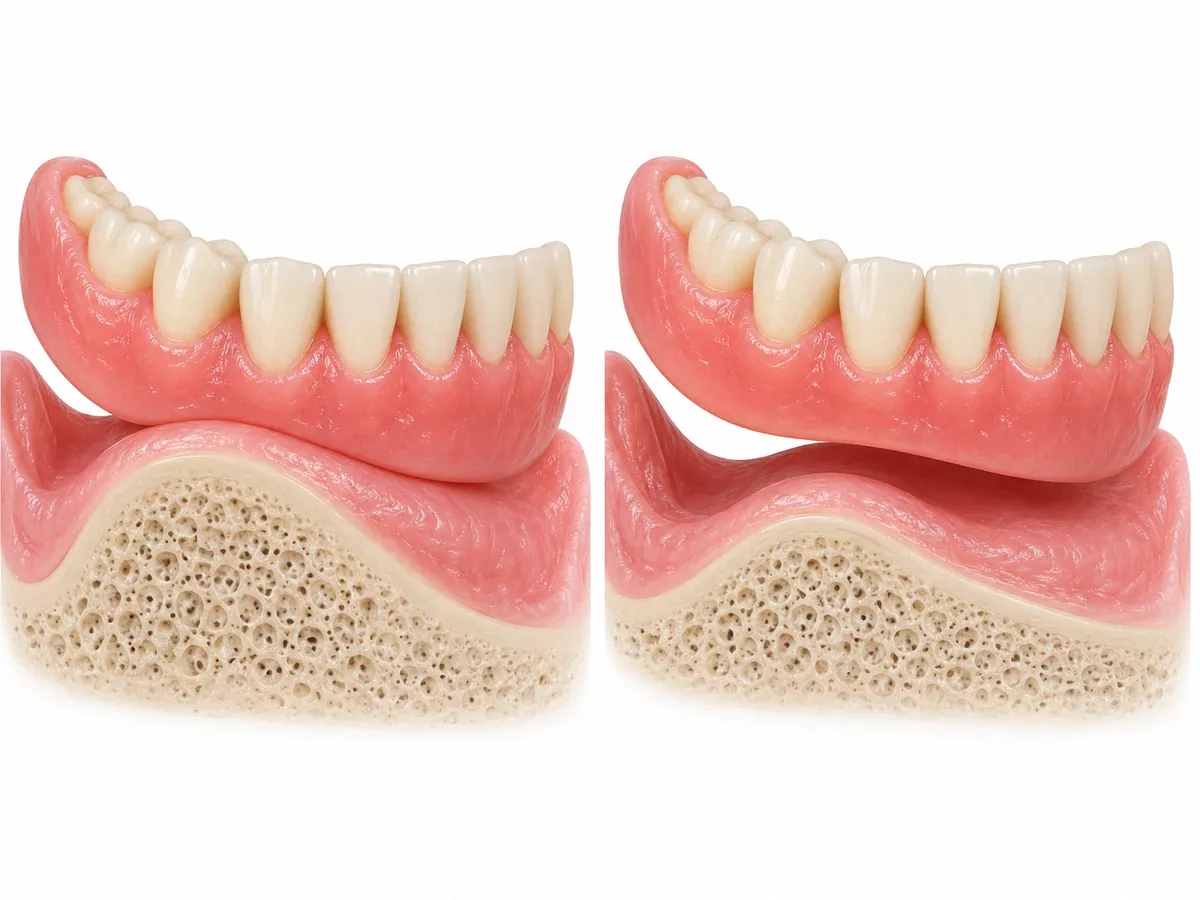
| Change | What you may notice |
|---|---|
| Jawbone in toothless areas is absorbed | A plate that fit well at first gradually stops fitting |
| Gums shrink | A gap opens between the plate and the gums |
| The fit no longer matches | Pain from irritation, and the plate may fall out while eating or talking |
This is why the portal answers questions about how long false teeth last in a careful way. Even if they do not wear down or break, the shape of the jawbone keeps changing.
So regular check-ups, adjustments and, in time, a new set are needed. A plate that has not broken is not necessarily a plate that still fits.
What can a dentist in Busan do for a loose denture?
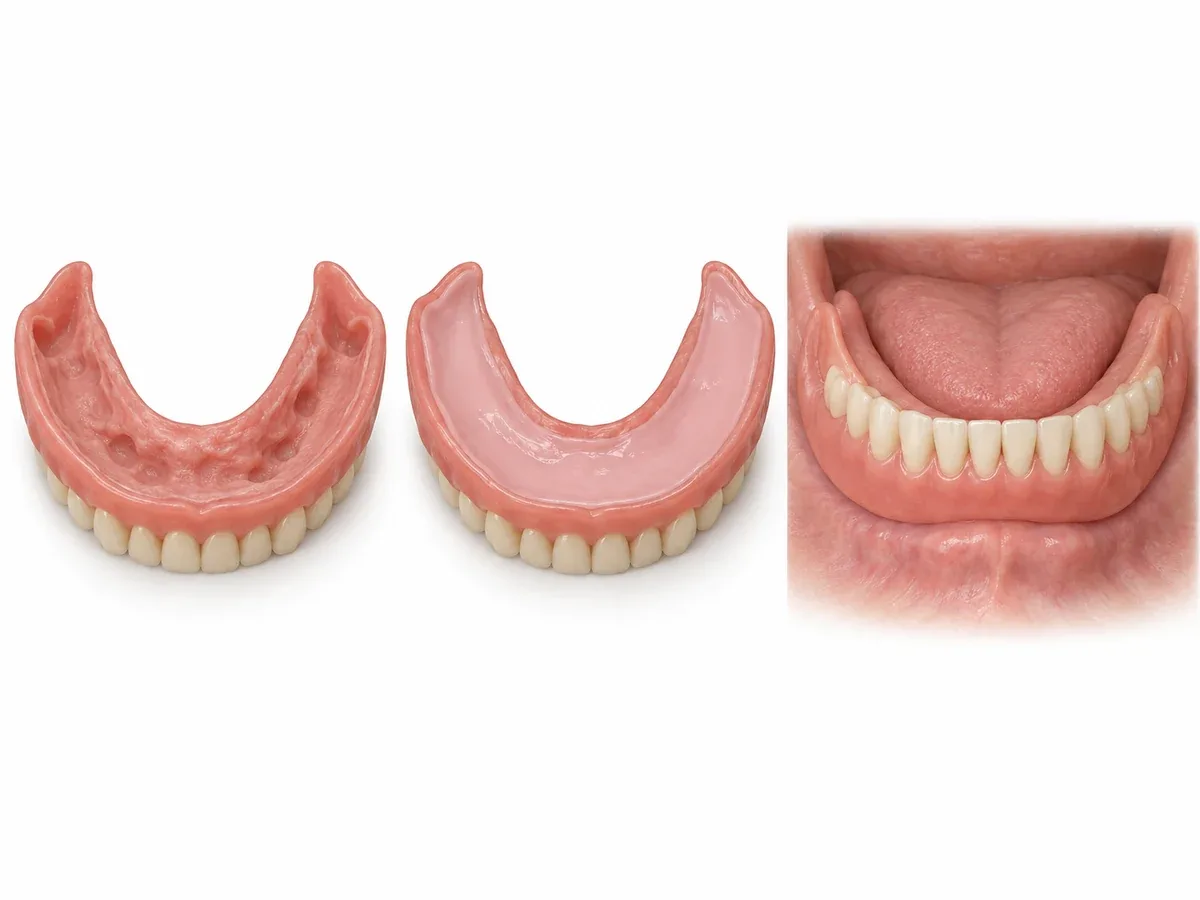
Loose false teeth do not always mean making a new set straight away. The first step at a dental clinic is usually to restore the fit.
One way is to refill the inner surface, the side that touches the gums, with new material. This reshapes it to match the shrunken gums, and dentists call it relining.
The source does not use that term. Instead, it says it is important to visit the dentist regularly for checks and to have repairs done when needed.
Repair and adjustment can cover several things.
- easing spots where the plate presses and hurts
- spreading biting force more evenly
- refilling the inner surface so it fits the gums again
There is one warning we want to stress, because the source uses unusually strong words. Some people try to fix their false teeth at home with tools and glue.
They are very precise devices, and the source says such attempts usually make the problem worse. It advises seeing a dentist even for small problems.
If you hold a poorly fitting plate in place with adhesive, the bone underneath keeps being pressed in the meantime.
For patients covered by Korea's National Health Insurance, the portal notes that dentures have been covered since July 2012 for people aged 65 and over. Coverage is once every seven years per jaw, and crowns on supporting teeth are not covered.
Why does the tooth holding a partial denture wear out first?
This is the part we most want wearers of partial plates to read. A partial plate uses the remaining teeth to stay in place.
The most common type hooks a metal clasp around a tooth. The source lists both sides of this design.
| Side | Point |
|---|---|
| Advantage | Simple to make |
| Advantage | Easy to adjust |
| Drawback | A clasp in a visible spot may not look good |
| Drawback | The clasped tooth can become prone to decay or gum disease |
| Drawback | The clasped tooth takes heavy strain from the plate's movement, and its life may be shortened |
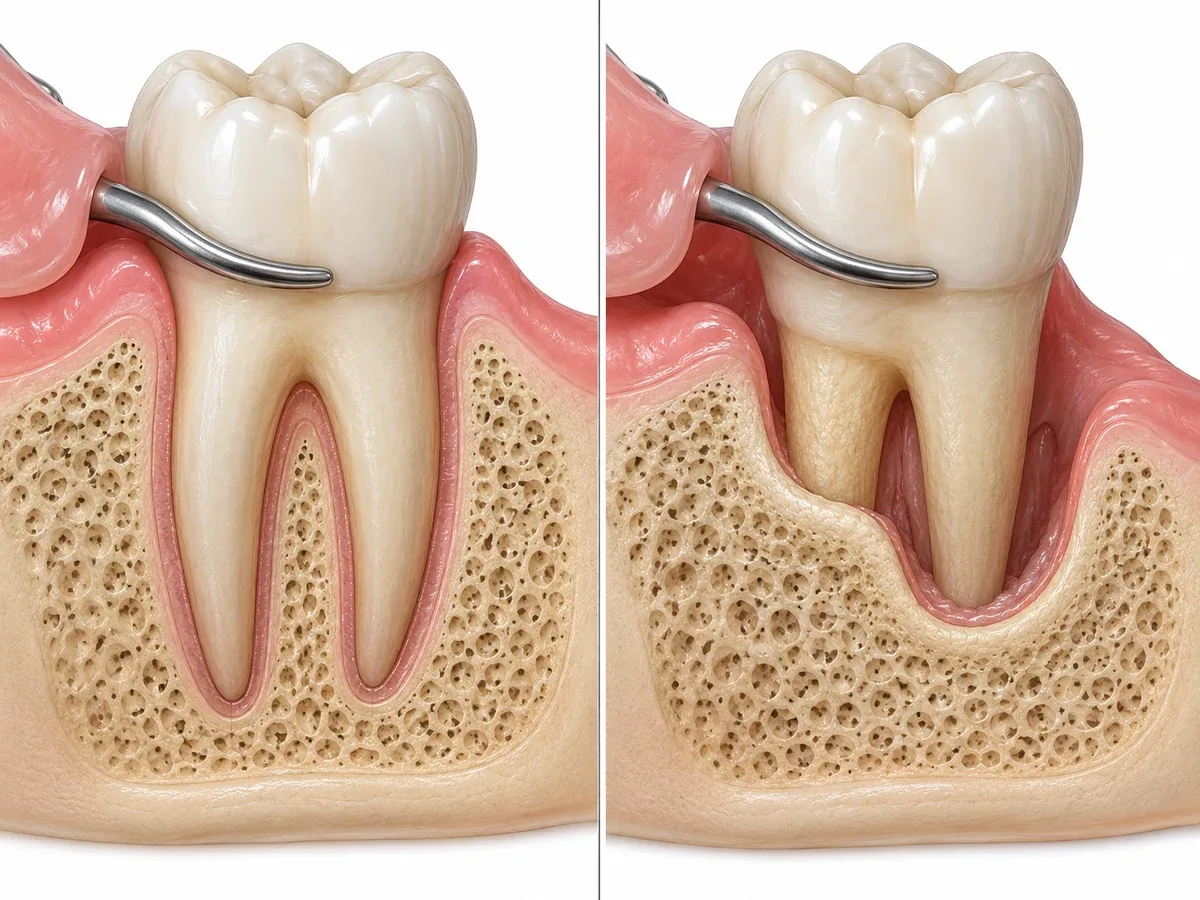
Two problems overlap on that tooth.
- Force. The plate moves each time you chew, and the clasped tooth holds it back.
- Hygiene. A toothbrush struggles to reach where the metal touches, so plaque is easily left behind.
The national health portal's page on oral disease prevention lists plenty of plaque left in the mouth as a leading risk factor for gum disease. It adds that when bone loss widens the gaps between teeth, a toothbrush is not enough, and an interdental brush is needed.
What is lost does not come back. The same source says that even when gum inflammation heals, the gums and the bone do not return to their original state, so prevention matters greatly.
If you wear a partial plate, protecting your remaining teeth is often more urgent than the plate itself.
It is worth knowing what happens if one more tooth is lost. The extraction page says a loose tooth may be removed before false teeth are made, so they can be designed to be stable.
Because the extraction site takes months to heal, denture treatment can take several months, or more than a year. Losing one tooth can mean redesigning the whole plate.
What is different about an implant-supported denture?
The source is clear about the limits of how false teeth stay in place. A full set is held by suction, like a suction cup, and that grip has limits.
It may come loose when you move your mouth or chew. Because it rests on soft gums and the bony ridge, it also shifts a little.
The lower jaw is at a particular disadvantage. An upper plate sits on the wide, stable palate, but a lower one sits around the tongue, which is always moving, so it is less stable.
If you feel your lower plate lifts more than the upper one, there is a structural reason. This is why the source describes borrowing support from elsewhere.
Instead of simply resting on the gums, false teeth can be held by implants placed in the bone or by remaining tooth roots.
| Type | What the source says |
|---|---|
| Full denture resting on the gums | Held by suction, with limited grip, and moves slightly. The lower jaw is at a particular disadvantage. |
| Overdenture (using tooth roots) | Made to cover healthy roots left in suitable spots. Chewing is more stable, and the bone around the roots is kept rather than absorbed. With poor care, the covered roots can decay or develop gum disease and may need extraction. |
| Implant-supported denture | Attachments such as magnets or locators on the implants connect to the plate and improve grip and support. The source says this is possible even when bone loss makes fixed implant work difficult. |
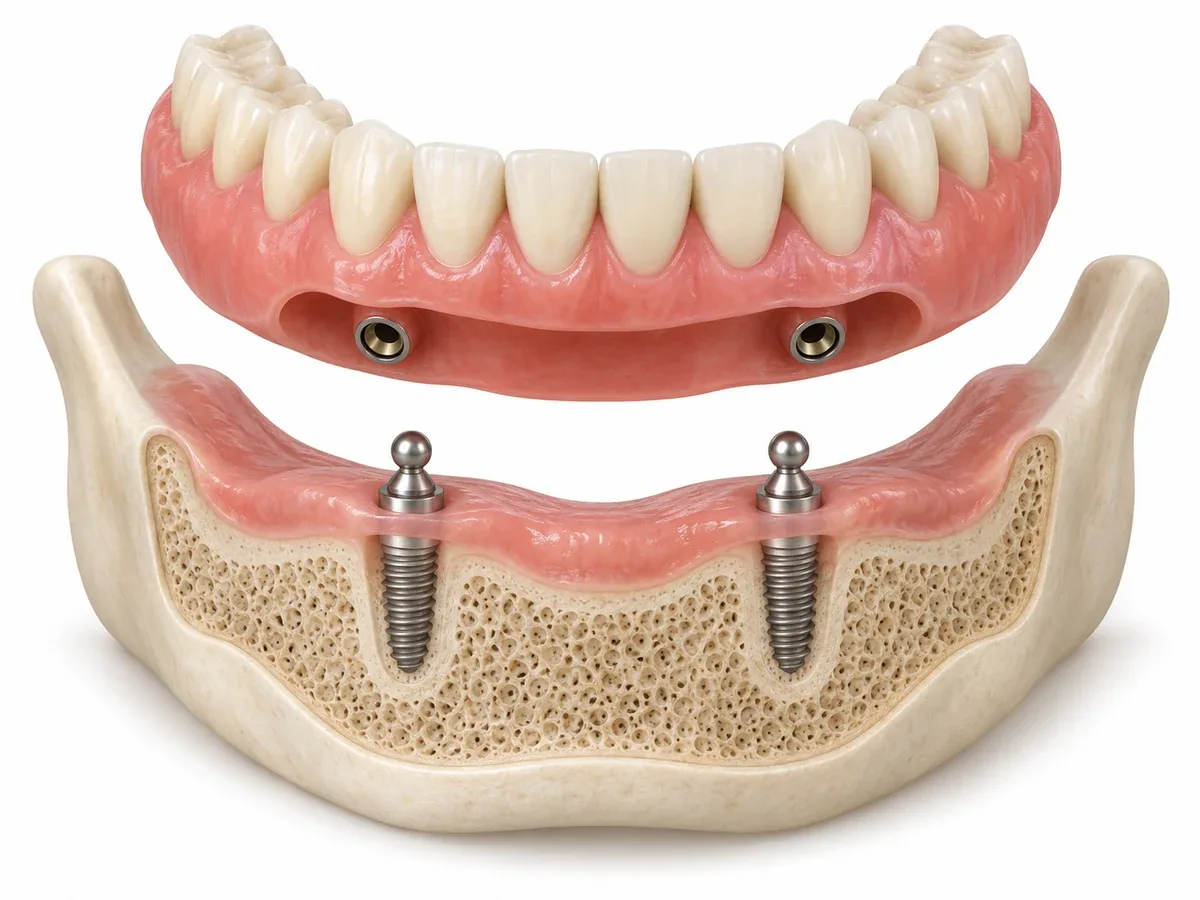
The source does not list the good points alone. Compared with a standard plate, this approach needs extra surgery to place implants, and treatment cost and time increase.
Several options exist depending on how many implants are used and how. The plan is set around how well the patient adapts and what they need.
In other words, there is no single answer that fits everyone.
How should you care for a denture every day?
Here is what the source lists under care after treatment. Some points may differ from what is commonly believed, so please read them slowly.
- Do not use regular toothpaste. It can wear down the material. Brush gently with soap or dish detergent, or use a denture brush and paste.
- Clean it over a basin of water, so it does not break if it slips from your hands.
- Take it out at night for 8 hours or more. The gums are pressed while you wear it, so they need time to recover. Keep it in a cup of water, unless there is a special situation such as grinding.
- Disinfect it regularly with a cleaner from a pharmacy. Adding the cleaner to the overnight cup is a handy way to do it.
- Brush every day. Skipping it lets food collect between the artificial teeth and stains form quickly.
- Look after your remaining teeth and gums as well, not just the plate.
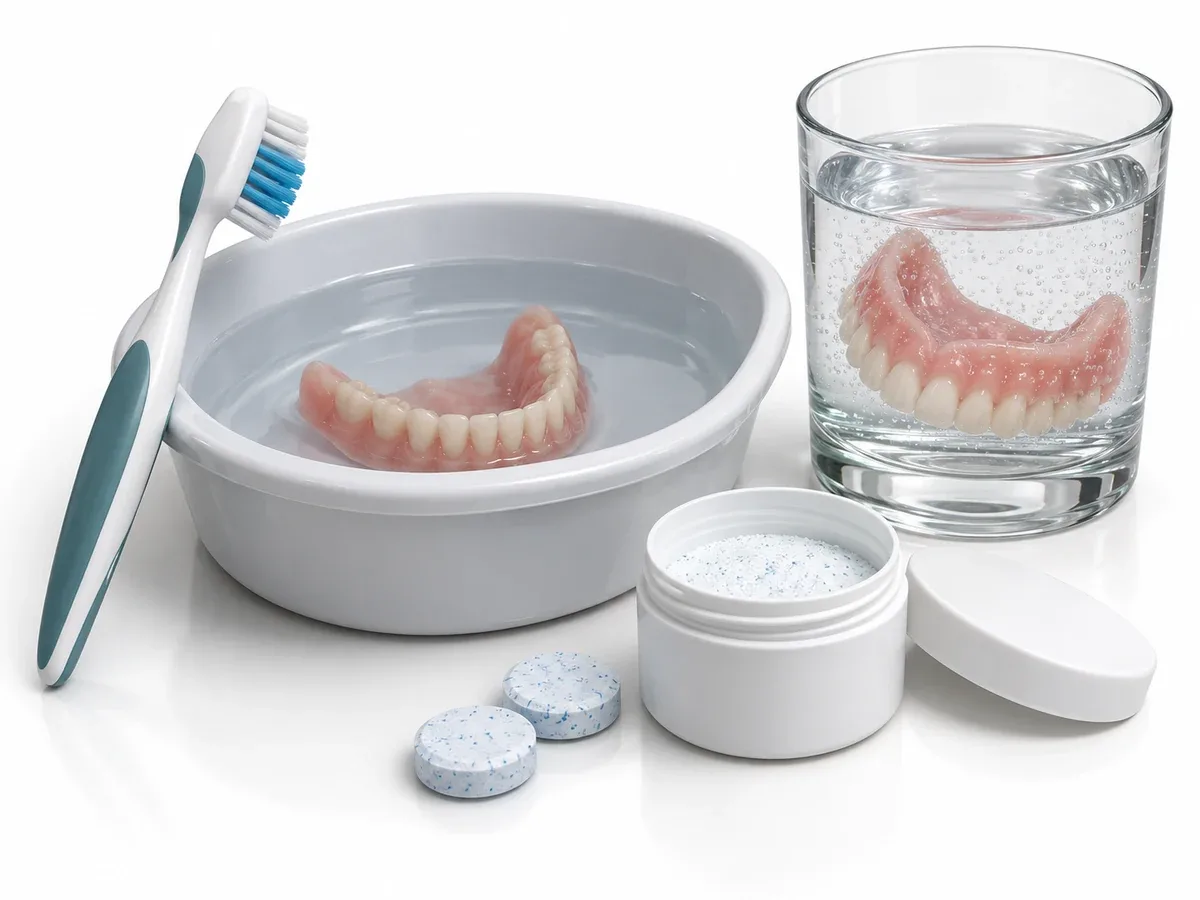
Since the source warns that regular toothpaste can wear the material, it is safer not to try methods on your own that could damage it.
If your mouth is often dry, there is one more point. The dry mouth page says wearers should disinfect their false teeth daily so fungus does not grow.
It explains that fungal infection in the mouth is a common complication of dry mouth. It also notes that some people find their plate harder to manage even without a measurable drop in saliva.
Less saliva weakens the grip between plate and gums. If you take medication that dries your mouth, or your mouth feels dry, please mention it at your visit.
What happens when a loose denture changes how you eat?
The national health portal says that even with false teeth, chewing works at about 20–30% of natural teeth. So while a loose set stays in use, meals quietly change.
The oral frailty series says that more than half of people aged 70 and over report chewing discomfort from wearing dentures.
It explains that this does not end with chewing. The burden of eating can lead to skipped meals, poor nutrition, muscle loss and slower wound healing from weaker immunity.
Soft foods get chosen more often, and meat and vegetables slowly leave the table.
The source also gives advice on how to eat with a full set.
- Do not bite into food with the front teeth, as the plate can come out.
- Fibrous or tough food chewed on the back teeth can strain the lower gums and hurt.
- While adapting to a new set, start with soft food such as steamed egg.
- Read a newspaper aloud to get used to speaking with it.
Adapting takes weeks to months, and the pace differs from person to person.
Frequently asked questions
Is it all right to keep using denture adhesive?
Getting by for now is different from restoring the fit. The source explains loosening as bone loss and advises regular checks and repairs when needed. The bone keeps changing while you rely on adhesive, so it is worth having the fit checked once.
Why does my lower denture slip more than the upper one?
It comes down to structure. An upper plate sits on the wide, stable palate, while a lower one sits around the tongue, which is always moving, so it holds less firmly.
Can I sleep with my false teeth in?
The source advises taking them out at night for 8 hours or more to let the gums recover, unless there is a special situation such as grinding. Keep them in a cup of water.
Can I get denture care in English in Busan?
Yes. We provide 1:1 English interpretation from your first consultation through the end of treatment. The clinic is near Seomyeon Station Exit 2 (5-min walk), opposite Lotte Hotel Busan, and you can call 010-8555-2854 (+82-10-8555-2854 from abroad).
A loose denture is not broken.
It is the result of change.
While the bone underneath shrinks,
the false teeth stay as they were.
That is why adjustment is half of the treatment.
Before you rely on adhesive, have the fit checked. Reset Dental Clinic in Busan offers 1:1 English interpretation for denture checks; call 010-8555-2854.
References
- KDCA National Health Information Portal, "Removable Prostheses (Dentures)" — jawbone loss and loosening over time, regular checks and adjustment, warnings against home repair, clasp-retained partial dentures, overdentures and implant-supported dentures, daily care, about 20–30% of natural function and insurance coverage from age 65
- KDA newspaper Dailydental (Chiui Sinbo), "Oral Frailty (VII): Reduced Chewing Ability" (opinion column by Dr. Lee Seong-geun) — chewing discomfort with dentures in people aged 70 and over, and its links to poor nutrition, muscle loss and slower healing
- KDCA National Health Information Portal, "Preventing and Managing Oral Disease" — plaque as a risk factor for gum disease, interdental brushes and why gums and bone do not recover once lost
- KDCA National Health Information Portal, "Tooth Extraction" — extracting loose teeth for a stable denture design, and extraction in severe gum disease
- KDCA National Health Information Portal, "Dry Mouth (Xerostomia)" — daily denture disinfection to prevent fungal growth, and difficulty managing dentures with a dry mouth
Written by Reset Dental Clinic Support Team
Medical review Dr. Na In-chae, Head Dentist · Periodontics Specialist
Last updated: September 19, 2026
This column is for general information and does not replace diagnosis or treatment for individual patients. If you have symptoms, please see a dentist.


