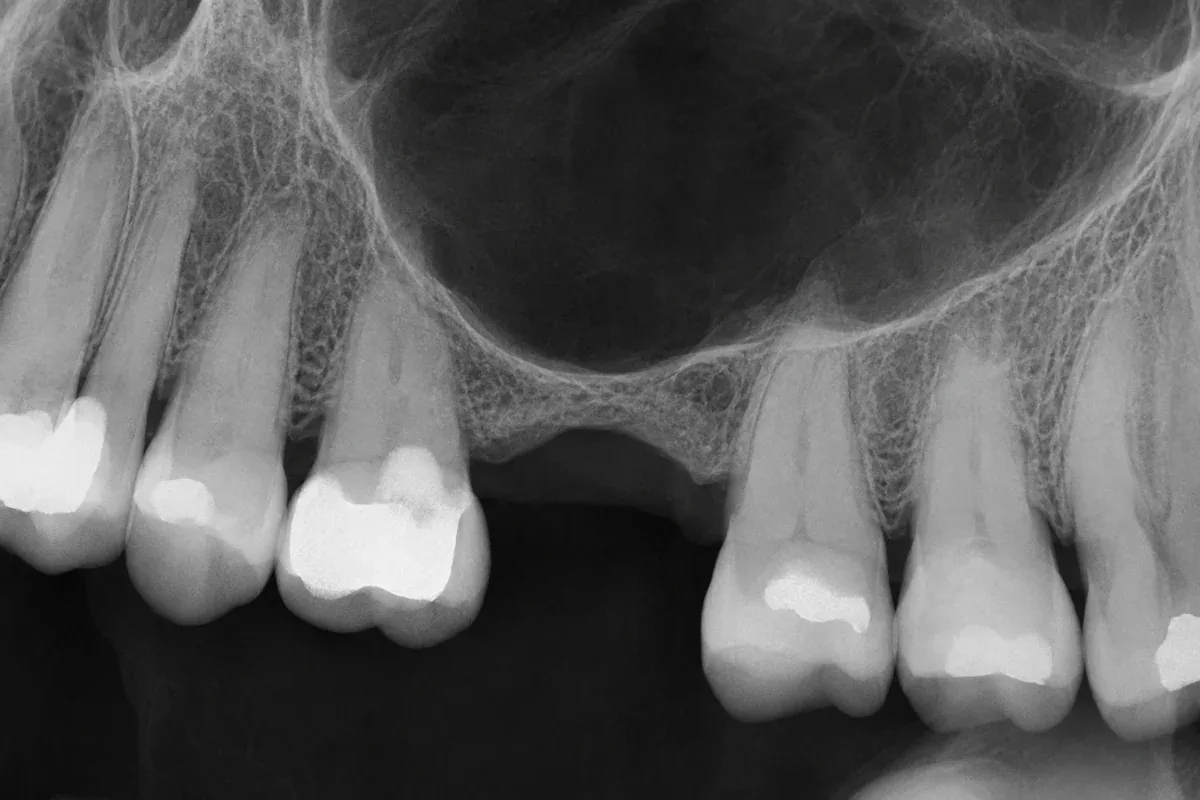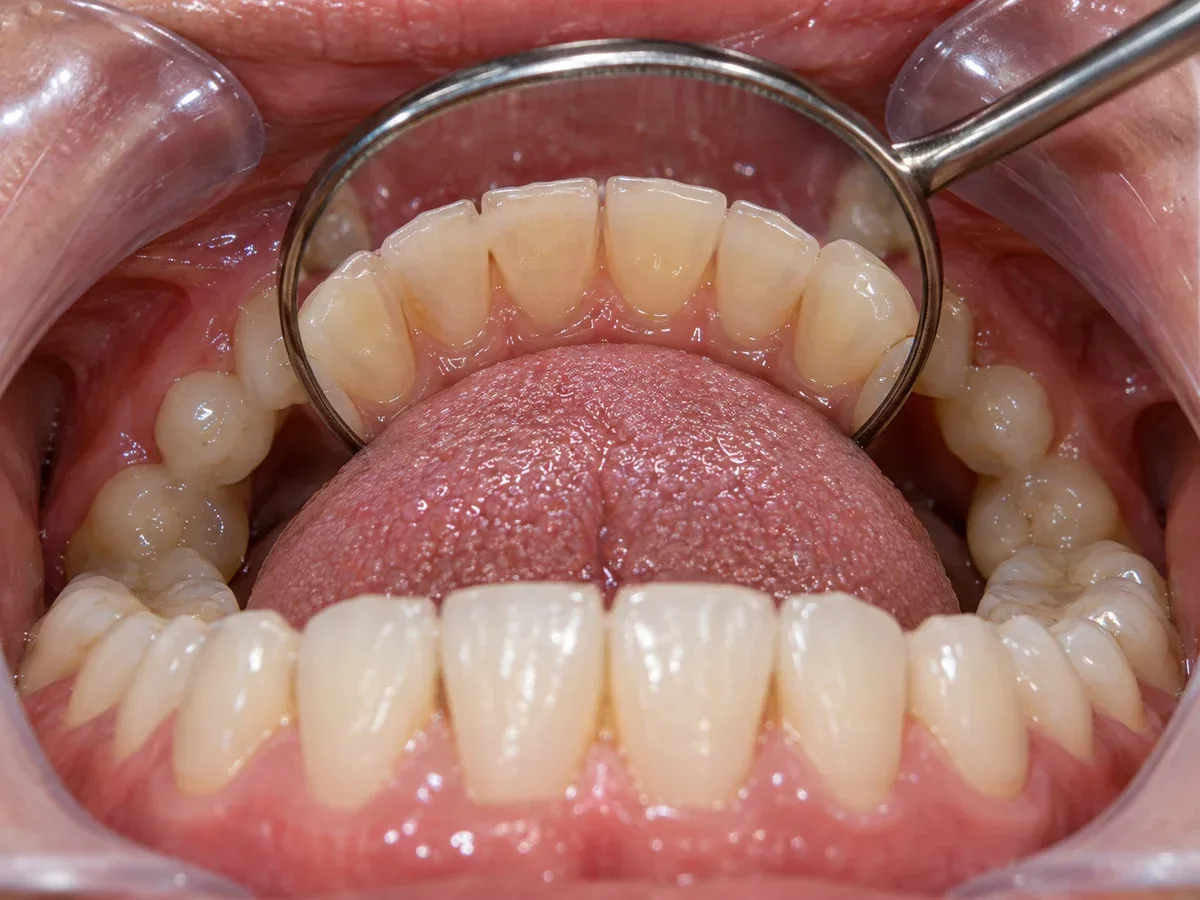
- Temporary veneers are not the final restoration. In the source's words, the temporary material does not bond to the tooth, so it can come off easily.
- That is why some foods are off the list: foods with big temperature changes, chewy, very sticky and hard foods.
- If one comes off, do not leave it. The source says the new restoration may not fit when a temporary falls out.
- This period is also a chance to try out the finished look in advance, so tell us what bothers you now.
On the day your teeth are shaped and measured, you go home with temporary veneers from Reset Dental Clinic in Seomyeon, Busan. "Just be careful" does not tell you what to watch or how much. For patients living in or visiting Korea, we provide 1:1 English interpretation from the first consultation through the end of treatment.
The temporary period can last a few days or a week or two. We gathered what three KDCA National Health Information Portal articles say about temporary restorations: "Gold Inlays", "Laminate Treatment" and "All-Ceramic Crowns". Here is how to get through this period well.
What are temporary veneers, and why do they come off so easily?
The laminate article says that after the impression, a temporary tooth made of composite resin is placed if needed. The all-ceramic crown article has its own step for this: making and fitting a temporary restoration to use until the final one is placed.
The names differ, but the job is the same. The temporary holds the place until the final restoration arrives.
| Job | Why it matters |
|---|---|
| Covering the shaped surface | Blocks stimuli from reaching the tooth |
| Supporting the gums | Helps the gums keep their shape |
| Previewing the result | Shows the finished look in advance |
These three jobs are the reason for temporary veneers. It is not placed just for looks.
"Why does it keep coming off?" is the comment we hear most. The gold inlay article answers it clearly. During treatment, the temporary filling does not bond to the tooth, so foods with big temperature changes and chewy foods should be avoided.
"Does not bond to the tooth" is the key phrase. The final veneer is bonded with resin cement after the tooth surface is roughened with acid, as the laminate article describes. It holds firmly, and for the same reason, it is hard to remove.
Temporary veneers are made the opposite way. They must come off without damage on bonding day, so they sit on the tooth lightly on purpose.
So coming off is not a mistake or a defect; it is how they are made. Knowing this changes how you handle temporary veneers. Rather than trying hard to keep them from ever falling, live with the idea that they can, and act accordingly.

Which foods should you avoid with temporary veneers?
The three sources each word it differently. Put together, the list looks like this.
| What to avoid | Which source says so |
|---|---|
| Foods with big temperature changes | Gold inlay article, because the temporary filling does not bond to the tooth |
| Chewy foods | Gold inlay article, in the same sentence |
| Very sticky foods | All-ceramic crown article, which says to avoid them while a temporary is in place |
| Hard foods | Laminate article, because veneers attach to part of the tooth and are relatively weaker |
Many people ask what that means in practice. In the clinic, we put it this way:
- Sticky foods that pull: taffy, caramel and rice cakes come first.
- Chewy foods you tear at: tough meat and dried squid come second.
- Hard foods: ice and hard nuts come third.
- Hot and cold in turns: switching back and forth between them is also worth avoiding.

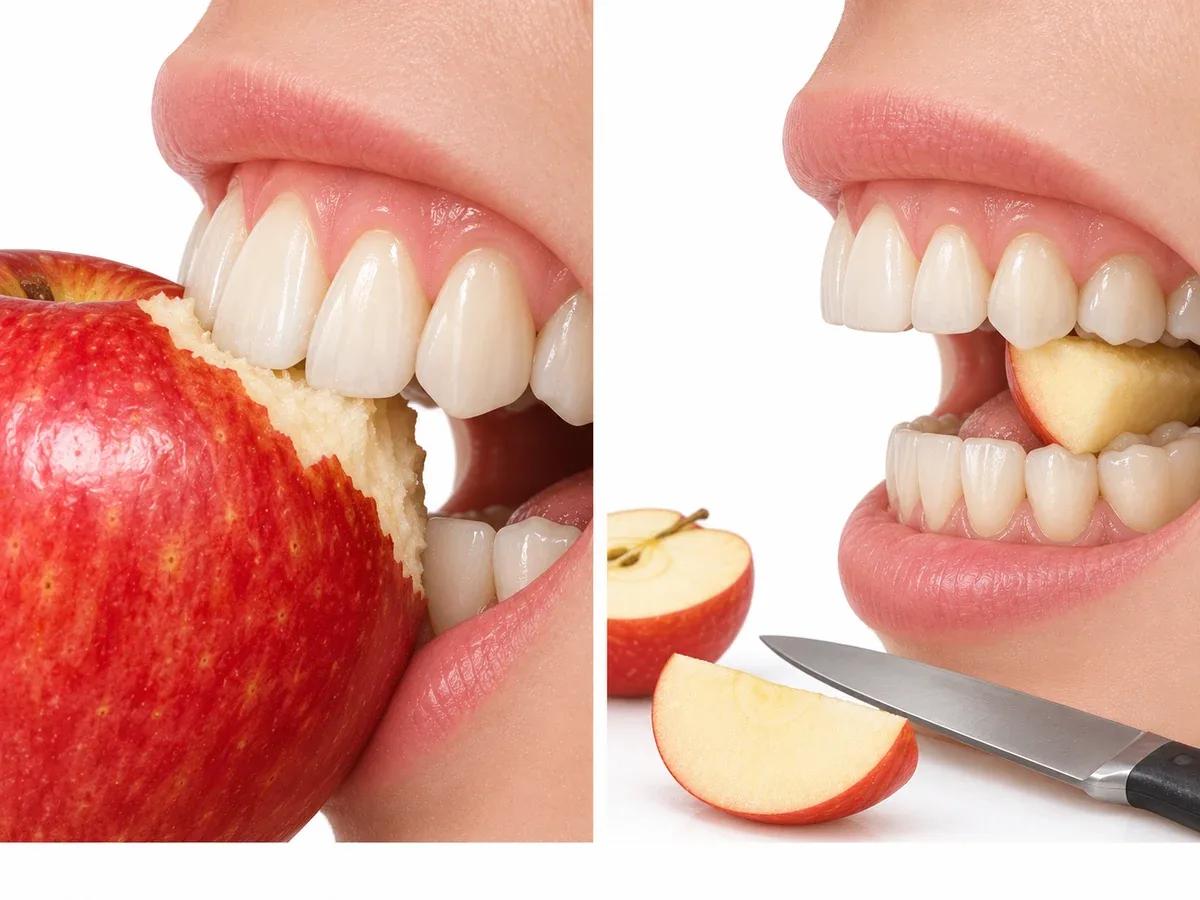
With temporary veneers on the front teeth, there is one more thing to watch: biting into food with your front teeth. When you bite straight into an apple or a baguette, the force on the temporary points the same way as pulling it off.
Cut food into bite-size pieces and move them to your back teeth to chew. That makes this period much easier.
Do you have to avoid chewing on that side altogether? No. Soft foods are fine; what to avoid is pulling force and hard things.
What should you do if a temporary veneer comes off?
First, there is no need to panic. But please do not leave it. The gold inlay article says that when a temporary comes out, the new restoration may not fit.
Why? The space left by a temporary does not stay empty. The teeth beside it, the opposing tooth and the gums slowly move into that space.
When that happens, the space where the finished restoration must go changes. This is how a restoration that was carefully made can end up being remade.
The movement is small. But the source gives veneer thickness as about 0.5 to 1.0 mm, so even a small shift can decide whether it fits. A day or two of delay is not a disaster, but going several days is a different matter.
Here is the order we give in the clinic:
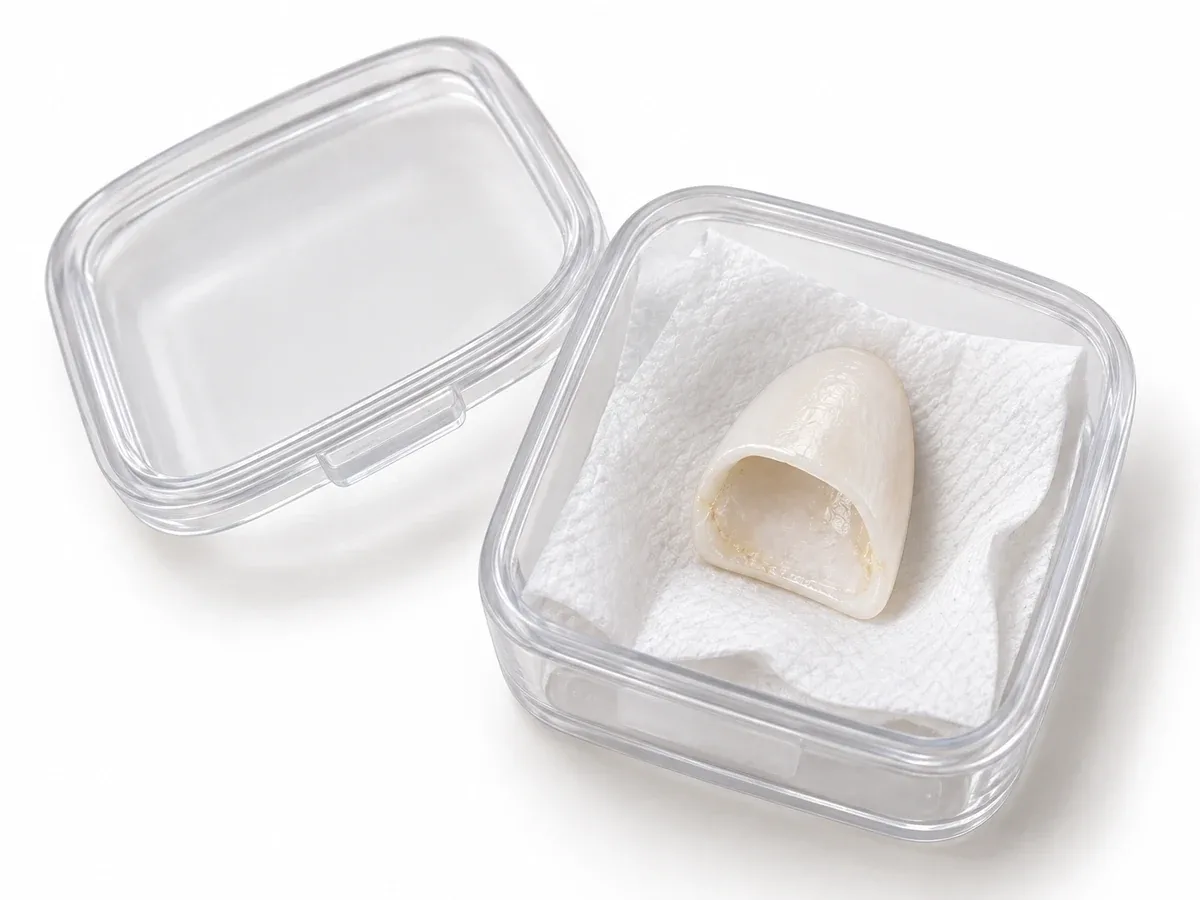
- Do not throw the temporary away. Keep it in a small container or a zip bag.
- Call the clinic and agree on when to come in.
- Until then, avoid chewing on that side and brush the area gently.
- Do not glue it back on yourself at home. Even a slight shift in position can throw off the whole next step.
These four steps are our clinic's guidance, not sentences from the source.
How should you brush and floss with temporary veneers?
You still need to brush during the temporary period. In fact, care in this period shapes the health of your gums for the next step.
The edges of temporary veneers are not as smooth as the final ones, so plaque sticks easily. Left alone, the gums turn red and swell.
If swollen gums bleed, the bonding itself becomes harder on the day. Food and plaque that stay at the edge can also show up as bad breath. If the smell continues after careful brushing, the edge may be lifting and should be checked.
Brush, but mind the direction. The dentin hypersensitivity article says scrubbing side to side can even damage the shape of the teeth. That applies all the more where a temporary sits.
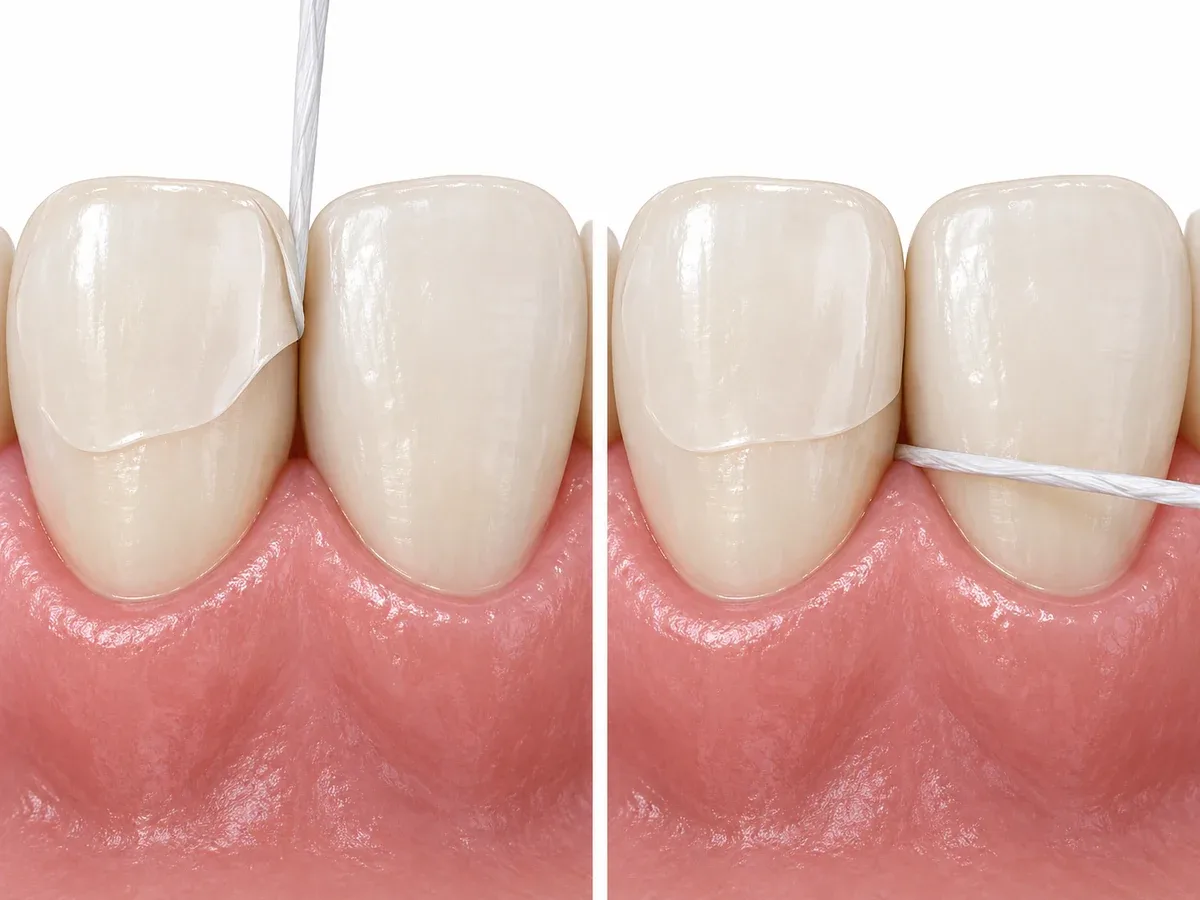
You should floss, too, with one change. If you slide the floss in and pull it straight back up, the temporary can lift with it. Try this instead:
- Slide the floss down between the teeth as usual.
- Clean along each side gently.
- Let go of one end of the floss.
- Pull it out sideways through the gap, holding the other end.
This is a tip we give in the clinic for temporary veneers. If it is hard to do, we are happy to show you at your next visit.
What about sensitivity and discomfort?
Teeth may feel sensitive during the temporary period. The dentin hypersensitivity article explains that sensitivity after restorations comes from sensitive inner dentin exposed while the tooth is shaped.
It adds that if the pulp inside is healthy, the symptom usually fades on its own over time. The gold inlay article also says sensitivity may appear early after a restoration, and advises avoiding very cold or very hot foods.
Some situations, however, are not ones to wait out:
- the temporary has come off or cracked
- the gums keep hurting or stay swollen
- one spot touches first when you bite, and that tooth alone hurts
- sensitivity is not easing but getting worse
In these cases, please contact the clinic without waiting for bonding day.
The saddest outcome is when someone puts up with discomfort through the temporary period, and the problem grows at the final step.
How can you make good use of this period in Busan?
One more thing. This period is not just something to endure. The laminate article begins treatment with a diagnostic model that gives shape to the final restoration.
In the same spirit, temporary veneers are where you actually live with the finished look for a while. Over a few days, please pay attention to the points in the table below.
| What to check | How |
|---|---|
| How much tooth shows | Look in the mirror when you smile |
| Length | Notice whether the teeth feel too long |
| Speech | Listen for "s" and "p" sounds that catch |
| Lip contact | Notice how the teeth feel against your lower lip |
| Photos | Take a few and show them at your next visit |
What you tell us now can be built into the final restoration. If you tell us after bonding, it means making it again. The same comment carries different weight depending on when you say it.
On the first day with temporaries on the front teeth, many people say their speech feels a little off. The inner surface of the front teeth is where the tip of the tongue touches to form sounds, so even a slight change in thickness is felt right away.
It shows most in "s" sounds, where air is pushed out through a narrow gap. In most cases, the tongue finds its place again within a few days.
We suggest you keep a record instead of just putting up with it. If the same sound still catches after three or four days, it may be a matter of thickness or shape rather than getting used to it.
In that case, it is better to adjust it at the temporary stage. Pick one short sentence and read it aloud every day; just notice whether day one and day three sound different.
Staining is a small concern during this period, because the temporary will be removed anyway. After bonding, though, the laminate article advises avoiding drinks that may stain for about two to three days, such as coffee.
Frequently asked questions
Are temporary veneers supposed to be a different color?
Yes. Temporary veneers are made fairly quickly from materials such as composite resin, so light does not pass through them like the final restoration, and the surface is less smooth. A slightly dull color or visible edge is normal at this stage, but please tell us if the shape or length bothers you.
How long will I wear temporary veneers?
No source gives a number for the veneer temporary period. The all-ceramic crown article, a related treatment, gives about 1 to 3 weeks when prosthetic treatment alone is done. The actual length depends on the making schedule, so please confirm it when you book your next visit.
My temporary came off, but I cannot get to the clinic right away. What now?
Please contact us first, and we can tell you how long it is fine to wait and how to manage until then. Keep the piece you found and brush the area gently. The one thing to avoid is gluing it back yourself.
Can I get veneers with English support in Busan?
Yes. We offer 1:1 English interpretation from the first consultation through the end of treatment. The clinic is near Seomyeon Station Exit 2 (5-min walk), opposite Lotte Hotel Busan, and you can call 010-8555-2854 (+82-10-8555-2854 from abroad).
Temporary veneers are not made
to bond firmly to your teeth.
Avoid sticky, chewy and hard foods,
and move biting from your front teeth to your back teeth.
Most problems will not happen.
If one comes off, keep it and call us.
And tell us what you notice in this period
before the final bonding.
If you are wearing temporary veneers in Busan and have questions, we offer 1:1 English interpretation from your first consultation through the end of treatment. Call 010-8555-2854 to reach us.
References
- KDCA National Health Information Portal, "Amalgam and Inlays (Gold Inlays)" — temporary fillings do not bond to the tooth, so foods with big temperature changes and chewy foods should be avoided; a new restoration may not fit if a temporary comes out; indirect treatment split into a first and second visit; sensitivity may appear early after a restoration, when very cold or hot foods should be avoided
- KDCA National Health Information Portal, "Laminate Treatment" — placing a composite resin temporary tooth if needed after the impression; bonding with resin cement after roughening the surface with acid; relatively lower strength and avoiding hard foods; avoiding staining drinks for about 2–3 days after bonding; a diagnostic model that gives shape to the final restoration
- KDCA National Health Information Portal, "All-Ceramic Crowns" — making and fitting a temporary restoration to use until placement; avoiding very sticky foods while a temporary is in place; a treatment period of about 1–3 weeks and 1–3 visits when prosthetic treatment alone is done
- KDCA National Health Information Portal, "Dentin Hypersensitivity" — sensitivity after restorations as exposure of sensitive inner dentin during shaping; symptoms usually fading if the pulp is healthy; side-to-side scrubbing as a cause of damage to tooth shape
Written by Reset Dental Clinic Support Team
Medical review Dr. Kim Hyun-joo, Head Dentist · Esthetic Restorations
Last updated: September 19, 2026
This column is for general information and does not replace diagnosis or treatment for individual patients. If you have symptoms, please see a dentist.