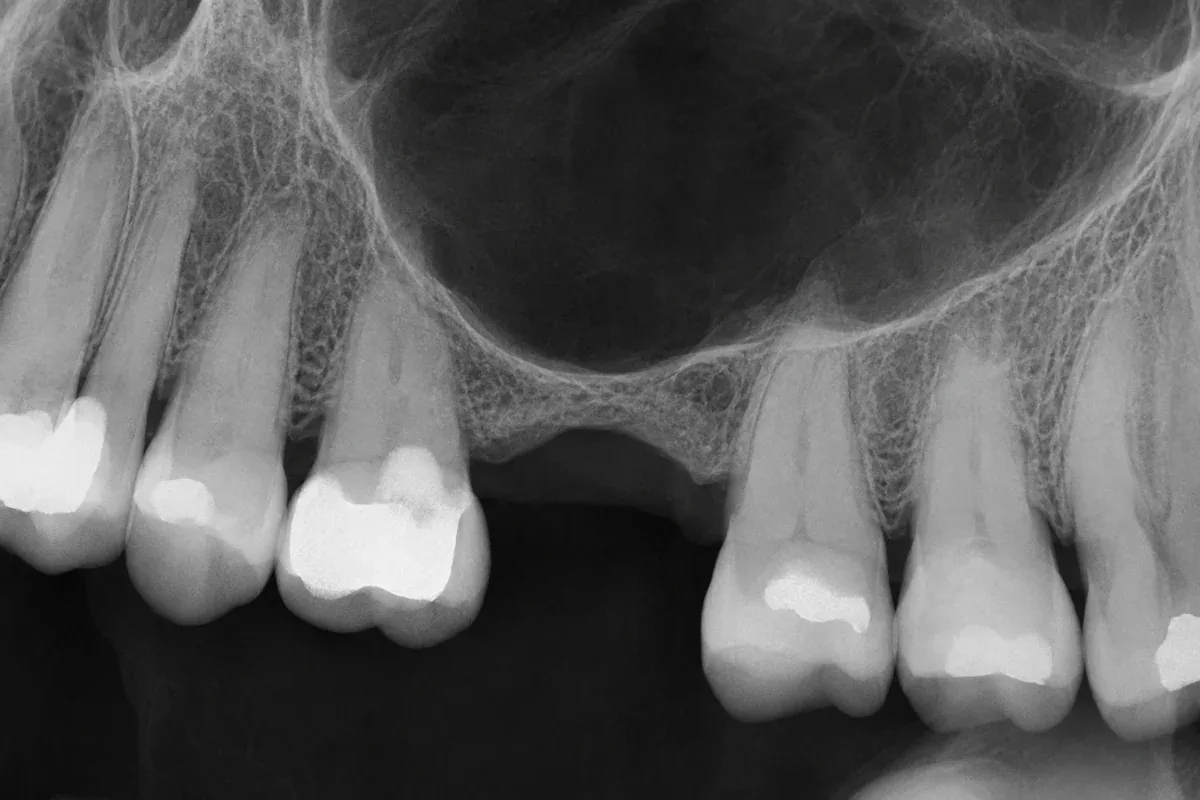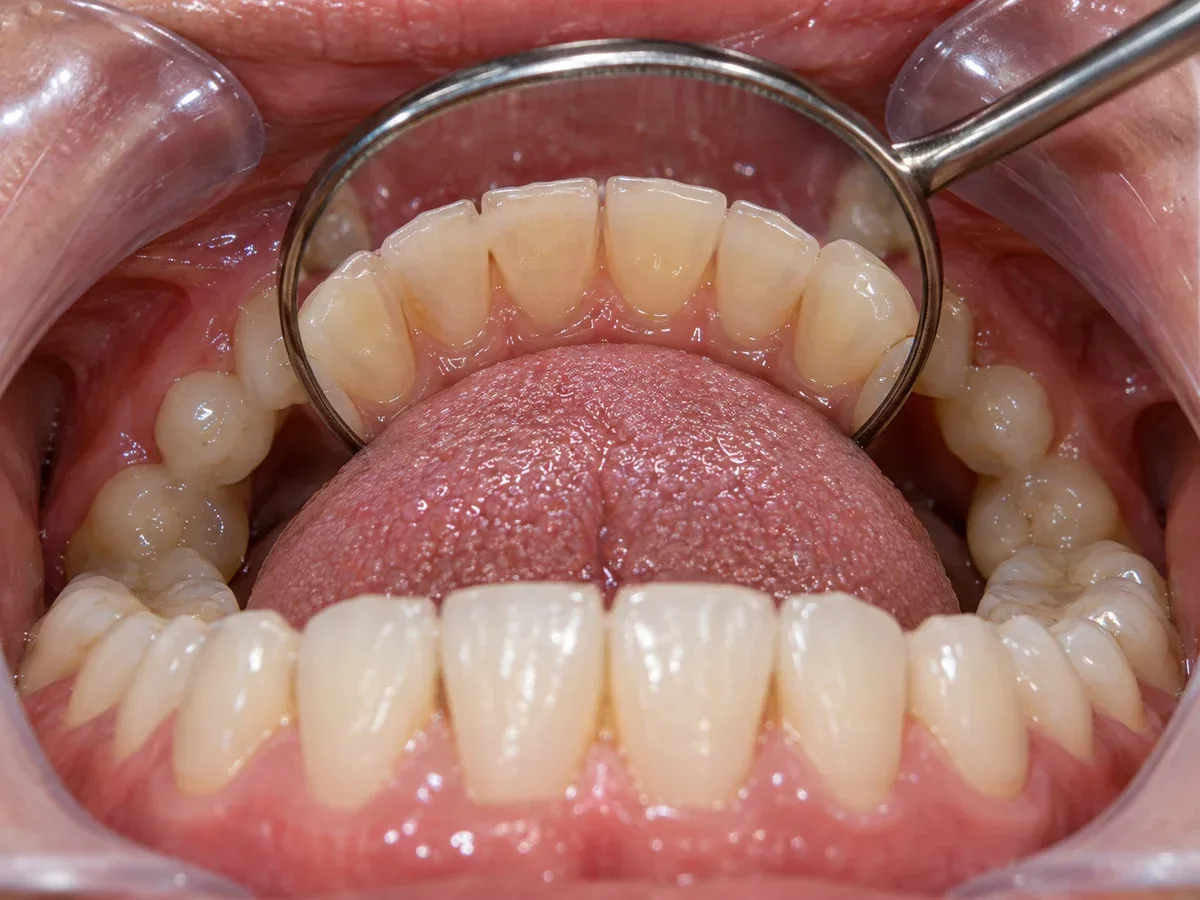
- Before the material, the method comes first: a one-visit direct filling, or an inlay made outside the mouth and bonded at a second visit.
- A gold inlay does not corrode and resists biting force, but its color rules it out where looks matter.
- Ceramic looks natural and suits the body well, but the source warns it can break in people who grind or clench.
- For old amalgam, what decides replacement is not mercury but whether the edge has broken down.
"Gold is still the way to go for molars." "Everyone gets ceramic these days." Patients at Reset Dental Clinic in Seomyeon, Busan, often hear both in the same week. For patients living in or visiting Korea, we provide 1:1 English interpretation from the first consultation to the end of treatment.
Both claims are half right. Each material has its strengths and weaknesses, and they change with which tooth, in which spot, is being treated.
This guide draws on the KDCA National Health Information Portal pages on gold inlays, amalgam, tooth-colored inlays, tooth decay and teeth grinding. Instead of recommending one material, it explains what to look at when you choose.
Direct filling or inlay: which comes first?
The source first divides decay treatment by method, not by material name. A direct restoration is finished in one visit and includes amalgam, composite resin and glass ionomer. An indirect restoration needs two visits and includes gold, resin and ceramic inlays.
The difference is where the restoration is made. In a direct restoration, material is packed straight into the prepared spot and hardens in the mouth.
In an indirect restoration, the dentist takes an impression of the cavity, the space shaped after the decay is removed. The inlay is made outside the mouth and then fixed with dental cement. That is why the source says an inlay needs two visits.
| Method | Visits | Materials | How it is made |
|---|---|---|---|
| Direct restoration | 1 | Amalgam, composite resin, glass ionomer | Packed into the tooth and hardened in the mouth |
| Indirect restoration (inlay) | 2 | Gold, resin or ceramic inlay | Made outside the mouth from an impression, then cemented |
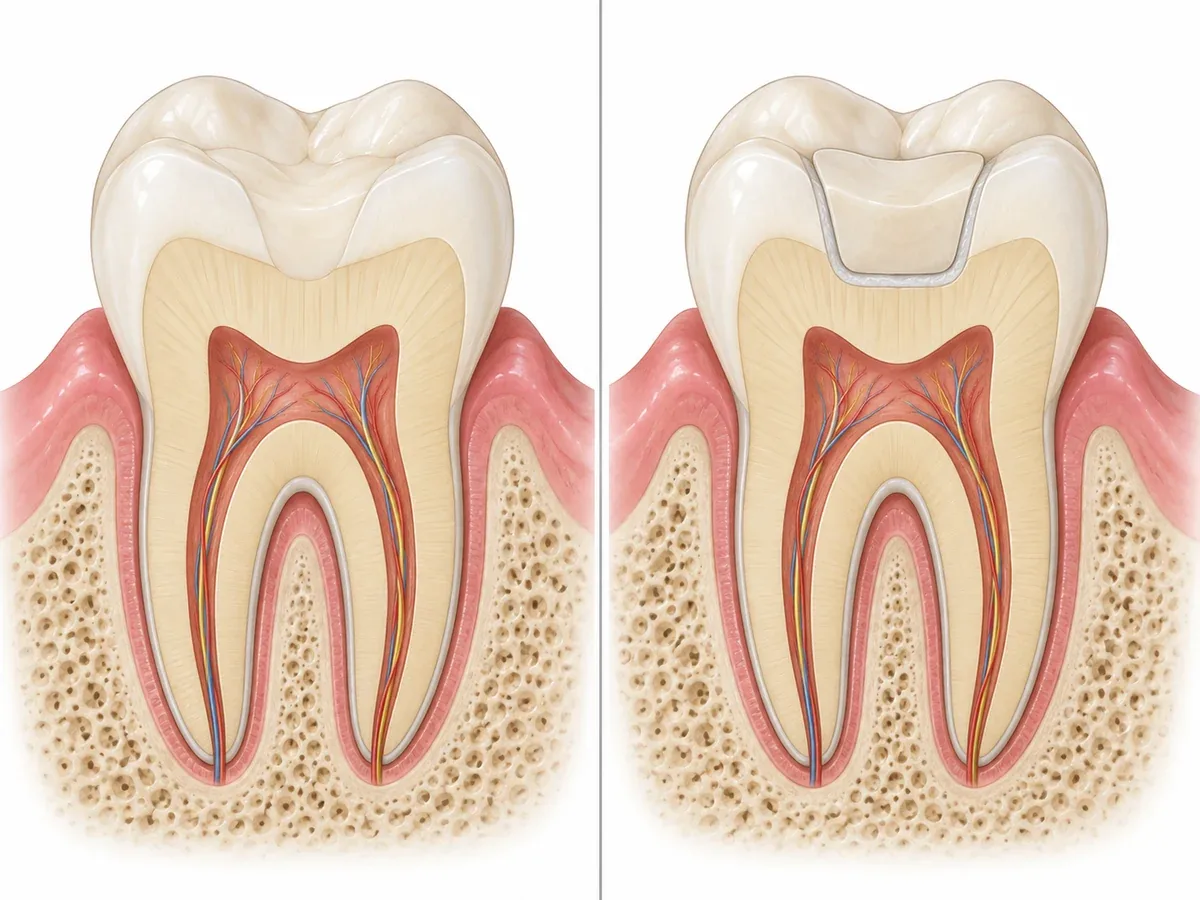
Why does this split come first? The source explains when an indirect inlay is chosen. When a tooth is badly damaged, or several teeth need partial coverage, a one-visit composite filling is hard to do well.
In particular, the source says a lab-made restoration can work much better when several teeth are treated at once. So before you think about gold or ceramic, which side your tooth falls on is usually decided first.
What is a gold inlay good at, and where does it fall short?
The source introduces the gold inlay as the classic restoration. It does not dissolve or corrode in saliva, and it does not break easily under biting force. Its volume changes little after it is fitted.
Because it is made outside the mouth, it is easy to shape like the natural tooth and polish smooth. The source's FAQ adds that gold alloy has a strength similar to tooth, which allows precise fabrication.
The drawbacks are listed alongside. Gold cannot bond to the tooth by itself, so a cement is needed, and saliva may get in during that step. It differs in color from the tooth, so it is not used where appearance matters.
Gold also conducts heat well, so a base layer is needed to protect the nerve. It takes time to make as well.
The most useful part for choosing is the list of cases where a gold inlay does not fit. The source names these:
- small, shallow cavities
- front teeth, where appearance matters
- cavities limited to the chewing surface
- children and teenagers
- short teeth
- patients who get new decay very easily
On the other hand, it fits these cases:
- teeth where worn enamel has exposed the dentin beneath
- replacing an amalgam filling with a large defect from edge corrosion or new decay
- large cavities with too little healthy tooth left for amalgam or composite
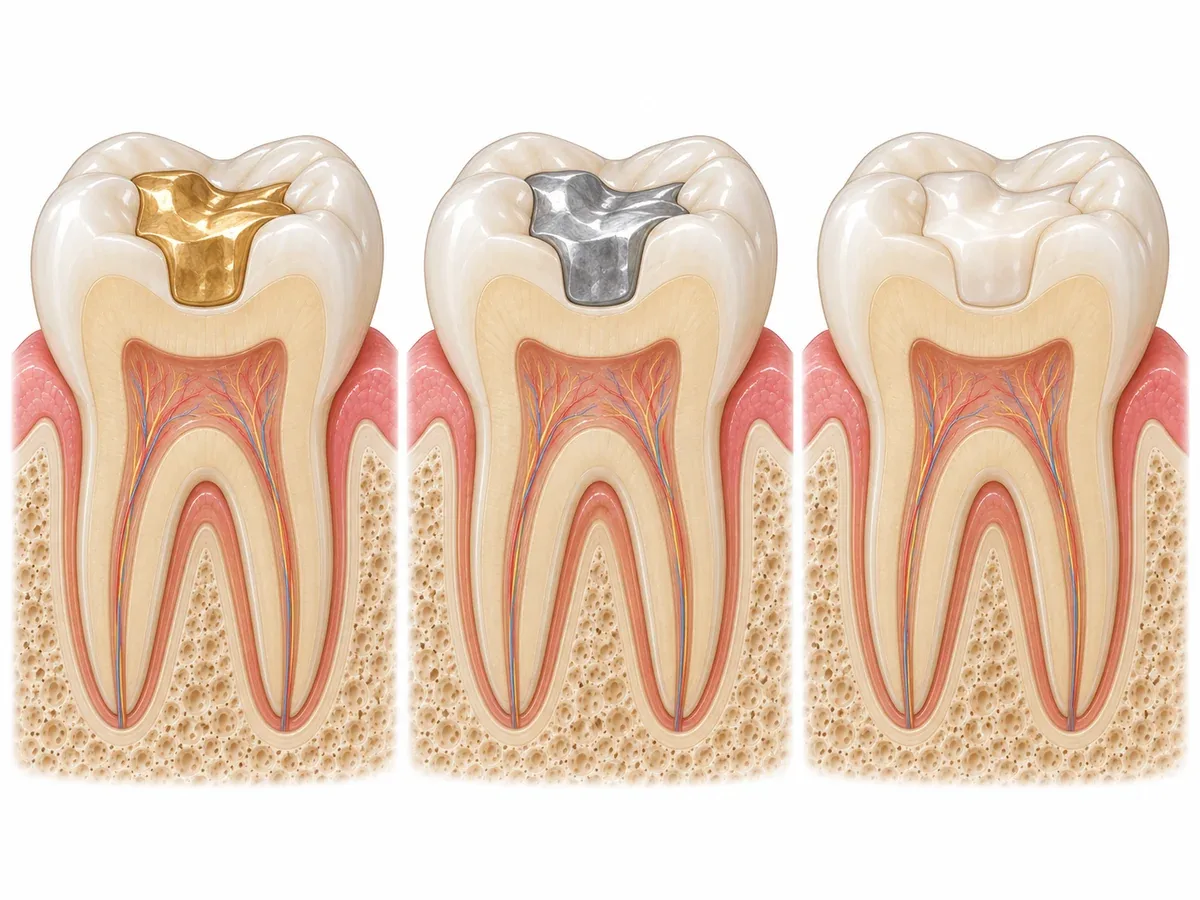
Why is amalgam still used?
Amalgam is an alloy of mercury and other metals. The source calls it an old material, used in dentistry for about 200 years.
| Metal | Share |
|---|---|
| Silver | 65% |
| Tin | 29% |
| Copper | 6% |
| Zinc | 2% |
| Mercury | 3% |
It lasts well in the mouth and is strong enough. It is forgiving to place, wears at a rate similar to tooth, costs little and has a long service life.
Its downsides are a color unlike tooth, possible staining, and no bonding to the tooth. In contact with a different metal, a small electric current can flow, which is called galvanism. It can also break at the sides between teeth, or deform if pressed before it sets.
It usually takes 24 hours to set fully. So the source says you should not chew on that side for a day after treatment.
The source addresses mercury directly. Under the 2013 Minamata Convention on Mercury, dental mercury is supplied just in capsules, not in bottles. Europe stopped producing and using it, considering its effect on the environment more than on the body, while it is still widely used for molars in the United States.
On safety, the source says systematic research has confirmed it is not harmful. It adds that the American Dental Association and restorative dentistry textbooks describe it as a suitable material with very little risk to health.
How do composite resin and ceramic inlays differ?
"Please make it tooth-colored" covers two different materials. The source names composite resin and ceramic (porcelain) as the main tooth-colored inlay materials, and describes each separately.
A composite resin inlay looks natural and is simple to make. It wears the opposing tooth less than ceramic, and needs less tooth removed than ceramic. It is also more elastic, so less biting shock passes to the tooth.
However, it is not as hard as ceramic. For strong biting forces, the source says methods using glass fiber have been developed to raise fracture resistance.
A ceramic inlay looks even more natural than resin and suits the body well. Older ceramics were more brittle and wore opposing teeth more. The source says newer ceramics have been adjusted to wear at a rate similar to tooth, are tougher, and are now widely used.
Ceramics are grouped by makeup, such as feldspathic porcelain and zirconia, and by how they are made, such as pressed or machined. Asked whether ceramic can be used on molars, the source says biting force must be considered, but stronger ceramics are now used without major problems.
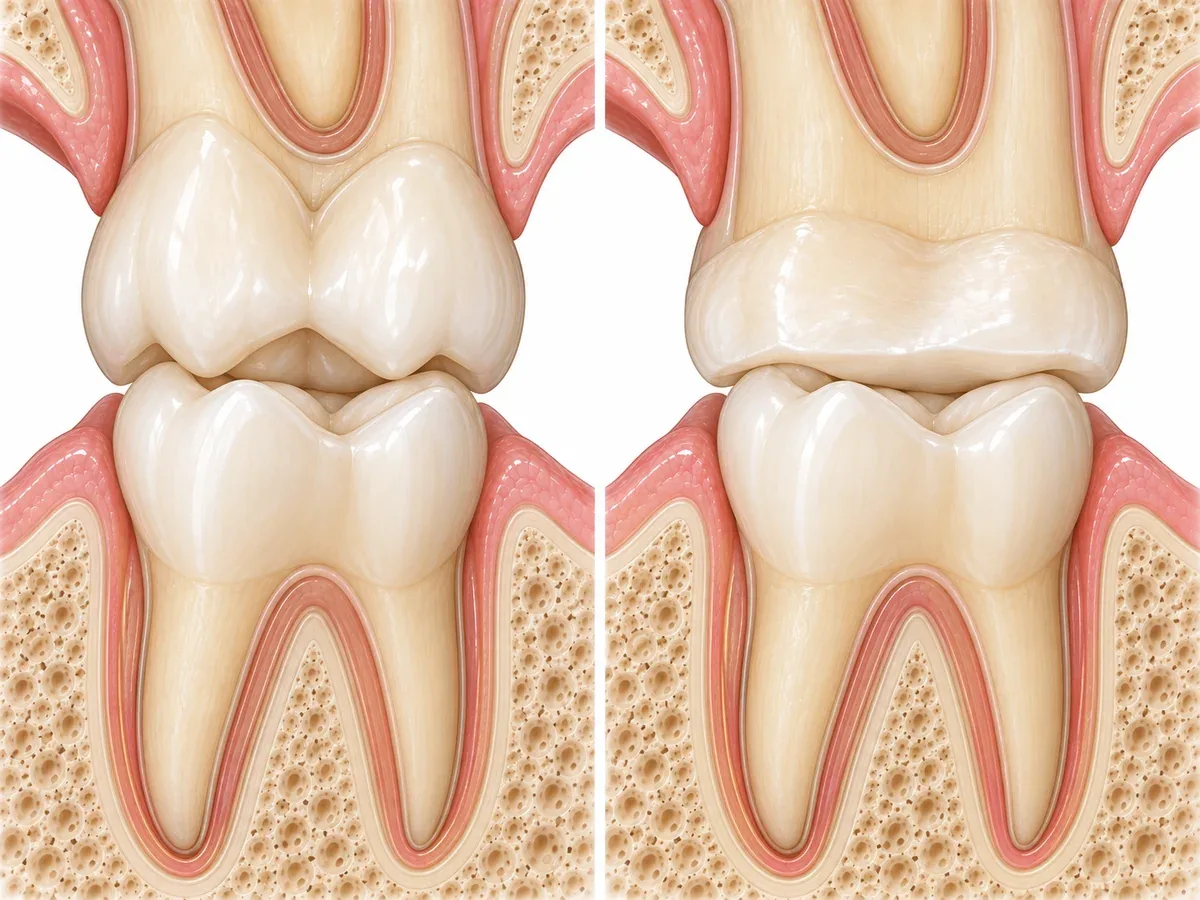
The source also describes a CAD/CAM system for people who find impressions uncomfortable. A camera scans the tooth instead of impression material, and the inlay is designed on a computer and milled by machine. Early systems were less precise, but precision is improving as the technology develops.
Choosing an inlay in Busan: how do the materials compare?
The table below gathers what the KDCA pages say about each material. It lists strengths and weaknesses as the source describes them, without ranking.
| Material | Visits | Strengths in the source | Weaknesses in the source |
|---|---|---|---|
| Amalgam | 1 | Strong enough, wears like tooth, simple to place, low cost, long service life | Not tooth-colored, does not bond, galvanism, may break at the sides, 24 hours to set |
| Composite resin | 1 (direct) / 2 (inlay) | Tooth-like color, minimal tooth removal, same-day treatment possible, less wear on opposing teeth than ceramic, elastic | Complex and moisture-sensitive, shrinks as it sets, may stain or cause sensitivity |
| Gold inlay | 2 | Does not corrode, resists biting force, little volume change, easy to shape and polish | Not tooth-colored, needs cement, conducts heat and needs a base, takes time to make |
| Ceramic inlay | 2 | Natural look, suits the body well, conducts heat like tooth, possible with little dentin left | Higher cost and longer treatment, depends on the dentist's skill, may break with grinding or clenching |
As the table shows, no single material leads in every column. So the source does not say which is better; it sets out where each one fits and where it does not.
Choosing is less about ranking materials. It is closer to checking which column's conditions your tooth is in.
Cost is part of the picture too, but a pricier choice is not automatically better. The KDCA root canal page says crown materials should be chosen with the dentist, weighing the situation, the tooth's position, appearance and budget.
Three questions help most: how much tooth is left, how strong your bite is, and whether the tooth shows when you smile.
How does teeth grinding change the choice of inlay?
Chewing habits are one of the biggest factors in choosing a material. The list of drawbacks for tooth-colored inlays includes this item word for word: patients who grind or clench their teeth are prone to breakage.
The KDCA page on teeth grinding confirms the same problem from the other side. The signs checked in the clinic for grinding include:
- repeated breakage of restored teeth
- cracks or chips in teeth
- flattened, worn chewing surfaces
- notches worn at the neck of the teeth
So if a restoration keeps breaking, check the biting force before changing the material.

The source also clears up a common misunderstanding. Grinding was once seen as a problem of how the upper and lower teeth meet, and treated by grinding teeth slightly to adjust the bite.
But the source states that a poor bite is not the cause of grinding, so bite adjustment is not needed to treat it. Instead, it names a hard resin guard covering all the teeth, an occlusal splint, as the most widely used method.
The guard does not stop grinding itself. It blocks the force from reaching the teeth, the bone around them, the muscles and the jaw joint.
Should an old amalgam filling be replaced with an inlay?
The source answers in two parts. First, there is no need to replace amalgam because of mercury.
The amalgam FAQ says amalgam in the mouth releases little mercury, and removing it can release more. So if there are no symptoms or decay, it is fine to keep using it. The complications section also says no adverse effects from its mercury have been reported.

The case for replacement is on the gold inlay page. One listed use is replacing an amalgam filling with a large defect from edge corrosion or new decay. The amalgam page also notes that the edges can be weak after placement and may break.
So the question is not how many years it has been. It is whether the edge has broken and left a gap, and whether decay has returned beneath it.
This is hard to judge by eye alone. It calls for the X-ray and clinical exams the source uses to diagnose decay.
What stays the same whatever you choose
- Sensitivity after treatment can happen with any material. Both the gold and tooth-colored inlay pages list strong sensitivity as a complication, which may lead to root canal treatment if severe. Avoiding very hot or cold food at first is advised.
- With a two-visit inlay, the time in between matters. The temporary filling does not bond to the tooth, so avoid very hot, cold or chewy food. If the temporary comes out, the new inlay may no longer fit.
- No material prevents decay. The source calls decay a recurring disease that can return without good oral hygiene and diet control, and advises dental visits about every 6 months even after treatment.
Frequently asked questions
Does a gold inlay last the longest?
The source says gold inlays have been used successfully for so long that many people have had theirs for over 10 years. The same page lists small, shallow cavities, front teeth and chewing-surface cavities as poor fits. Lasting long and suiting that spot are two different things.
Will a ceramic inlay crack on a molar?
The source says older ceramic was fragile, but stronger ceramics are now used on molars without major problems. Its list of drawbacks still warns that grinding or clenching raises the risk of breakage. If you have these habits, please tell your dentist first.
Can I chew right after an amalgam filling?
No. Amalgam usually takes 24 hours to set fully, so avoid chewing on that side for a day. Chewing before it sets risks deforming or breaking it.
Can I get inlay treatment in English in Busan?
Yes. We offer 1:1 English interpretation from the first consultation through the end of treatment. The clinic is near Seomyeon Station Exit 2 (5-min walk), opposite Lotte Hotel Busan, and you can call 010-8555-2854.
The task is not to pick a good material,
but the material that suits this spot.
The source does not recommend any one of them.
Instead, it sets out where each fits
and where it does not.
How much tooth is left, how strong your bite is, whether the tooth shows:
check these three first.
If you are choosing an inlay in Busan, Reset Dental Clinic offers 1:1 English interpretation from the first consultation through the end of treatment. For patients living in or visiting Korea, call 010-8555-2854 (+82-10-8555-2854 from abroad).
References
- KDCA National Health Information Portal, "Amalgam and Inlays (Gold Inlay)" — definition of an inlay and the two-visit process; many gold inlays used for over 10 years; indications (worn teeth, replacing amalgam with large defects, large cavities) and contraindications (small, shallow cavities, front teeth, chewing-surface cavities, young patients, short teeth, high decay risk); no corrosion and resistance to biting force versus color, base layer and fabrication time; gold alloy with strength similar to tooth; temporary filling care and post-treatment sensitivity
- KDCA National Health Information Portal, "Amalgam and Inlays (Amalgam)" — direct versus indirect restorations; amalgam composition (silver 65%, tin 29%, copper 6%, zinc 2%, mercury 3%) and about 200 years of use; strengths (strength, tooth-like wear, simple placement, low cost) and weaknesses (no bonding, galvanism, side fractures, 24-hour setting); capsule supply under the Minamata Convention and Europe's phase-out; systematic research finding no harm; no need to remove existing amalgam without symptoms or decay
- KDCA National Health Information Portal, "Amalgam and Inlays (Tooth-Colored Inlay)" — composite resin versus ceramic; resin's strengths (appearance, easy fabrication, less opposing wear, less reduction, elasticity); ceramic's appearance, biocompatibility and improved wear and strength; feldspathic porcelain, zirconia and other types; pros and cons including cost, skill, treatment time and fracture risk with grinding; two-visit process, temporary filling care, CAD/CAM, and ceramic inlays on molars
- KDCA National Health Information Portal, "Tooth Decay" — principles of decay treatment (removing decay and defective restorations, protecting the nerve, restoring the original shape); steps and features of each material; composite resin with minimal reduction; static when amalgam touches another metal; temporary filling care after an inlay; diagnosis by X-ray and clinical exam; decay as a recurring disease and visits about every 6 months
- KDCA National Health Information Portal, "Teeth Grinding (Bruxism)" — clinical signs including repeated breakage of restorations, cracked and chipped teeth, worn chewing surfaces and notches at the tooth neck; a poor bite is not the cause, so bite adjustment is not needed; a hard resin occlusal splint covering all teeth as the most widely used method, blocking force on teeth, gums, muscles and the jaw joint
Written by Reset Dental Clinic Support Team
Medical review Dr. Kim Hyun-joo, Head Dentist · Esthetic Restorations
Last updated: September 19, 2026
This article is general information and does not replace diagnosis or treatment for individual patients. If you have symptoms, please see a dentist.