

- Not finding the tooth that hurts is normal. The source says pulp pain is often hard to locate, and patients sometimes point to the wrong tooth.
- Some toothache is easy to place. With acute inflammation at the root tip, patients usually find the tooth.
- A toothache can happen with healthy teeth. The source calls this non-dental toothache and warns against unneeded dental treatment.
- A toothache with chest pain or breathlessness needs a cardiologist right away.
"Where does it hurt?" Many patients at Reset Dental Clinic in Seomyeon, Busan, answer by pointing at one cheek and saying it is somewhere around here. For patients living in or visiting Korea, we provide 1:1 English interpretation from the first consultation to the end of treatment.
There is no need to feel frustrated. There is a reason it is hard to tell which tooth hurts, which is why dentists narrow it down step by step.
This guide follows that process in order. It draws on the KDCA National Health Information Portal pages on toothache and chronic pain, orofacial chronic pain, tooth decay and root canal treatment.
Why is toothache so hard to pin down?
The source starts by explaining this area of the body. The mouth and face taste, smell, chew and swallow, and they also handle breathing, speech and facial expression.
Because the area does so many jobs, its nerve supply is very complex and dense. Symptoms here can be shaped by physical and psychological factors, so they show up in many varied and complex ways.
Some patients feel pain even though nothing physical is found. The source also notes that a poor bite does not necessarily lead to pain in the mouth and face.
So the source divides toothache into two groups. Dental toothache comes from a problem in the tooth. Non-dental toothache happens when the teeth are fine but something else causes the pain.
| Type | Causes listed in the source |
|---|---|
| Dental toothache | Dentin hypersensitivity, pulpitis (inflamed pulp), periodontitis at the root tip, a cracked tooth |
| Non-dental toothache | Muscle-related, sinus-related, heart-related, psychogenic and neurovascular toothache, and toothache from trigeminal neuralgia |
With so many possible causes, the source concludes that an accurate diagnosis of toothache is very important.
When does a sensitive tooth turn into a toothache?
The most common starting point is sensitivity. The source explains that enamel covers the crown of the tooth, with dentin underneath.
Dentin contains tiny channels called dentinal tubules. They run all the way to the pulp and carry nerve fibers. When dentin is exposed, stimuli pass straight through, and this is called dentin hypersensitivity.
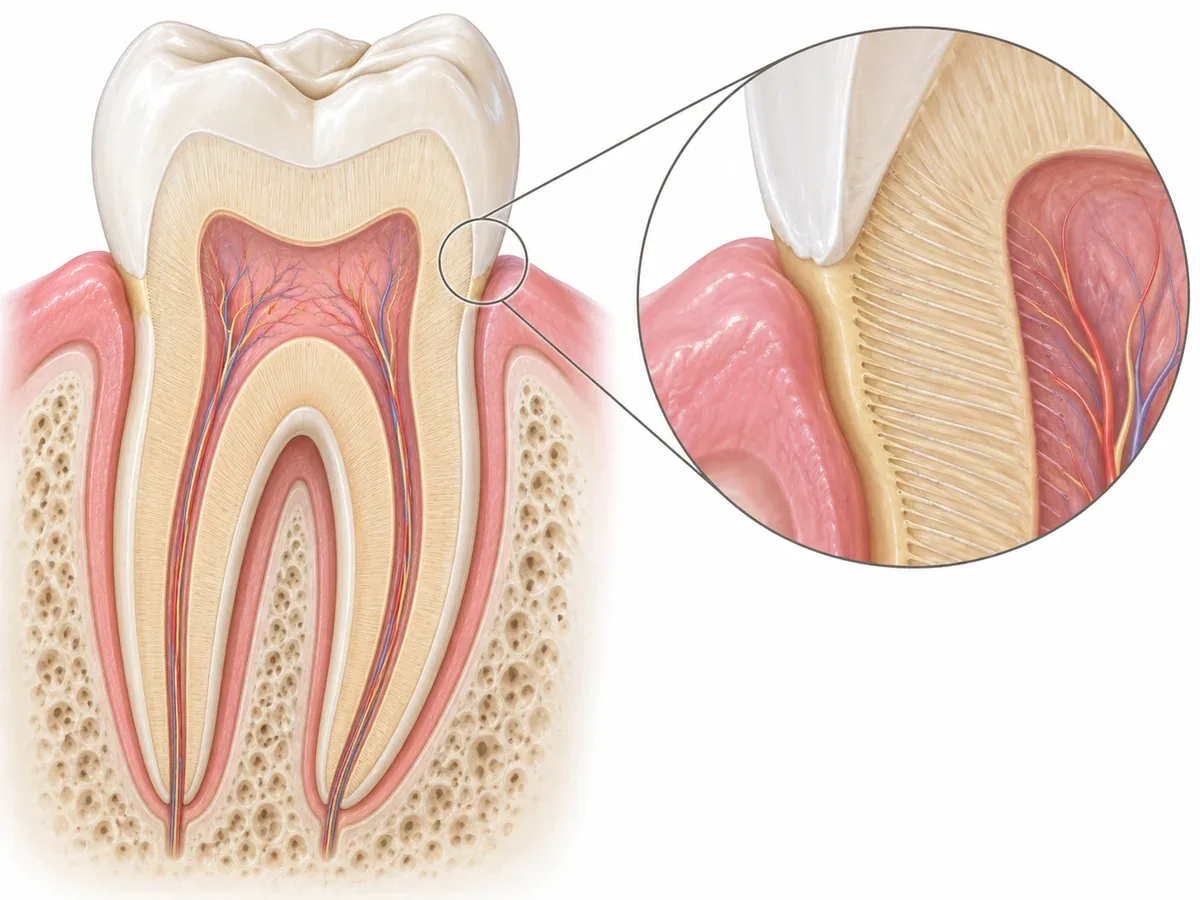
The dividing point matters here. Hypersensitivity pain appears when cold water or cold air touches the tooth, but it goes away when the stimulus is removed.
If it is severe or keeps going, it can progress to pulpitis. Then the pain lasts long after the stimulus is gone, or comes on even at rest.
So if "sensitive" has turned into "painful," the same problem may have grown larger.
Why can't you tell which tooth is causing the toothache?
The pulp is tissue rich in blood vessels and nerves, and it is enclosed by hard dentin. When the pulp is inflamed, the vessels swell.
The source explains that because the pulp is surrounded by hard material, the pressure has nowhere to go. That is why the pain can be very severe.
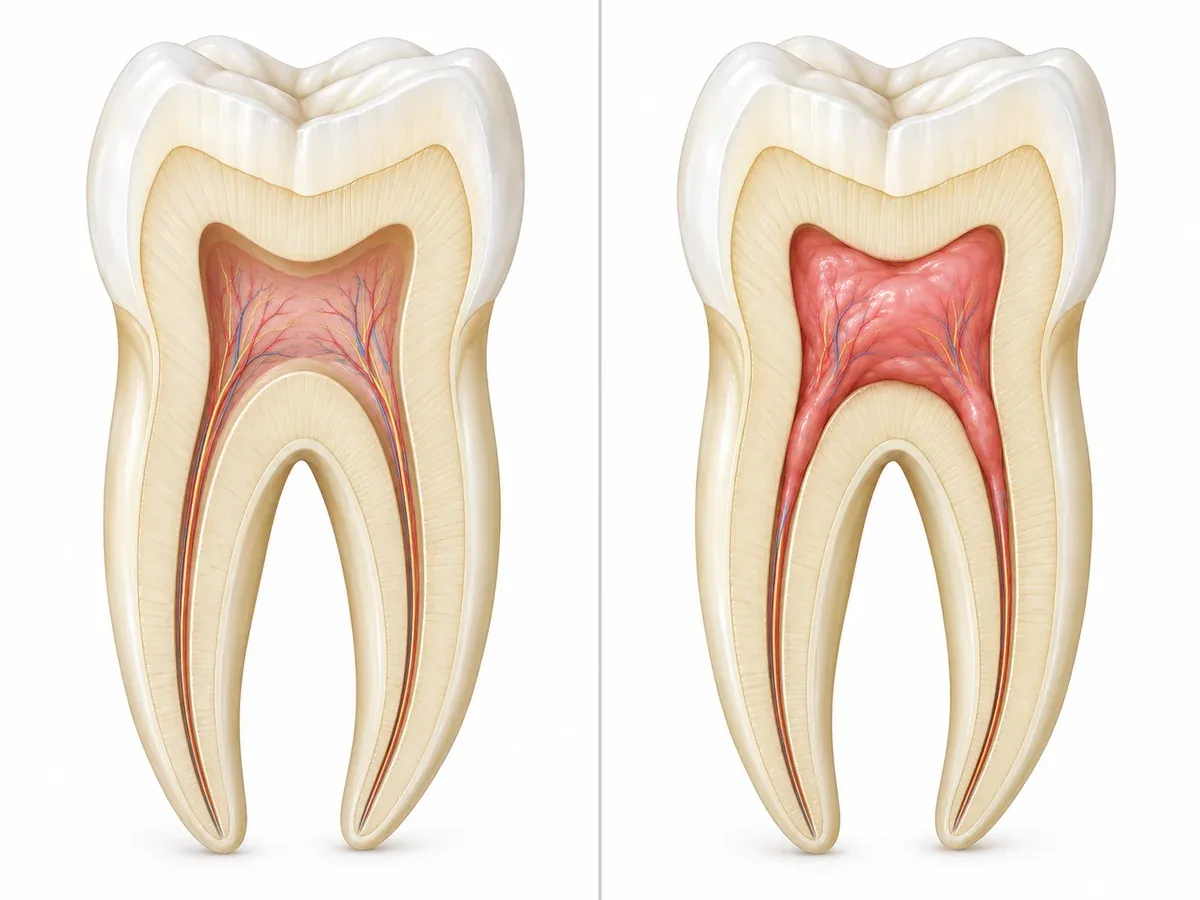
The type of pain also blurs its location. Pulp pain is usually dull or aching, and sometimes throbbing like a pulse.
Then comes the key sentence in the source. Patients often cannot say exactly where the pain is. Even when a tooth hurts badly, they may not know which one, and they sometimes name the wrong tooth.
The table below gathers how the source describes the pain for each cause. It shows why the questions in the dental chair are so detailed.
| Cause | What the pain is like | Finding the tooth |
|---|---|---|
| Dentin hypersensitivity | Sharp pain with cold water, cold air or scratching; stops right away when the stimulus stops | Usually possible |
| Reversible pulpitis | Sharp pain with heat, sweets or pressure; stops at once when the stimulus stops; can be hard to tell apart from hypersensitivity | Can be hard |
| Irreversible pulpitis | Lasts after the stimulus stops, or hurts at rest; can wake you at night and spread to the ear or cheek | Hard to locate |
| Acute periodontitis at the root tip | Moderate or worse pain on its own; worse when biting, the tooth feels raised, tender to tapping | Usually easy |
| Cracked tooth | Sharp pain on biting that fades quickly when you let go; sometimes worse on release | Narrowed down by biting tests |
| Muscle-related toothache | Fairly constant, dull or aching, not throbbing; no change when the tooth is stimulated, worse when the muscle is pressed | Cannot be found in the teeth |
Look at the last column. Whether the tooth is easy to find depends on the cause. The source sums it up: with pulpitis, patients struggle to name the tooth, but with periodontitis they usually find it.
What if a tooth hurts just when you bite?
"It is fine at rest, but it zings when I chew." The source treats this as a separate case.
Biting something hard, a direct blow to the jaw, or heavy wear and loss of elasticity with age can leave a fine crack in a tooth. A crack within the enamel causes no symptoms. Once it reaches the pulp, it hurts.
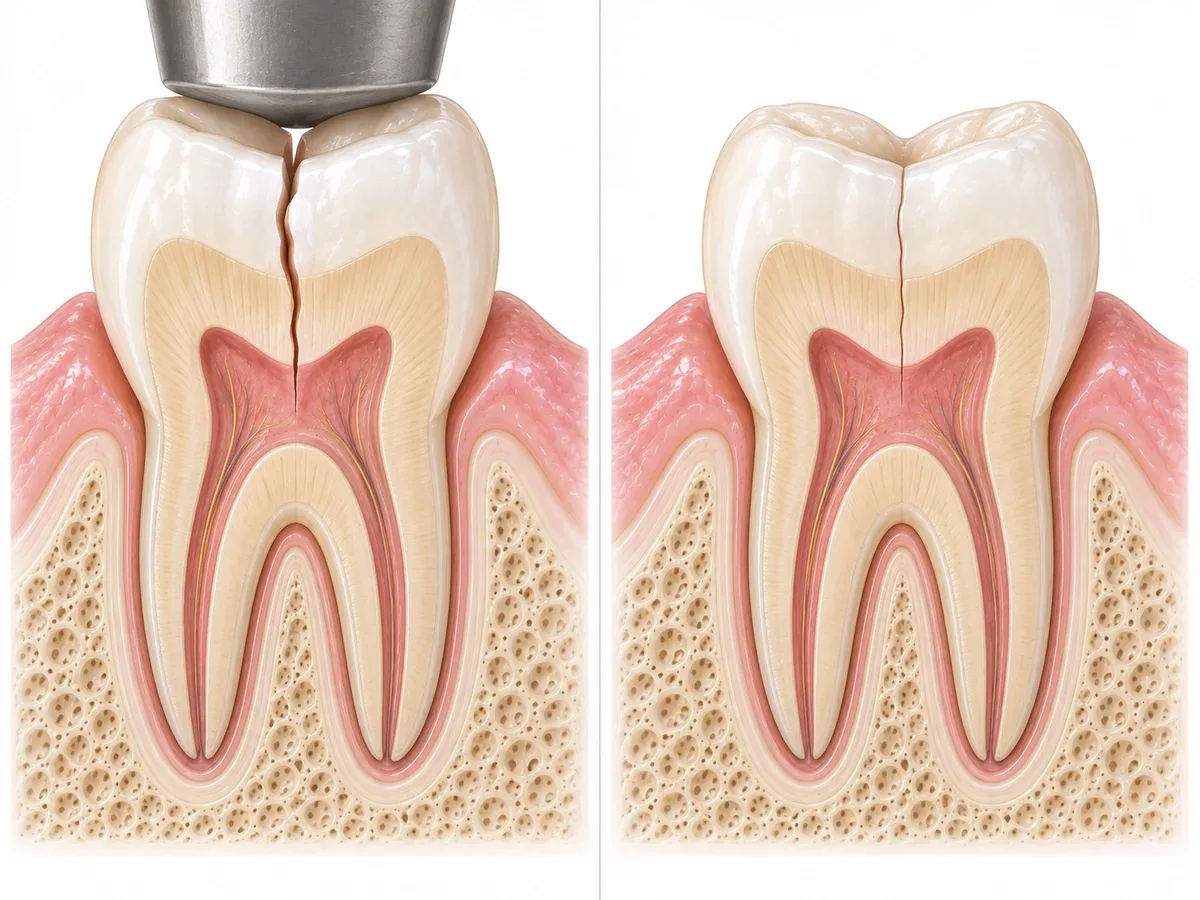
This pain can look like periodontitis, but the source says the mechanism is different. It comes from biting force directly stimulating the pulp.
The source also describes rebound pain. The cracked surfaces of dentin rub against each other, so the pain is worse when you release the bite than when you bite down.
The fine lines often seen on tooth surfaces are a different matter. In the FAQ, the source says tiny cracks within the enamel may not look nice, but they do not always need treatment if there is no pain.
If biting or other stimuli bring pain or sensitivity, have it checked. That tells a surface line apart from a cracked tooth.
Toothache that does not come from the teeth
This is why careful diagnosis is needed. Here are the non-dental types of toothache the source describes.
- Muscle-related toothache: pain from the chewing muscles is felt in the teeth as referred pain. Stimulating the tooth changes nothing, but pressing the muscle makes it worse, and numbing the muscle eases it. The source says the teeth are fine, so no dental treatment is needed.
- Sinus-related toothache: it appears in the upper teeth with sinusitis or rhinitis. The teeth are tender to tapping, the pain gets worse when you bend your head down or walk with heavy steps, and pressure may be felt between the eyes.
- Neurovascular toothache: it comes with headaches such as migraine. It is spontaneous and throbbing, with completely pain-free periods in between, and may recur at the same time of day, week or month.
- Toothache from trigeminal neuralgia: light triggers such as washing the face, brushing or eating bring a sudden, brief electric-shock pain on one side. The source warns it is sometimes mistaken for a tooth problem, so care is needed to avoid unneeded dental treatment.
- Psychogenic toothache: the pain appears in several teeth or areas and moves around. No cause can be found, and it does not respond to proper dental treatment.
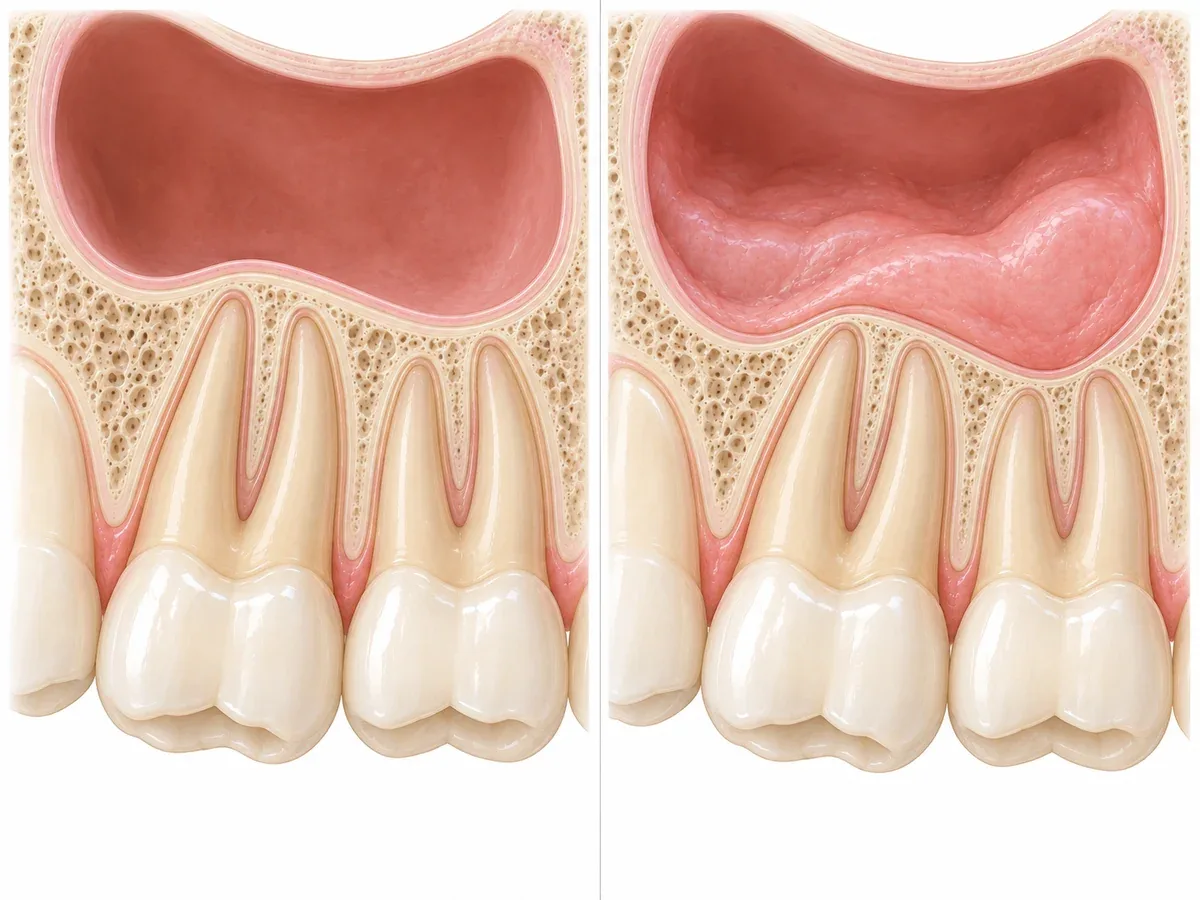
The link with the sinus works both ways. If the inflammation is in the sinus alone, the focus is sinus treatment.
However, the source says that because the sinus and the upper teeth touch, severe tooth inflammation can itself cause sinus inflammation. In that case, both need treatment together.
Headaches are linked too. The source says a headache should be diagnosed by a neurologist. If no cause is found and usual migraine treatment does not help, a dental check is needed, because ongoing inflammation around teeth and gums can also cause headache.
For long-lasting pain, the range widens further. The KDCA page on orofacial chronic pain also covers these conditions:
- burning mouth syndrome, a burning feeling in the tongue and lining of the mouth
- trigeminal neuralgia, mostly caused by a blood vessel pressing on the nerve
- post-traumatic trigeminal neuropathy, which can follow injury during dental work such as wisdom tooth surgery, nerve-block anesthesia, implant surgery or root canal treatment
How does a dentist in Busan find the tooth behind a toothache?
This is why we test. Put the KDCA pages on decay and root canal treatment together, and an order appears.
First, we listen. The source lists these as key clues for diagnosis:
- where the painful tooth seems to be
- when the symptoms started
- how long the pain lasts and how strong it is
- what brings the pain on
- your medical history and current medicines
- any past dental treatment
The questions we ask in the chair come straight from this list.
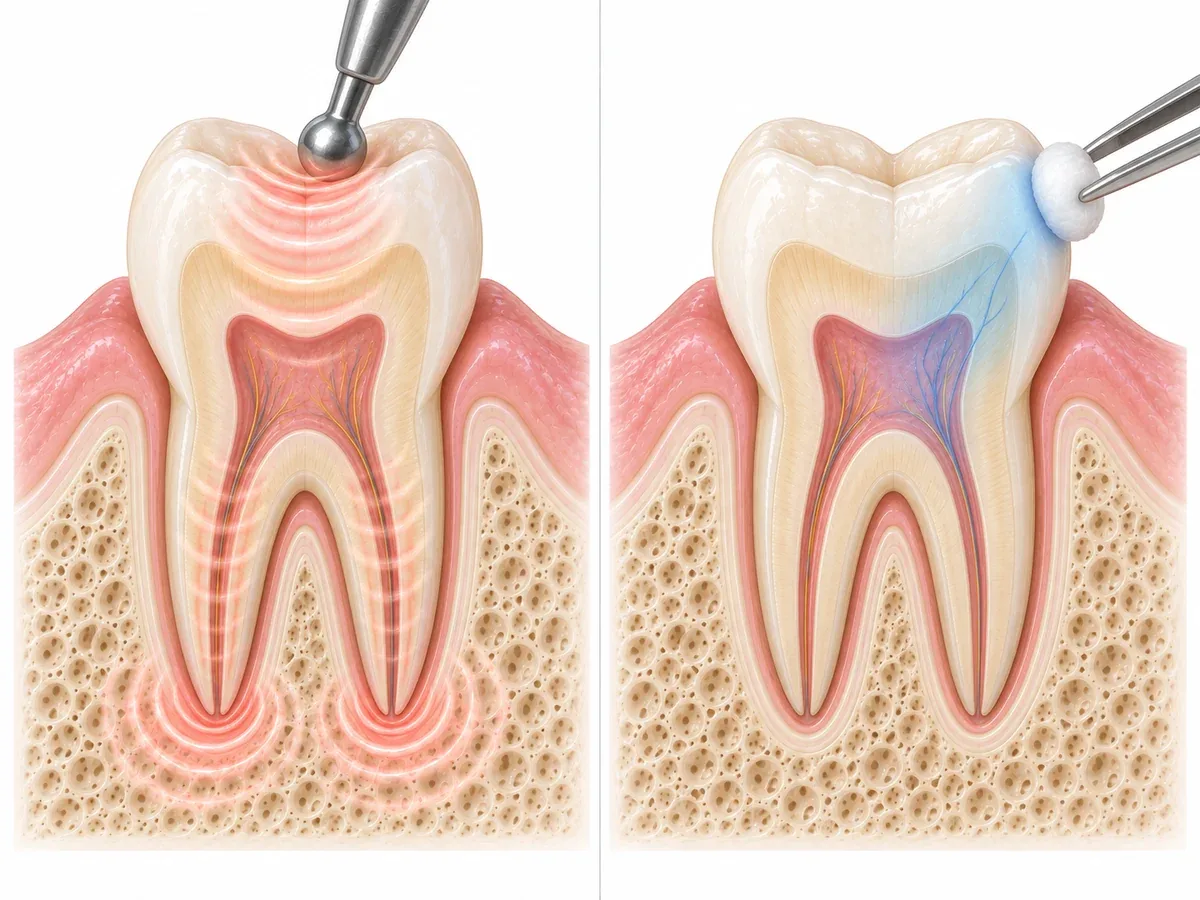
Next come hands-on and instrument tests. The table below sets out what each one checks.
| Test | What it checks |
|---|---|
| Palpation | Feeling the gum and skin around the tooth to see how far inflammation has spread |
| Percussion (tapping) | Tapping each tooth from several sides to find the painful one; tender with acute inflammation at the root tip |
| Mobility test | Rocking the tooth with tweezers or a finger |
| Bite test | Biting on a small wooden stick in one spot; the root canal page lists it for diagnosing a fractured tooth |
| Pulp vitality tests | Cold or heat, and a mild electric current, to see whether the pulp is alive; also test anesthesia or careful drilling |
| Periodontal exam | Checking whether gum and pulp inflammation overlap |
| X-rays and dental CT | Showing the location and depth of decay and lesions around the root; also helps find the number and openings of the canals |
Why combine several tests? Because no single test settles it.
With acute inflammation at the root tip, the nerve is usually already dead, so the tooth typically does not respond to heat or electricity. But if the nerve is not completely dead, the source says it may still react to heat.
When should a toothache not wait?
The signs below are the ones the source states clearly.
- A toothache with chest pain or shortness of breath, or one that gets worse with movement. The source says heart circulation problems such as angina or a heart attack can be felt as jaw or tooth pain, sometimes as toothache alone. If this is suspected, see a cardiologist immediately.
- Swollen, warm gums or pus. The source says antibiotics are given when the inflammation brings heat, and pus that has formed must be drained through an incision.
- Pain at rest that wakes you at night. The source describes this as a feature of irreversible pulpitis, which needs root canal treatment or extraction.
- Facial swelling during treatment. When inflammation spreads to the root tip, sudden swelling with severe pain can appear.
The toothache hurt, then stopped
This is the case to be most careful about. The source says the intense toothache of acute irreversible pulpitis can disappear by itself within days once the pulp dies.
The FAQ answer is even clearer. The pain may fade, but the inflammation in the pulp has not stopped. Left untreated, it can spread below the root and even cause loss of the jawbone.
Please do not read the end of the pain as healing.
Frequently asked questions
Can you diagnose my toothache if I cannot point to the tooth?
Yes. The source itself assumes that with pulpitis, patients often cannot say where the pain is. That is why several exams and X-rays are combined, so simply telling us you cannot locate it actually helps.
The pain eased after a numbing injection. Does that prove it is a tooth problem?
Not necessarily. The source explains that trigeminal neuralgia has trigger points, and numbing that spot can ease the pain while the injection lasts. Muscle-related toothache also eases when the muscle is numbed.
My teeth feel sensitive. Do I need root canal treatment?
Sensitivity alone does not decide it. The source first lists reducing the triggers, applying fluoride or laser treatment to exposed dentin, and covering worn notches with a material such as resin. Root canal treatment comes in when it has progressed to pulpitis.
Can I get toothache treatment in English in Busan?
Yes. We offer 1:1 English interpretation from the first consultation through the end of treatment. The clinic is near Seomyeon Station Exit 2 (5-min walk), opposite Lotte Hotel Busan, and you can call 010-8555-2854.
Not knowing which tooth hurts
does not mean you explained it badly.
As the source says,
pain from the pulp is
hard to pin down by nature.
When it started, what triggers it, how long it lasts:
just remember those and bring them with you.
If you have a toothache in Busan, Reset Dental Clinic offers 1:1 English interpretation from the first consultation through the end of treatment. For patients living in or visiting Korea, call 010-8555-2854 (+82-10-8555-2854 from abroad).
References
- KDCA National Health Information Portal, "Toothache and Chronic Pain (Toothache)" — dental versus non-dental toothache; dentinal tubules and dentin hypersensitivity; pulp enclosed by hard tissue and why pulpitis pain is hard to locate; reversible and irreversible pulpitis and how far pain spreads; acute periodontitis at the root tip and why its tooth is usually found; rebound pain of cracked teeth and extraction for vertical fractures; muscle, sinus, neurovascular, heart-related and psychogenic toothache and trigeminal neuralgia; seeing a cardiologist at once; draining pus; why treatment is needed after pain stops; FAQ on fine cracks
- KDCA National Health Information Portal, "Toothache and Chronic Pain" — the many functions of the mouth and face and their very complex, dense nerve supply; symptoms shaped by physical and psychological factors, sometimes without physical findings; considering the jaw joint and bite together; a poor bite does not necessarily cause orofacial pain
- KDCA National Health Information Portal, "Toothache and Chronic Pain (Chronic Orofacial Pain)" — types of chronic orofacial pain (burning mouth syndrome, trigeminal neuralgia, tension headache, post-traumatic trigeminal neuropathy, post-herpetic neuralgia); trigeminal neuralgia mostly from vessel compression and the need for brain MRI; post-traumatic neuropathy after wisdom tooth surgery, nerve-block anesthesia, implant surgery or root canal treatment
- KDCA National Health Information Portal, "Tooth Decay" — key diagnostic clues (location, onset, duration, intensity, triggers, medical history and medicines, past dental treatment); palpation, percussion, mobility, pulp tests (temperature and electric) and bite tests; X-rays showing decay and lesions around the root; symptoms by how far decay has spread
- KDCA National Health Information Portal, "Root Canal Treatment" — related tests (oral exam, bite test for fractures, periodontal exam, electric and thermal pulp tests, test anesthesia and drilling, panoramic and periapical X-rays and dental CT); X-rays help find the number and openings of canals; severe pain with heat or cold, pain at rest and frequent pus in the gum as reasons for treatment; antibiotics and anti-inflammatory painkillers for acute swelling during treatment
Written by Reset Dental Clinic Support Team
Medical review Dr. Na In-chae, Head Dentist · Periodontics Specialist
Last updated: September 19, 2026
This article is general information and does not replace diagnosis or treatment for individual patients. If you have symptoms, please see a dentist.


