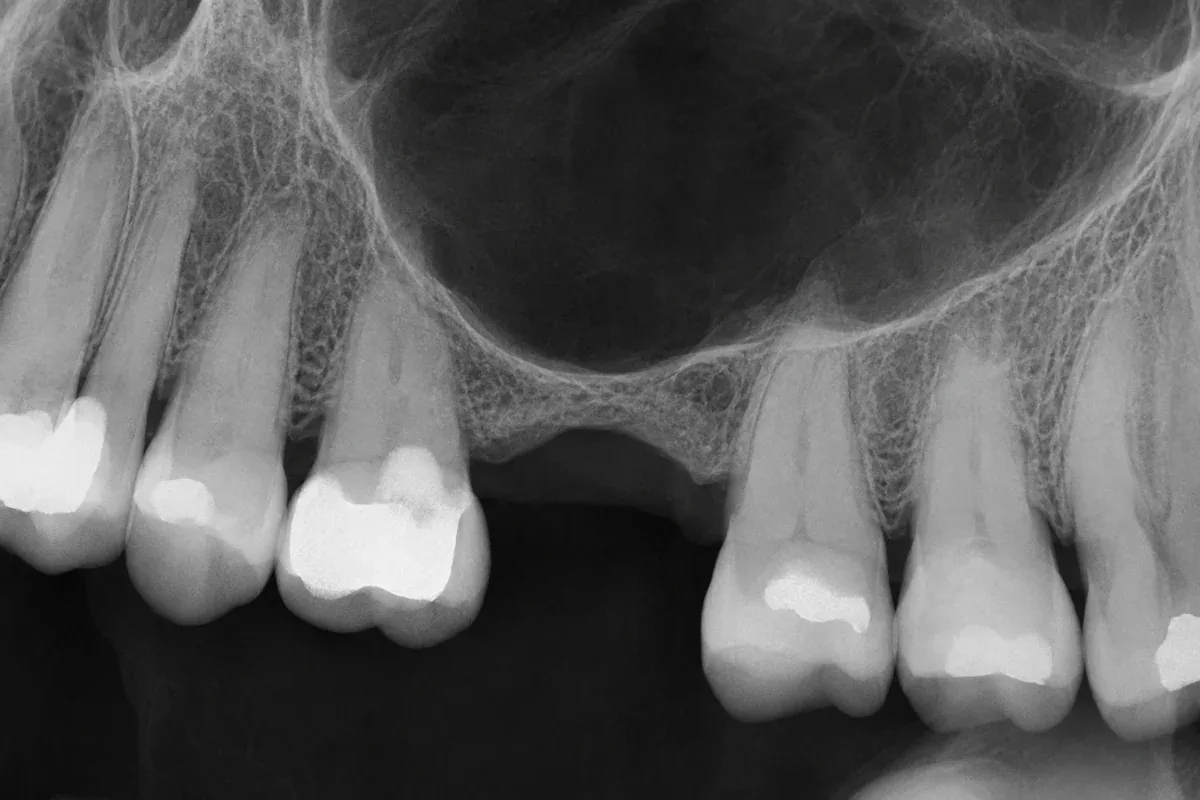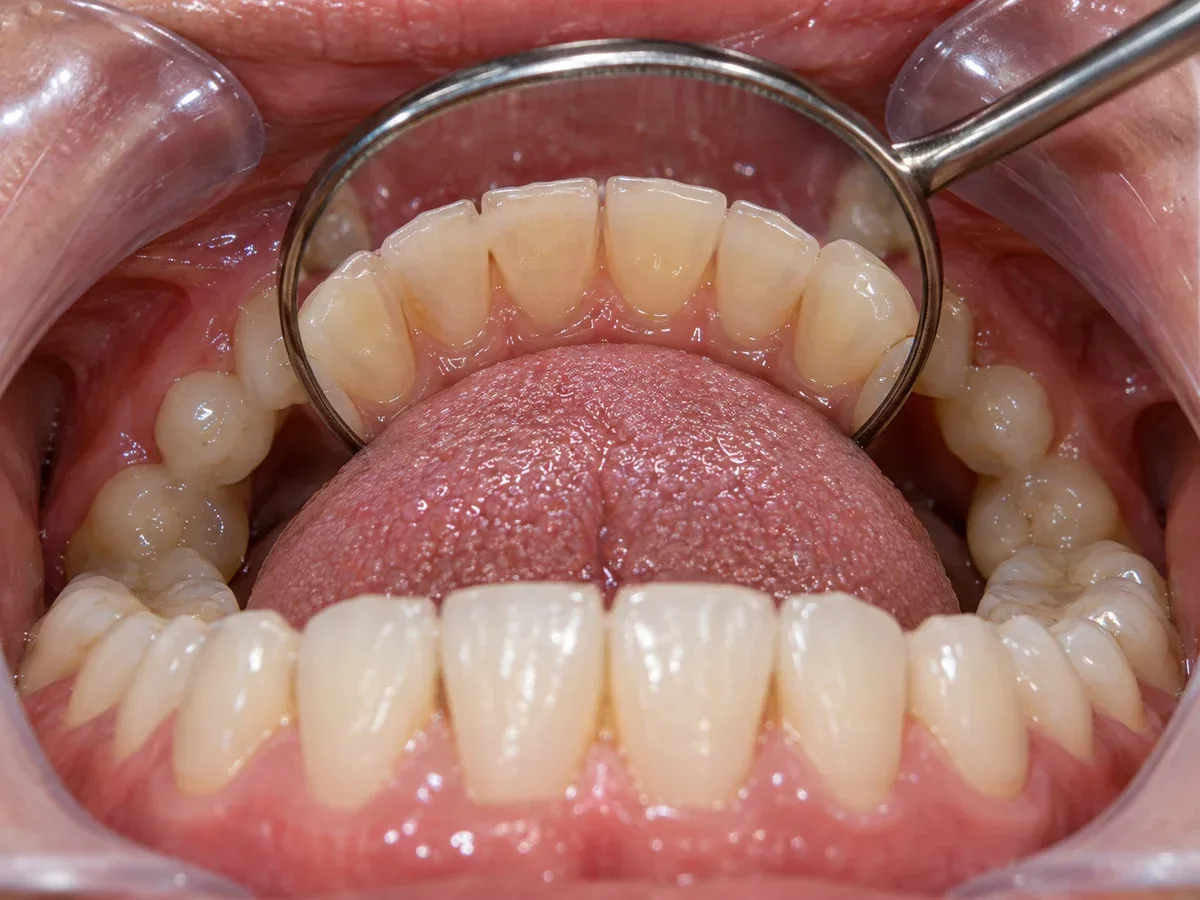
- Do not throw a fallen veneer away; bring it in as it is. The source says that if it simply came off and there is no decay, the same veneer can be bonded again.
- A broken veneer is different. Small damage can be smoothed and kept, but severe damage or a functional or esthetic problem calls for a new one.
- A veneer attaches to part of the tooth, so it is relatively weaker than other restorations and can come off under harmful force.
- Before re-bonding, we look for the cause. The same force left in place leads to the same result.
Sometimes a patient in Busan calls us after finding something hard in their mouth during a meal or while brushing. At Reset Dental Clinic in Seomyeon, the two questions we hear first are what to do now and whether the veneer can go back on. For patients living in or visiting Korea, we provide 1:1 English interpretation from the first consultation through the end of treatment.
This column answers those two questions in order. It draws on four KDCA National Health Information Portal articles: "Laminate Treatment", "All-Ceramic Crowns", "Tooth-Colored Inlays" and "Dental Trauma".
What should you do right away if a veneer comes off?
The explanations come later. Here is what to do now, in short:
- Find the piece. If the whole veneer came off, it may be usable again. Keep even small pieces.
- Keep it dry. A small container or zip bag is enough; there is no need to soak it in liquid.
- Do not glue it back yourself. Instant glue or denture adhesive makes the area harder to clean up later.
- Be gentle with the bare surface. Stay away from very cold or very hot food for a while.
- Come in even if you swallowed it. Finding out what came off and why still matters.
Keeping it dry is the opposite of what you do for a broken tooth. We explain why in the next section.
The shaped tooth surface underneath may feel sensitive once it is exposed. That is why the laminate article lists sensitivity as a side effect.
Just pushing it back into place without glue is not a good idea either. It can fall out again, and you could swallow it.
How soon should you come in? It is not an emergency. But a bare, shaped tooth surface is prone to sensitivity and plaque, so it is better not to leave it long.
If sensitivity is severe, or a sharp edge catches your tongue or lip, call us that same day.
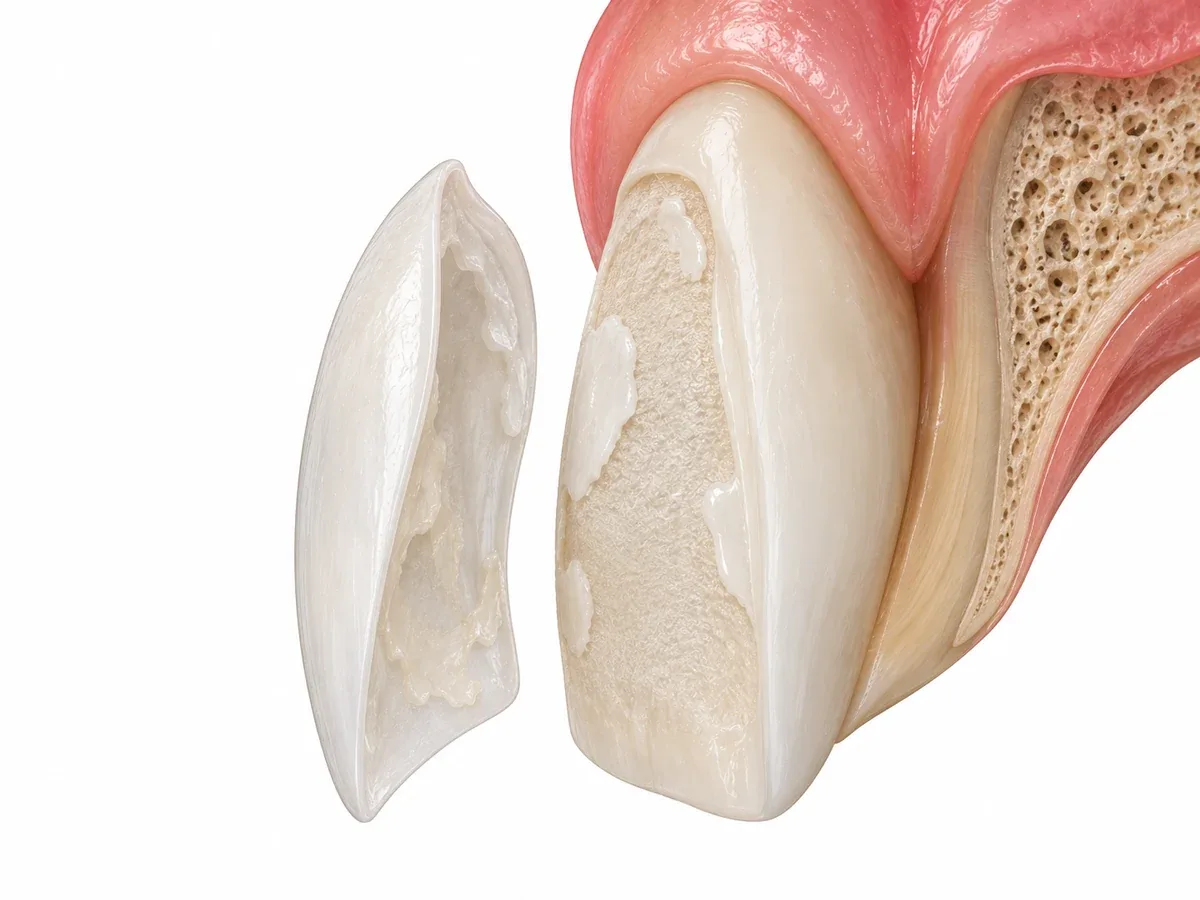
Why is a fallen veneer stored differently from a broken tooth?
Many people mix these up, so we cover it separately. A tooth that breaks from a knock and a veneer that comes off need different storage.
For a broken tooth piece or a knocked-out tooth, the dental trauma article says keeping the root surface moist has a major effect on the outlook for the tooth. It adds that the root can dry out within minutes.
So it advises bringing the tooth in milk, saline or your own saliva. A tooth is part of the body, with living tissue attached.
A fallen veneer is not like that. It is fired porcelain, so drying does not change it. Soaking it can actually leave moisture on the inner surface and make it harder to check.
Dry, and protected from knocks, is all it needs. Wrapped in tissue in a pocket, it is easy to lose or crush, so a small container is better.
| What came off | How to keep it | Why |
|---|---|---|
| A veneer | Dry, in a small container | Fired porcelain does not change when dry |
| A broken tooth piece | In milk, saline or saliva | The root surface should stay moist |
| A knocked-out tooth | In milk, saline or saliva | The root can dry out within minutes |
| Veneer with tooth attached | Bring everything that came out | A tooth piece is mixed in |
Sometimes both happen at once, and part of the tooth comes off with the veneer. In that case, a tooth piece is mixed in, so bring everything that came out.

When can a veneer be re-bonded, and when does it need to be remade?
The source sets out this fork in the road fairly clearly. There are three paths.
First, the veneer simply came off. The source says that if there is no decay in the tooth, the existing veneer can be bonded again.
Note the condition. If decay has formed under the veneer, that must be treated first. After that, the tooth surface changes shape, so the original veneer may no longer fit.
Second, the porcelain chipped, but the damage is small. The source says that if a small chip does not greatly affect looks or function, it can be smoothed with tools such as dental silicone points and kept in use.
Third, the damage is severe, or it causes a functional or esthetic problem. The source says a new veneer is then the better choice.
The FAQ in the all-ceramic crown article points the same way. Grinding down a restoration makes it easier to break, so a new one is usually needed; apart from very small damage, it should be fully removed and remade.
| Current state | What the source says |
|---|---|
| Came off whole, veneer intact | If there is no decay in the tooth, the existing veneer can be bonded again |
| Decay under where it came off | Decay must be treated first, so bonding it back as is becomes difficult |
| A small chip at the edge | If it does not greatly affect looks or function, it can be smoothed and kept |
| A large break or a crack | A new one is recommended |
| The veneer was lost | A new one is made |
Can you just live with a very small chip? The source allows smoothing and continued use, but the smoothing is done at the clinic. A sharp edge left alone can scrape your tongue or lip, and a crack can grow from that spot.
If one came off, do all six need to be redone? Usually not, as the source describes re-bonding the fallen one or remaking just that one. A new one must match its neighbors in color and shape, so we may look at a wider area.
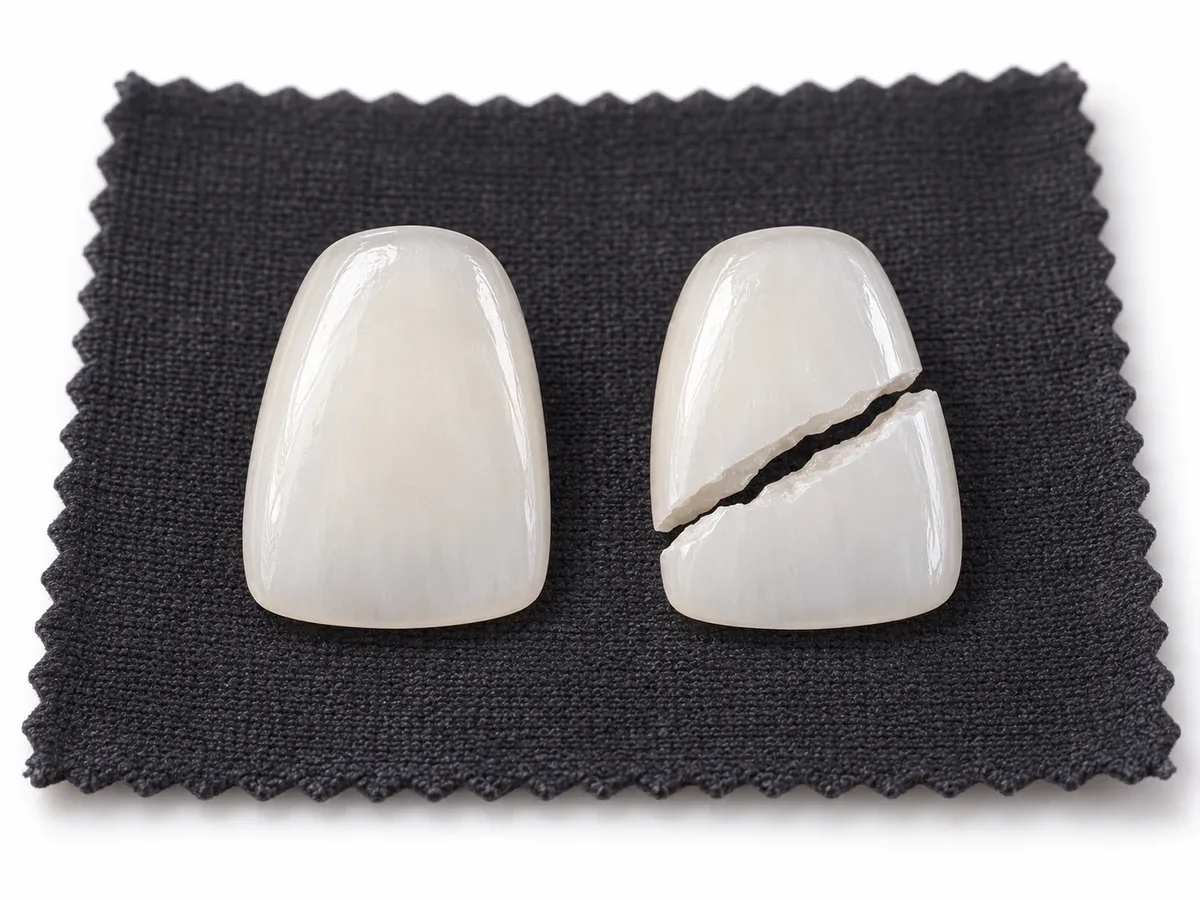
Why do veneers come off?
A veneer coming off is not a rare accident caused by a bad material. The source describes it as part of how veneers work.
The summary says a veneer does not cover the whole tooth. It attaches to part of the tooth, so it is relatively weaker than other restorations and can come off under harmful force. That is why the source asks you to avoid biting hard foods with treated teeth.
The all-ceramic crown article adds the material side. Among the drawbacks, it lists a risk of coming off because reinforced ceramic bonds weakly to cement.
A crown gets support from its shape, because it wraps around the tooth. A thin veneer on the front surface relies more on the bond itself.
From here on, we describe what we look at in the clinic. More than the fact that it came off, we check where the bond gave way.
We look at two things in particular:
- whether the adhesive came away on the inside of the shell or stayed on the tooth
- whether the bonded surface was enamel or reached deeper
The same "it came off" can mean different next steps.
Could decay under the veneer be the reason it came off? Both are possible, which is why it needs checking. The source lists "no decay" as the first condition for re-bonding for this reason.
Why do veneers break?
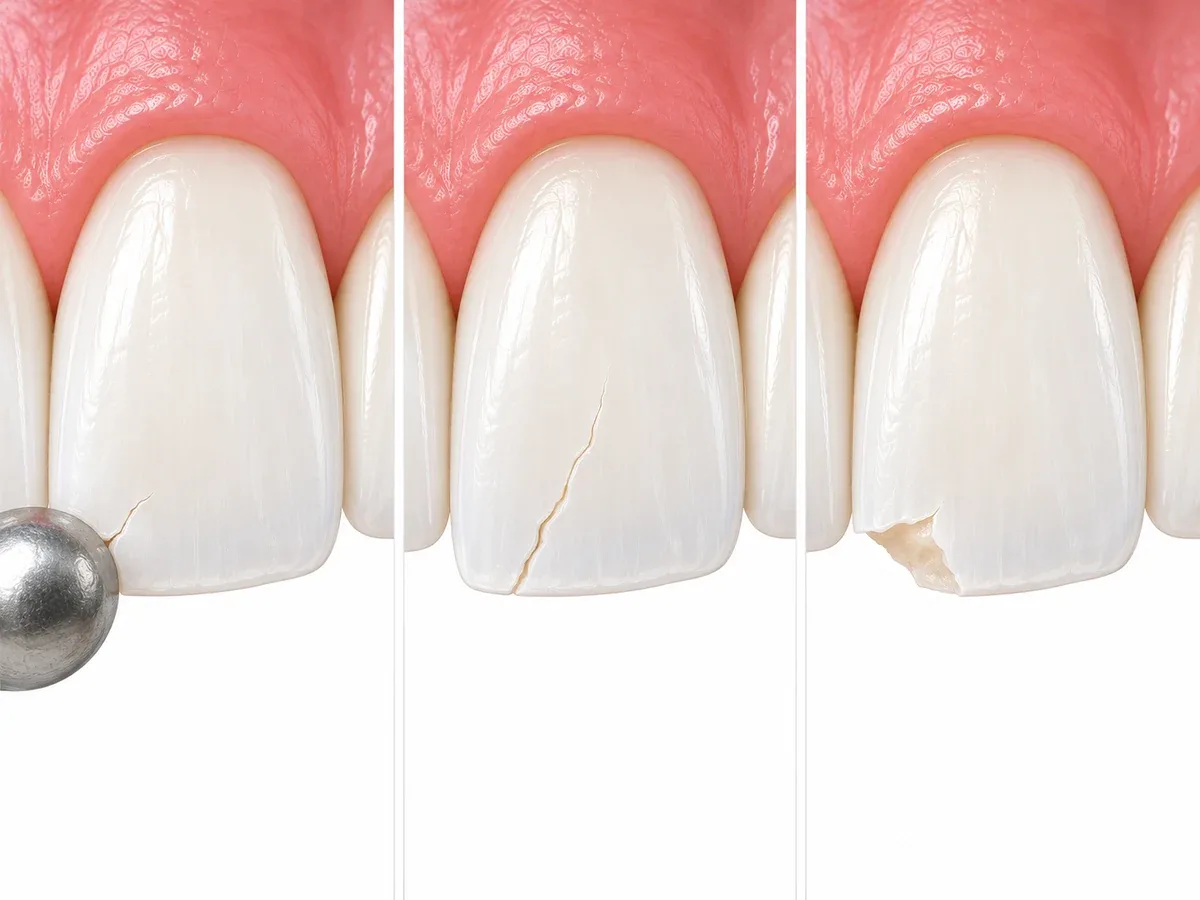
Breaking has somewhat different causes. The all-ceramic crown article names two.
One is a single large force. The source says a sudden bite on something hard can break it if the impact is large. Common examples:
- ice
- meat with bone in it
- hard nuts
- cutting something with your front teeth
The other is time. The same article says ceramic used for a long time loses strength and develops cracks, making it more prone to fracture.
This is why many people feel it was fine yesterday and suddenly broke today. An unseen crack was there first, and one last bite finished it.
If extra force is added every day, that time gets shorter. The tooth-colored inlay article lists this drawback of porcelain as is: patients who grind or clench their teeth break it more easily.
The source on tooth grinding confirms it from the other side. Its list of symptoms and complications includes tooth wear, fractures and broken restorations. If restorations keep breaking, biting force should be checked before changing the material.
What if the tooth underneath breaks too?
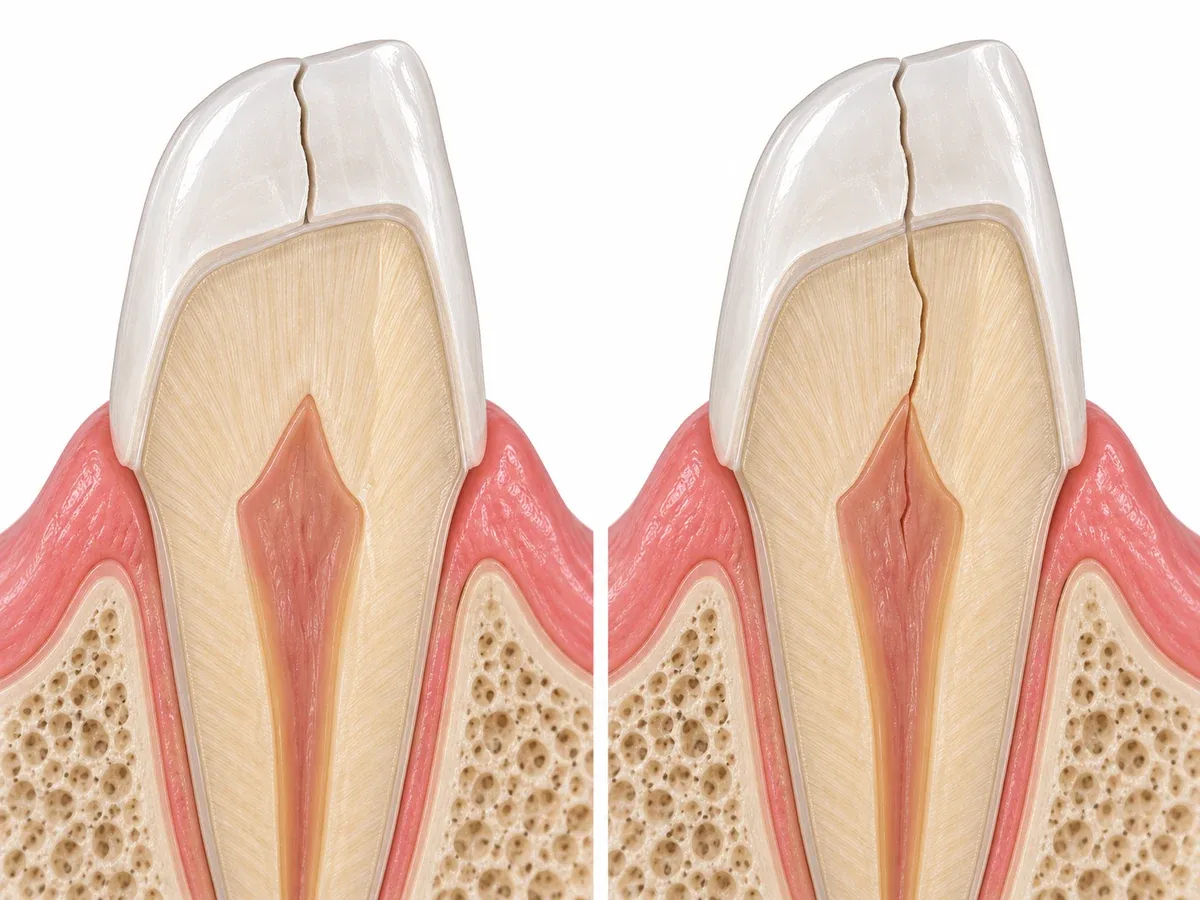
Most of the time, the porcelain shell alone breaks. Sometimes, though, the tooth underneath breaks with it, and that is a different story.
The dental trauma article sorts fractures by depth, as shown below. At this point the question is no longer remaking a veneer, but how much of the tooth can be saved.
| Depth | What is affected |
|---|---|
| Enamel micro-fracture | No loss of tooth structure |
| Enamel fracture | The enamel alone is broken |
| Enamel and dentin | Both are broken, but the pulp is not exposed |
| Pulp exposed | The break reaches the pulp inside |
| Into the root | The break continues below the gum into the root |
So when a veneer comes off or breaks, we check the tooth underneath too. As the same article notes, an exposed fracture surface can cause sensitivity.
It is also hard to see by eye how far a crack runs. That is why we look at an X-ray as well.
If a piece of tooth came off too, bring that piece. The dental trauma article says re-attaching the fragment gives a very natural-looking result, so it is worth bringing if you can find it.
Because that piece is tooth, it should not be kept dry. Bring it in liquid, as described earlier.
How do we keep it from happening again at our Busan clinic?
Whether it is re-bonded or remade, leaving the cause in place means it will happen again. Here are the points from the sources, in order.
We check the bite. The last step of veneer treatment in the laminate article is checking and adjusting the bite. The source says the bite is checked and any spot of excess contact is adjusted, and we do not skip this step when re-bonding.
We check biting force. The all-ceramic crown article says that people who grind or clench in their sleep may need an appliance to protect teeth and restorations from wear and breakage. If the same spot has broken a second time, this conversation comes first.
We check food and habits. The sources advise caution with the following:
- biting hard foods with the treated teeth, which puts excess force on them
- sticky, chewy foods, which the crown article asks you to limit
- cutting thread or opening bottle caps with your front teeth, which is hard even on natural teeth
We check the edges and gums. Discoloration at the edge, which the source lists as a side effect, is also a sign of how the area where tooth meets veneer is doing.
That fits the crown article's aftercare advice: proper brushing and regular scaling. When you have scaling, tell the hygienist about your veneers first, because the source notes that ultrasonic scalers can damage porcelain.
Frequently asked questions
Can I put my veneer back on myself?
We do not recommend pushing it back in, because it can fall out or be swallowed, and we recommend gluing it even less. The re-bonding in the source is done after both the tooth surface and the inside of the veneer are cleaned, and home glue gets in the way of that.
If my veneer is re-bonded, will it come off again?
It can if the cause is left in place. So before bonding, we check the bite, ask about clenching habits and look at the surface where it came off. We read the source's condition, "if there is no decay", in the same spirit.
Is a chipped or fallen veneer an emergency?
Usually not, but a bare tooth surface should not be left for long. Call us the same day if sensitivity is severe or a sharp edge catches your tongue or lip.
Can I get a veneer checked in English in Busan?
Yes. We offer 1:1 English interpretation from the first consultation through the end of treatment. The clinic is near Seomyeon Station Exit 2 (5-min walk), opposite Lotte Hotel Busan, and you can call 010-8555-2854 (+82-10-8555-2854 from abroad).
Do not throw a fallen veneer away.
Put it in a dry container and bring it in as it is.
The source says it can be bonded again if there is no decay,
smoothed and kept if the damage is small,
and remade if the damage is severe.
Whichever it is, one step comes first:
finding out what made it come off.
If a veneer has come off or broken while you are in Busan, we offer 1:1 English interpretation from your first consultation through the end of treatment. Call 010-8555-2854 to arrange a visit.
References
- KDCA National Health Information Portal, "Laminate Treatment" — veneers attach to part of the tooth, so they are relatively weaker and can come off under harmful force; side effects (coming off, partial fracture, edge discoloration, sensitivity); re-bonding if there is no decay; smoothing small damage with dental silicone points and remaking when damage is severe; bite adjustment as the last step; avoiding hard foods and care with ultrasonic scalers
- KDCA National Health Information Portal, "All-Ceramic Crowns" — fracture from a sudden bite on hard food; ceramic losing strength and cracking after long use; risk of coming off due to weak bonding between reinforced ceramic and cement; appliances for night-time grinding and clenching; remaking rather than grinding down damaged restorations; brushing, regular scaling and limiting sticky foods
- KDCA National Health Information Portal, "Amalgam and Inlays (Tooth-Colored Inlays)" — porcelain's esthetics and biocompatibility, its past brittleness and recent improvements; patients who grind or clench break it more easily; possible sensitivity after treatment
- KDCA National Health Information Portal, "Dental Trauma (Tooth Injury)" — fracture types from enamel micro-fracture to pulp exposure and root fracture; bringing fragments for re-attachment; keeping the root surface moist, with drying within minutes, and storage in milk, saliva or saline; sensitivity from an exposed fracture surface
- KDCA National Health Information Portal, "Tooth Grinding (Bruxism)" — symptoms and complications of grinding include tooth wear, fractures and broken restorations
Written by Reset Dental Clinic Support Team
Medical review Dr. Kim Hyun-joo, Head Dentist · Esthetic Restorations
Last updated: September 19, 2026
This column is for general information and does not replace diagnosis or treatment for individual patients. If you have symptoms, please see a dentist.