- Sores inside the mouth are grouped under one name, stomatitis. They divide broadly into infectious and non-infectious types.
- The most common mouth ulcer, the aphthous ulcer, makes up about 20% of oral mucosal diseases and usually heals within 10–14 days without a scar.
- The source says an ulcer that does not respond to 2–3 weeks of treatment must be biopsied to rule out cancer.
- If sores keep coming back, a hidden general health condition may be the cause, and a consultation to look for it is needed.
At Reset Dental Clinic in Seomyeon, Busan, many people tell us their mouth keeps getting sore, or that a mouth ulcer has lasted over two weeks. Most heal on their own with time. We check them for international patients with 1:1 English interpretation.
The sources draw one clear line, though. It concerns a mouth ulcer that is still there after the usual healing time has passed.
This column is based mainly on the national health portal's page on stomatitis. It also draws on its pages on dry mouth, tooth decay, bad breath and oral disease prevention.
What does it mean when a mouth ulcer keeps appearing?
Stomatitis is the umbrella name for inflammation of the lining inside the mouth. It can appear on the lips, tongue, gums, palate or inner cheeks, and the source says it often causes pain.
It is less a single disease and more a container for many. So hearing "it is stomatitis" does not settle the treatment. The first job is to work out which kind of mouth ulcer or sore it is.
There are several ways to classify it. In practice, the source says, it is divided into infectious and non-infectious types, based on the symptoms and appearance of the sore.
| Group | Typical condition | Features |
|---|---|---|
| Infectious | Herpes simplex stomatitis | Many small blisters of 1–2 mm form, then burst into ulcers |
| Infectious | Hand, foot and mouth disease | Blister-like rashes appear on the skin of the hands, feet and buttocks and inside the mouth |
| Infectious | Oral candidiasis | A fungal infection; white patches that rub off are the most common form |
| Non-infectious | Aphthous stomatitis | A clear border, a red rim and a yellow center |
| Non-infectious | Burning mouth syndrome | A burning pain continues with no visible sore |
| Non-infectious | Radiation mucositis | After radiation therapy, the lining thins and the tissue hardens |
The source also describes who gets it. In Korea, national health data from 2023 show about 1,300 patients a year.
It is most common in people in their 20s and 30s and in children aged 10 or under. Cases are also rising in people aged 50 and over, where it is especially common in women.
Why is the aphthous ulcer the most common kind?
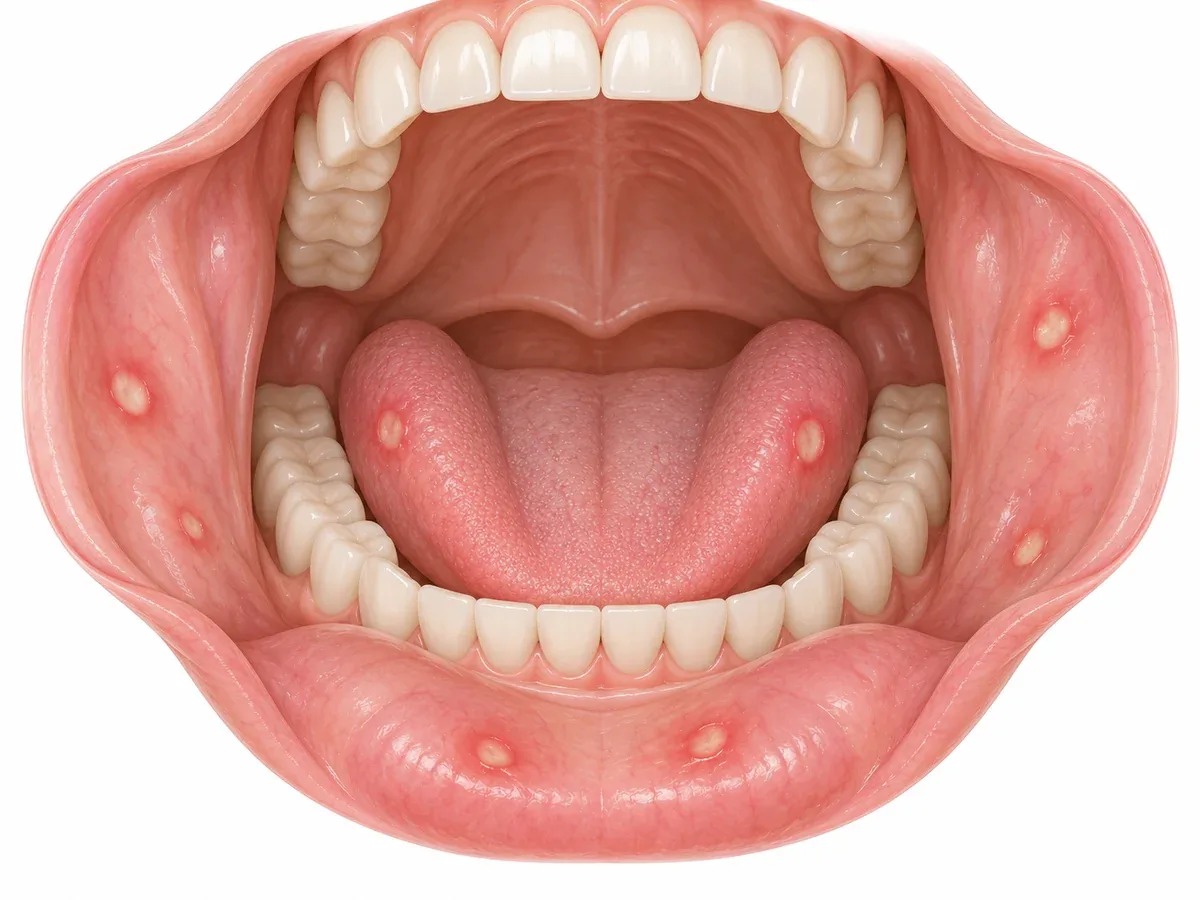
The source says aphthous stomatitis is the most frequent oral mucosal disease, at about 20%. It adds that it occurs more often in Asian populations.
The minor aphthous ulcer, the small sore on the tongue or cheek that many people know well, is the most common type. It accounts for about 80% of aphthous ulcers.
Its shape is fairly distinct. One or more small ulcers of 2–10 mm keep appearing on the lining that moves, such as the cheeks, lips, tongue, soft palate and upper throat.
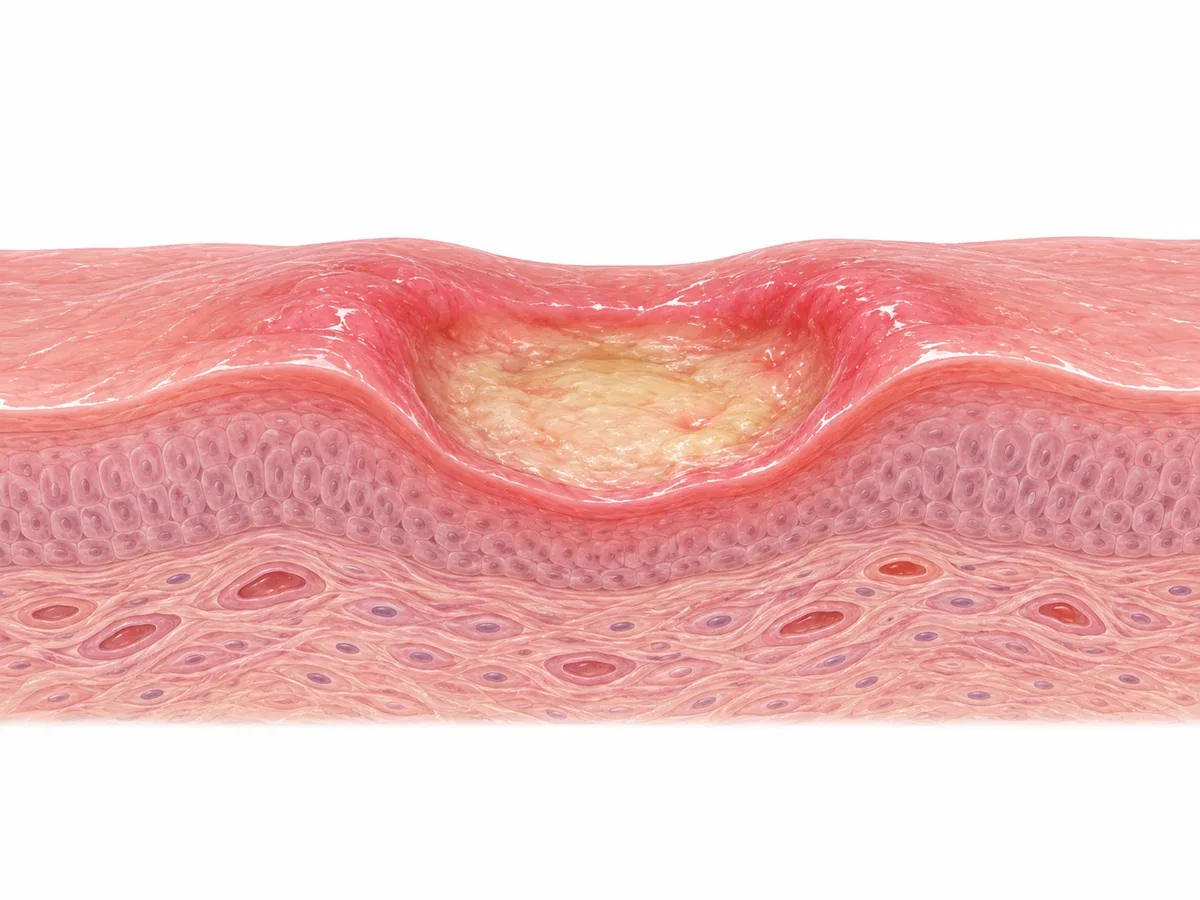
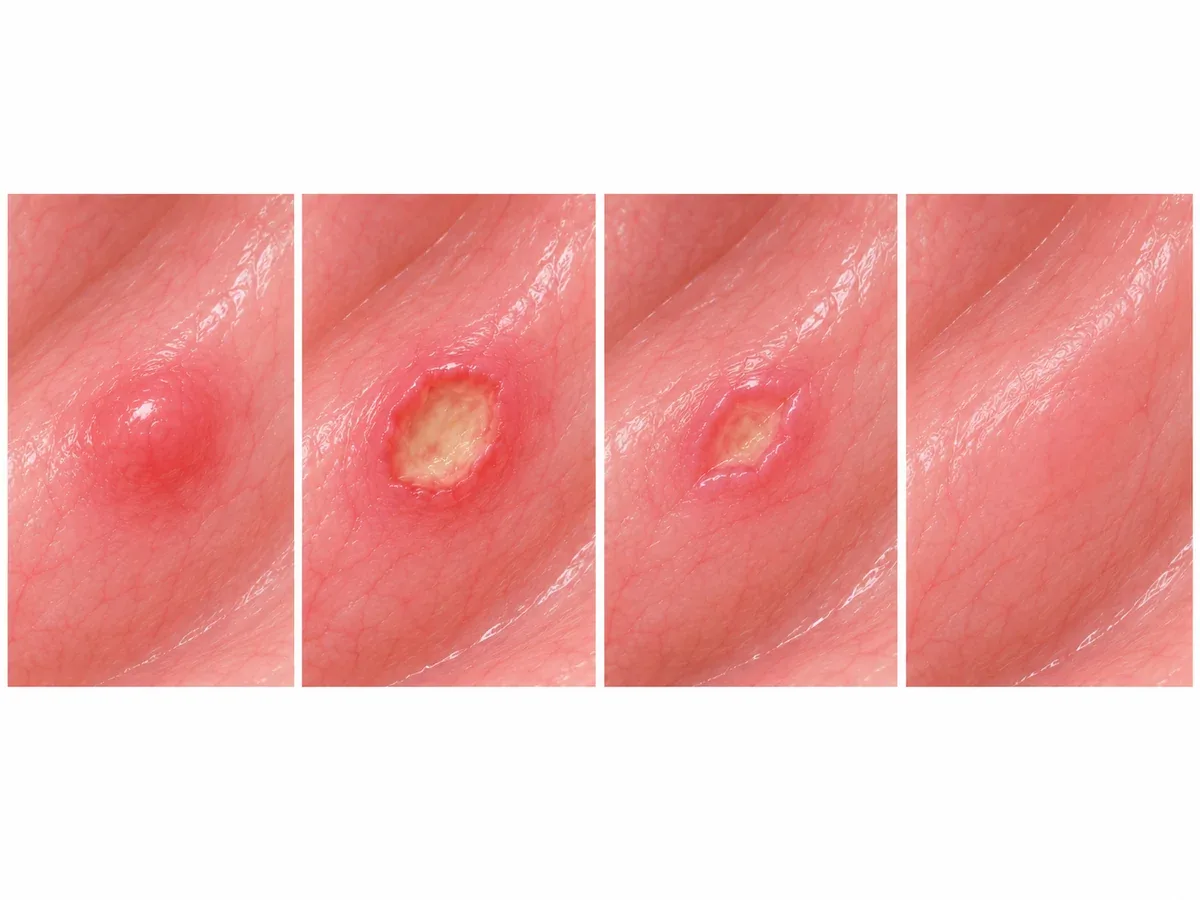
Each ulcer has a clear border with a red rim and a yellowish center. It is painful, but it heals within 10–14 days without a scar, and it usually comes with no symptoms elsewhere in the body.
The cause of this mouth ulcer is still not clear. The source says several factors are thought to play a part, alone or together, and about one third of patients have a family history.
Because the cause is unknown, treatment does not cure it outright. It aims to support healing and ease symptoms.
The ulcer stage lasts 1–16 days. During that time, severe pain and difficulty swallowing or speaking can occur.
Which mouth sores look similar but are different?
Two sores may both look like a mouth ulcer, yet a different cause means a different course and treatment. Here is a summary of the three infectious types in the source.
- Herpes simplex stomatitis. About 70–80% of adults are known to carry the virus. It lies dormant in a facial nerve and can be triggered by sunlight, tiredness, fever, cold temperatures, upper respiratory infections, menstruation, pregnancy or a weakened immune system. Small blisters of 1–2 mm burst into shallow, irregular ulcers that usually heal within two weeks without a scar.
- Hand, foot and mouth disease. Mostly in children, infection with coxsackievirus A causes blisters on the hands, feet, buttocks and inside the mouth. Mouth sores appear in about 90% of patients, and about 15% have mouth sores without any blisters on the hands and feet. It usually clears on its own in about a week, and the source says steroid ointment should be avoided.
- Oral candidiasis. This is a fungal infection. The fungus normally lives in the mouth in 30–55% of healthy adults, but it causes disease with dentures, inhaled steroids, dry mouth, poorly controlled diabetes, weak immunity, cancer treatment or broad-spectrum antibiotics. White patches rub off easily, showing lining underneath that bleeds easily.
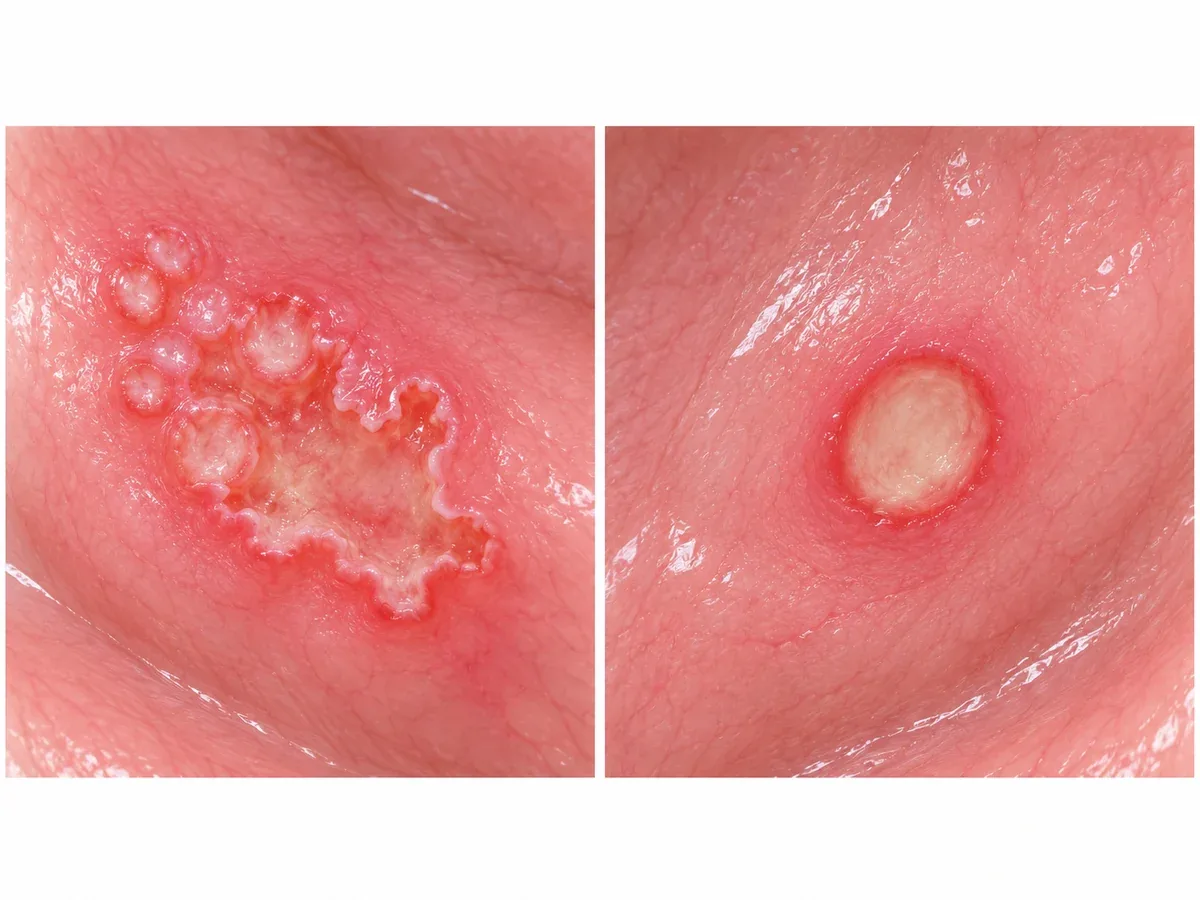
Telling one mouth ulcer from another is the dentist's job. The source says sores vary so much in shape and pattern that it is hard for non-specialists to tell them apart.
Still, your own observations help. Tell us whether a white patch wipes off, or whether the sore began as a blister.
That information, together with an examination, helps narrow down the cause.
Why does a dry mouth make ulcers more likely?
The national health portal's page on dry mouth links the two directly. It says dry mouth also affects the development of oral diseases such as a mouth ulcer.
Its list of signs often seen in people with dry mouth includes stomatitis, oral candidiasis, aphthous ulcers and cracks at the corners of the lips.
This matches the stomatitis page, which names dry mouth as a setting for oral candidiasis. The two sources fit together.
The dry mouth page adds that fungal infection often shows up as angular cheilitis rather than white patches. That means red, raw, cracked corners of the mouth.
So if the corners of your mouth keep cracking, it may not be just the dry season.
For preventing ulcers of the mouth lining, the dry mouth page recommends a few steps:
- brush your teeth often
- drink water often to keep the lining moist
- avoid spicy or dry foods
How long should a mouth ulcer take to heal?
The source gives healing times by cause. Put together, they look like this.
| Type | Usual course |
|---|---|
| Aphthous ulcer | Heals within 10–14 days without a scar |
| Herpes simplex stomatitis | Heals within 2 weeks without a scar |
| Hand, foot and mouth disease | Clears on its own in about a week |
| Radiation mucositis | Redness 4–5 days after treatment starts, ulcers within a week, easing within 2–4 weeks after radiation stops |
Overall, the source sums up the outlook calmly. Most cases respond well to proper treatment, and serious after-effects are rare.
So a mouth ulcer on its own is not a reason for great worry. We give these time frames because a benchmark tells you when to get it checked.
If it has not healed after 2–3 weeks
We are not saying this to alarm you. We are passing on the benchmark written in the source.
Diagnosis starts with looking at the sore. When it appeared, how long it has lasted and whether it has happened before are important clues.
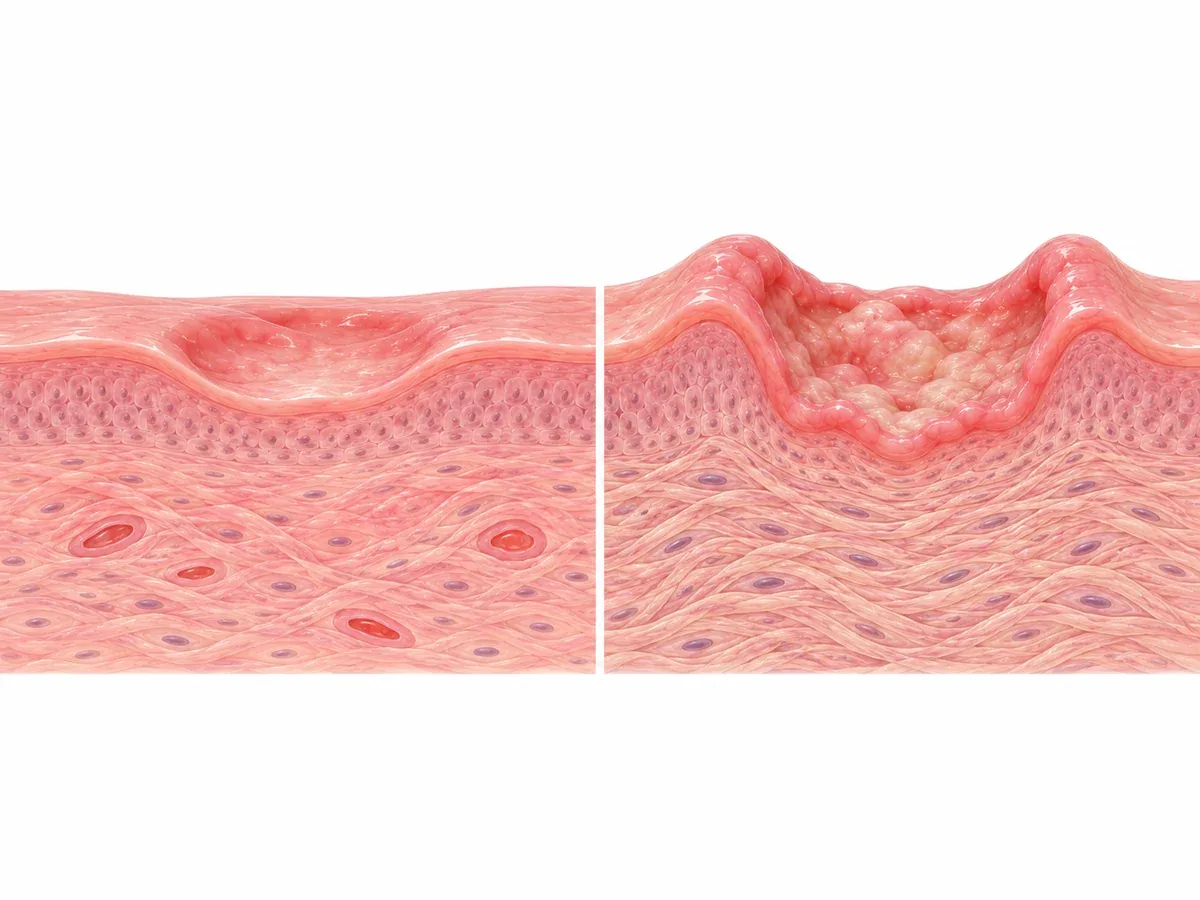
The source then says that an ulcer that does not respond to 2–3 weeks of treatment needs attention. In that case, a biopsy must be done to rule out cancer.
The source also explains why. Stomatitis usually responds well to treatment, but a delayed diagnosis of cancer leads to a poor outlook.
In most cases, the check ends with nothing found. The step exists so that the rare exception is not missed. A biopsy confirms what a sore is; it does not predict a bad result.
Cancer is not the thing checked for. The source says blood tests may be done to look for general conditions such as:
- pernicious anemia, iron deficiency anemia and aplastic anemia
- hemophilia and leukemia
- acquired immunodeficiency syndrome
It adds that a hidden general health condition can show up as stomatitis. When sores keep coming back, a consultation to look for an underlying condition is needed.
One rarer case is worth knowing. Behçet's disease, which causes large aphthous ulcers, can leave lasting damage to the lining. That is why a long-lasting mouth ulcer should be shown to a dentist at least once.
What can you do at home for a mouth ulcer?
The source's prevention advice is simple and clear. It lists good nutrition, oral hygiene, no smoking, no alcohol, dental care and avoiding irritating foods.
For care without medicine, it lists the following:
- Replace missing nutrients. If the sores come from a lack of vitamin B12 or iron, supplements may help. This does not apply to every case.
- Mouthwash may help reduce the bacteria that drive inflammation.
- Saliva substitutes may help when reduced saliva leaves the mouth dry.
- Spicy, hot and hard foods keep irritating the sore while it heals, so go easy on them.
The pain of a mouth ulcer can also stop you brushing properly for a few days. The tooth decay page explains that plaque forms as bacteria feed on food left after meals.
The oral disease prevention page says mouth bacteria live on the tooth surface and gumline. They also live on the top of the tongue, the rest of the mouth lining and in saliva.
So avoid the sore spot if you need to, but keep brushing everywhere else as usual.
Bad breath can come along too. The bad breath page lists soft tissue infection in the mouth, oral candidiasis and tongue conditions among its causes. Helping the sore heal comes before masking the smell.
One request: please do not pick a leftover ointment on your own. As the source advises against steroid ointment for hand, foot and mouth disease, the right medicine depends on the cause.
What does a dentist in Busan check for a mouth sore?
First, we look at the mouth ulcer directly. Then we ask when it appeared, how long it has lasted and whether it has happened before.
These three questions are the clues the source names for diagnosis.
We also check whether anything keeps rubbing the sore. The source lists injury among non-infectious causes, so we look at the following.
| Check | Why |
|---|---|
| The mouth ulcer itself | Diagnosis starts with its appearance |
| When, how long, how often | These are the key clues to its cause |
| Sharp tooth edges, ill-fitting crowns or dentures | Injury is one non-infectious cause |
| Dry mouth | Dry mouth makes ulcers more likely |
| Lasting 2–3 weeks or more | A biopsy is discussed |
| Keeps coming back | Blood tests are discussed |
If the sore meets the 2–3 week benchmark, we will talk with you about a biopsy. If it keeps returning, we will discuss blood tests.
Frequently asked questions
Is a small sore on the tongue a mouth ulcer too?
Yes. The source says the small sore many people know is a minor aphthous ulcer, the most common type at about 80% of aphthous ulcers. It falls under the wider name of stomatitis.
My mouth burns, but I cannot see a sore. What is it?
It may be burning mouth syndrome, where burning pain lasts at least 4–6 months with no visible sore or test finding. The source says it affects 0.7–4.6% of people, often women in their 50s and 60s. It stresses reassurance, because the condition is not serious and is not cancer.
When should I have a mouth ulcer checked?
The benchmark is 2–3 weeks. Come sooner if pain makes eating hard, sores appear in several places at once, or you have a fever. If a sore is getting shallower and narrower after about two weeks, it is usually healing.
Can I get a mouth ulcer checked in English in Busan?
Yes. We provide 1:1 English interpretation from your first consultation through the end of treatment. The clinic is near Seomyeon Station Exit 2 (5-min walk), opposite Lotte Hotel Busan, and you can call 010-8555-2854 (+82-10-8555-2854 from abroad).
Most mouth sores pass on their own.
But the source draws one clear line.
An ulcer that has not healed after 2–3 weeks must be checked.
Most checks end with nothing found, so there is no need to put one off. For a mouth ulcer check in Busan, Reset Dental Clinic offers 1:1 English interpretation; call 010-8555-2854.
References
- KDCA National Health Information Portal, "Stomatitis" — types of stomatitis, aphthous ulcers and their healing time, herpes, hand, foot and mouth disease and candidiasis, the biopsy benchmark for ulcers that do not respond to 2–3 weeks of treatment, blood tests, home care and burning mouth syndrome
- KDCA National Health Information Portal, "Dry Mouth (Xerostomia)" — how dry mouth affects mouth ulcers, related signs such as candidiasis and angular cheilitis, and prevention tips
- KDCA National Health Information Portal, "Bad Breath (Halitosis)" — soft tissue infection, candidiasis and tongue conditions as causes of bad breath
- KDCA National Health Information Portal, "Tooth Decay" — how plaque forms and basic prevention
- KDCA National Health Information Portal, "Preventing and Managing Oral Disease" — where mouth bacteria live and the value of regular oral check-ups
Written by Reset Dental Clinic Support Team
Medical review Dr. Kim Hyun-joo, Head Dentist
Last updated: September 19, 2026
This column is for general information and does not replace diagnosis or treatment for individual patients. If you have symptoms, please see a dentist.