

- A receding chin means the lower jawbone sits back and is also small, so the chin seems to be missing. Sources divide it into two types.
- In profile, the nose tip, lips and chin tip can look like one straight line, the lower lip thickens, and a peach-pit wrinkle forms when the lips close.
- Growing children may avoid surgery through orthodontic treatment, but adults who have finished growing need surgery to correct a skeletal mismatch.
"I look like I have no chin." Many patients bring this worry to Reset Dental Clinic in Seomyeon, Busan. The same worry can come from a small lower jaw, or from front teeth that stick out while the jaw is in place. For patients living in or visiting Korea, we offer 1:1 English interpretation from the first consultation through the end of treatment.
Because the part to treat is different, the answer is different too. This column explains what a receding chin is and what needs to be sorted out first.
It draws on Seoul Asan Medical Center's disease encyclopedia pages on jaw growth problems, protruding mouth and sleep apnea. It also uses the Korean government health portal's page on jaw surgery and orthodontic treatment.
What are the two types of receding chin?
The source describes jaw growth problems as the lower or upper jaw growing too much or too little compared with the other.
Among these, a receding chin is a state where the lower jawbone sits back and is also small. As a result, the chin seems to be missing.
A receding chin comes in two types:
- Mandibular hypoplasia: the whole lower jaw skeleton is small and set back.
- Chin (genial) hypoplasia: just the tip of the chin is small and set back.
This distinction matters. It decides whether the area to treat is the whole jaw or just the chin tip.
Two people can both feel they have "no chin" and still need very different plans. So the type is the first thing we look at.
What does a receding chin look like?
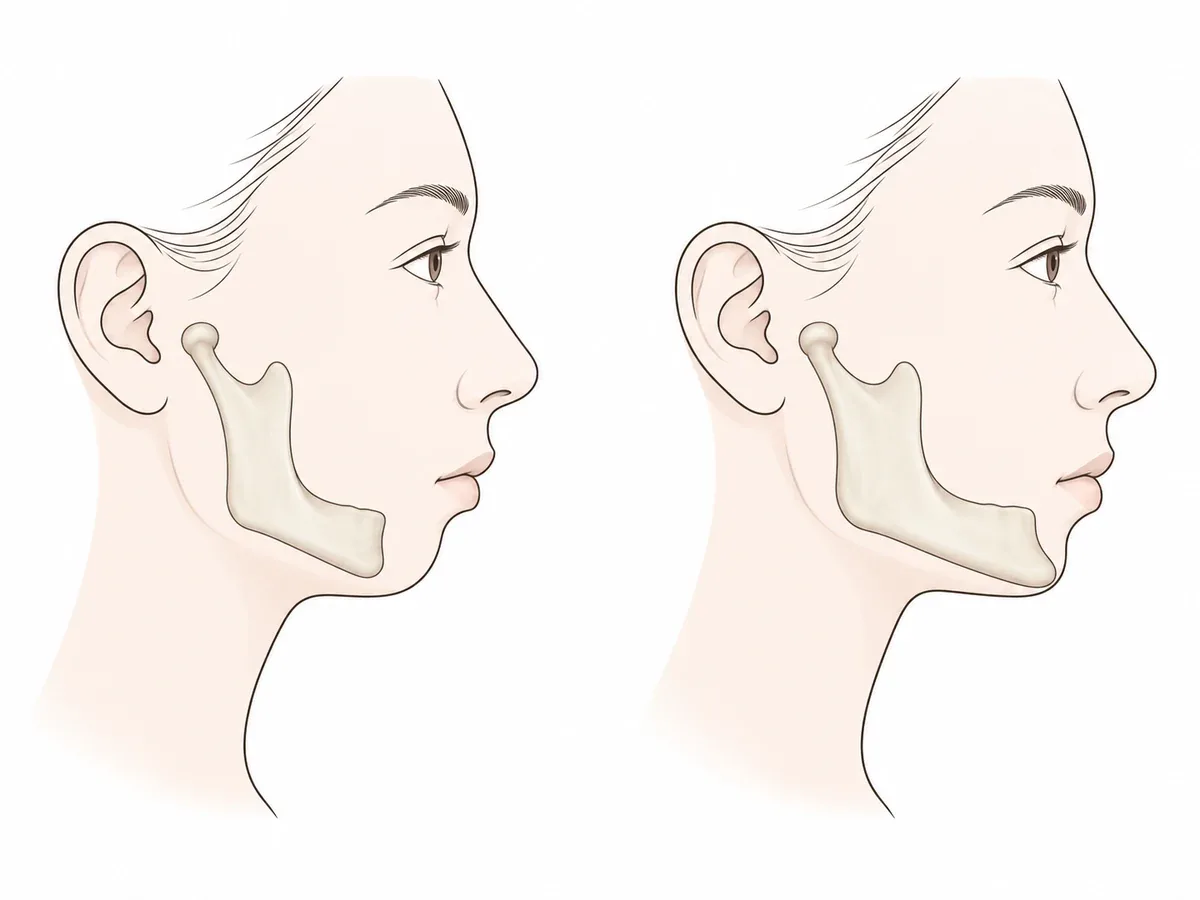
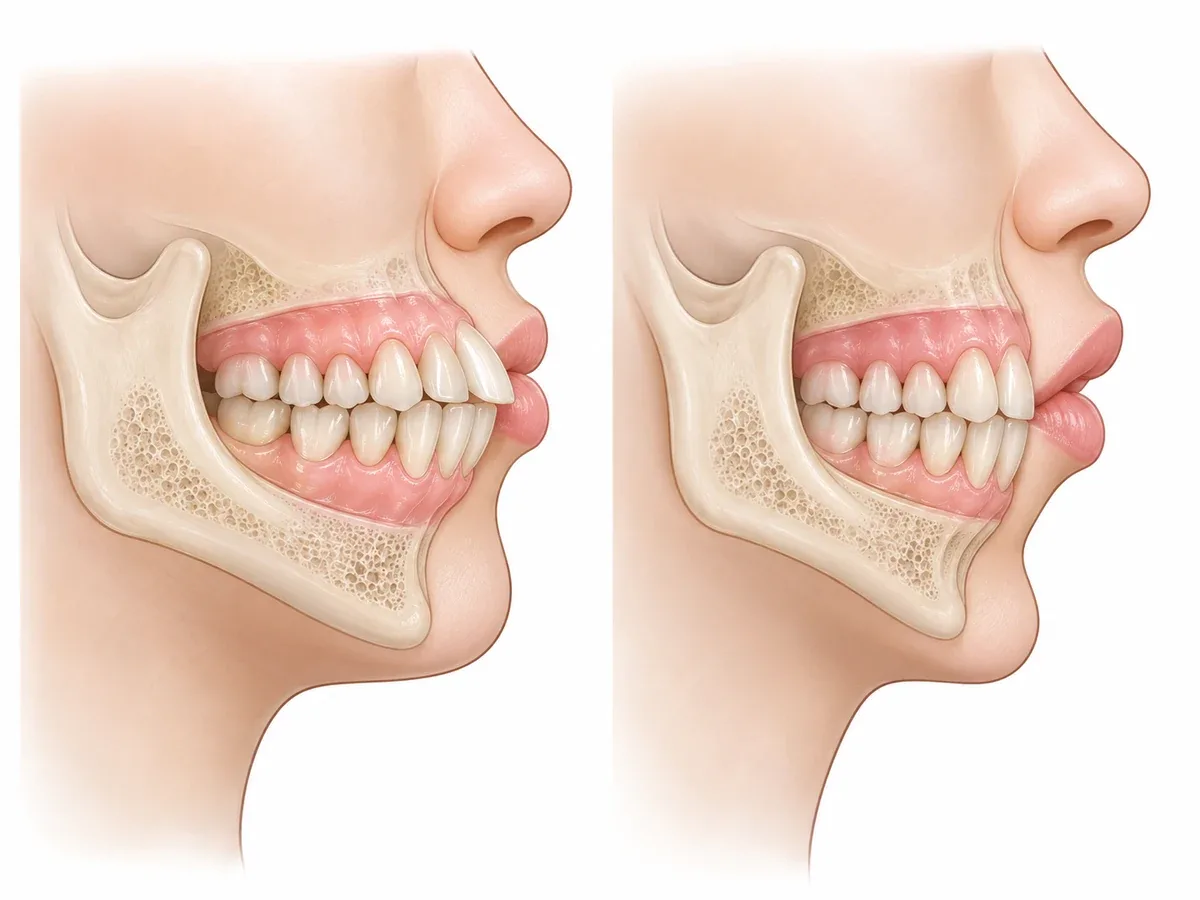
The source describes a receding chin like this. From the front, the chin seems to be missing.
From the side, the nose tip, lips and chin tip can look like one straight line. The mouth also looks as if it sticks out.
As the chin tip sits back, it pulls on the skin. The lips turn outward and the lower lip becomes thicker.
When the lips close, a wrinkle like a peach pit forms below them. The source says this can make a person look as if they are pouting in a bad mood.
The key phrase here is "the mouth looks as if it sticks out." A small jaw can make the mouth look forward, and so can front teeth that stick out. That is why the source notes that the two must be told apart.
How is a receding chin different from bimaxillary protrusion?
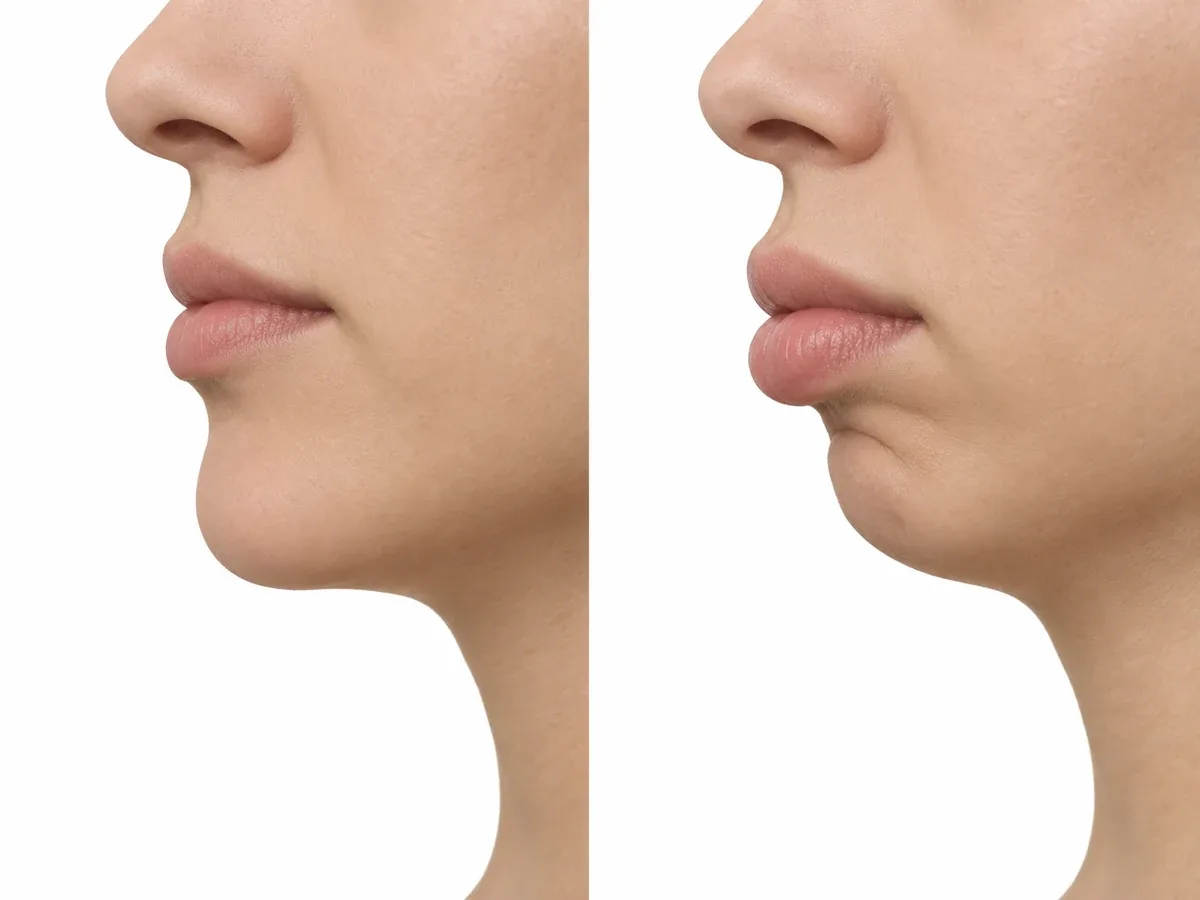
The source names bimaxillary protrusion as the condition to tell apart from a receding chin. The signs look similar.
But it does not happen because the lower jaw sits back. It happens because the front gums and teeth push unusually far forward.
Reading the protruding mouth page alongside makes the picture clear. With protrusion, the gums and teeth in the upper and lower front area push forward. If the jawbone is in a normal position and just the teeth are tipped, orthodontic treatment can help.
If the position and size of the jawbone itself is the problem, however, moving teeth cannot reach every part of it.
| Type | What causes it |
|---|---|
| Mandibular hypoplasia | The whole lower jaw skeleton is small and set back |
| Chin hypoplasia | Just the chin tip is small and set back |
| Bimaxillary protrusion | Not the lower jaw, but the front gums and teeth pushing unusually far forward |
So the first consultation is about sorting out which case it is. The source says 3D CT shows the structure from the skin surface down to the bone, allowing an accurate diagnosis.
When surgery is being planned, it adds that precise measurements and simulation are done in advance.
The dental arch page describes the records used to see the whole relationship between the jaws and teeth.
- X-rays
- photos of the face and the inside of the mouth
- dental models
Looking at these together shows whether the teeth, the jawbone or both are the issue. The protruding mouth page also notes that a forward mouth can cause problems with speech and chewing.
So a receding chin or a protruding mouth is worth assessing for function, not appearance alone.
What causes a receding chin?
The source says the size and shape of the jaw are strongly influenced by genes. If someone on either side of the family has a receding chin, there is a chance of having one.
It lists other causes as well:
- childhood habits, such as pushing the lower jaw forward
- injury
- abnormal action of the muscles linking the upper and lower jaws
- conditions such as arteriovenous or lymphatic malformations
| Kind | Examples in the source |
|---|---|
| Congenital | Problems in the womb and fetal injury, and absence of the lower jaw's joint head (condylar aplasia) |
| Acquired | Injury, rheumatoid arthritis, infection, malocclusion, jaw joint ankylosis, jaw joint arthritis, after-effects of radiation therapy, tumor removal |
The dental arch page adds a related point. The size of the teeth and jaws is set by genes, but habits such as tongue thrusting, finger sucking and mouth breathing can change where the teeth sit.
It is worth noting that injury and joint disease are on the acquired list.
If you injured your jaw as a child, it may have affected growth afterward. That is worth mentioning at a consultation.
Can a receding chin affect sleep?
The protruding mouth page includes this sentence: in Class II malocclusion or a receding chin, sleep apnea can occur.
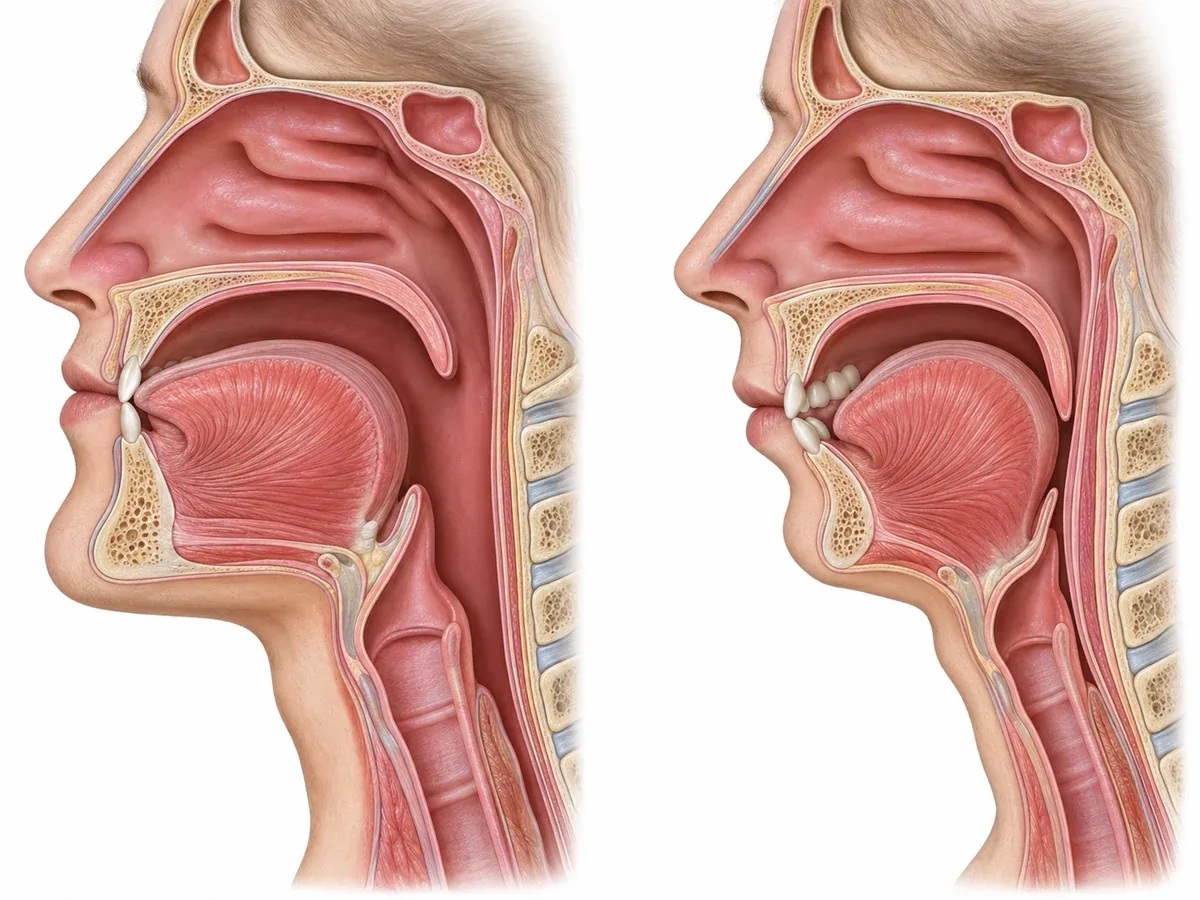
The sleep apnea page points the same way. Most people who snore or have sleep apnea have an anatomical narrowing of the upper airway, from the nasal cavity down to the throat.
It adds that snoring and sleep apnea are common in people whose jaw is unusually small, or whose neck is short and thick.
So a receding chin may not be about appearance alone. Bring it up at your consultation if any of these apply:
- your breathing often seems to stop during sleep
- you do not wake up feeling refreshed
- the person you sleep beside says you snore heavily
The sleep apnea page divides the condition into obstructive, central and mixed types. The obstructive type is the most common.
During an apnea, the oxygen level in the blood falls. The person then wakes during sleep in order to breathe.
Other causes of a narrow airway are listed too. These include fat building up around the neck from obesity, and an enlarged tongue or tonsils.
In children, the source names enlarged tonsils and adenoids as the main cause. Sleep problems should not be judged by a dentist alone, but together with the relevant medical department.
Can orthodontic treatment fix a receding chin in Busan, or is surgery needed?
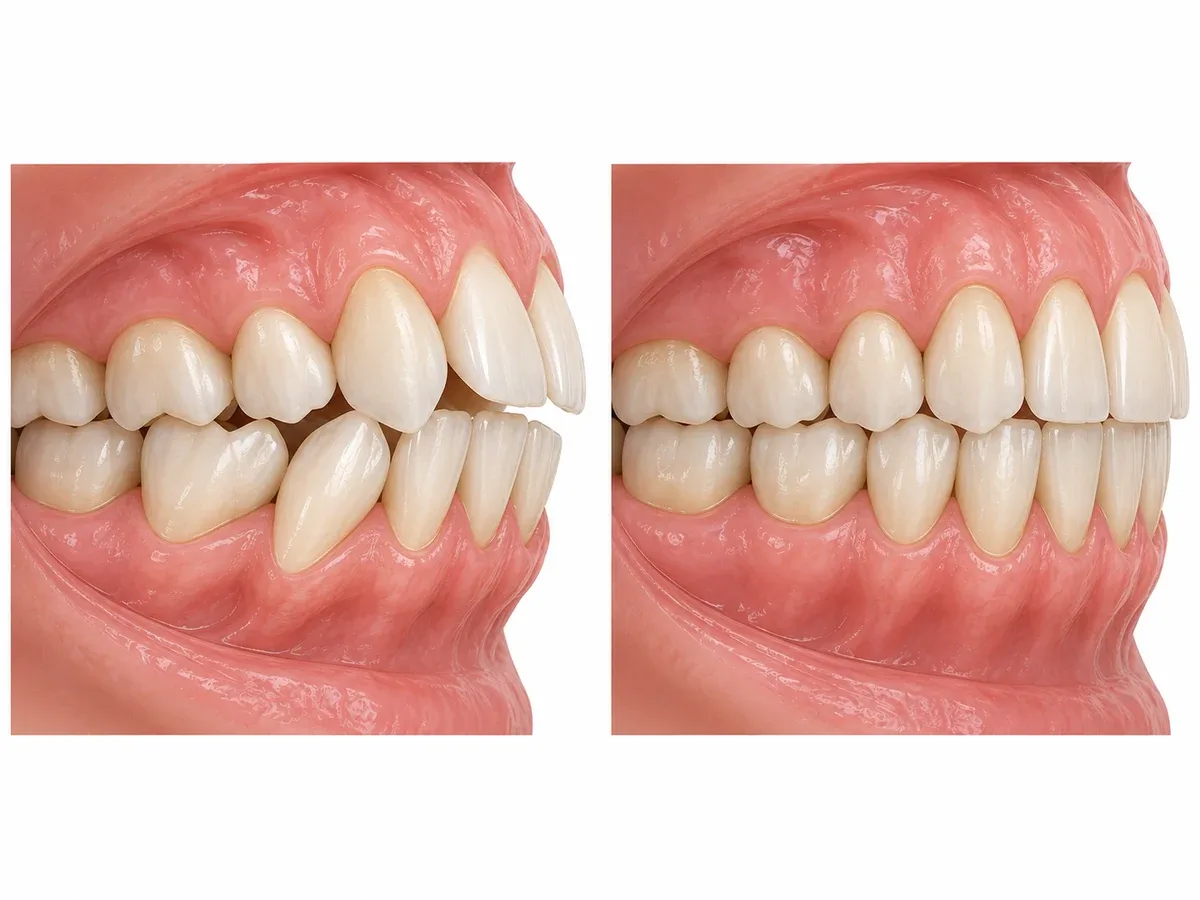
The government health portal answers this with timing. Jaw surgery is done when the bite problem is too severe for orthodontic treatment alone, or when braces cannot fully improve the shape of the face.
It goes on. In growing children, orthodontic treatment may improve skeletal problems and avoid surgery. But adults who have finished growing need surgery to correct a skeletal mismatch.
If surgery is needed, it is team treatment. The portal says jaw surgery is done jointly by an orthodontist and an oral and maxillofacial surgeon.
The orthodontist first positions the teeth with braces. The surgeon then moves one or both jawbones into the right place.
The portal lists three goals of orthodontic treatment before surgery:
- straighten crooked teeth
- move the upper and lower teeth into the right position on each jawbone
- match the upper and lower arches so the teeth fit well after surgery
It adds that without this orthodontic phase, it may be hard to place the jawbone where it is wanted.
| Case | What the source says |
|---|---|
| Growing children | Orthodontic treatment may improve skeletal problems and avoid surgery |
| Adults who have finished growing | Surgery is needed to correct a skeletal mismatch |
| Braces alone cannot treat it, or cannot fully improve the face | Jaw surgery is done |
The portal also stresses that jaw surgery is functional, not simply cosmetic. The teeth move with the jawbone, and jaw joint movement is affected too.
The dental arch page makes a similar point about timing. Growing teenagers can often finish with orthodontic treatment alone. But if bone growth goes wrong, orthodontic treatment and surgery may both be needed in adulthood.
Some people have a mouth that sticks out and a chin that sits back at the same time. The protruding mouth page says chin surgery is then combined with the surgery for the front teeth.
That page gives the recovery for anterior segmental osteotomy, the usual surgery for a protruding mouth. It is done under general anesthesia with a hospital stay of about 3–4 days.
Swelling peaks on days 2–3 and starts to ease after days 4–5. Daily and social life are usually possible after about 10 days to 2 weeks.
Keep in mind that this is the course for surgery on the front teeth area. Surgery that moves the whole lower jaw covers a different scope.
Frequently asked questions
Is moving just the chin tip forward enough for a receding chin?
It depends on the type. The source separates mandibular hypoplasia, where the whole jaw is small and set back, from chin hypoplasia, where just the tip is. If the whole jaw sits back, treating the tip alone does not change the bite.
My child's chin looks small. When should we have it checked?
The portal says growing children may improve skeletal problems with orthodontic treatment and avoid surgery. There are more options while growth remains, so an early check is sensible. That does not mean every child needs an appliance, and often we simply watch and choose the timing.
Could my heavy snoring be linked to my jaw?
The sleep apnea page says snoring and apnea are common in people with an unusually small jaw or a short, thick neck. But it lists other causes too, such as fat around the neck and enlarged tongue or tonsil tissue. In children, enlarged tonsils and adenoids are the main cause, so sleep should be checked together with the relevant medical department.
Can I get a receding chin assessed in English in Busan?
Yes. We provide 1:1 English interpretation from the first consultation through the end of treatment. The clinic is near Seomyeon Station Exit 2 (5-min walk), opposite Lotte Hotel Busan, and you can call 010-8555-2854 (+82-10-8555-2854 from abroad).
A receding chin and forward front teeth can look alike.
What to treat depends on which one it is,
and on whether growth has finished.
If you are worried about a receding chin in Busan, Reset Dental Clinic offers 1:1 English interpretation for patients in Korea. Call 010-8555-2854, and we will start by sorting out which case it is.
References
- Seoul Asan Medical Center Disease Encyclopedia, "Jaw Growth Problems" — receding chin as a lower jaw that sits back and is small; mandibular hypoplasia and chin hypoplasia; signs such as a straight nose-lip-chin line, a thick lower lip and a peach-pit wrinkle; how bimaxillary protrusion differs; genetic, habitual, traumatic, muscular, congenital and acquired causes; diagnosis with 3D CT, measurement and simulation
- KDCA National Health Information Portal, "Jaw Surgery and Orthodontic Treatment" — when jaw surgery is done; surgery may be avoided in growing children but is needed for skeletal mismatch in adults; joint treatment by orthodontist and oral and maxillofacial surgeon; jaw surgery as functional; three goals of pre-surgical orthodontics and why skipping it can make jaw positioning hard
- Seoul Asan Medical Center Disease Encyclopedia, "Protruding Mouth (Class II malocclusion)" — definition as bimaxillary protrusion; sleep apnea possible in Class II malocclusion or a receding chin; speech and chewing problems; orthodontics when just the teeth are tipped; recovery after anterior segmental osteotomy; chin surgery combined when the chin sits back
- Seoul Asan Medical Center Disease Encyclopedia, "Sleep Apnea" — obstructive, central and mixed types; narrowing of the upper airway as the usual cause; frequent in people with a small jaw or a short, thick neck; obesity and enlarged tongue or tonsils; enlarged tonsils and adenoids as the main cause in children; falling oxygen levels and waking during sleep
- Seoul Asan Medical Center Disease Encyclopedia, "Dental Arch Relationship Problems" — tooth and jaw size set by genes while tooth position can change with habits; diagnosis with X-rays, facial and intraoral photos and dental models; orthodontics alone for growing teens unless bone growth goes wrong
Written by Reset Dental Clinic Support Team
Medical review Dr. Kim Hyun-joo, Head Dentist · Integrated Dentistry Specialist
Last updated: September 19, 2026
This column is for general information and does not replace diagnosis or treatment for individual patients. If you have symptoms, please see a dentist.


