

- Mild facial asymmetry is very common. A face whose two sides match exactly is rare.
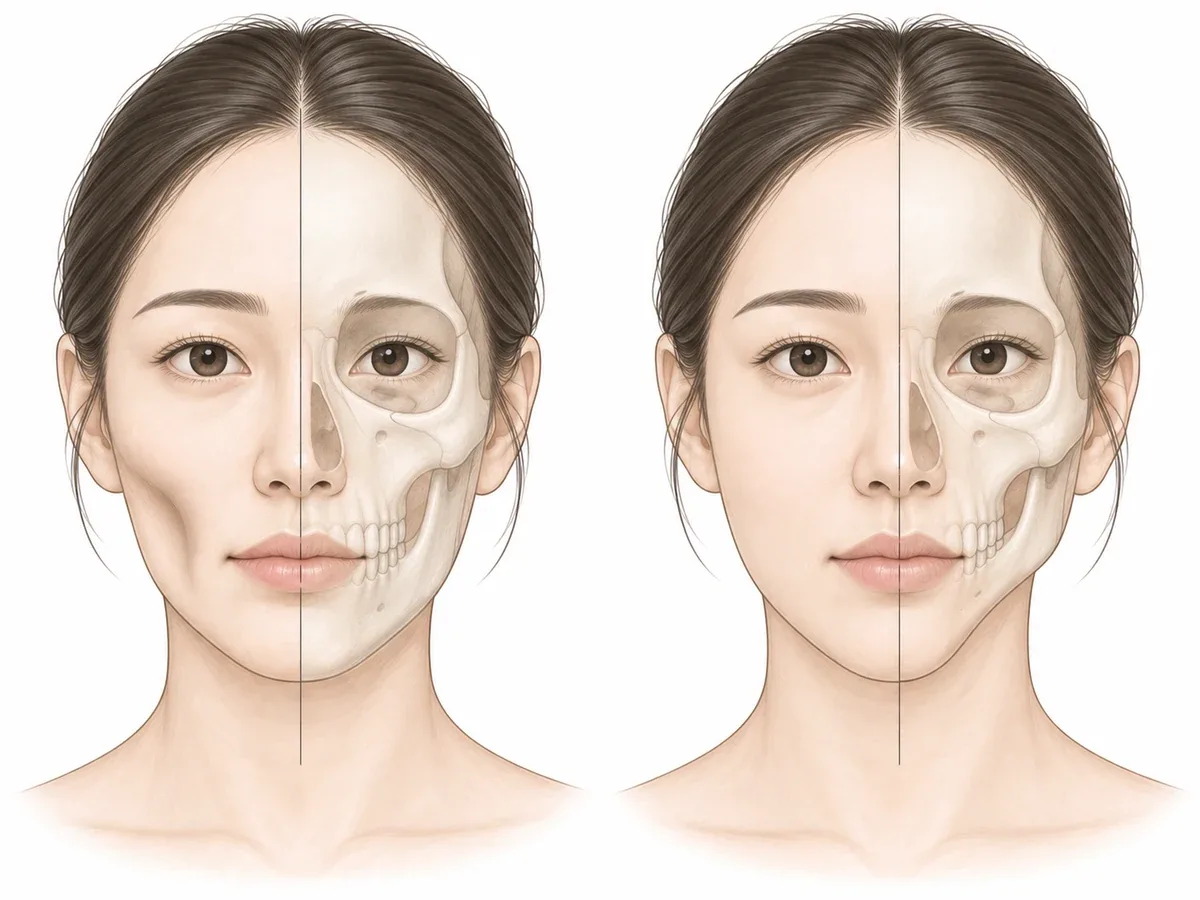
- To judge whether surgery is an option, the cause must first be sorted into soft tissue or bone.
- Asymmetry that appears after birth often comes from abnormal jaw growth. An injury to the jaw in childhood can show up later as the face grows.
- When the bone is uneven, treatment combines orthodontics and surgery in several stages over a long time.
At our clinic in Seomyeon, Busan, some patients arrive with a photo and say one side of their face looks different. A little facial asymmetry is very common, but what to do depends on whether the cause is soft tissue, bone or the bite. For patients living in or visiting Korea, we provide 1:1 English interpretation from the first consultation through the end of treatment.
This column draws on the Asan Medical Center disease encyclopedia entries on facial asymmetry, abnormal jaw growth, jaw joint disorders and jaw dislocation. It also uses the KDCA National Health Information Portal page on jaw surgery and orthodontic treatment.
What is facial asymmetry?
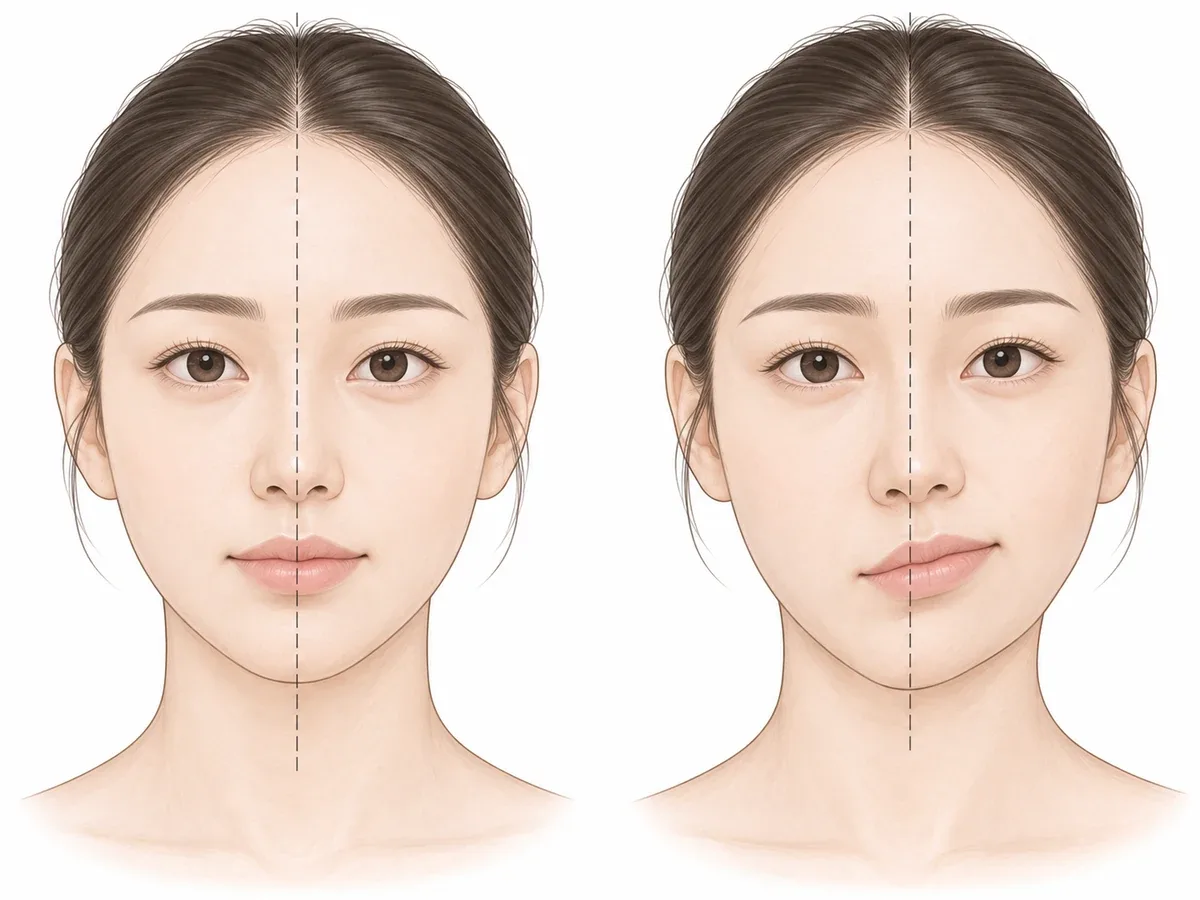
The Asan Medical Center encyclopedia describes facial asymmetry as a state where the two sides of the face differ. The length or area of each side is not the same, and the line of the lips is not level.
The same entry adds right away that many people have a mild degree of facial asymmetry. Severe cases can be corrected with surgery.
That short passage carries an important message. Not every facial asymmetry needs treatment.
The encyclopedia lists seven typical features:
- the eyes, nose or mouth look crooked
- the center between the eyebrows does not line up with the center of the chin
- one corner of the mouth rises higher when smiling
- the cheekbones sit at different positions
- the centers of the upper and lower teeth do not line up, with a bad bite (malocclusion)
- food is chewed well mainly with the molars on one side
- the head tilts to one side
Two of these seven features concern the teeth. A shifted dental midline and chewing mostly on one side both point straight to the mouth.
That is why a dental exam belongs in the picture. The face and the bite are looked at together.
Is the cause soft tissue or bone?
According to the encyclopedia, the first step in deciding whether surgery is an option is to find the source. The cause may lie in the soft tissue, or in hard tissue such as bone.
The soft-tissue example it gives is Romberg disease (progressive hemifacial atrophy). In this condition, the soft tissue slowly shrinks and one side of the face becomes smaller.
It usually starts around the age of 20. Once it stops progressing on its own, it can be corrected to some degree with fat grafting or flap surgery.
Skeletal asymmetry can be congenital or acquired. The congenital example is hemifacial microsomia (craniofacial microsomia).
In severe cases, one ear may be small or missing. Jaw asymmetry and nerve palsy may come with it.
Acquired facial asymmetry often develops because the jaw grows abnormally. The encyclopedia adds one more line: an injury to the jaw bone or jaw joint in childhood can lead to jaw asymmetry as the child grows.
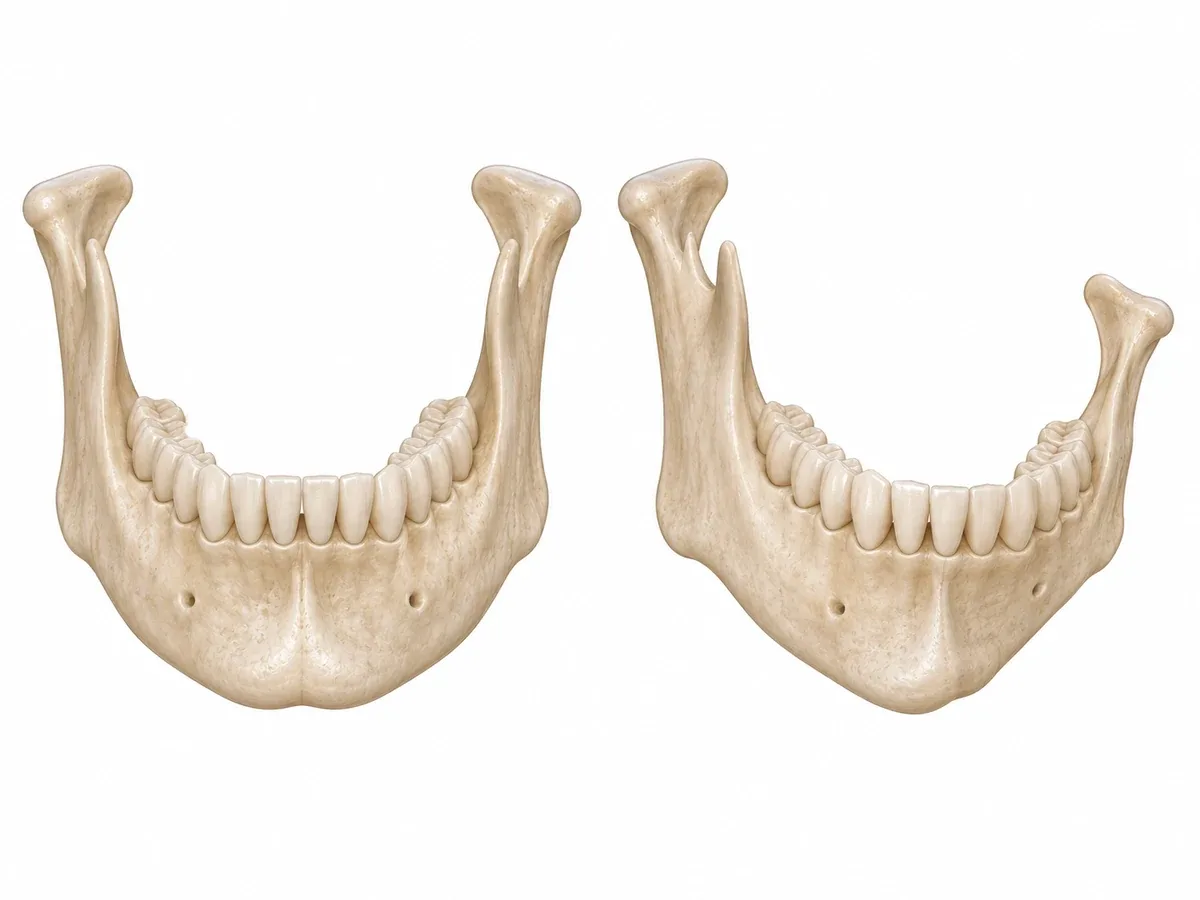
The encyclopedia entry on abnormal jaw growth gives more detail. It covers overgrowth and undergrowth of both the upper and the lower jaw.
Its listed causes are genetics, childhood habits, injury and abnormal muscle action. Acquired factors named in the entry include:
- injury (trauma)
- rheumatoid arthritis
- infection
- stiffening of the jaw joint (ankylosis)
- arthritis of the jaw joint
- after-effects of radiation therapy
| Cause | Example | What the source says |
|---|---|---|
| Soft tissue | Romberg disease (progressive hemifacial atrophy) | Can be corrected to some degree with fat grafting or flap surgery once it stops progressing |
| Bone (congenital) | Hemifacial microsomia (craniofacial microsomia) | In severe cases one ear is small or missing, with jaw asymmetry and nerve palsy |
| Bone (acquired) | Abnormal jaw growth | An injury to the jaw bone or jaw joint in childhood can cause asymmetry during growth |
Why does the jaw joint matter in facial asymmetry?
A jaw joint disorder (TMJ disorder) is a term for several conditions of the chewing muscles and the jaw joint. The Asan entry lists these typical signs:
- pain in the ear, cheek or temple when opening the mouth
- a clicking sound from the joint
- in severe cases, the mouth cannot open, or suddenly cannot close
The entry warns what can happen if the disorder is left alone for a long time. Arthritis may develop in the joint, jaw asymmetry can follow, and the mouth may barely open.
The entry on jaw dislocation has a similar passage. A dislocation means the lower jaw slips forward or to the side for some reason.
When it happens suddenly, the mouth cannot close, and pain, a bad bite and trouble swallowing appear. When it becomes chronic, facial asymmetry and a bad bite can develop.
Speech may become unclear, and chewing problems can make meals and daily life hard. Treatment pushes the lower jaw back into place, and the jaw is wrapped with an elastic bandage for 2–3 days.
Anyone who has had a dislocation once should take care so that it does not become a habit.
| Condition | Main signs | Link to asymmetry |
|---|---|---|
| Jaw joint disorder | Pain around the ear, cheek or temple, clicking, trouble opening or closing | Left alone for a long time, it can cause jaw asymmetry |
| Jaw dislocation (acute) | Mouth cannot close, pain, bad bite, trouble swallowing | Not described as a cause in the acute phase |
| Jaw dislocation (chronic) | Unclear speech, difficulty chewing and eating | Facial asymmetry and a bad bite can develop |
So when we look at asymmetry, we do not look at the outline of the face alone. We also check whether the mouth opens well, whether it clicks and whether you chew on one side.
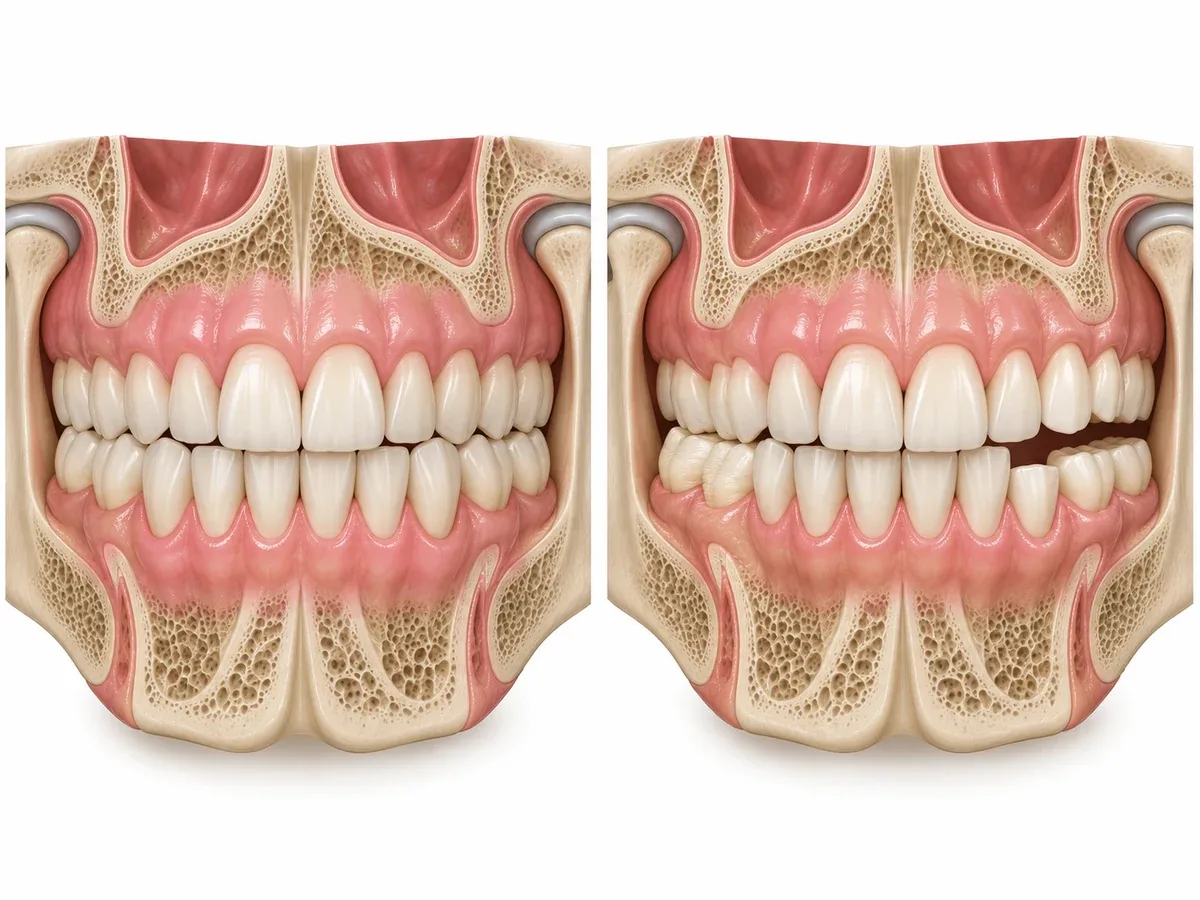
This is also why chewing mainly with the molars on one side is one of the seven features. How you chew and the shape of your face are linked.
The encyclopedia also gives simple care advice for jaw joint disorders:
- make a habit of keeping the upper and lower teeth slightly apart
- use warm compresses
- avoid hard and chewy foods
How is facial asymmetry diagnosed in Busan?
The encyclopedia lists the tests used to diagnose facial asymmetry. Once surgery is decided, further tests for surgery, anesthesia and orthodontics follow.
- X-rays of the facial bones
- CT scans
- computer analysis
- dental models
- a dental examination
The entry on abnormal jaw growth points the same way. Today, three-dimensional CT (3D-CT) is used instead of flat X-ray images.
It shows the structure from the skin surface down to the bone, which supports an accurate diagnosis. When surgery is planned, precise measurements and simulations are carried out in advance.
For jaw joint disorders, the Asan entries name bite tests, X-rays, MRI and electromyography. For a dislocation, X-rays and CT are used to see the joint's anatomy.
| Condition | Tests |
|---|---|
| Facial asymmetry | Facial bone X-ray, CT, computer analysis, dental models, dental exam |
| Abnormal jaw growth | 3D-CT from skin to bone; measurements and simulation if surgery is planned |
| Jaw joint disorder | Bite test, X-ray, MRI, electromyography |
| Jaw dislocation | X-ray and CT of the joint |
This is why we cannot answer from a single photo. A mirror or photo shows the surface, and imaging is what shows how the two sides differ underneath.
If you hurt your jaw as a child, tell us when and where it happened, as far as you remember. It helps the diagnosis.
Can orthodontics alone correct facial asymmetry?
The KDCA National Health Information Portal explains when jaw surgery is used. It is done when the bite problem is too severe for braces alone, or when braces cannot fully improve the shape of the face.
It also draws a line by age. In growing children, orthodontic treatment may improve a skeletal problem and help avoid surgery.
In adults who have stopped growing, surgery is needed to correct a skeletal imbalance. This is one of the clearest statements in the sources.
The portal stresses that jaw surgery is not simple cosmetic surgery. It is functional surgery that has to weigh many factors.
The teeth set in the jaw move with the bone, and the jaw joint's movement is strongly affected. So it should be done in close cooperation between an orthodontist and an oral and maxillofacial surgeon.
Orthodontic treatment before surgery matters too. If the teeth are not first moved into the right position, it is hard to place the jaw bone where it should go.
| Group | What the KDCA portal says |
|---|---|
| Growing children | Orthodontic treatment may improve a skeletal problem and avoid surgery |
| Adults who have stopped growing | Surgery is needed to correct a skeletal imbalance |
| Before jaw surgery | Orthodontics first moves the teeth into the right position |
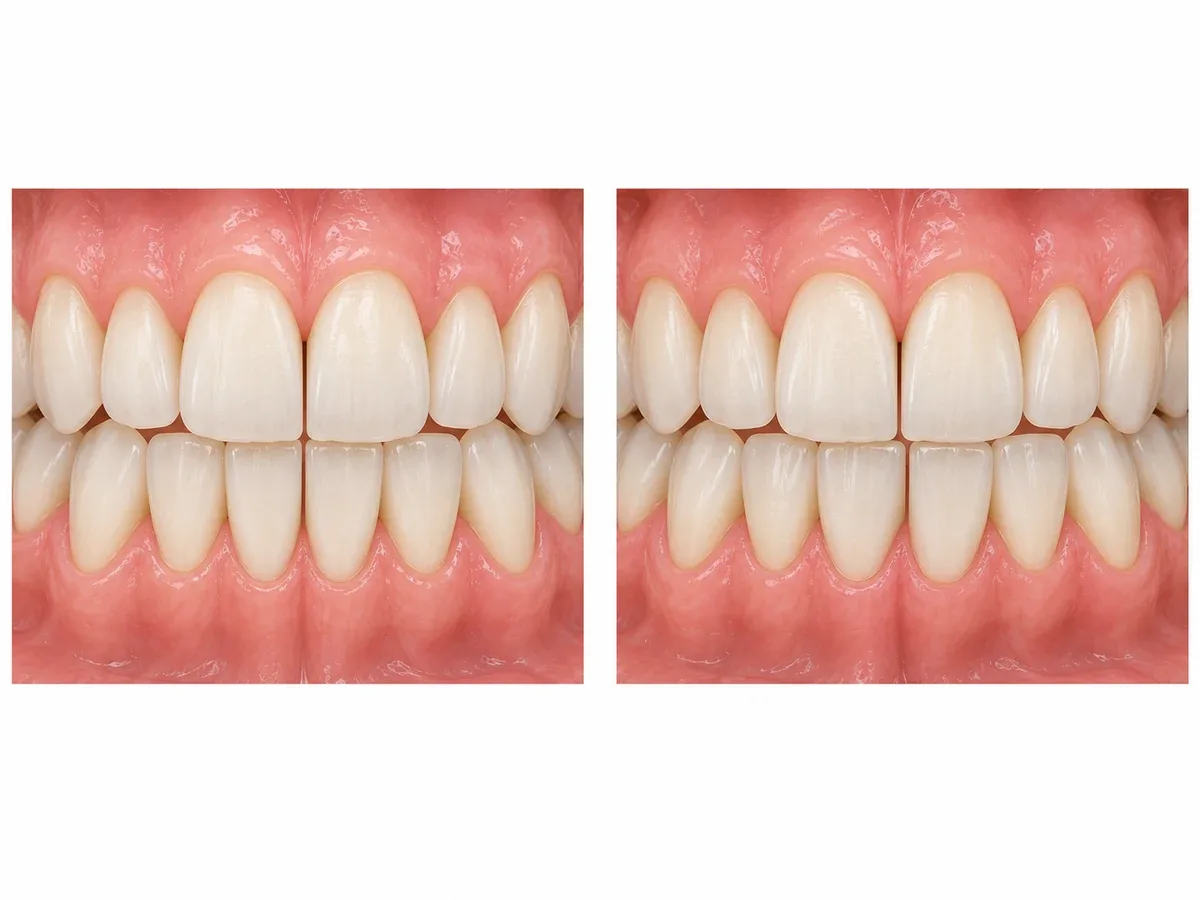
So can braces fix facial asymmetry? If tooth position and the bite are the cause, braces can change part of it. If the bone itself is uneven, orthodontics becomes one stage in a longer plan.
Why does treatment take several stages?
The encyclopedia states plainly that treating hemifacial microsomia with bone asymmetry is complex and takes a long time. Orthodontics, bone surgery and skin and soft-tissue surgery are carried out in several stages over many years.
For severe cases, it lists the steps by age. The lip shape is corrected at 1–2 years of age, and the jaw joint is rebuilt in childhood.
Bone lengthening is done if needed. Ear surgery takes place in the early primary school years, and several operations may be needed if an ear is missing or very small.
Jaw bone surgery comes after reaching adulthood, and the shape of the face is refined at the end.
| Timing | What the source says |
|---|---|
| Age 1–2 | The lip shape is corrected |
| Childhood | The jaw joint is rebuilt, with bone lengthening if needed |
| Early primary school | Ear surgery is done |
| Adulthood | Jaw bone surgery, then final refinement of the face shape |
Soft-tissue asymmetry follows a different path. As with Romberg disease, the approach is fat grafting or flap surgery after the condition stops progressing.
The sequence matters as much as the method. Diagnosis comes first, then a plan that matches the cause.
Frequently asked questions
Is chewing on one side the cause?
The encyclopedia lists chewing mainly with the molars on one side as a feature of facial asymmetry. Whether one-sided chewing caused the asymmetry, or an uneven bite makes you chew that way, has to be sorted out by examination. Since a jaw joint disorder left alone can cause jaw asymmetry, chewing mostly on one side is worth checking in itself.
I hurt my jaw as a child. Could that be related?
The encyclopedia says acquired facial asymmetry often comes from abnormal jaw growth. It adds that an injury to the jaw bone or jaw joint in childhood can lead to asymmetry during growth. Telling us when and where you were injured helps the diagnosis.
My face looks different in every photo. Is it severe?
Photos change a lot with angle and light, and the source notes that mild asymmetry is very common. Rather than comparing photos, look at fixed reference points. These are the eyebrow-to-chin center line, the tilt of the lips, the front-teeth center and the side you chew on.
Can I get this checked in English in Busan?
Yes. We provide 1:1 English interpretation from the first consultation through the end of treatment. The clinic is near Seomyeon Station Exit 2 (5-min walk), opposite Lotte Hotel Busan; call 010-8555-2854 (+82-10-8555-2854 from abroad).
A slightly uneven face is common, and not every facial asymmetry needs treatment.
What matters is where it comes from:
soft tissue, bone, or the way the teeth meet.
That answer decides the plan.
If you are concerned about facial asymmetry in Busan, Reset Dental Clinic offers 1:1 English interpretation from your first consultation through the end of treatment. Call 010-8555-2854 to book a consultation.
References
- Asan Medical Center Disease Encyclopedia, "Facial Asymmetry" — definition, how common mild asymmetry is, sorting soft-tissue from bone causes, Romberg disease and hemifacial microsomia, acquired asymmetry after childhood jaw injury, the seven typical features, diagnostic tests and staged treatment
- KDCA National Health Information Portal, "Jaw Surgery and Orthodontic Treatment" — when jaw surgery is used, growing children versus adults, jaw surgery as functional surgery, cooperation between orthodontist and oral surgeon, and orthodontics before surgery
- Asan Medical Center Disease Encyclopedia, "Temporomandibular Joint Disorder" — definition, pain and clicking, bite tests, X-ray, MRI and electromyography, what can happen if left untreated, and daily care advice
- Asan Medical Center Disease Encyclopedia, "Jaw Dislocation" — acute and chronic signs including facial asymmetry, X-ray and CT, putting the jaw back in place and a 2–3 day elastic bandage, and preventing repeat dislocation
- Asan Medical Center Disease Encyclopedia, "Abnormal Jaw Growth" — overgrowth and undergrowth of the jaws, causes and acquired factors, joint sounds and pain, and diagnosis with 3D-CT, measurements and simulation
Written by Reset Dental Clinic Support Team
Medical review Dr. Kim Hyun-joo, Head Dentist
Last updated: September 19, 2026
This column is for general information and does not replace diagnosis or treatment for individual patients. If you have symptoms, please see a dentist.


