

- A tooth transplant (autotransplantation) moves one of your own healthy teeth, usually a wisdom tooth, into the gap where a tooth was lost.
- The source says clinical studies report that more than 80% are still in place after about five years.
- The outlook is generally better under age 30 with no gum disease. Waiting a long time after an extraction can make it worse.
- Not every wisdom tooth will do. If its roots are strongly curved or it cannot be removed without damage, a transplant is not possible.
At Reset Dental Clinic in Seomyeon, Busan, patients are sometimes told that a back tooth cannot be saved, and the talk usually turns to implants. In some cases, there is one more option: a tooth transplant, moving a tooth you are not using into that spot. International patients can discuss it with us with 1:1 English interpretation.
This column is based mainly on the national health portal's page on tooth autotransplantation. It also draws on its pages on wisdom teeth, extraction, root canal treatment and dental implants.
What is a tooth transplant?
The source's definition is short. A tooth transplant means moving another healthy tooth of your own into the place of a lost tooth.
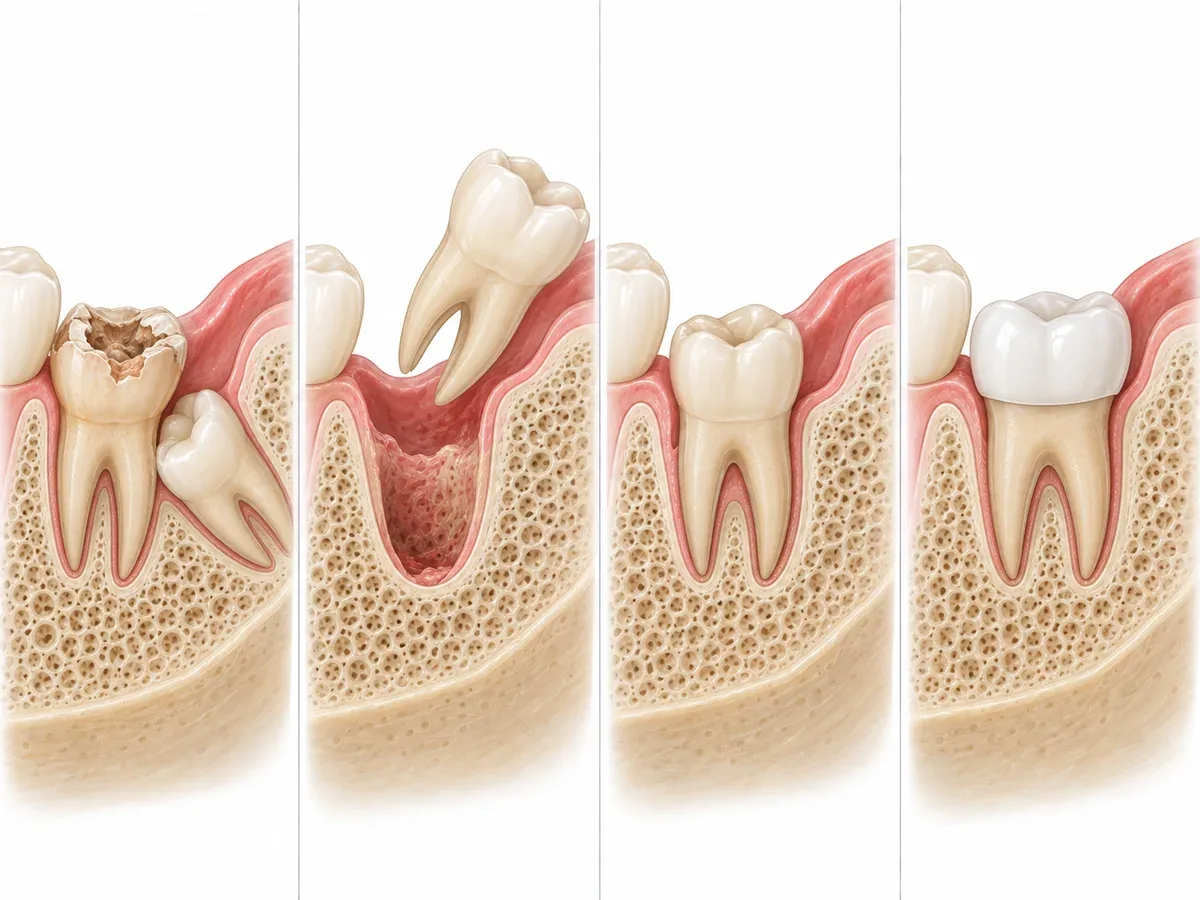
The most typical case it gives is this. A tooth with severe decay that cannot be saved is removed, and a wisdom tooth is moved into its place.
Candidates are not limited to wisdom teeth. When orthodontic treatment is planned, small premolars are sometimes removed to make space.
The source says those premolars can also be candidates for a transplant. A tooth that would be removed anyway is given another use.
Why is a wisdom tooth so often the one moved?
The wisdom tooth page makes the reason clear. The wisdom tooth, or third molar, is the last tooth to come in, usually in the late teens or early twenties.
The source says that if a wisdom tooth grows in straight and can chew like a molar, it does not have to be removed.
The trouble starts when it grows at an angle. If it is impacted and tilted forward, food easily gets stuck behind the molar in front, and decay develops.
As it progresses, pain follows. If the wisdom tooth lies on its side, the root of the molar in front can even be resorbed, and a badly damaged molar is sometimes removed.
That is the very case the tooth transplant page gives as its first example. If a tilted wisdom tooth has left the molar in front too decayed to keep, the wisdom tooth can be moved into the molar's place.
The source says wisdom tooth roots are usually healthy, so the tooth takes hold 2–3 months after surgery. The tooth that harmed its neighbor ends up taking its neighbor's place.
| Situation | How the tooth is moved |
|---|---|
| A tilted wisdom tooth has left the molar in front badly decayed | The molar is removed and the neighboring wisdom tooth is moved into its place |
| A large molar is badly damaged and a healthy wisdom tooth is present | The molar is removed and the wisdom tooth is moved into its place |
| An impacted tooth has resorbed an adult tooth's root, so that tooth must be removed | A transplant into that spot is considered |
| A tooth from another side of the mouth is used | It can be done across upper and lower jaws or left and right sides |
| A canine buried in the jawbone cannot be pulled into place with braces | Moving that tooth is considered |
What conditions must be met?
This is the part we need to explain most honestly. The source sets out the conditions in some detail.
| Condition | Why it matters |
|---|---|
| The site and the root must match | If the gap is narrower than the root, the tooth is hard to seat and to bond with the tissue around it |
| The tooth must come out undamaged | Strongly curved or abnormal roots make a transplant impossible |
| The donor tooth must have a normal shape | A tooth that is too small or abnormal may not work properly after the move |
| General health must be checked | Usually possible unless there is a serious medical condition such as diabetes or a bleeding disorder |
First, the site and the root must match. The dentist assesses how well the bone at the gap fits the tooth to be moved.
For example, if the gap is narrower than the root of the tooth, it is hard to place the tooth properly in the bone. It is also hard for it to bond with the surrounding tissue afterwards.
So before surgery, 3D X-ray imaging is used to study the site and the tooth.
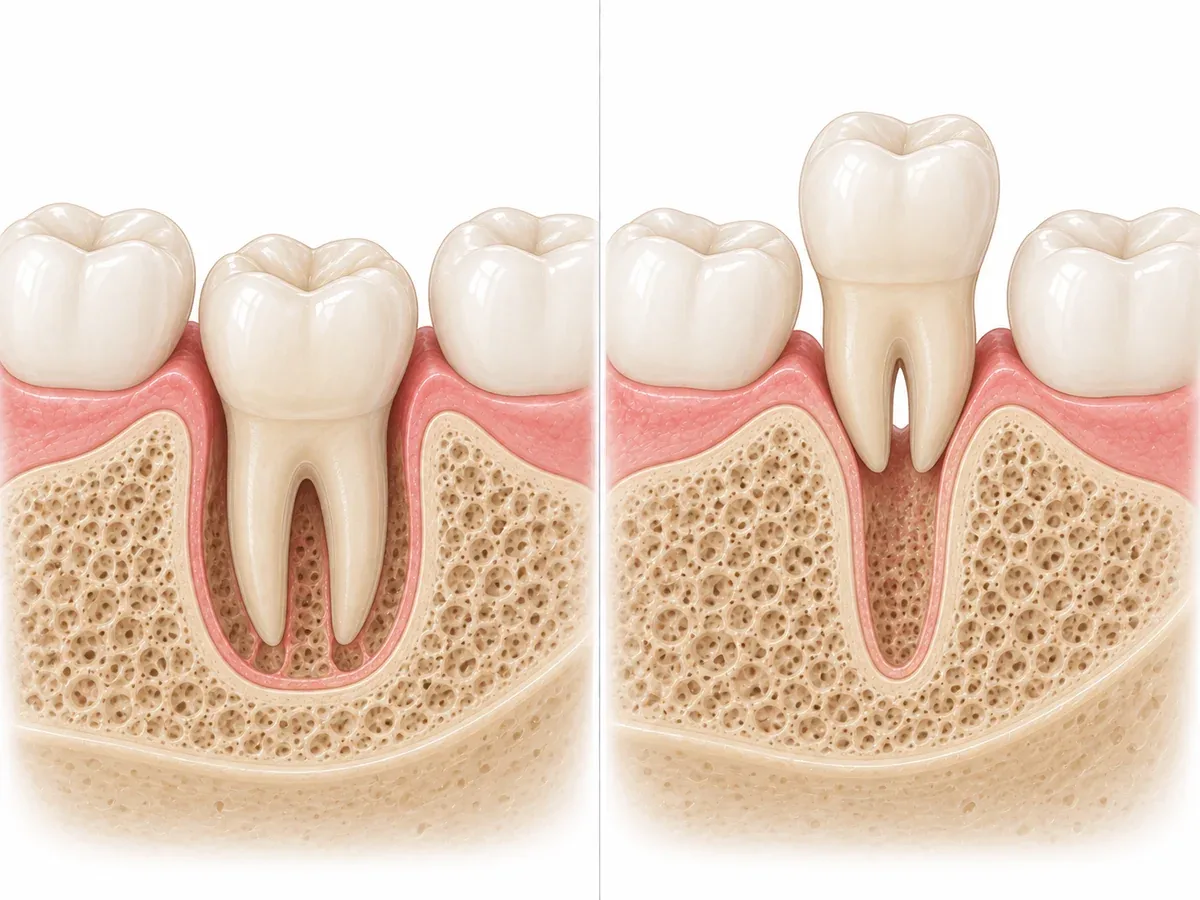
Second, the tooth must come out without damage. The source is clear. Even a healthy wisdom tooth cannot be moved if its roots are strongly curved, or its shape makes undamaged removal difficult.
It adds that tilted wisdom teeth are often hard to remove without damage, which can rule out a tooth transplant. The wisdom tooth page backs this up.
Roots that curve toward the cheek, the tongue, the front or the back can easily break during extraction. When a root is fused to the bone, removal becomes harder too.
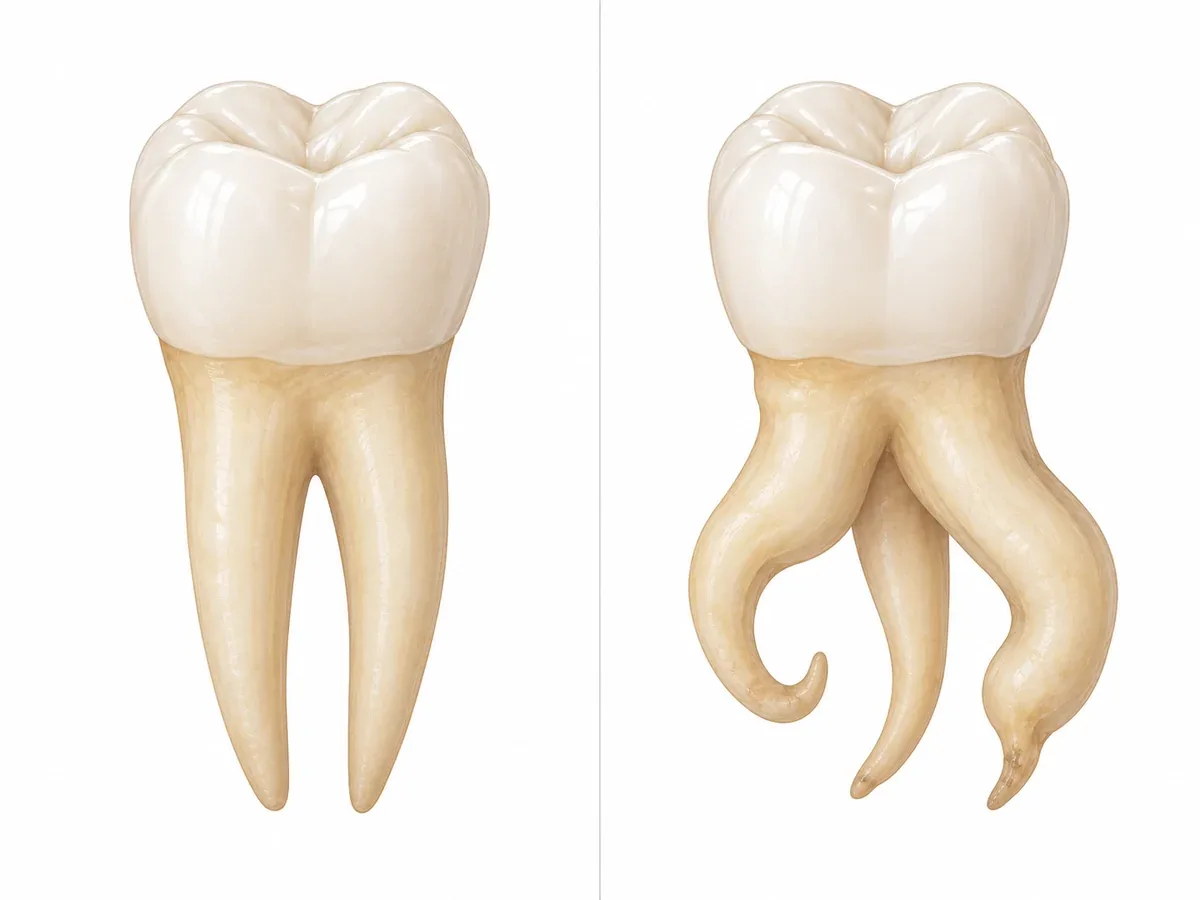
Third, the shape of the tooth being moved is checked. If a wisdom tooth is too small or abnormal, it may not work properly even after a transplant.
Fourth, general health is checked before a tooth transplant. The source says medical conditions can make surgery difficult, but not every condition rules it out.
The dentist decides, and it is usually possible unless there is a serious condition such as diabetes or a bleeding disorder. The source stresses that patients must tell the dentist about their health.
How does tooth transplant surgery work?
Here are the steps in the order the source gives them.
- Under local anesthesia, the damaged tooth that cannot be saved is removed, and the bone is shaped to make room.
- A replica of the donor tooth, made in advance from 3D X-ray imaging, is sterilized and tried in the socket. This lets the surgery be planned ahead.
- The donor tooth is carefully removed and placed in the gap. Depending on how far its roots have grown, root canal treatment may be done.
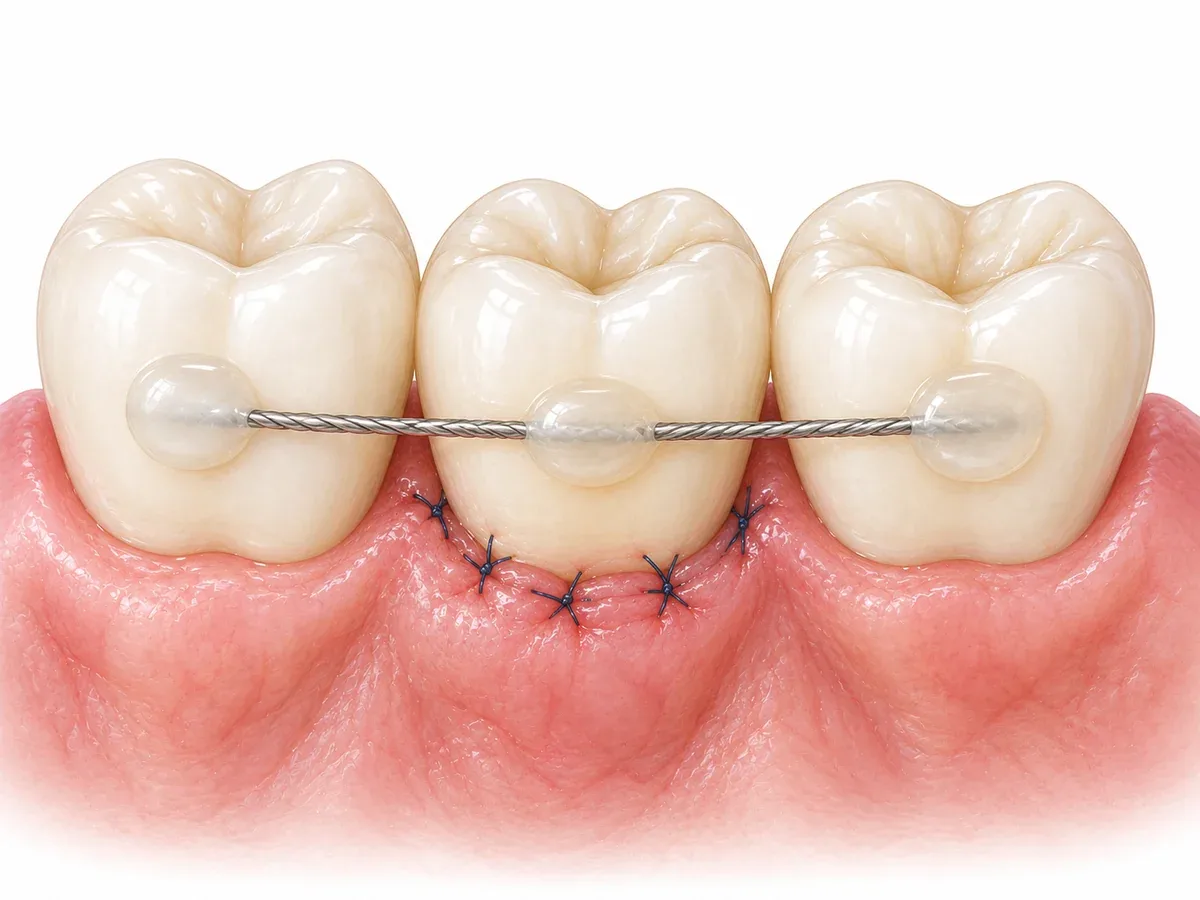
- The tooth is splinted to its neighbors with resin and wire, and the gum around it is stitched.
- The stitches come out after about a week. The splint is removed a few weeks later, depending on healing.
- Once the tooth has bonded with the tissue around it, moves less and bone has formed, a crown is placed.
You may wonder why root canal treatment comes up. The root canal page describes it as removing infected pulp, the tissue inside the tooth containing nerves and blood vessels.
The inside is then cleaned, and the space is sealed with sterile material. When a tooth is moved, it is cut off from its original blood supply, so this may be needed depending on root growth.
The same page mentions a related procedure, intentional replantation. When root canal treatment does not go well, the tooth is removed, treated and put back in the same spot.
Moving a tooth to a new spot is a transplant. Putting it back in its original spot is replantation.
How is a tooth transplant different from an implant?
The implant page describes a dental implant as an artificial titanium root placed in the bone, with an artificial tooth attached. The titanium fusing with bone is called osseointegration, and it is the key principle.
An implant is built from three parts. Treatment usually takes 3–4 months, and longer if a bone graft is needed.
- the artificial root (fixture) placed in the bone
- the connecting post
- the artificial tooth on top
The portal calls implants the standard option usually considered for missing teeth. It notes that by 2022 more than 800,000 people aged 65 and over had received implants under national insurance, and calls implants a prosthetic method with proven long-term stability.
| Point | Dental implant | Tooth transplant |
|---|---|---|
| What goes in | An artificial titanium root | Your own natural tooth |
| Structure | Three parts: root, connecting post, artificial tooth | A natural tooth moved whole, then usually crowned |
| How it holds | Titanium fuses with bone (osseointegration) | The tooth bonds with the tissue around it, usually within 2–3 months |
| What the source says about outcomes | Proven long-term stability, but it does not last forever | More than 80% in place at about five years, but not always successful |
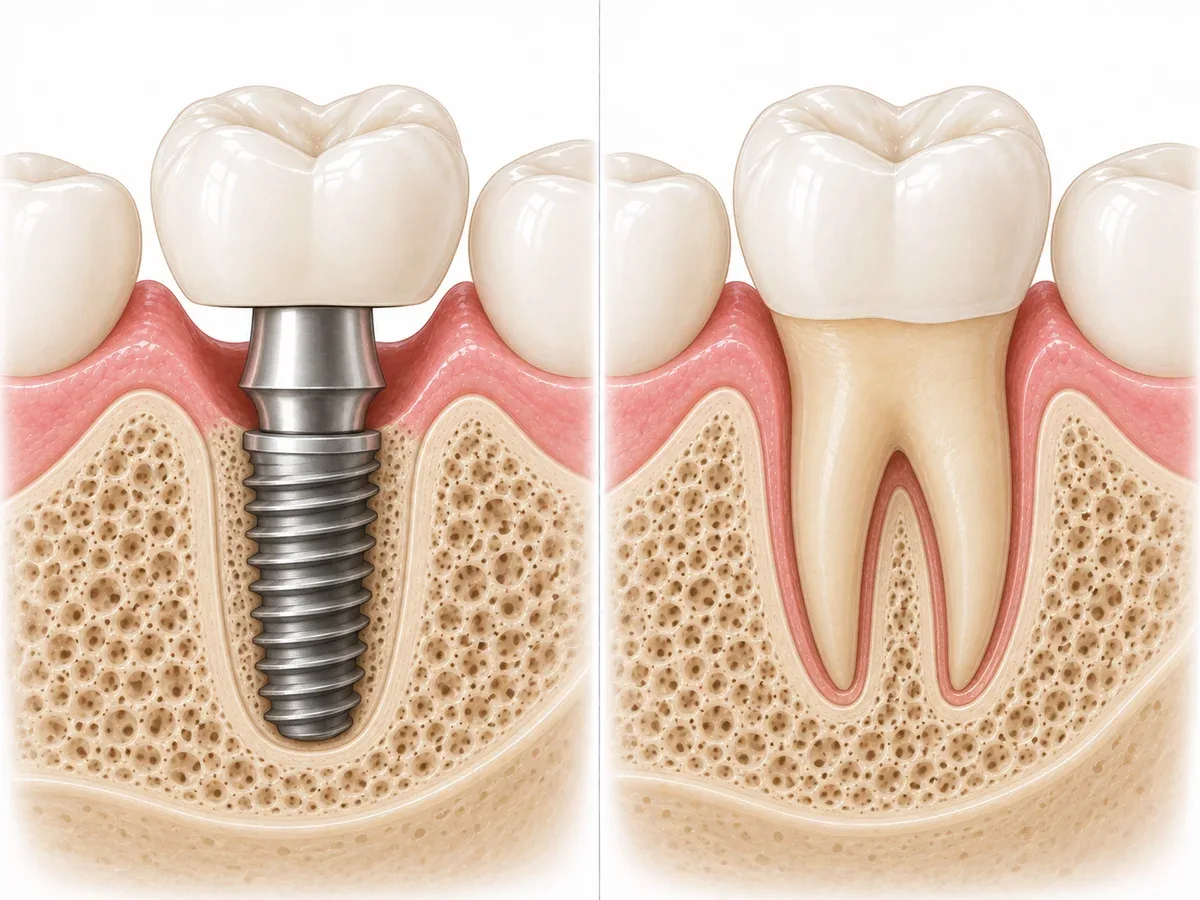
This does not mean a tooth transplant replaces implants. It is closer to one more option on the table when the conditions are right.
Both sources are careful about expectations. The transplant page calls more than 80% survival at about five years good, then adds at once that it does not always succeed and complications must be considered.
It also notes that inflammatory cells in the surrounding tissue can gradually wear away the root of a moved tooth. The implant page, for its part, says plainly that an implant does not last forever.
What should you ask a dentist in Busan before an extraction?
The extraction page says that because an extraction cannot be undone, it should be decided carefully and done when truly necessary. It lists cases where extraction is needed:
- decay too severe to treat
- a dead nerve (pulp necrosis) where root canal treatment is not possible or pain continues after it
- severe gum disease with so much bone loss that the tooth is very loose
- a cracked or broken tooth that stays painful after treatment
To decide, dentists use a clinical exam together with X-rays. These include a panoramic X-ray of both jaws, a periapical X-ray down to one tooth's root tip, and a dental CBCT scan in 3D.
If a tooth transplant is being considered, the same images are used to match the site with the root.
Here is the most practical line in this column. The source says that a transplant done long after an extraction may have a poorer outlook.
Asking before the tooth comes out widens your options more than asking long afterwards. If you have a wisdom tooth you are not using, please mention it early.
How is a transplanted tooth cared for afterwards?
The source says it simply: as with other dental treatment, regular check-ups and good oral hygiene matter.
Gum care carries extra weight after a tooth transplant. The source says the outlook is better in people without gum disease, so the health of the gums after surgery is tied to the future of that tooth.
Right after surgery, the extraction page's advice applies:
- Keep biting on the gauze, and swallow blood or saliva rather than spitting.
- Do not touch the area with your tongue or fingers.
- Use an ice pack for 1–2 days and eat mild food.
- Avoid hot baths and saunas.
- Avoid straws for 3 days, and alcohol and smoking for at least a week.
Swelling is usually worst 2–3 days after tooth transplant surgery and can last about a week.
For daily hygiene after that, the implant page's advice is a useful guide. A regular toothbrush cannot reach every surface, so use floss and interdental brushes as well, and check the inner surfaces in a mirror.
Frequently asked questions
Can I have a tooth transplant without a wisdom tooth?
You need a tooth that can be moved. Candidates are not limited to wisdom teeth, though. The source says premolars removed to make space for orthodontic treatment can also be used.
How long does a transplanted tooth last?
Clinical studies report that more than 80% are still in place after about five years. The source adds that it does not always succeed, and the root of a moved tooth can gradually wear away. That is why regular checks are needed.
My tooth was removed some time ago. Is it too late?
The source says a transplant done long after an extraction may have a poorer outlook. That does not settle it in advance, though. The bone at the gap needs to be assessed against the tooth to be moved.
Can I discuss a tooth transplant in English in Busan?
Yes. We provide 1:1 English interpretation from your first consultation through the end of treatment. The clinic is near Seomyeon Station Exit 2 (5-min walk), opposite Lotte Hotel Busan, and you can call 010-8555-2854 (+82-10-8555-2854 from abroad).
If you are told a tooth must come out,
ask one more question.
Could one of my own teeth be moved there?
The site, the root and the gums all have to fit,
so the conditions are strict.
But the source is clear that it is better to ask before the extraction than long after. Reset Dental Clinic in Busan offers 1:1 English interpretation for tooth transplant consultations; call 010-8555-2854.
References
- KDCA National Health Information Portal, "Tooth Autotransplantation" — definition, candidate teeth, conditions for success, surgical steps, splinting, reported five-year results, root resorption and factors affecting the outlook
- KDCA National Health Information Portal, "Wisdom Teeth" — when wisdom teeth need removal, damage to the molar in front, curved roots and root fusion to bone
- KDCA National Health Information Portal, "Tooth Extraction" — why extraction must be decided carefully, reasons for extraction, X-ray exams and care after surgery
- KDCA National Health Information Portal, "Root Canal Treatment" — what root canal treatment involves and intentional replantation
- KDCA National Health Information Portal, "Dental Implants" — implant structure, osseointegration, treatment time, insured implants for people aged 65 and over, and hygiene after treatment
Written by Reset Dental Clinic Support Team
Medical review Dr. Na In-chae, Head Dentist · Periodontics Specialist
Last updated: September 19, 2026
This column is for general information and does not replace diagnosis or treatment for individual patients. If you have symptoms, please see a dentist.


