

- In a dispute case, a patient said orthodontic treatment took about twice as long as expected. The dentist said the case was difficult and appointments were missed.
- The mediation agency could not judge the care, because there were no first-visit records or X-ray images.
- Because orthodontics takes a long time, trust built during treatment matters a great deal.
- Public health data gives no fixed number. The time needed depends on the teeth and the jaw bones.
"You said two years, and this is year three." At our clinic in Seomyeon, Busan, few sentences weigh more than this one. Orthodontic treatment starts with an estimated timeline, but it does not always finish on schedule. For patients living in or visiting Korea, we provide 1:1 English interpretation from the first consultation through the end of treatment.
This column explains why treatment runs long and what to agree on before you begin. It draws on two dispute cases reported by Dailydental, the newspaper of the Korean Dental Association. It also uses public health information from Asan Medical Center and the Korea Disease Control and Prevention Agency (KDCA).
What happened in a six-year orthodontic treatment case?
Dailydental reported a case shared by the national agency that mediates medical disputes. In March 2018, a dentist extracted teeth, took impressions of the upper and lower jaws and took intraoral photos. Orthodontic treatment then began.
Treatment continued until December 2023. That is about six years.
Near the end, the patient complained that the bite felt uncomfortable. Another dental clinic diagnosed a malocclusion, meaning the teeth did not meet properly.
The findings at that clinic included several problems. They are listed below as the article described them.
- missing premolars
- condylar resorption on the left side, a loss of bone at the head of the jaw joint
- a crossbite and asymmetry in the left back teeth
- a deep bite, where the upper front teeth overlap the lower ones too much
The patient then raised a complaint. The patient said treatment took about twice as long as expected. The patient also said that proper care was not given during that time, which led to the malocclusion.
The dentist's answer appeared in the same article. The patient's starting condition was a difficult case, the dentist said. The patient also did not keep appointment dates, so treatment was delayed.
| Point | What the article reported |
|---|---|
| Start | March 2018, after extraction, impressions and intraoral photos |
| End | December 2023, about six years later |
| Patient's claim | Treatment took about twice as long as expected, without proper care |
| Dentist's answer | A difficult case, and appointment dates were not kept |
| Agency's view | No first-visit records or X-ray images, so the care could not be evaluated |
When two sides tell different stories, records decide the matter. Yet the agency found no first-visit records and no X-ray images. So it said it was hard to judge whether the treatment had been appropriate.
The agency also found no signed consent form for the treatment. For that reason, it held the clinic responsible for not explaining enough.

Why does orthodontic treatment take longer than planned?
There are three common reasons. Each one appears in the sources above.
First, a difficult starting point. This was the reason the dentist gave in the case above. Asan Medical Center's page on dental arch problems also says the scope of care depends on the condition.
Teenagers who are still growing can often finish with orthodontic treatment alone. But if something goes wrong with bone growth, surgery combined with orthodontic treatment may be needed in adulthood.
Second, the gap between visits. Orthodontic treatment adjusts force at set intervals. In the case above, the dentist said missed appointments delayed treatment.
The braces stay on your teeth between visits. Even so, the plan does not move forward while you are away.
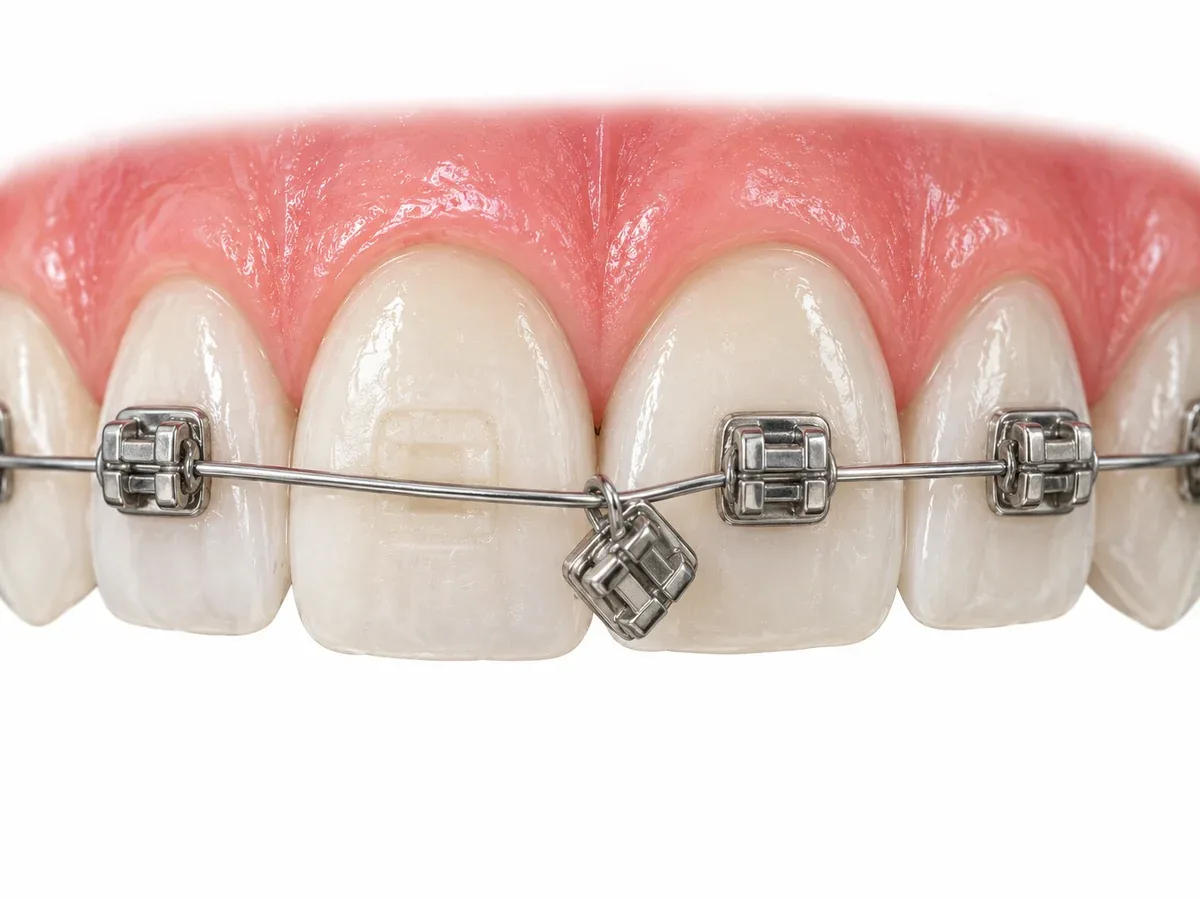
Third, things that happen along the way. A bracket may come off, a cavity may need treatment first, or the gums may become inflamed. Each of these pauses the plan for a while.
Jaw joint symptoms can also appear. In the Dailydental article, a vice president of the Korean Academy of Dental Science gave clear advice. A history of jaw joint disorders should be checked and recorded before orthodontic treatment starts.
If a problem appears during treatment, the dentist should respond properly. One example is a referral to an oral medicine specialist.
| Reason | What the sources say |
|---|---|
| Starting condition | Difficult cases take longer; with abnormal bone growth, surgery combined with orthodontics may be needed |
| Gap between visits | The dentist in the case said missed appointments delayed treatment |
| Events along the way | A loose bracket, a cavity or gum inflammation pauses the plan |
You cannot change the first reason. The second and third, however, are partly in your hands:
- keep your appointment dates, or rebook quickly if you must miss one
- tell the clinic soon when a bracket comes off
- do not put off treating a cavity
- have gum inflammation checked early
How fast do teeth actually move?
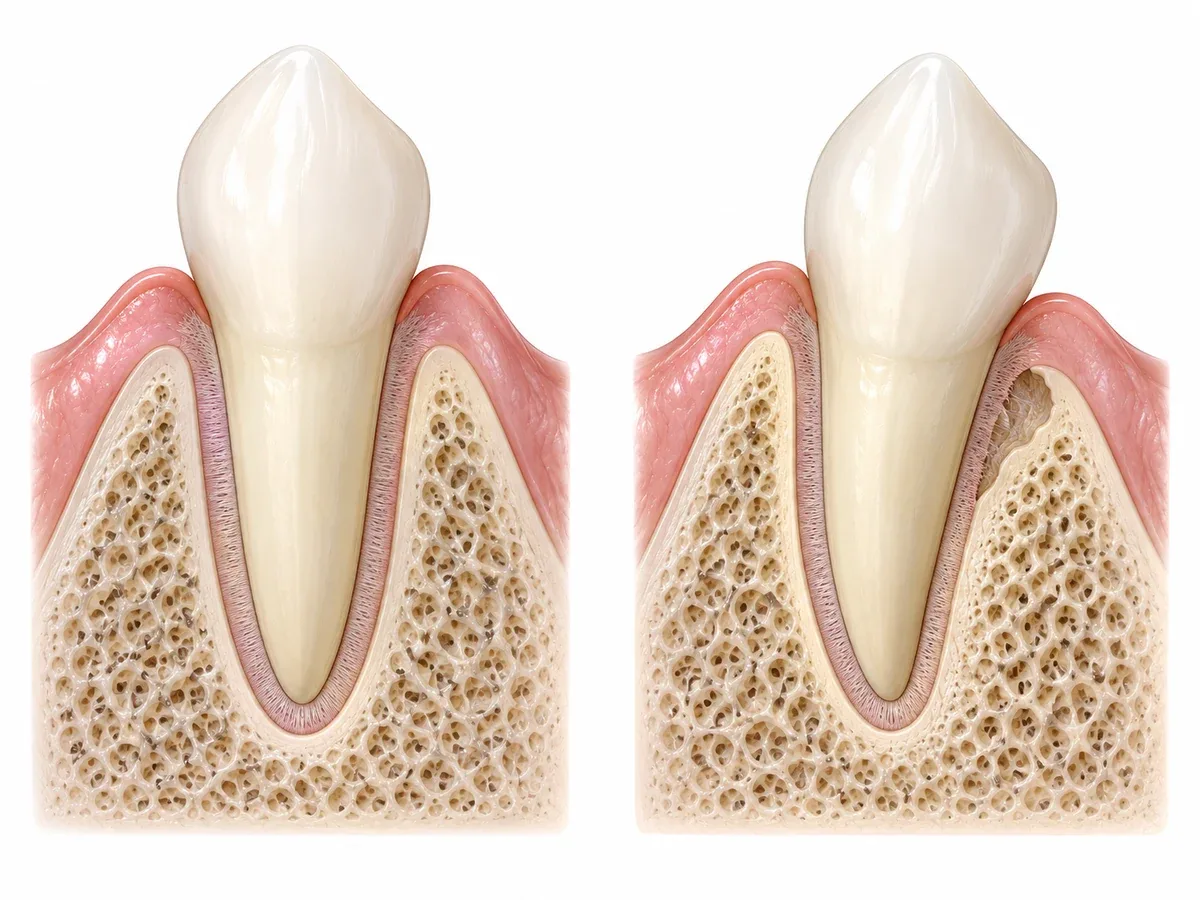
Teeth sit inside the jawbone. When force is applied, bone around the root breaks down on one side. New bone forms on the other side, and the tooth moves along.
Bone changes at a limited speed. Pushing harder does not make it faster.
The KDCA health portal does not give a fixed number for treatment time either. Its page on jaw surgery and orthodontics discusses how long orthodontics is needed before surgery. It says the time varies with each patient's teeth and jaw bones.
The same page adds a warning. Surgery without first lining up the teeth can make it hard to place the jaw where it should be. Even if surgery is forced, the result may not be satisfying.
In other words, rushing tends to make results worse. Time in orthodontic treatment is part of how it works.
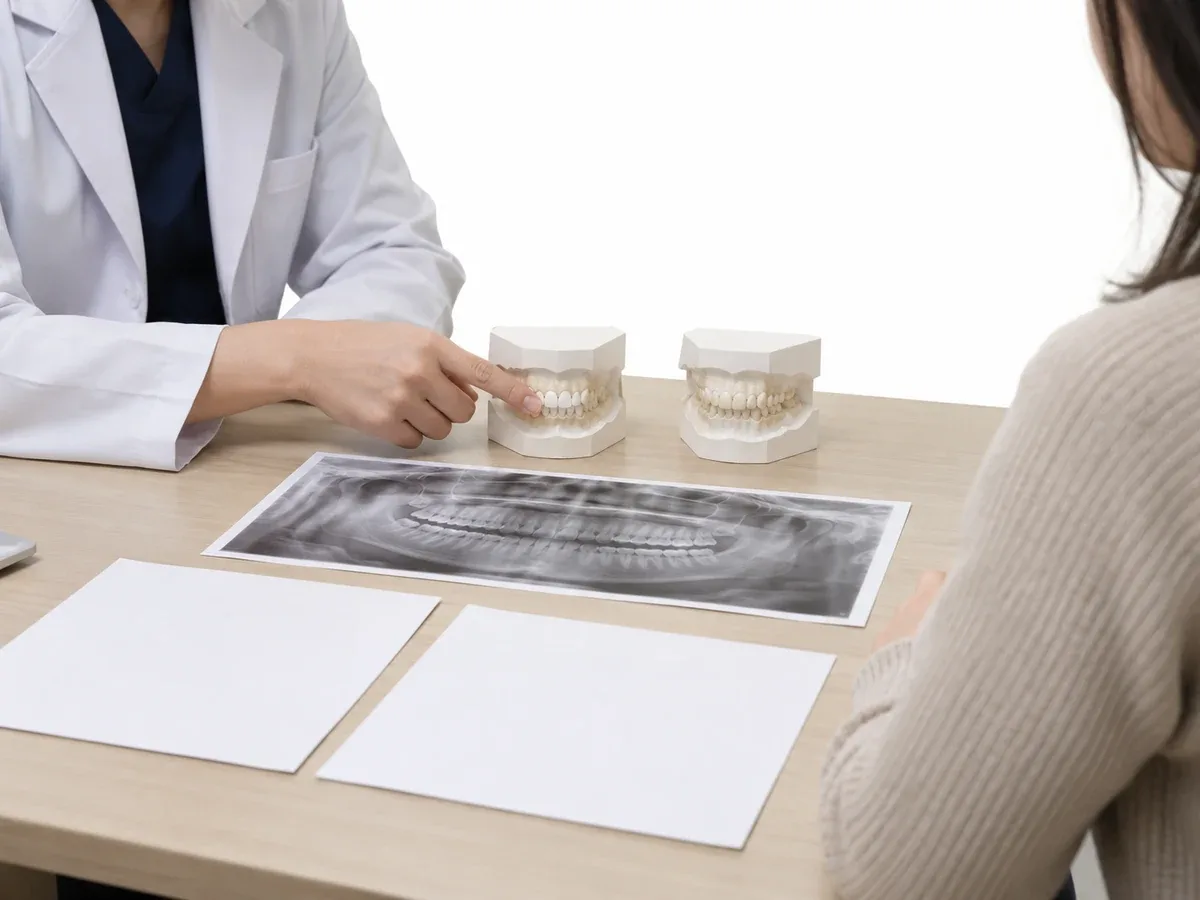
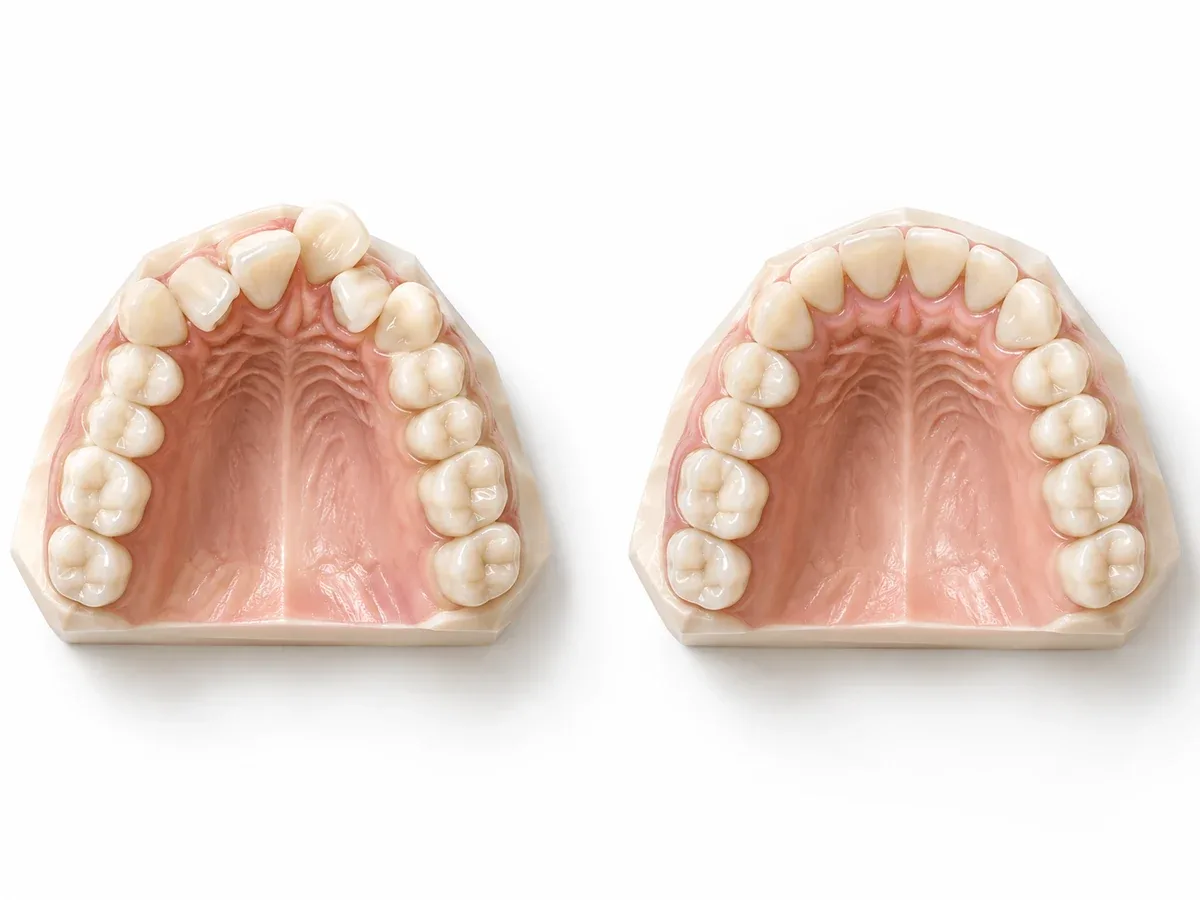
Asan Medical Center also explains how dentists look at the whole bite before planning. Dental arch problems are diagnosed with several kinds of records:
- X-rays
- photos of the face
- photos inside the mouth
- models of the teeth
These records show how the upper and lower teeth relate to each other. They also become the starting line for comparing progress later.
What should you agree on before the timeline?
Dailydental reported a second case, involving clear aligners. Some enamel was removed between the teeth, a step called interproximal reduction. As the aligner stages went on, a gap opened between the front teeth and the midline shifted.
The expert review found that reducing enamel between the teeth was usual for that patient's mouth. Without it, the clear aligners would have had limits.
Even so, the clinic was held responsible. Its explanations and records about the limits of treatment were not enough. The same applied to the need for enamel reduction and the change in the midline.
In that article, an official of the mediation agency made a key point. Orthodontic treatment takes a relatively long time, so trust during treatment matters.
The official added that orthodontic treatment carries a duty to the process and also a duty to the result. So the dentist should explain fully and have a consent form signed.
In the first case, the director of legal affairs at the Korean Dental Association gave similar advice. A patient's expectations and what a dentist can achieve may not match. So before starting, the dentist should explain several things and get written consent.
| Item | Why it matters |
|---|---|
| An accurate diagnosis | It sets the starting line for every later comparison |
| Realistic, achievable goals | Expectations and achievable results may differ |
| Side effects | Possible problems are known before they happen |
| Written consent | Both sides share the same record of what was agreed |
So when patients ask us about time at a consultation, we answer this way. The timeline depends on the goal.
First we agree on where the finish line is. After that, the estimated time fits much better.
What should you check during orthodontic treatment in Busan?
The longer orthodontic treatment runs, the easier it is to forget the first conversation. We suggest asking your dentist a few questions about once every six months.
- Which stage am I in now?
- Which stages are left?
- Of the goals we set at the start, which are done and which remain?
- If the plan has changed, why?
This was also the agency's point in the first case. Even during treatment, patients should be kept informed about their teeth, the plan and the time still needed.
It also helps to look at your records together. Put the photos from the start next to today's. That is much clearer than hearing about progress in words.
If you are an expat or student who may leave Korea during treatment, raise this early. Ask how the plan and records will be handled if you move.
| Topic | What to ask |
|---|---|
| Now | Which stage you are in |
| What is left | Which stages remain |
| Goals | Which first goals are done and which remain |
| Plan | If the plan changed, the reason for it |
When should jaw joint symptoms be checked?
The first case included condylar resorption on the left side. That is why jaw joint checks came up in the article.
Asan Medical Center describes temporomandibular disorder (TMD) as a term covering several conditions. They involve the chewing muscles and the jaw joint.
Typical symptoms are listed below. If you notice any of them, tell your dentist before or during treatment.
- pain around the ear, cheek or temple when opening the mouth
- a clicking sound from the jaw
- in severe cases, difficulty opening the mouth
Diagnosis uses a bite examination, X-rays, MRI and electromyography, a test of muscle activity. Conservative treatment comes first. Physical therapy and bite splints are the most common options.
| Item | Summary |
|---|---|
| What it is | Conditions of the chewing muscles and the jaw joint |
| Symptoms | Pain near the ear, cheek or temple, clicking, limited opening |
| Diagnosis | Bite exam, X-rays, MRI, electromyography |
| Treatment | Conservative care first; physical therapy and bite splints |
Before orthodontic treatment starts, tell your dentist about any past jaw joint symptoms. That way they can be recorded, as the article advised.
Frequently asked questions
Can I know the exact length of orthodontic treatment from the start?
No public source sets a fixed number. The KDCA page simply says the time needed varies with each patient's teeth and jaw bones. An expected timeline is an estimate made after planning, and it is adjusted as treatment goes on.
Is there a way to finish sooner?
Keeping your scheduled visits is the most reliable step. In the case above, the dentist named missed appointments as the reason for delay. Reporting a loose bracket quickly and treating cavities and gum problems promptly help in the same way.
Does a longer treatment damage the teeth?
Care matters more than the length itself. Still, the other clinic's findings in the case included condylar resorption. That is why the article advised checking jaw joint history, detailed examination and referral when problems appear.
Can I get orthodontic treatment in English in Busan?
Yes. We offer 1:1 English interpretation from the first consultation through the end of treatment. The clinic is near Seomyeon Station Exit 2 (5-min walk), opposite Lotte Hotel Busan, and you can call 010-8555-2854 (+82-10-8555-2854 from abroad).
Can I switch clinics during treatment?
Yes, but your records need to go with you. In the case above, missing first-visit records and X-rays made it hard to judge the care. If you move, ask for your diagnostic records and progress notes.
Time in orthodontics depends on the goal.
Agree on the finish line first.
Keep records from the very start.
Check your progress together along the way.
If you are planning orthodontic treatment in Busan, Reset Dental Clinic offers 1:1 English interpretation from your first consultation through the end of treatment. Call 010-8555-2854 to book a consultation.
References
- Dailydental (Korean Dental Association newspaper), "Set Treatment Goals and Agree in Advance Before Orthodontics" — a long-term orthodontic dispute case shared by the national mediation agency: treatment from March 2018 to December 2023, the patient's claim and the dentist's answer, the other clinic's findings, the agency's view on missing records and consent, and advice from the association's legal affairs director and a vice president of the Korean Academy of Dental Science on goals, consent and jaw joint checks
- Dailydental (Korean Dental Association newspaper), "Clear Aligners: Enamel Reduction, Explaining Limits and Records Are Essential" — a clear aligner dispute case involving enamel reduction between teeth, a front-tooth gap and a midline shift, the expert finding that the reduction was usual, the clinic's responsibility for insufficient explanation and records, and the agency's comment on trust, the duty to the result and consent forms
- KDCA National Health Information Portal, "Orthognathic Surgery and Orthodontic Treatment" — the purposes of orthodontics before jaw surgery, why enough time is needed before surgery, and how the time needed varies with each patient's teeth and jaw bones
- Asan Medical Center Disease Encyclopedia, "Dental Arch Relationship Abnormalities" — definition, diagnosis with X-rays, facial and intraoral photos and dental models, and when surgery combined with orthodontics may be needed
- Asan Medical Center Disease Encyclopedia, "Temporomandibular Disorders" — definition, symptoms such as pain and clicking, diagnosis with bite exams, X-rays, MRI and electromyography, and conservative treatment including physical therapy and bite splints
Written by Reset Dental Clinic Support Team
Medical review Dr. Kim Hyun-joo, Head Dentist · Integrated Dentistry Specialist
Last updated: September 19, 2026
This column is for general information and does not replace diagnosis or treatment for individual patients. If you have symptoms, please see a dentist.


