

- A TMJ disorder is not one disease. It is a term for several conditions of the chewing muscles and the jaw joint.
- The source names injury and stress as the biggest causes, along with long chewing of hard food and clenching.
- Conservative care comes first. Physical therapy and a bite splint are the most common treatments.
- The source also notes that the joint can be treated, but the clicking noise itself is often hard to treat.
"My jaw clicks when I open my mouth. Does it need treatment?" We hear this often at our clinic in Seomyeon, Busan, and a click alone is viewed differently from a click with pain or limited opening. For patients living in or visiting Korea, we provide 1:1 English interpretation from the first consultation through the end of treatment.
This column is based on the Asan Medical Center disease encyclopedia entries on TMJ disorders and jaw dislocation. It also uses the KDCA National Health Information Portal pages on teeth grinding and on toothache and chronic pain, plus reports from the Korean Dental Association newspaper.
What is a TMJ disorder?
TMJ stands for temporomandibular joint, the jaw joint. The source describes a TMJ disorder as a term that covers several conditions of the chewing muscles and the jaw joint.
It includes noise from the joint, pain, and difficulty opening and closing the mouth. So "TMJ" on its own does not name one single problem.
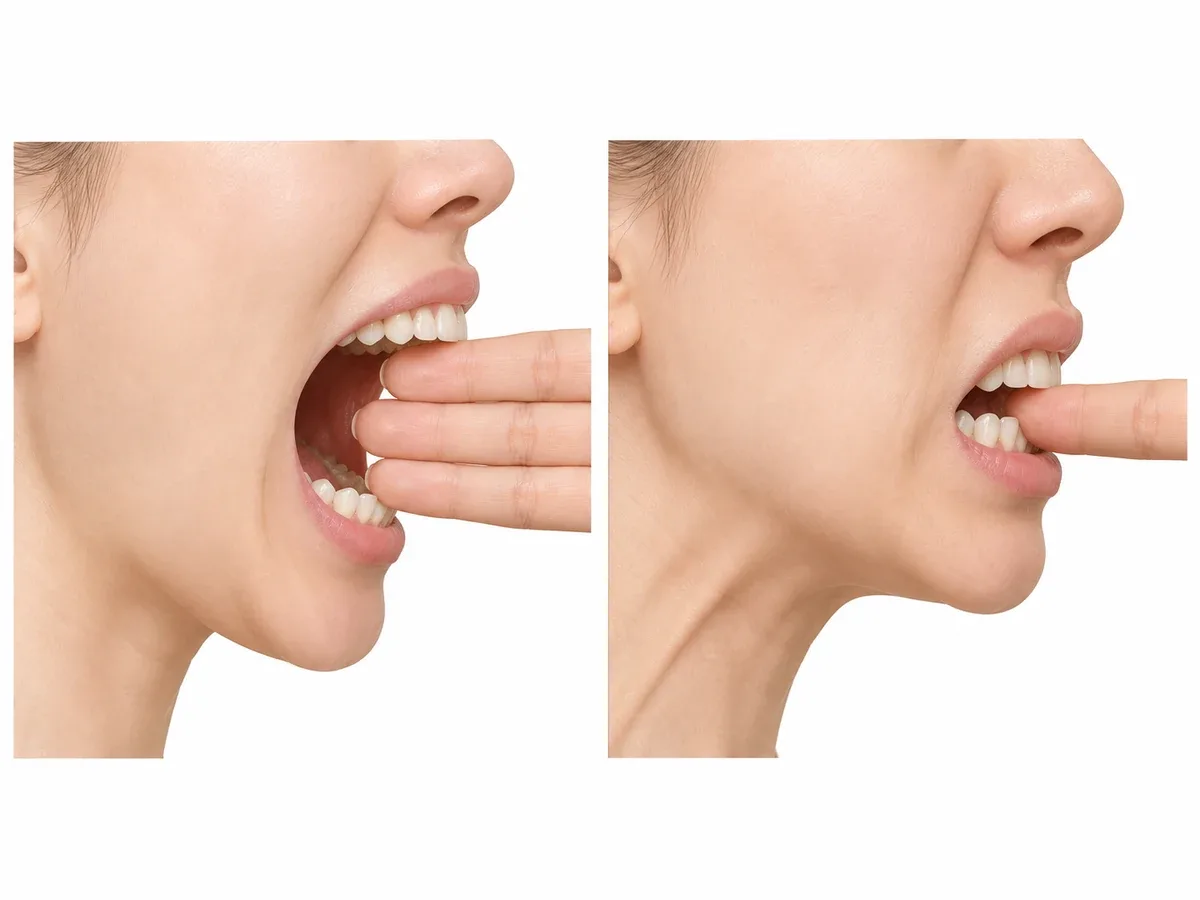
The symptoms are described like this:
- pain in the ear, cheek or temple when opening the mouth
- a clicking or popping sound from the joint
- in severe cases, the mouth cannot open
- in severe cases, the mouth suddenly cannot close
There is one thing to sort out first. Is it a sound alone, a sound with pain, or has the mouth started to open less than before?
The same click can call for different steps depending on which of these three it is. That is the starting point for any TMJ assessment.
| Situation | What it suggests |
|---|---|
| Clicking, no pain, normal opening | Often watched over time, with changes to daily habits |
| Clicking with pain | A clear reason for an exam and treatment |
| Opening less than before | A clear reason for an exam and treatment |
What causes TMJ problems?
The source says TMJ disorders can come from chewing hard food for a long time or a clenching habit. It names injury and stress as the biggest causes.
The KDCA page on teeth grinding (bruxism) is worth reading alongside it. Bruxism is divided into sleep bruxism and daytime bruxism.
The page links grinding to several factors:
- stress
- sleep disorders
- smoking and drinking
- caffeine
- certain medicines
| Item | What the page says |
|---|---|
| Types | Sleep bruxism and daytime bruxism |
| Related factors | Stress, sleep disorders, smoking, drinking, caffeine, medicines |
| Not a cause | Malocclusion (a misaligned bite) |
| Effects | Tooth wear and fractures, gum disease, TMJ disease, headaches |
| Treatment | Stabilization splint, botulinum toxin, stress management, cognitive behavioral therapy |
It also says grinding can cause tooth wear and fractures, gum disease, TMJ disease and headaches. So a grinding habit and a clicking jaw can be part of the same picture.
The same page contains one more line worth noting. It states firmly that a misaligned bite (malocclusion) is not a cause of teeth grinding.
In other words, a bite that looks slightly off is not automatically the reason someone grinds. This matters when deciding how to treat TMJ symptoms.
The KDCA page on toothache and chronic pain draws a similar line. Nerves in the mouth and face are closely intertwined, so pain can change with both physical and emotional condition.
The page says the structure and movement of the TMJ and the bite need to be assessed together. It also says a bad bite does not necessarily cause pain.
| Source | Key point |
|---|---|
| Asan, TMJ disorder | Injury and stress are the biggest causes; chewing hard food and clenching also play a part |
| KDCA, teeth grinding | Stress, sleep disorders, smoking, drinking, caffeine and medicines are linked; malocclusion is not a cause |
| KDCA, toothache and chronic pain | Pain changes with body and mind; a bad bite does not necessarily cause pain |
How are TMJ disorders checked in Busan?
The source names four tests. Each looks at a different part of the problem.
- a bite test, which checks how the back teeth meet
- X-rays, which show the state of the joint and any bone changes
- MRI
- electromyography, which measures muscle tension
The Korean Dental Association newspaper reported on an autumn meeting of the Korean academy for TMJ disorders. It said MRI, CT and ultrasound imaging are used in diagnosis.
On treatment, the meeting covered prolotherapy, PDRN injections and osteoimmunology. The link with sleep disorders and teeth grinding was also discussed.
This tells us that TMJ diagnosis and treatment are still being refined. It is an active field, not a settled one.
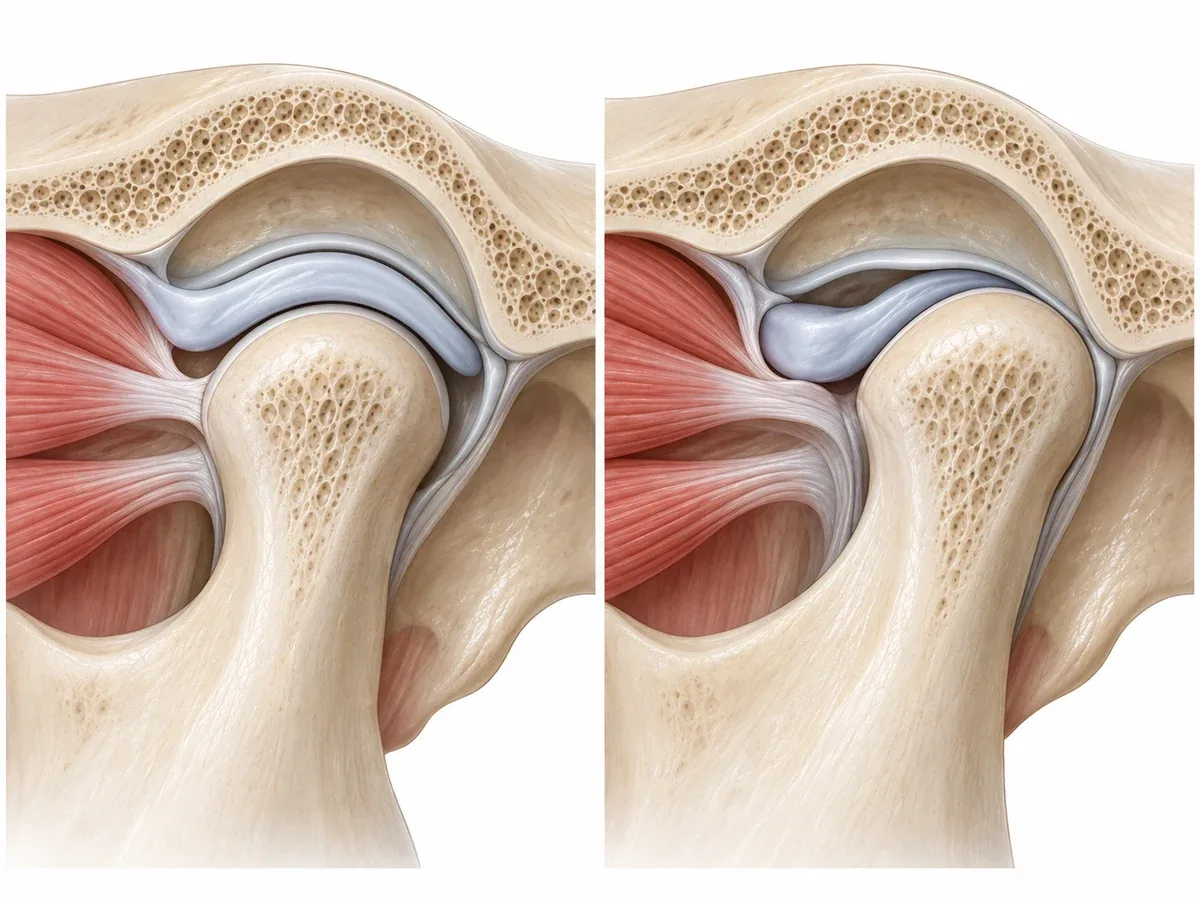
A sound heard from outside does not show what is going on inside the joint. Imaging is how the structure behind the click is seen.
Your own account matters as much as the images. Before a visit, it helps to note down a few points:
- whether there is a sound alone, or a sound with pain
- where it hurts: near the ear, the cheek or the temple
- whether your mouth opens less than it used to
- whether you grind or clench your teeth, day or night
- how often you chew hard food, and how much stress you are under
- any past jaw injury, and any current or past braces
Each point links back to a cause or symptom named in the sources. Together they help decide which tests are needed.
How is TMJ treated?
The source lists medication, physical therapy, bite splints, behavioral therapy and exercise. Conservative methods are usually tried first.
Of these, physical therapy and bite splints are used most often. Each has a clear role.
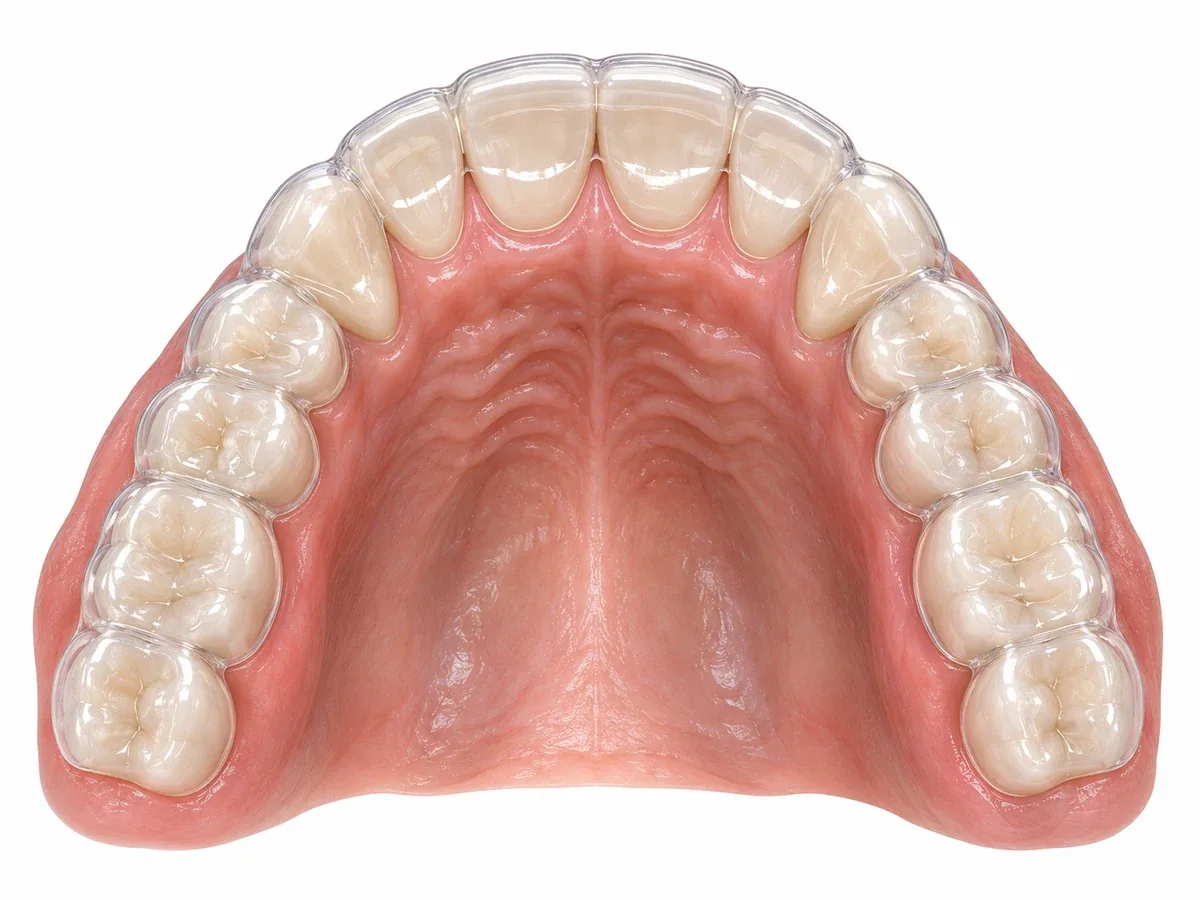
Physical therapy includes warm compresses, ultrasound and laser therapy. A bite splint is a device worn in the mouth to help the jaw rest in a stable position.
Medication means painkillers with anti-inflammatory action and muscle relaxants. These are prescribed as part of the wider plan.
| Treatment | What the source says |
|---|---|
| Physical therapy | Warm compresses, ultrasound, laser therapy |
| Bite splint | A device worn in the mouth to help the jaw stay in a stable position |
| Medication | Anti-inflammatory painkillers and muscle relaxants |
The KDCA bruxism page names a stabilization splint as the most widely used treatment today. It is combined with botulinum toxin injections, stress management and cognitive behavioral therapy.
How long should a splint be worn? The source describes its purpose, helping the jaw stay stable, but gives no number of weeks or months.
It is a treatment adjusted to your symptoms and response. So the length depends on how things go rather than on a period fixed at the start.
Why does conservative care come first? These steps can be stopped or changed if they do not help.
Grinding down teeth to change the bite cannot be reversed. Given that the sources say a bad bite is not a cause of grinding, and does not necessarily cause pain, the order matters.
So a typical TMJ plan starts with rest, warmth, habit changes and a splint. The response to these steps then guides what comes next.
Does the clicking itself need treatment?
In the source's own words: the jaw joint can be treated, but noise from the joint is often hard to treat.
So if there is a click with no pain and no loss of opening, removing the sound is often not the goal. Instead, habits are adjusted and the jaw is watched over time.
If there is pain, or the mouth has become hard to open, the case for TMJ treatment becomes clear. That is the dividing line.
The source also describes what can happen if a TMJ disorder is left alone for a long time. Arthritis may develop in the joint, the jaw can become asymmetric, and the mouth may barely open.
A troubled jaw makes it hard to eat properly. Swallowing food that has not been chewed well can lead to indigestion.
| Case | What the source and this column say |
|---|---|
| Click, no pain, normal opening | Removing the sound is often not the goal; habits are adjusted and progress watched |
| Pain, or harder to open | The need for treatment becomes clear |
| Left alone for a long time | Arthritis and jaw asymmetry may develop, and the mouth may barely open |
What can you do at home for TMJ?
The source gives five cautions for anyone with a TMJ disorder:
- avoid opening the mouth wide
- avoid staying tense for long periods
- build a habit of keeping the upper and lower teeth apart
- put a warm compress on the painful area
- avoid hard and chewy foods
The third point matters most. It is natural for the upper and lower teeth to touch mainly when chewing.
Many people keep their teeth lightly together all day. That keeps the jaw muscles working when they should be at rest.
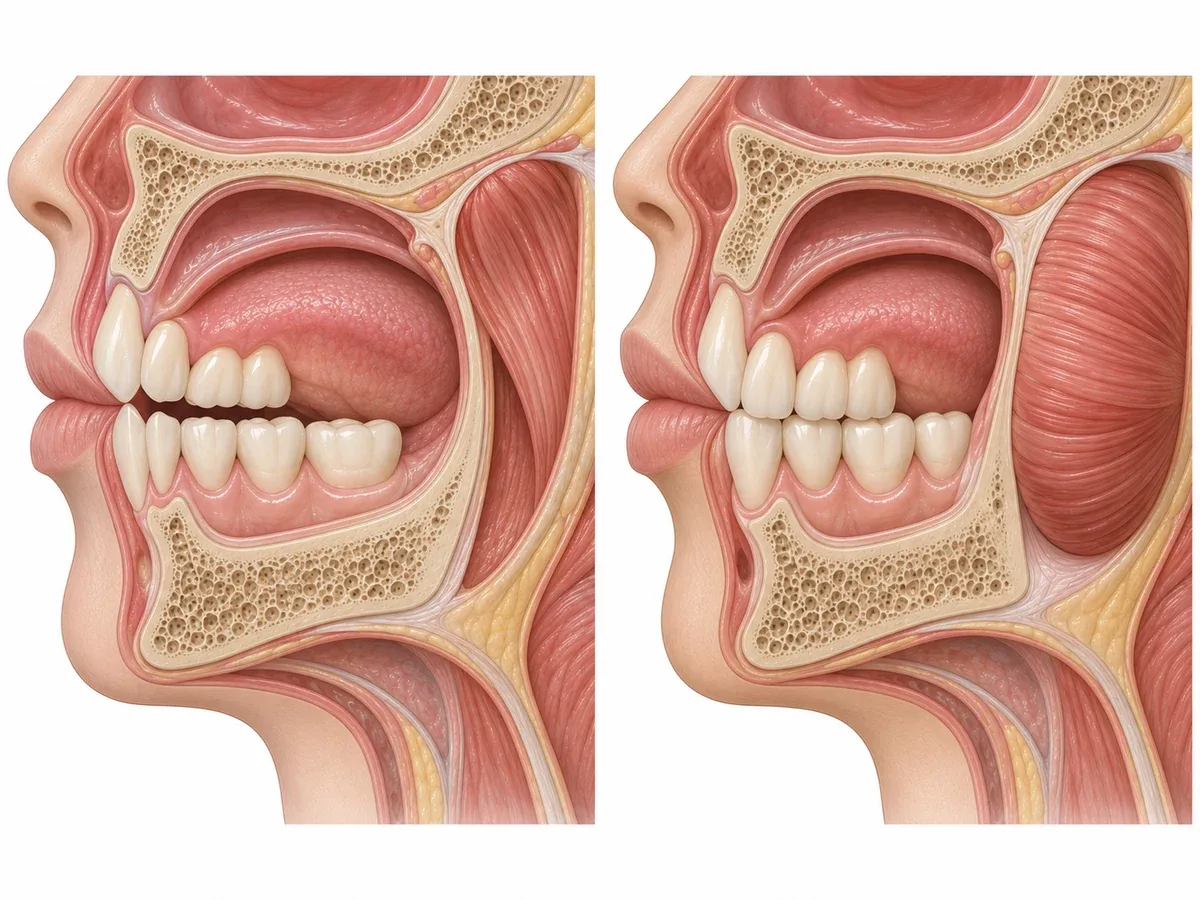
A simple check is to notice your teeth several times a day. If they are touching while you are not eating, let the jaw relax and part them.
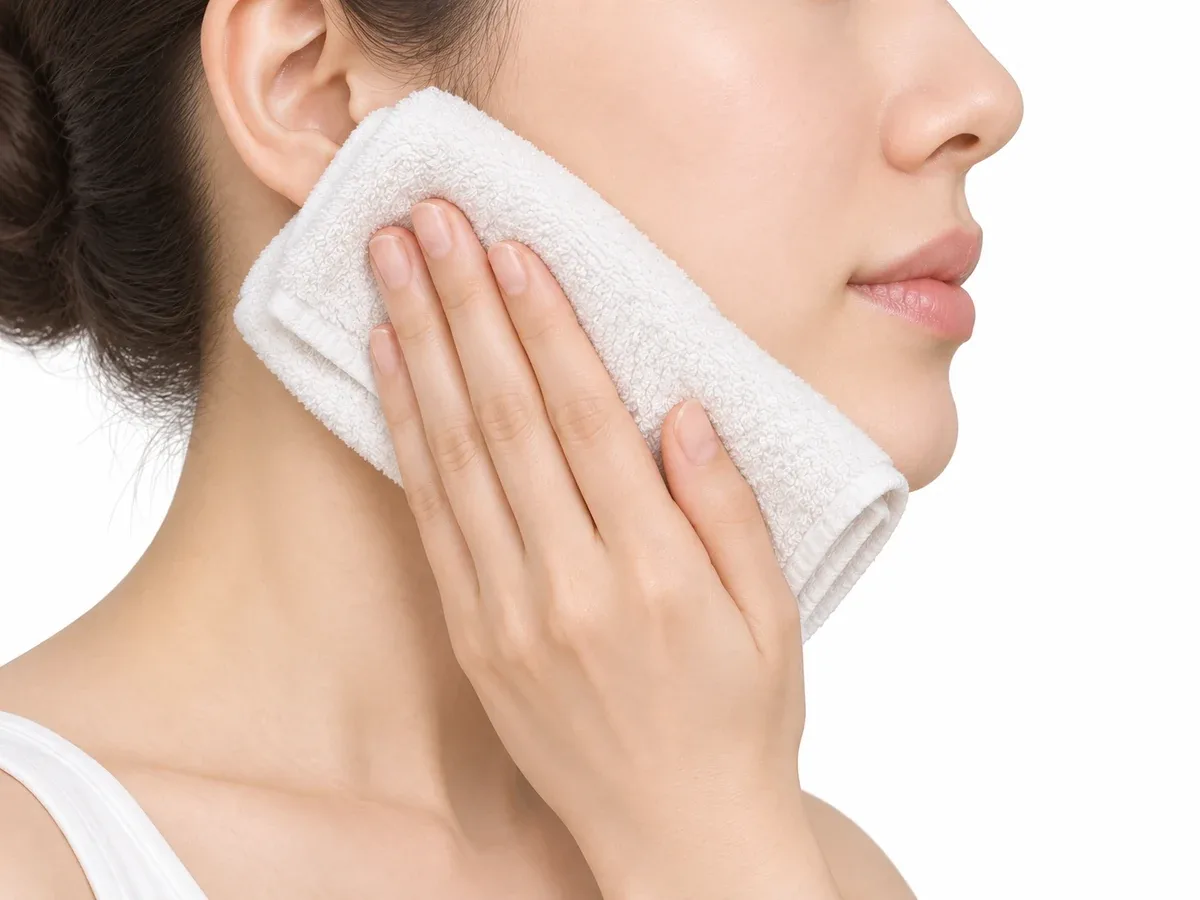
A warm compress on a sore jaw is also on the list of physical therapy methods. It is something you can do at home between visits.
Frequently asked questions
My jaw just clicks. Can I leave it?
If there is no pain and the mouth opens as wide as before, it is often watched over time. The source also says untreated TMJ disorders can lead to arthritis, jaw asymmetry or limited opening. If pain or catching joins the click, it is worth having it checked.
Will grinding down my bite fix it?
Changing the bite needs great caution. The KDCA pages say malocclusion is not a cause of grinding and does not necessarily cause pain, and the TMJ source puts conservative care first. Checking the response to a splint and physical therapy comes before any step that cannot be undone.
My jaw started hurting during braces. What should I do?
The Korean Dental Association newspaper reported a long orthodontic dispute in which there was no signed consent form. The mediators found the clinic responsible for not explaining enough.
Commenting on the case, a vice president of the Korean Academy of Dental Sciences gave clear advice. TMJ history should be checked and recorded before braces, with a detailed joint exam at diagnosis. If jaw symptoms appear during treatment, tell your orthodontic team right away rather than putting up with it.
Can I get TMJ care in English in Busan?
Yes. We provide 1:1 English interpretation from the first consultation through the end of treatment. The clinic is near Seomyeon Station Exit 2 (5-min walk), opposite Lotte Hotel Busan; call 010-8555-2854 (+82-10-8555-2854 from abroad).
A click alone and a click with pain are two different situations.
TMJ care starts with conservative steps:
rest for the jaw, teeth apart, warmth,
and a splint when it is needed.
Looking for TMJ care in Busan? Reset Dental Clinic offers 1:1 English interpretation from your first consultation through the end of treatment. Call 010-8555-2854 to book a consultation.
References
- Asan Medical Center Disease Encyclopedia, "Temporomandibular Joint Disorder" — definition, causes including injury and stress, symptoms, bite tests, X-ray, MRI and electromyography, conservative treatment with physical therapy and bite splints, the note that joint noise is often hard to treat, the course if left untreated, and daily cautions
- KDCA National Health Information Portal, "Teeth Grinding (Bruxism)" — sleep and daytime bruxism, related factors, the statement that malocclusion is not a cause, effects including TMJ disease, and treatment with a stabilization splint, botulinum toxin, stress management and cognitive behavioral therapy
- KDCA National Health Information Portal, "Toothache and Chronic Pain" — how orofacial pain changes with body and mind, assessing joint structure, movement and bite together, and the note that malocclusion does not necessarily cause pain
- Korean Dental Association newspaper Dailydental, "TMJ Disorders Revisited Through Imaging and Injection Therapy" — an academic meeting on MRI, CT and ultrasound imaging, prolotherapy, PDRN injections, osteoimmunology, and links with sleep disorders and bruxism
- Korean Dental Association newspaper Dailydental, "Set Treatment Goals and Agree in Advance for Orthodontic Treatment" — a shared orthodontic dispute case, the finding of insufficient explanation, and advice to check and record TMJ history before braces and respond to problems during treatment
Written by Reset Dental Clinic Support Team
Medical review Dr. Kim Hyun-joo, Head Dentist
Last updated: September 19, 2026
This column is for general information and does not replace diagnosis or treatment for individual patients. If you have symptoms, please see a dentist.


