- A salivary stone forms when calcium deposits, debris and bacteria clump together and block the path saliva takes into the mouth.
- The source notes that a salivary stone can be mistaken for pain in a lower tooth. That is why many people see a dentist first.
- Sour food such as lemon juice makes the pain worse. Saliva floods in but cannot get past the blocked duct.
- Most stones form in the gland under the jaw, about 75%, and about 20% in the gland in front of the ear.
"My jaw swells whenever I eat," or "a lower tooth hurts, but I can't tell which one." Patients at Reset Dental Clinic in Seomyeon, Busan sometimes arrive with these words. The cause may be a salivary stone. We offer 1:1 English interpretation for patients living in or visiting Korea, from the first consultation through the end of treatment.
In these cases the problem is not a tooth at all. The path that saliva travels along has become blocked.
This column explains salivary stones using the Asan Medical Center sources on salivary stones and salivary gland inflammation. It also draws on the KDCA pages on dry mouth and on toothache and chronic pain.
What is a salivary stone?
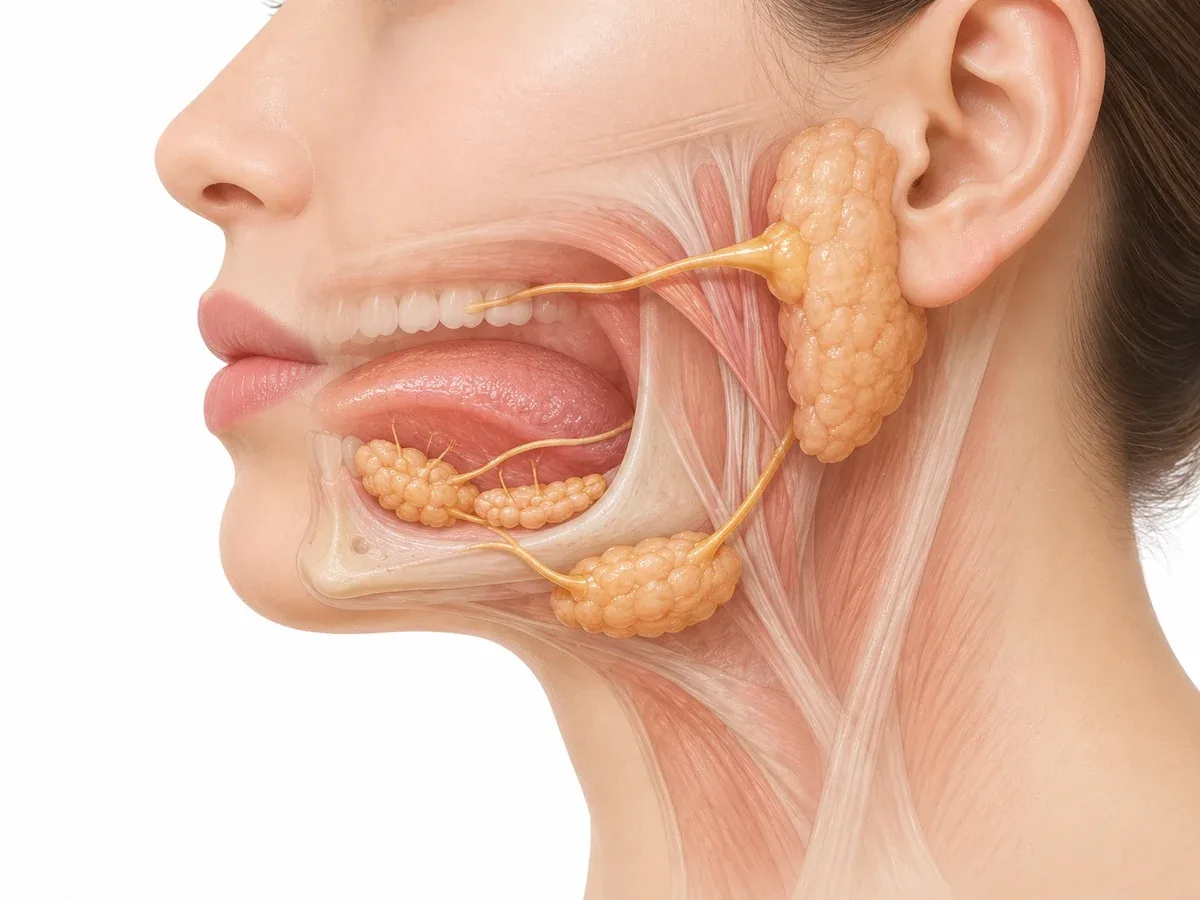
First, where does saliva come from? The source on salivary gland inflammation lists three main pairs of glands.
- the parotid gland, in front of the ear
- the submandibular gland, under the jaw
- the sublingual gland, under the tongue
- countless small salivary glands spread throughout the mouth
Saliva made in these glands flows along small tubes, called ducts, into the mouth. A salivary stone is a stone that forms along this path and blocks it.
The source gives a precise definition.
Calcium deposits, foreign material and bacteria clump together inside a salivary gland or its duct. The clump then blocks the passage of saliva. Dentists call this condition sialolithiasis.
The exact cause is not known. The source names three likely factors:
- saliva that stays still instead of flowing
- inflammation of the salivary duct
- injury to the duct
When the duct is blocked, the area behind it swells. Think of a garden hose with a stone stuck inside it.

Why does a salivary stone form under the jaw so often?
The source gives figures for where a salivary stone forms. The submandibular gland under the jaw is the most common site, at 75%.
The parotid gland in front of the ear comes next, at about 20%. Other salivary glands account for around 5%.
The source also explains why the area under the jaw is affected more often. Compared with the parotid gland, saliva there stays still for longer. It also contains more mucus.
Slow, thicker saliva gives deposits more time to clump together. This fits the likely causes listed above.
Still saliva appears twice in the source. It is named as a likely cause, and it also explains why the area under the jaw is affected more often.
| Site | What the source says |
|---|---|
| Submandibular gland (under the jaw) | 75%, the most common site |
| Parotid gland (in front of the ear) | About 20% |
| Other salivary glands | Around 5% |
| Why under the jaw | Saliva stays still for longer and contains more mucus |
So if the swelling is under your jaw, a salivary stone is one of the things worth checking.
What does a salivary stone feel like?
This is the most important sentence in this column. The source states that a salivary stone can be mistaken for pain in a lower tooth.
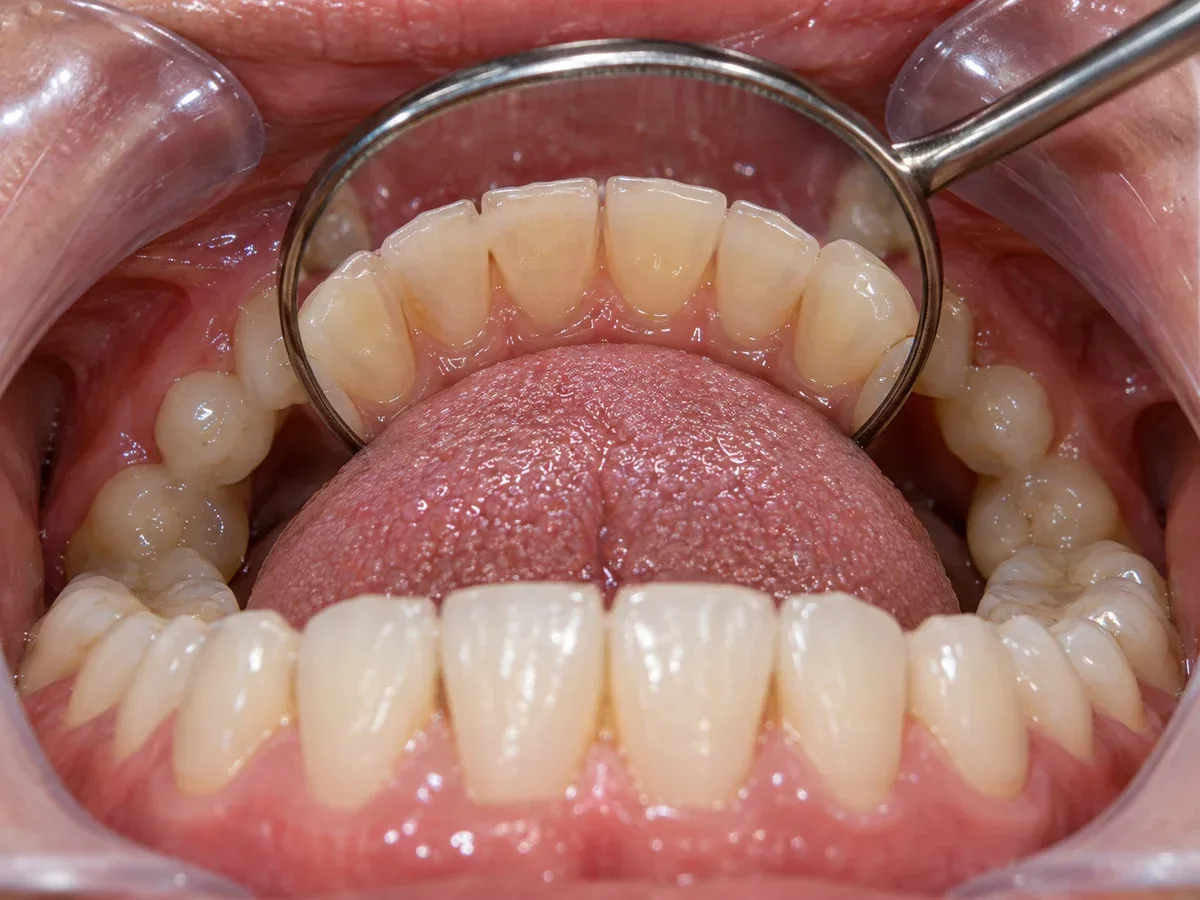
The gland under the jaw sits close to the inner side of the lower back teeth. So the pain can feel as if it comes from a tooth.
There is also a telltale sign. Sour food such as lemon juice makes the pain worse.
When you taste something sour, your salivary glands release a lot of saliva. But the stone blocks the duct, so the saliva cannot flow out. That pressure is what you feel as pain.
Sour food therefore plays two roles. It can make a blocked gland hurt more. For a small stone, the extra saliva can also help push it out, as the treatment section explains.
Swelling usually comes with it. Once a stone grows beyond a certain size, the area can swell.
The swelling tends to go down slowly over time. Sometimes, though, the gland itself stays swollen. In acute inflammation, pus can also drain out.

The KDCA page on toothache and chronic pain also helps here. Nerves in the mouth and face are closely interwoven, so pain can show up in different ways.
In other words, the place that hurts and the place where the problem sits can differ. The same page adds that the jaw joint, its movement and the bite should be looked at together.
Signs described in the sources include:
- pain that feels like it comes from a lower tooth
- pain that gets worse with sour food
- swelling under the jaw, often around meals
- a gland that stays swollen, or pus in acute inflammation
How is a salivary stone diagnosed in Busan?
Whether you are seen in Busan or elsewhere, the first steps are looking and feeling. The source says the doctor checks for pain and swelling by examining and touching the area.
A stone under the jaw can often be felt by pressing between the tongue and the gums with both hands. A stone inside the gland itself, however, is hard to find by touch.
In that case, a CT scan of the neck is taken. The stone shows up white, much like bone.
Stones vary a great deal. They range from the size of a grain of sand to several centimeters, and their shapes differ too.

Symptoms appear on the side that is blocked. So it helps to note which side swells and when.
Before your visit, try to remember a few details:
- Which side swells, left or right.
- Whether it swells around meals or with sour food.
- How long the swelling lasts before it settles.
- Whether you have noticed pus or a bad taste.
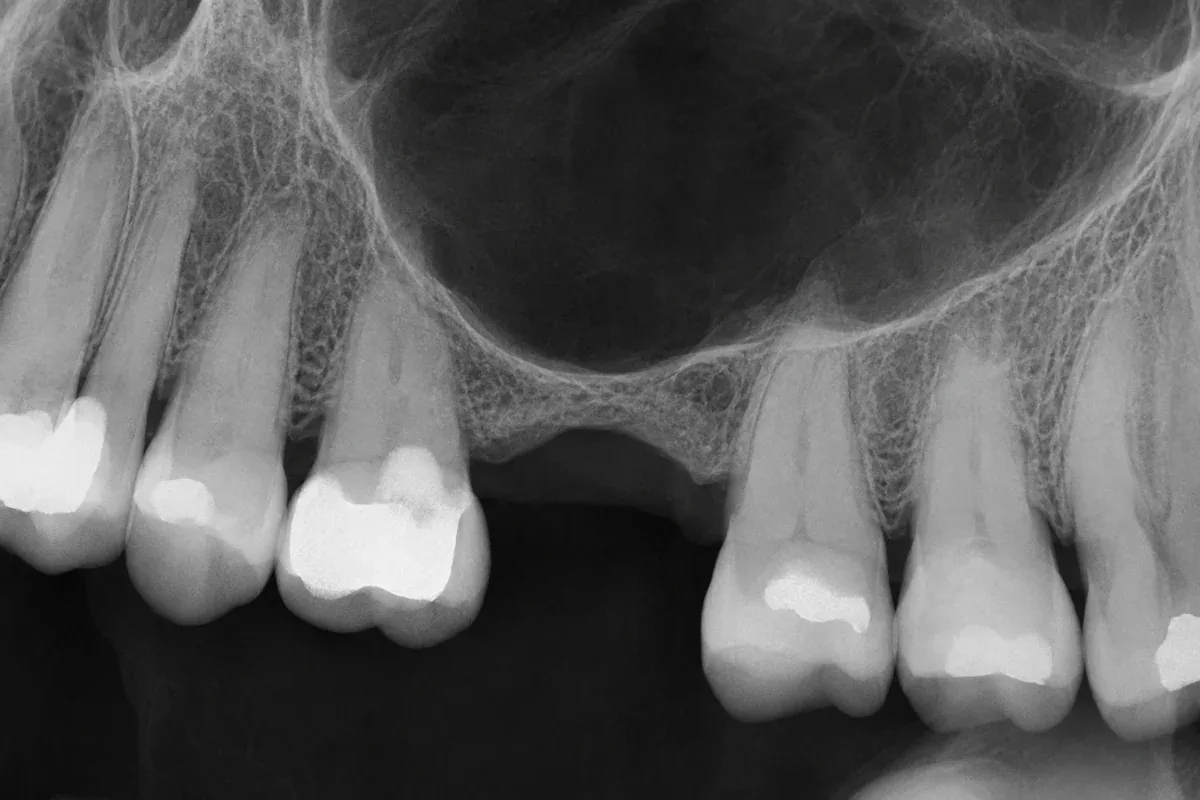
Because the pain can feel like a lower tooth, a dental check is a natural first step. X-rays can show whether a tooth is the cause. If the salivary gland is suspected instead, a neck CT is the next step.
Telling your dentist these details helps with diagnosis. Writing them down on your phone is an easy way to keep track.
How is a salivary stone treated?
The source divides treatment by situation.
A small salivary stone can clear up on its own after symptoms come and go a few times. Eating plenty of sour food, such as fruit or juice, increases the flow of saliva. The stone can then be pushed out by itself.
If inflammation has set in, antibiotics are given to control it.
Put in order, the source describes these steps:
- A small stone may pass on its own as saliva increases.
- If inflammation develops, antibiotics are given.
- If there is no improvement, surgery is chosen by where the stone sits.
- Duct reshaping is sometimes added to reduce recurrence.
If the condition does not improve, surgery follows. Some stones can be felt easily in the floor of the mouth, between the tongue and the gums. These are removed through a small cut inside the mouth under local anesthesia.
A stone at the start of the duct or inside the gland is handled differently. Under general anesthesia, an incision is made in the neck and the gland is removed.
To lower the chance of it coming back, a procedure to reshape the duct is sometimes done at the same time. The source also notes that, now and then, no stone can be found at all.
The choice of treatment therefore depends on three things. These are the size of the stone, whether there is inflammation and where the stone sits.
| Situation | Treatment |
|---|---|
| Small stone | It may clear on its own; more saliva from sour food can push it out |
| Inflammation present | Antibiotics to control the inflammation |
| Stone felt in the floor of the mouth | Removed through a cut inside the mouth under local anesthesia |
| Stone at the start of the duct or inside the gland | Gland removal through a neck incision under general anesthesia |
| To reduce recurrence | Duct reshaping is sometimes done as well |
What happens if you put off treatment?
The section on the course of the disease is firm. If a salivary stone is suspected, it should be treated by a specialist.
Left alone, the whole gland can become inflamed, or severe pain can develop. In some cases, the inflammation spreads further.
It can then damage nearby teeth and nerves or cause an abscess. For these reasons, the source says proper treatment is needed.
Less saliva is a burden in itself. The KDCA page on dry mouth says that when saliva decreases, tooth decay and gum disease get worse faster.
The same page lists these effects of dry mouth:
- trouble swallowing and speaking
- tooth decay
- bad breath
- changes in taste
The page names medicines, radiation therapy, Sjögren's syndrome, stress and aging as causes of dry mouth. For care, it suggests adjusting medicines that cause dryness, regular fluoride application, checkups every six months, drinking water and sugar-free gum.

| Topic | What the source says |
|---|---|
| Salivary stone left untreated | Inflammation of the whole gland or severe pain |
| Spreading inflammation | Damage to nearby teeth and nerves, or an abscess |
| Less saliva | Tooth decay and gum disease get worse faster |
| Dry mouth care | Medicine review, regular fluoride, six-month checkups, water, sugar-free gum |
A swelling that comes and goes is easy to ignore. The sources are clear that it should not be ignored for long.
Treating a salivary stone early keeps the problem small. If you live in Busan, a short visit can rule out a tooth cause first.
Frequently asked questions
Should I see a dentist or an ENT doctor?
The source says a salivary stone can be mistaken for pain in a lower tooth, so many people come to a dentist first. X-rays can rule out a tooth problem first. If the salivary gland is suspected, a neck CT is needed, and the case is shared with the relevant department.
I heard eating sour food cures it. Is that true?
It is half right. The source says a small stone can be pushed out on its own when sour food increases saliva. The same source also says sour food makes the pain worse, and inflammation needs antibiotics, so please have it checked rather than deciding alone.
Can a salivary stone go away by itself?
For a small stone, the source says it can. It also warns that, left untreated, the whole gland can become inflamed or severe pain can develop. The inflammation can spread and cause damage to nearby teeth and nerves, or an abscess.
Can I get salivary stone care in English in Busan?
Yes, we provide 1:1 English interpretation from your first consultation through the end of treatment. The clinic is near Seomyeon Station Exit 2 (5-min walk), opposite Lotte Hotel Busan. Call 010-8555-2854 (+82-10-8555-2854 from abroad).
Swelling under the jaw at mealtimes is not always a tooth problem.
A salivary stone blocks the path of saliva.
Sour food makes it hurt more,
and it can feel like a lower tooth.
If your jaw swells when you eat and you are in Busan, Reset Dental Clinic offers 1:1 English interpretation from your first consultation through the end of treatment. Call 010-8555-2854 to book a consultation.
References
- Asan Medical Center Disease Encyclopedia, "Sialolithiasis (Salivary Stones)" — definition as calcium deposits, debris and bacteria clumping in a salivary gland or duct and blocking saliva; unknown exact cause, with stagnant saliva, duct inflammation and injury as likely factors; 75% in the submandibular gland and about 20% in the parotid gland, and why; pain that can be mistaken for a lower tooth and gets worse with sour food; diagnosis by examination, two-hand palpation and neck CT; stones from sand-grain size to several centimeters; treatment from natural passage and antibiotics to surgery, gland removal and duct reshaping; complications if left untreated
- Asan Medical Center Disease Encyclopedia, "Sialadenitis (Salivary Gland Inflammation)" — the parotid, submandibular and sublingual glands plus countless small glands in the mouth; definition of inflammation of these glands
- KDCA National Health Information Portal, "Dry Mouth" — medicines, radiation therapy, Sjögren's syndrome, stress and aging as causes; trouble swallowing and speaking, decay, bad breath and taste changes; faster progression of decay and gum disease with less saliva; medicine review, regular fluoride, six-month checkups, water and sugar-free gum
- KDCA National Health Information Portal, "Toothache and Chronic Pain" — closely interwoven nerves in the mouth and face, so pain can appear differently with physical and emotional state; the need to look at the jaw joint, its movement and the bite together
Written by Reset Dental Clinic Support Team
Medical review Dr. Kim Hyun-joo, Head Dentist
Last updated: September 19, 2026
This column is for general information and does not replace diagnosis or treatment for individual patients. If you have symptoms, please see a dentist.