

- A tooth infection from severe decay or gum disease can spread into the floor of the mouth.
- It spreads fast and can block the airway without clear early symptoms.
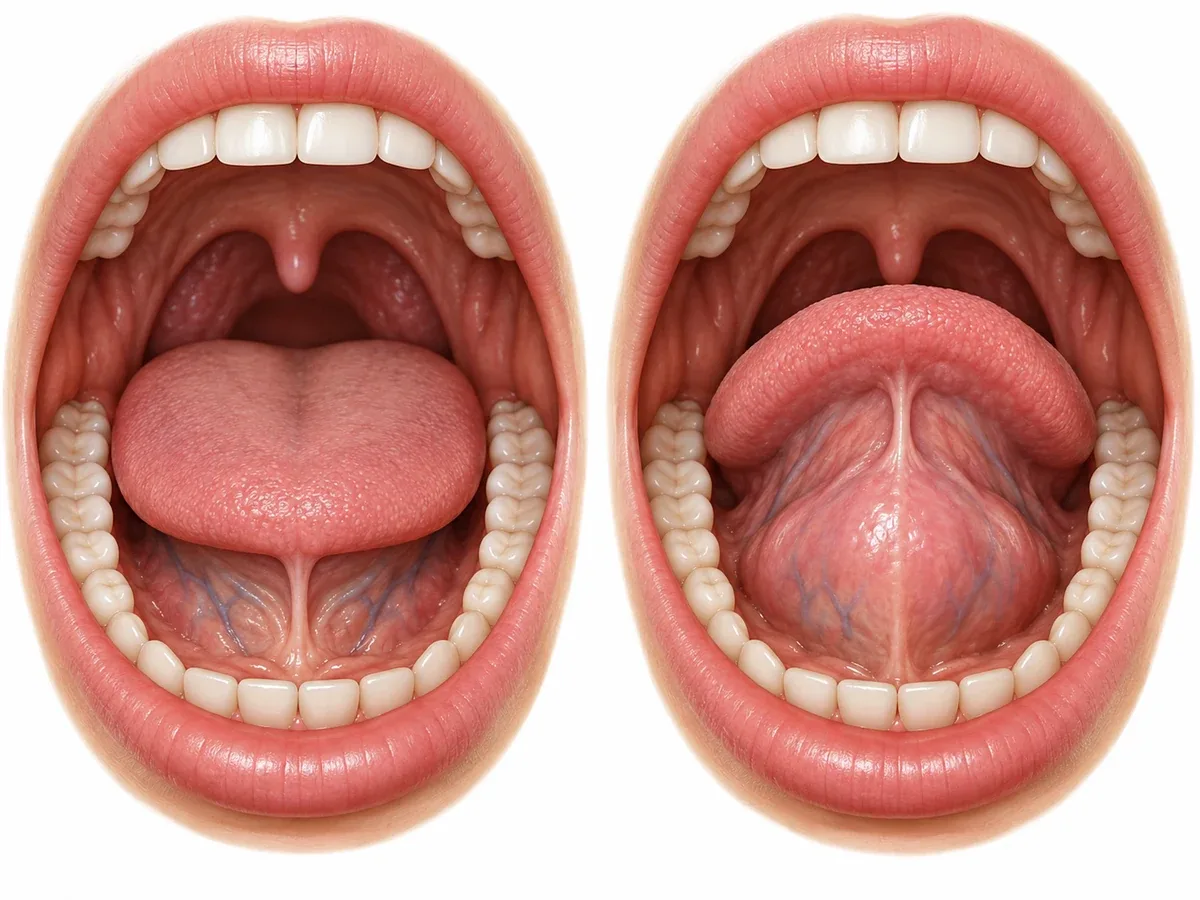
- The typical sign is a tongue pushed up so it looks doubled, with neck swelling, drooling and fever.
- The most serious complication is suffocation from a blocked airway.
Some patients tell us their tooth hurt for a few days, and now their jaw is swollen. At Reset Dental Clinic in Seomyeon, Busan, we never take this lightly, since a tooth infection does not always stay in the tooth. For patients living in or visiting Korea, we provide 1:1 English interpretation from the first consultation through the end of treatment.
An infection in the mouth can spread into the spaces of the neck. This column is not meant to frighten you. It is meant to help you know when it is an emergency.
It draws on the Asan Medical Center pages on Ludwig's angina, periapical abscess and periodontal abscess. It also uses the KDCA page on tooth extraction.
How can a tooth infection reach the space under the jaw?
The neck is divided into several spaces by its anatomy. One of them lies directly under the jaw.
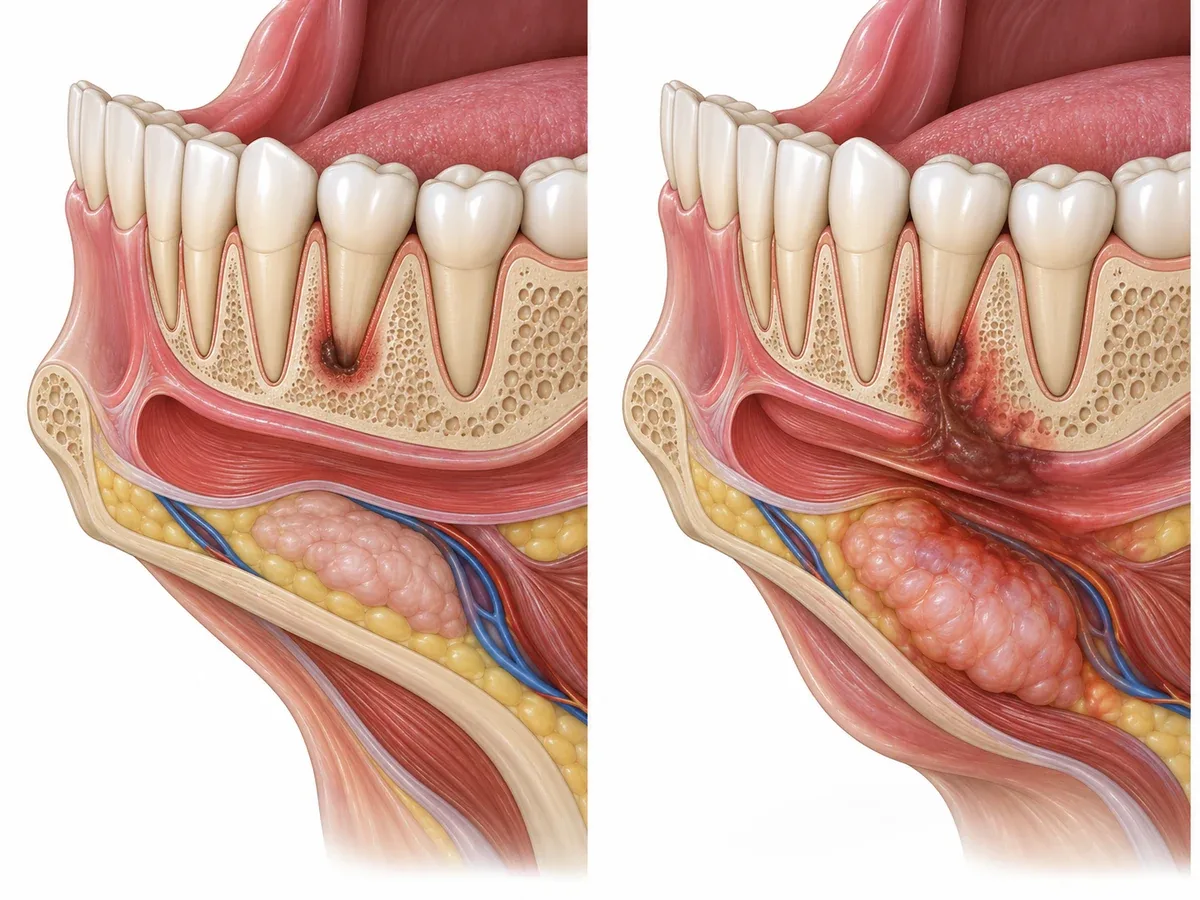
The source defines Ludwig's angina as inflammation of the tissue under the skin in this space under the jaw. This kind of spreading tissue infection is called cellulitis.
More precisely, it is an infection in which inflammation that began in the mouth spreads rapidly into the space just below the jaw.
The source follows with a warning. Inflammation under the jaw spreads very fast, so it can block the airway without clear early symptoms. It therefore needs urgent treatment.
In everyday terms, a tooth infection usually starts small, inside one tooth or one gum pocket. Ludwig's angina is what the source describes once it breaks out into the neck.
This is why a swollen jaw after a toothache is not something to wait out. A tooth infection that has moved beyond the tooth is a different problem from a toothache.

Where does the infection start?
The source is clear about the cause. Infection under the jaw mostly happens when bacteria from severe decay or gum disease (periodontitis) spread into the floor of the mouth.
The main causes are decay and root tip inflammation in the lower front teeth or lower premolars. Sometimes, inflammation around a wisdom tooth spreads and causes it.
The source also lists other possible starting points:
- a foreign object in the floor of the mouth
- injury to the mouth
- a fracture of the lower jaw
- bacterial infection from a tongue piercing
- inflammation of the salivary glands under the tongue or under the jaw that spreads downward
Why the lower front teeth and premolars? The root tips of these teeth sit close to the floor of the mouth. That seems to be the reason they are named as main causes.
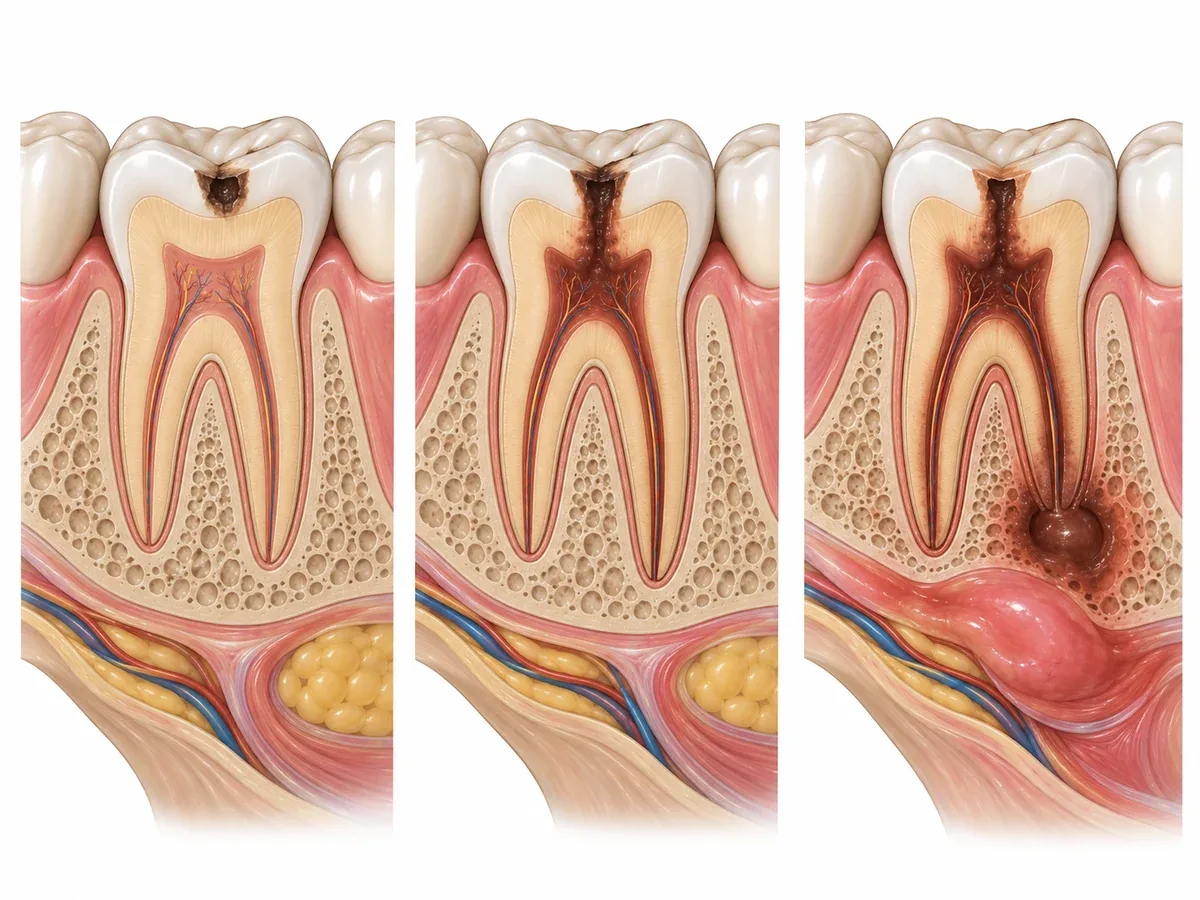
A periapical abscess, an infection around the root tip, can be the starting point. Its source says the acute form brings severe pain, swelling around the root, a rise in body temperature and headache.
The periodontal abscess source describes the acute form too. It lists spreading pain, severe pain when the gum is touched and a loose tooth. Rarely, fever and weakness affect the whole body.
The same source explains how a periodontal abscess forms. It can appear when the entrance of a gum pocket narrows and pus cannot drain well. It can also appear when the body's resistance is low.
Its basic treatment is removing bacterial plaque and tartar thoroughly. Treating the gum early keeps a small tooth infection from growing.
Fever and feeling drained are signs that the tooth infection is no longer staying in one place.
| Source | Acute symptoms described |
|---|---|
| Periapical abscess | Severe pain, swelling around the root, a rise in body temperature, headache |
| Periodontal abscess | Spreading pain, severe pain when the gum is touched, a loose tooth; rarely fever and weakness |
What are the warning signs of a spreading tooth infection?
The source groups the symptoms of Ludwig's angina into five sets.
- The tongue is pushed upward so it looks as if there are two tongues (the typical sign).
- Neck pain, neck swelling, neck redness, a swollen tongue, trouble swallowing and difficulty moving the neck.
- Ear pain and drooling.
- Fever, tiredness and exhaustion.
- Drowsiness or other changes in consciousness, and difficulty breathing.
Why do these signs appear? Drooling happens because swallowing saliva becomes hard.
Turning the neck becomes difficult, and breathing becomes uncomfortable. All of these mean that swollen tissue is taking up space.
If you have any sign from the fifth set, you need emergency care right away.
| Set | Symptoms |
|---|---|
| 1 | Tongue pushed upward so it looks doubled (the typical sign) |
| 2 | Neck pain, swelling and redness; swollen tongue; trouble swallowing; limited neck movement |
| 3 | Ear pain, drooling |
| 4 | Fever, tiredness, exhaustion |
| 5 | Drowsiness or other changes in consciousness, difficulty breathing |
| What you notice | What it suggests | What to do |
|---|---|---|
| Toothache with fever or feeling drained | The tooth infection is no longer staying in one place | See a dentist promptly |
| Swelling under the jaw after a toothache | Infection may be spreading beyond the tooth | Do not wait; get checked the same day |
| Trouble swallowing, drooling, a raised tongue, a stiff neck | Swollen tissue is taking up space | Emergency care without delay |
| Difficulty breathing or a change in alertness | The fifth set of symptoms | Emergency care right away |
Do not wait for all five. Trouble swallowing, drooling, difficulty breathing or a change in alertness each calls for urgent care on its own.
How is a spreading tooth infection diagnosed and treated?
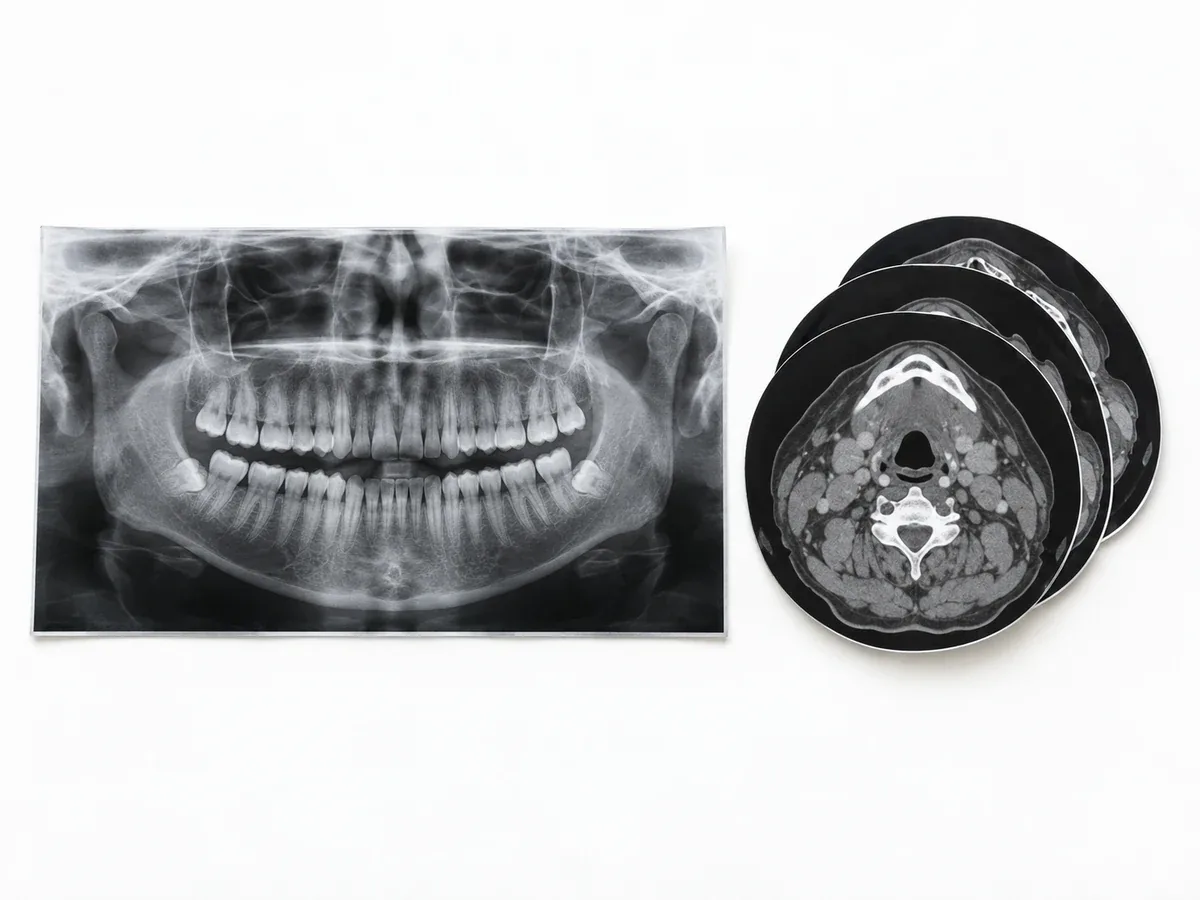
For diagnosis, the source recommends a dental panoramic X-ray to find which tooth is the cause. A CT scan of the neck is recommended to see how far the inflammation has spread.
Infected tissue or pus is also cultured to identify the bacteria.
At a dental visit, the panoramic X-ray is often the first step, because it shows which tooth started the tooth infection. If the infection has already spread, treatment moves to hospital admission, as described below.
Treatment starts with a hospital stay. As the swelling progresses, a blocked airway could be fatal. So the source says patients should be admitted for antibiotics and close observation.
In an emergency, a breathing tube is placed, or an opening is made in the windpipe (tracheotomy).
In many cases, no pocket of pus forms and the infection stays as cellulitis. It can then mostly be treated with antibiotics. If a pocket of pus has formed, it may be drained.
| Purpose | Method |
|---|---|
| Finding the tooth that is the cause | Dental panoramic X-ray |
| Seeing how far it has spread | CT scan of the neck is recommended |
| Identifying the bacteria | Culture of infected tissue or pus |
| Basic treatment | Hospital admission, antibiotics and close observation |
| If a pocket of pus has formed | Drainage may be done |
| Emergency | A breathing tube or a tracheotomy |
Two things are checked separately: the tooth that started it and how far the infection has spread. The dental X-ray and the neck CT answer these two questions.
Why should a tooth infection be treated quickly?
The course section of the source explains why. The most serious complication of Ludwig's angina is death by suffocation from a blocked airway.
This can happen because the inflammation spreads so fast that it can block the airway.
If the inflammation spreads outward, it can form abscesses in other parts of the neck. It can even reach the mediastinum, the space in the middle of the chest.
That is why a dentist may sometimes say, "It is better to treat this today." The strength of the pain alone does not decide it.
If you are travelling, do not wait until you get home to have a swelling checked. A tooth infection that is spreading does not follow a travel schedule.
How can you stop a tooth infection early in Busan?
Because the cause is clear, prevention is clear too. Do not leave severe decay or gum disease untreated.
The periapical abscess source notes that treatment is hard to finish in one visit. So you should keep coming until treatment is complete. If you stop halfway because the pain eased, the inflammation stays behind.
Putting off a tooth that needs to come out also raises the risk. The KDCA page on extraction lists these reasons for removing a tooth.
- severe tooth decay
- pulp necrosis, when the nerve inside the tooth has died
- severe gum disease
- orthodontic reasons
The same page advises talking to a specialist beforehand if you have heart disease, a blood disorder or uncontrolled diabetes. The weaker your general health, the more vulnerable you are to infection.
The KDCA page also explains that local anesthesia, sedation or general anesthesia is chosen for each case. It lists possible complications such as root fracture, nerve injury, an opening into the sinus, infection and dry socket. These are good topics to ask about before an extraction.
The periodontal abscess source adds a related caution. People with diabetes develop mouth infections and gum disease more easily than others.
Here are simple steps drawn from these sources.
- Have a painful or loose tooth checked early.
- Finish root canal or gum treatment once it has started.
- Do not keep putting off a tooth that needs extraction.
- Tell your dentist about heart disease, blood disorders or diabetes.
Frequently asked questions
When is a tooth infection an emergency?
If you have trouble swallowing, drooling, difficulty breathing or a change in consciousness, get emergency care without delay. A feeling that your tongue is being pushed up, or difficulty turning your neck, belongs in the same group.
Can I manage it with painkillers?
The pain may ease, but the infection keeps going. The source says this inflammation can block the airway without clear early symptoms. It is a clear case where the strength of the pain does not match the size of the risk.
Is a tooth infection in the lower front teeth riskier?
The source names decay and root tip inflammation in the lower front teeth or premolars as main causes. This seems to be because their root tips sit close to the floor of the mouth. It also notes that inflammation around a wisdom tooth can spread and cause it.
Can I get tooth infection care in English in Busan?
Yes, we provide 1:1 English interpretation from your first consultation through the end of treatment. The clinic is near Seomyeon Station Exit 2 (5-min walk), opposite Lotte Hotel Busan. Call 010-8555-2854 (+82-10-8555-2854 from abroad).
A tooth infection does not always stay in the tooth.
Swelling under the jaw, a raised tongue,
trouble swallowing or breathing
are signs to act on the same day.
If you have a painful tooth or a swollen jaw in Busan, Reset Dental Clinic offers 1:1 English interpretation from your first consultation through the end of treatment. Call 010-8555-2854, and for breathing or swallowing trouble, go to emergency care first.
References
- Asan Medical Center Disease Encyclopedia, "Ludwig's Angina" — cellulitis of the space under the jaw, where mouth inflammation spreads rapidly; it can block the airway without clear early symptoms; bacteria from severe decay or gum disease entering the floor of the mouth, mainly from lower front teeth or premolars, sometimes wisdom teeth; foreign bodies, injury, jaw fracture, tongue piercing and salivary gland inflammation; the raised, doubled-looking tongue and other symptoms; panoramic X-ray, neck CT and culture; admission, antibiotics and observation, intubation or tracheotomy in emergencies, drainage when pus forms; suffocation, neck abscesses and spread to the mediastinum
- Asan Medical Center Disease Encyclopedia, "Periapical Abscess" — inflammation around the root with a raised-feeling tooth and severe pain; decay spreading to the nerve; severe pain, root swelling, raised temperature and headache in the acute form, and a gum fistula without pain in the chronic form; root canal treatment, extraction when damage is severe, apicoectomy when symptoms continue; continuing treatment until it is complete
- Asan Medical Center Disease Encyclopedia, "Periodontal Abscess" — pus-forming inflammation in the gum tissue from mouth bacteria; poor drainage from a narrowed pocket and lowered resistance as causes; spreading pain, pain on touching the gum, a loose tooth and, rarely, fever and weakness; removing plaque and tartar as basic treatment; mouth infections and gum disease occurring more easily in people with diabetes
- KDCA National Health Information Portal, "Tooth Extraction" — severe decay, pulp necrosis, severe gum disease and orthodontic reasons; local anesthesia, sedation or general anesthesia; possible complications such as root fracture, nerve injury, sinus perforation, infection and dry socket; consulting a specialist first with heart disease, blood disorders or uncontrolled diabetes
Written by Reset Dental Clinic Support Team
Medical review Dr. Kim Hyun-joo, Head Dentist
Last updated: September 19, 2026
This column is for general information and does not replace diagnosis or treatment for individual patients. If you have symptoms, please see a dentist.


