

- The KDCA material says that temporary dentures are often made during treatment so patients can eat and go about daily life. They also take time to make, so plan ahead.
- An implant usually takes 3–4 months to fuse firmly with the bone, and longer if a bone graft is needed.
- Seoul National University Hospital gives at least 2–3 months for the lower jaw and 4–6 months for the upper jaw, and usually 6–9 months after a bone graft.
- While you wait, avoid hard food. Too much force can stop the implant from fixing to the bone.
Patients in Seomyeon, Busan who are considering a full-arch implant rarely ask about the surgery first. They ask about the months after it, and whether they will have to go without teeth once all their teeth are out. For patients living in or visiting Korea, Reset Dental Clinic provides 1:1 English interpretation from the first consultation through the end of treatment.
This column covers the waiting period in full-arch implant treatment and the temporary teeth you use during it. It draws on the KDCA national health portal and implant information from Seoul National University Hospital and Asan Medical Center.
Why aren't the final teeth placed right away?
The core principle of a full-arch implant, like any implant, is that it bonds with bone. The KDCA material calls this osseointegration: the titanium artificial root fuses with the bone and becomes one with it.
This bond takes time. The healing period until bone and implant are firmly joined varies with the bone at the site, age and general health.
According to the KDCA, it is generally about 3–4 months. If a bone graft is needed, it takes longer.
The Asan Medical Center material follows the same pattern. It describes waiting 2–6 months for the implant to attach firmly to the bone before a second surgery.
At that second surgery, a post for the final tooth is placed on top of the implant. The final teeth come after that.
So with a full-arch implant, the question is not whether there is a waiting period. It is how long it will be, and what you will wear in the meantime.
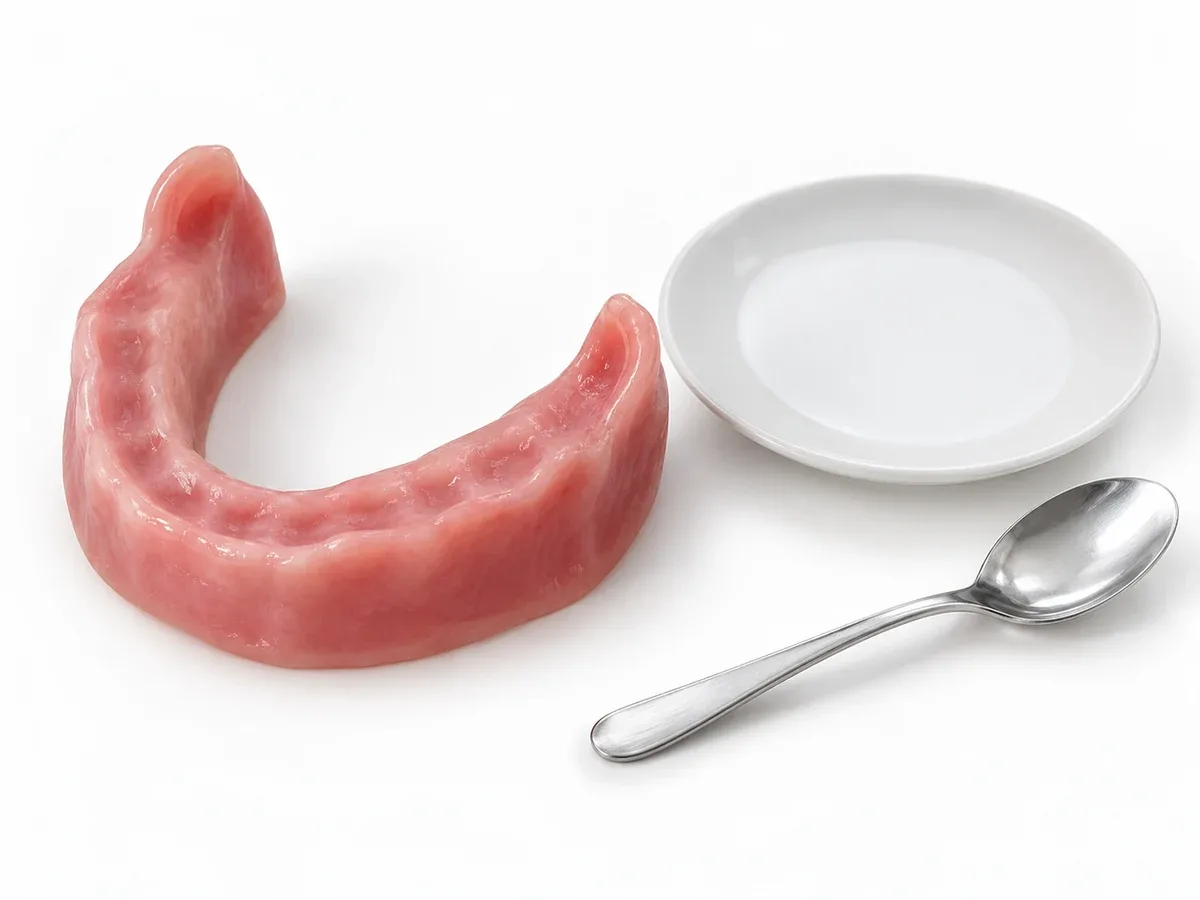
Why do the upper and lower jaws heal on different timelines?
The Seoul National University Hospital material breaks the timeline down further. For the implant and jawbone to fuse, it gives at least 2–3 months for the lower jaw (mandible) and at least 4–6 months for the upper jaw (maxilla).
It adds some conditions. If the bone at the site is weak, it takes 1–2 months longer, and after a bone graft, healing usually takes 6–9 months.
The same material notes that about 8–9 months may be needed where a bone graft was done, or where chewing force is heavy.
That is why patients who have a full-arch implant in both jaws often plan around the upper jaw's schedule. The amount and density of bone differ from person to person.
So we can give you an exact full-arch implant timeline after we have looked at your bone on a CT scan. Until then, the figures below are the ranges the sources give.

| Source or condition | Time |
|---|---|
| KDCA | Generally about 3–4 months; longer if a bone graft is needed |
| Asan Medical Center | Second surgery after waiting 2–6 months |
| Seoul National University Hospital, lower jaw | At least 2–3 months |
| Seoul National University Hospital, upper jaw | At least 4–6 months |
| Weak bone | 1–2 months longer |
| After a bone graft | Usually 6–9 months |
Is full-arch implant surgery done in one stage or two?
What the waiting period looks like also depends on the surgical method. The Seoul National University Hospital material describes two approaches.
In the two-stage method, the gum is closed completely over the implant so it cannot be seen. In the one-stage method, the gum is closed with a healing abutment, a small cap, showing above the implant.
With the two-stage method, a second step follows once healing is judged sufficient. Under local anesthesia, the gum is opened, the bond with the bone is checked and the healing abutment is attached.
The material describes this second step as simple. Patients return to normal life within a day or two at most, or right away.
With the one-stage method, there is no second step. Once the healing period is over, treatment moves straight on to making the final teeth.
Either way, the temporary teeth sit on top during full-arch implant healing. Whether anything shows above the gum changes how the inside of a temporary denture is adjusted, so we plan the surgery and the temporary teeth together.
| Two-stage method | One-stage method | |
|---|---|---|
| Closing the gum | Gum fully covers the implant | Closed with the healing abutment showing |
| After healing | Gum is opened, the bond is checked and the healing abutment is attached | Moves straight on to making the final teeth |
| After the second step | Normal life within a day or two at most, or right away | No second step |
What do you wear while you wait?
The KDCA material on removable prosthetics answers this question. Extraction sites take a few months to heal, and implants need several more months to bond with bone.
As a result, treatment can take at least several months, and sometimes over a year. The material then adds a key point.
During treatment, temporary dentures are often made so patients can eat and keep up their social life. Its FAQ also mentions using a temporary denture while extraction sites recover before implants are placed.
The material also gives a caution. Temporary dentures take time to make, so it is wise to visit the clinic with plenty of time to spare.
In practice, do not set the extraction date for a full-arch implant first on its own. Match it with the date your temporary teeth will be ready.
- Have the CT scan and treatment plan made.
- Agree on the date the temporary teeth will be ready.
- Set the extraction and surgery date to match it.
- Wear the temporary teeth while the bone heals.
- Move on to the final teeth once healing is confirmed.
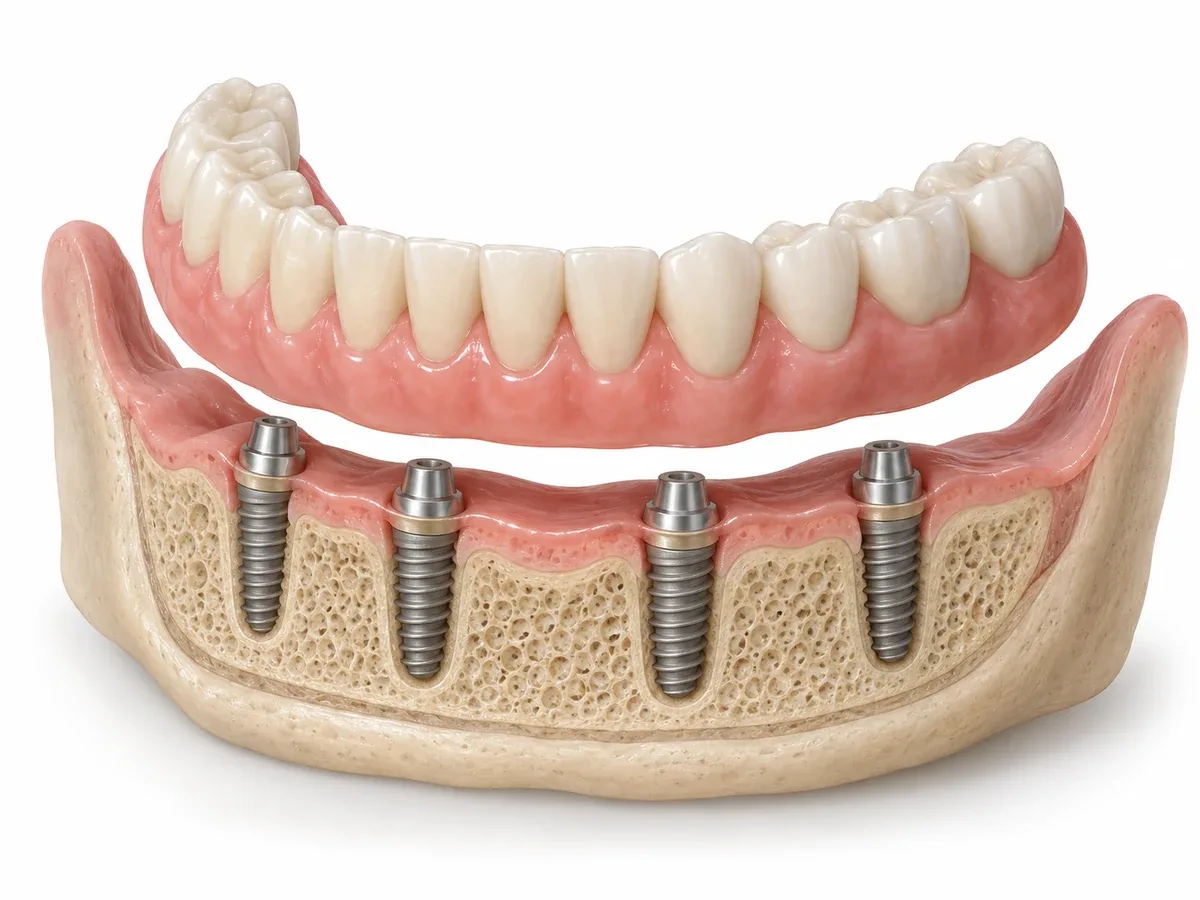
Can temporary teeth be fixed on the day of surgery?
The KDCA material lists immediate implants as a treatment type, alongside single and multiple implants. The Seoul National University Hospital material divides placement timing into three groups.
- immediate placement, on the day of extraction
- delayed immediate placement, 6–10 weeks after extraction
- late placement, 3–6 months after extraction
It is also possible to place a full-arch implant on the day of extraction and fix temporary teeth on it. It works when the right conditions are met.
The Seoul National University Hospital material explains that a screw-type implant gains primary stability from its threads. It also says that too much force while eating during healing interferes with the implant fixing to the bone.
So whether to fix temporary teeth is decided after checking, at placement, how firmly the implants are held by the bone. If they are not held firmly enough, waiting with a temporary denture is safer for the bone.
Part of this decision is made during surgery, not promised beforehand. We explain this at the start so the plan holds no surprises.
| Fixed temporary teeth | Temporary denture | |
|---|---|---|
| When it is considered | The implants are held firmly by the bone at placement | The implants are not held firmly enough, or immediate loading is not planned |
| What matters | Avoiding too much force while the bone heals | Checking that the denture does not press on the implant sites |
| When it is decided | Partly during surgery | Can be planned in advance |
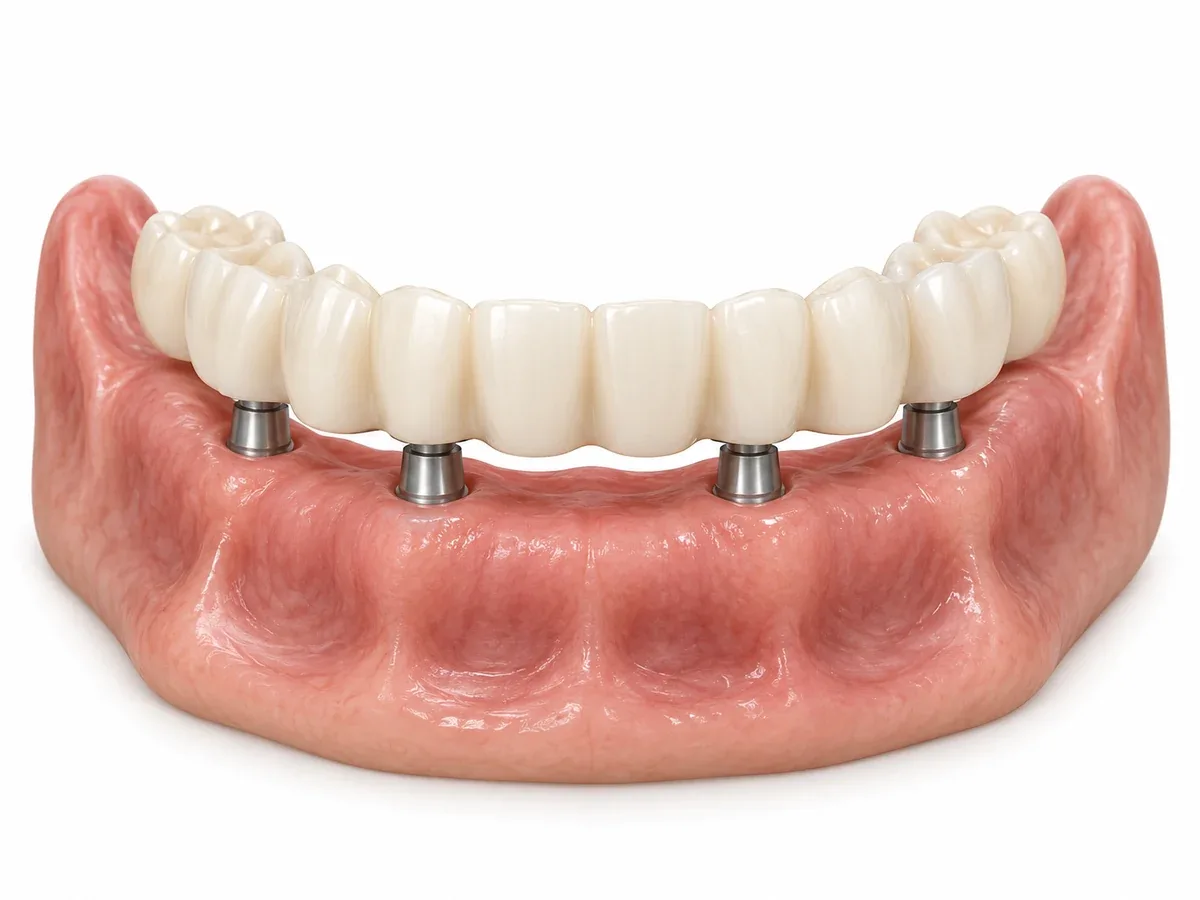
What should you watch for during the months of healing?
Aftercare right after full-arch implant surgery is similar across the sources. The KDCA material says swelling is worst at 48 hours (2 days) after surgery and then gradually goes down.
Until the stitches come out, do not brush the surgical site; use a mouthwash instead. The Seoul National University Hospital material advises soft, liquid food on the other side for 2–3 days.
It also advises avoiding hard exercise, alcohol and smoking for a week. During the healing period, avoid hard food, because too much force interferes with the implant fixing to the bone.
A temporary denture also needs care. The KDCA material warns against biting into food with the front teeth of a full denture, because the denture can come loose.
Adjusting takes several weeks to several months. Start with soft foods such as steamed egg and build up slowly.
Check that the temporary denture does not press on the implant sites. If it feels uncomfortable, or one spot seems to touch, come in instead of putting up with it.
- First 2 days: swelling peaks at about 48 hours
- Until the stitches are out: no brushing on the site; use mouthwash
- First 2–3 days: soft, liquid food on the other side
- First week: no hard exercise, alcohol or smoking
- Whole healing period: no hard food; no biting with the front of a full denture
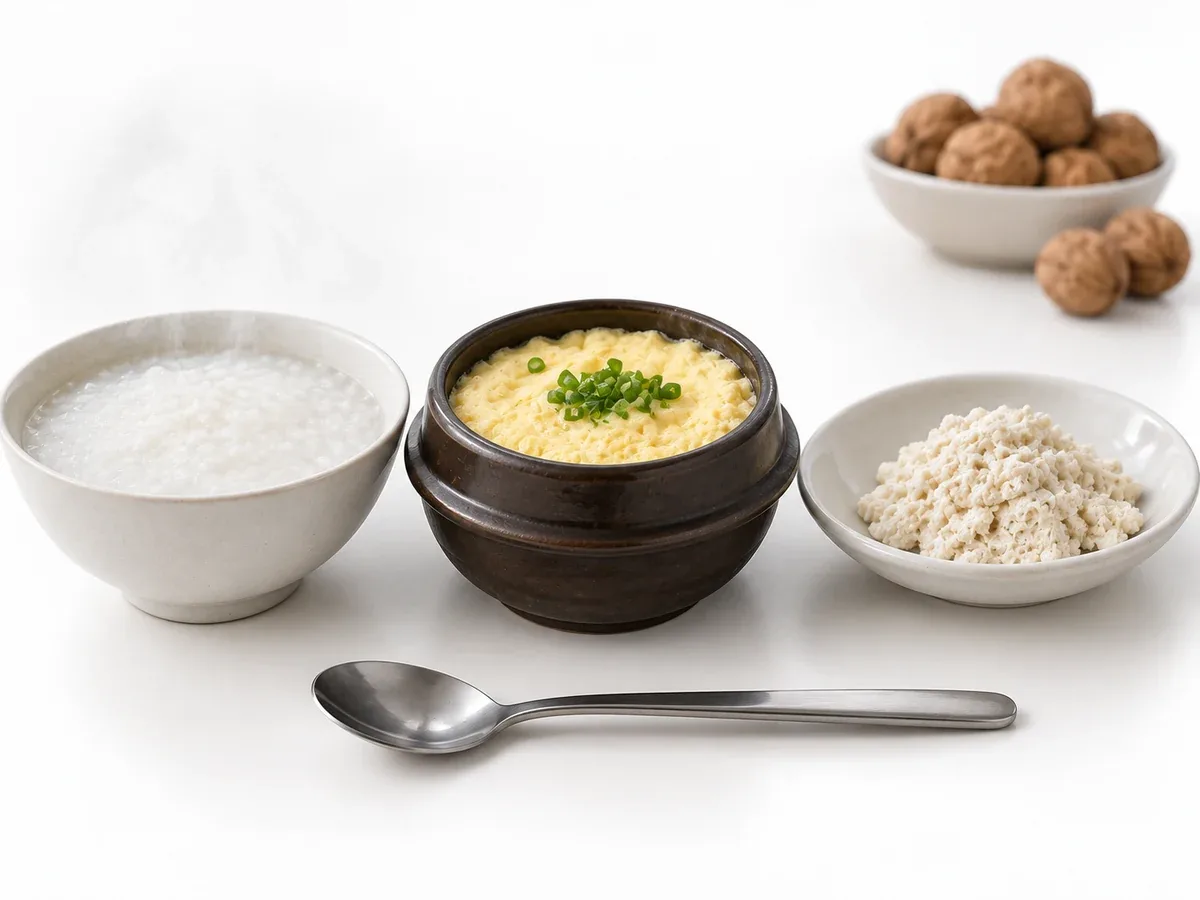
What happens after the final full-arch implant teeth go in, for patients in Busan?
Even after the final teeth are in, there is no rush. The KDCA material says the first year is when the bone around the implants hardens and settles, so chew soft foods first.
You may also bite your tongue or cheek at first. The KDCA material explains this happens when an area without teeth is used again after a long time.
It describes this as something you gradually adjust to over 1–2 months. The denture material also suggests reading a newspaper aloud if your speech feels awkward.
Maintenance continues after treatment ends. According to a Dailydental report on a Korean Academy of Periodontology presentation, the suitable maintenance interval is every 3 months in the first year.
After that, it is every 6 months, adjusted to each person's risk. Think of the day treatment ends as the day your check-up schedule begins.
For a full-arch implant, those visits are part of the treatment plan from the start. They are how the bone around each implant is watched as it settles.
- First year of a full-arch implant: chew soft foods first while the bone settles
- First 1–2 months: you may bite your tongue or cheek, which gradually eases
- If your speech feels awkward: read a newspaper aloud
- Maintenance: every 3 months in the first year, then every 6 months by individual risk
Frequently asked questions
Will I be without teeth from the day of extraction?
The KDCA material says temporary dentures are often made so patients can eat and keep up their social life during full-arch implant treatment. They take time to make, so talk about temporary teeth before you set an extraction date.
How much longer is the wait with a bone graft?
The Seoul National University Hospital material says healing usually takes 6–9 months after a bone graft. It depends on how much bone was grafted and where, so we set the schedule after checking the CT scan.
Can I go back to work the day after surgery?
The Asan Medical Center material says daily life is possible right after implant surgery. A few days of rest may be needed after extra procedures such as a bone graft. Swelling peaks on day two, so plan important events after that.
Can I have full-arch implant treatment in English in Busan?
Yes. We offer 1:1 English interpretation from the first consultation through the end of treatment. The clinic is near Seomyeon Station Exit 2 (5-min walk), opposite Lotte Hotel Busan, and you can call 010-8555-2854 (+82-10-8555-2854 from abroad).
The months of healing do not have to be months without teeth.
Temporary teeth are planned together with the surgery,
and the date they are ready comes first.
The upper and lower jaws each keep their own pace.
If you are considering a full-arch implant in Busan, Reset Dental Clinic offers 1:1 English interpretation from your first consultation through the end of treatment. Call 010-8555-2854 to book a consultation.
References
- KDCA National Health Information Portal, "Dental Implants" — osseointegration as the core principle; a healing period of generally 3–4 months that varies with bone, age and health, and is longer with a bone graft; single, multiple and immediate implants as treatment types; swelling that peaks at 48 hours, and mouthwash instead of brushing the site until the stitches are removed; soft foods in the first year while the bone settles; biting the tongue or cheek at first, adjusting over 1–2 months
- KDCA National Health Information Portal, "Removable Prosthetics" — treatment that can take several months to over a year; temporary dentures often made for eating and social life, which also take time to make; temporary dentures during recovery before implant placement; not biting with the front teeth of a full denture, adjusting over weeks to months with soft foods and reading aloud
- Seoul National University Hospital Medical Information, "Dental Implants" — immediate, delayed immediate (6–10 weeks) and late (3–6 months) placement; primary stability from screw threads; healing of at least 2–3 months in the lower jaw and 4–6 months in the upper jaw, 1–2 months more for weak bone and usually 6–9 months after a bone graft; one-stage and two-stage surgery; avoiding hard food and excess force during healing; soft food for 2–3 days and no exercise, alcohol or smoking for a week
- Asan Medical Center Tests and Procedures, "Implant Surgery" — a second surgery after waiting 2–6 months for the implant to attach to bone, followed by the post and final restoration; daily life possible right after surgery, with a few days of rest after extra procedures such as bone grafts
- Korean Dental Association newspaper Dailydental, "65% of Implant Patients Experience Peri-Implant Disease" — a Korean Academy of Periodontology presentation recommending implant maintenance every 3 months in the first year, then every 6 months depending on individual risk
Written by Reset Dental Clinic Support Team
Medical review Dr. Na In-chae, Head Dentist · Periodontics Specialist
Last updated: September 19, 2026
This column is for general information and does not replace diagnosis or treatment for individual patients. If you have symptoms, please see a dentist.


