

- Korea's national health portal says smoking raises the chance that a full-arch implant fails, and that quitting is essential for long-term success.
- A research paper on older implant patients found that a long smoking history came with at least twice the failure rate of non-smokers.
- The Korean Academy of Periodontology reported that smoking raises the risk of disease around implants 5.89 times.
- Smoking does not rule treatment out. The advice is to stop before surgery and stay smoke-free while the bone heals and after.
"Do I really have to quit smoking?" When patients ask us this at Reset Dental Clinic in Seomyeon, Busan, we answer it directly. This column explains which stages of a full-arch implant smoking affects, using published sources. For patients living in or visiting the city, we provide 1:1 English interpretation from your first consultation through the end of treatment.
Can you still get a full-arch implant if you smoke?
The Korea Disease Control and Prevention Agency (KDCA) runs a national health portal. Its implant page states early on that implants do not last forever. It adds that smoking makes implant failure more likely.
The same page lists quitting as its own pre-surgery check. It calls smoking directly linked to failure, and quitting essential.
A Korean paper on older patients, reported by the Korean Dental Association's newspaper, agrees. A long smoking history came with at least twice the implant failure rate of non-smokers. The authors wrote that patients need quit-smoking education and a clear warning about failure rates before treatment.
Seoul National University Hospital's medical information page explains why. Smokers can have lower resistance to infection, and wound healing can be affected. It therefore advises quitting before surgery.
None of these sources says smokers should be refused treatment. Instead, they say the higher risk should be explained first and quitting built into the plan. We follow the same order in every full-arch implant consultation.
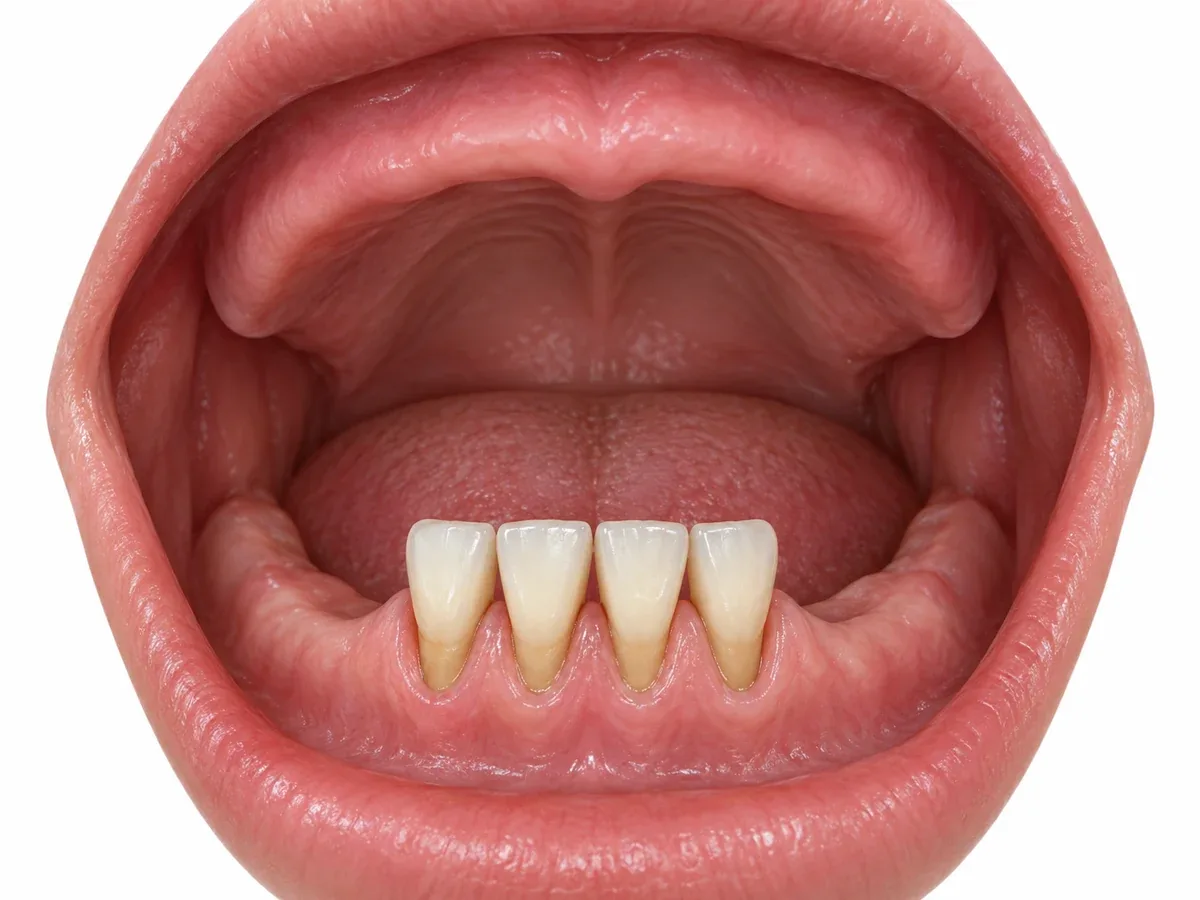
What changes during the months the bone is healing?
An implant bonding firmly to bone is called osseointegration. The KDCA page describes it as the core principle of implant treatment.
The same page gives four reasons why osseointegration fails:
- an infection right after surgery
- poor oral hygiene after surgery
- smoking
- low bone density
Its aftercare advice also says to avoid tobacco and alcohol as much as possible.
Healing usually takes three to four months, and longer when a bone graft is done at the same time. The careful period is just as long.
Seoul National University Hospital gives separate figures for each jaw. The lower jaw takes at least two to three months, and the upper jaw at least four to six. With a bone graft, six to nine months is usual.
The same source says to strictly avoid hard exercise, alcohol and smoking for one week after surgery.
A full-arch implant places several implants in one jaw, with a single connected bridge on top. If a few of them fail to bond, the whole prosthesis may need to be rethought. That is why quitting during this period matters more than with a single implant.
Tooth extraction comes first
A full-arch implant often begins with removing the remaining teeth. The KDCA extraction page says to avoid alcohol and tobacco for at least a week afterwards. Smoking can slow early healing and cause complications such as infection.
Asan Medical Center's disease encyclopedia names smoking first among the causes of dry socket. This is infection and severe pain in the extraction site.
It occurs in about 2–5% of extractions, and the page advises no smoking for at least two weeks around the extraction. The sucking motion creates negative pressure in the mouth and disturbs clotting.
The sources list these things to avoid:
- alcohol and tobacco (KDCA "Tooth Extraction", Seoul National University Hospital)
- drinking through a straw for three days (KDCA "Tooth Extraction")
- spitting (Seoul National University Hospital)
- hard exercise, saunas and hot baths (Asan Medical Center)

Does smoking matter more when a bone graft is needed?
When the bone above the upper back teeth is too short, a sinus lift may be done as well. The floor of the air space beside the nose is lifted, and bone is added underneath.
The dental newspaper also reported a study from Seoul National University Dental Hospital. One surgeon followed 26 patients with 51 implants placed with a sinus lift, for up to ten years.
Cumulative survival was 98.0% at six months, 92.2% at one year, 88.2% at five years and 85.4% at ten years. Seven of the 51 implants failed. Four lacked initial stability and three fixtures fractured.
In a full-arch implant, this surgery is sometimes needed when the upper back bone is thin. In this study, smoking had a large effect on survival. Smokers showed a 7.52 times higher risk than non-smokers.
This result comes from a small sample at one institution with one surgeon. Read it as a direction, not an exact number.
Lee Seong-geun, then a Korean Dental Association director, wrote a column for the same newspaper. He noted that, in the literature, front-tooth implants and sinus-graft implants show a significant link with smoking.
A full-arch implant plan often covers both the front teeth and the upper back teeth. When both areas are in one plan, quitting becomes even more important.

What happened in one published case?
The same column describes a case from the author's own practice. The patient was a man in his mid-50s who smoked more than a pack and a half a day. He wanted to replace his upper denture with a fixed full-arch implant bridge.
The author advised him to quit, then placed six implants together with a sinus bone graft. Healing after surgery went well.
About six months later, at the second surgery, all six implants had failed to bond and came out. The sites around them did not bleed at all and held nothing but graft material. When asked, the patient said he had started smoking again after his stitches were removed.
The author had him promise to stop smoking completely and placed the implants again right away. This time all six bonded well, and the bridge was completed.
This case rebuilt an entire upper jaw. When several implants in a full-arch implant fail together, the surgery and bridge plan must start again from the beginning.
The author wrote that he could merely infer the cause: poor growth of small blood vessels in the grafted bone. One case cannot prove a cause.
Still, it shows clearly that the whole healing period matters, not just the days after surgery. The day your stitches come out is not the finish line.
Does smoking still matter after the implants have bonded?
The Korean Academy of Periodontology presented research on its 17th Gum Day. It found that 43% of implant patients experience peri-implant mucositis, and 22% experience peri-implantitis.
Three main risk factors were named. Poor oral hygiene raised the risk 3.8 times, smoking 5.89 times and uncontrolled diabetes 2.75 times.
A professor at Yonsei University Dental Hospital explained why this matters. Immune cells do not easily break down bacteria around implants, so the disease can progress more destructively than gum disease.
Yet 89.4% of implant patients said they skipped aftercare because nothing felt wrong. The academy stressed regular checkups, since the disease is often advanced once symptoms appear.
The KDCA gives the same warning. As peri-implantitis worsens, it reaches the jawbone and keeps destroying it. Because the implant may not feel loose even with severe bone loss, treatment is often started late.
The academy recommended maintenance visits every three months in the first year, then every six months depending on risk. If quitting is hard for you, keeping your full-arch implant checkups matters even more.
There are clear tasks at home too. The KDCA recommends the following:
- keep healthy habits and good oral hygiene
- use floss and interdental brushes, since the gaps between teeth are wide
- see a dentist every three to six months after treatment ends
With a connected full-arch bridge, you will need to learn a separate tool for cleaning underneath it. The KDCA notes that a toothbrush alone cannot reach every surface.

| Source | Finding | Note given with it |
|---|---|---|
| Report on a paper about older implant patients | Long smoking history: failure rate at least 2 times higher | Quit-smoking education and a warning about failure rates are needed before treatment |
| Seoul National University Dental Hospital study (with sinus lift) | Smokers: 7.52 times higher risk than non-smokers | 26 patients, 51 implants; a small sample from one institution and one surgeon |
| Korean Academy of Periodontology (17th Gum Day) | Smoking raises the risk of disease around implants 5.89 times | Given with poor oral hygiene (3.8 times) and uncontrolled diabetes (2.75 times) |
What do we plan together at a consultation in Busan?
With patients who smoke, we set a quit date before we set a surgery date. The full-arch implant schedule is arranged after that.
At the consultation, we ask about the following:
- how much you smoke each day, and for how many years
- whether you have quit before, and what made it hard
- whether withdrawal symptoms have troubled you
- whether you have had quit-smoking treatment before
We also explain whether any area needs a bone graft. That decides how long the careful period will last.
We also tell you plainly that smoking raises the failure rate and the risk of implant disease. It is better to know this before treatment starts.
| Timing | What the source says | Source |
|---|---|---|
| Around extraction | No smoking for at least 2 weeks | Asan Medical Center |
| After extraction | Avoid alcohol and tobacco for at least 1 week | KDCA "Tooth Extraction" |
| Before implant surgery | Quitting before surgery is advised | Seoul National University Hospital |
| First week after surgery | Strictly avoid hard exercise, alcohol and smoking | Seoul National University Hospital |
| After surgery in general | Avoid tobacco and alcohol as much as possible | KDCA "Dental Implants" |
| When using quit-smoking medicine | Start 1–2 weeks before surgery, continue about 8–10 weeks after | Dentist's column in the dental newspaper |
When and how should you quit before a full-arch implant?
In his column, Lee Seong-geun described the method he uses. First, he measures nicotine dependence with a quit-smoking questionnaire. He wrote that from the start of implant treatment, he always has patients stop smoking.
The column describes three approaches:
- Stop right before the procedure.
- If withdrawal was hard for you before, stop 2–3 days before the procedure and use a nicotine patch.
- Start quit-smoking medicine 1–2 weeks before the procedure and continue it afterwards.
The author recommends stopping at once rather than cutting down slowly. Withdrawal is usually worst on the second or third day after quitting. That is why patients who struggled before stop 2–3 days ahead and use a patch.
He also described using quit-smoking medicine. It is started 1–2 weeks before the procedure and continued for about 8–10 weeks after. This way, the full-arch implant and quitting are completed together.
He notes that a single piece of advice from a doctor lowers smoking rates by 7%. He also tells patients that quitting lowers the risk of lung disease, stroke and heart attack, and improves implant survival.
This is one dentist's account of his own practice. Decide on quit-smoking medicine or patches with a clinic that offers quit-smoking treatment.
| Item | What the column says |
|---|---|
| How to quit | Stopping at once is recommended over cutting down slowly |
| If withdrawal was hard before | Stop 2–3 days before the procedure, with help from a nicotine patch |
| Quit-smoking medicine | Start 1–2 weeks before the procedure, continue about 8–10 weeks after |
| If quitting is truly not possible | Use a patch for 2–3 weeks, then cut to 5–10 cigarettes a day or fewer (a fallback) |
Smoking does not mean you must give up on a full-arch implant. But quitting needs to start before surgery and last through the months of healing and beyond.
We set your quit date and full-arch implant schedule together at the consultation. Call 010-8555-2854 to talk it through.
Frequently asked questions
Is a full-arch implant fine if I just cut down?
The KDCA says that quitting is essential for implant success and long-term use. The column's author also recommends stopping at once first. Cutting down with a patch is his fallback when quitting is truly not possible.
When can I smoke again after full-arch implant surgery?
The sources give no safe date. Seoul National University Hospital says no smoking for a week after surgery. The KDCA still lists smoking as a cause of failed bonding and implant disease after that, so we recommend quitting for good.
I already have a full-arch implant and I smoke. What should I do?
Keep your regular checkups even if nothing hurts. Peri-implantitis is often found late, because the implant may not feel loose even after heavy bone loss.
Can I get this treatment in English in Busan?
Yes, we provide 1:1 English interpretation from your first consultation through the end of treatment. The clinic is near Seomyeon Station Exit 2 (5-min walk), opposite Lotte Hotel Busan. Call 010-8555-2854 (+82-10-8555-2854 from abroad).
Smoking does not close the door on a full-arch implant.
But the risk is real, from extraction day
through the months of healing and for years after.
We set the quit date first, then the surgery date.
If you are considering a full-arch implant in Busan, Reset Dental Clinic offers 1:1 English interpretation from your first consultation through the end of treatment.
References
- KDCA National Health Information Portal, "Dental Implants" — implants do not last forever and smoking makes failure more likely; smoking is directly linked to failure and quitting is essential; osseointegration and its 3–4 month healing time; causes of failed bonding (infection, poor hygiene, smoking, low bone density); peri-implantitis often found late; floss, interdental brushes and regular visits
- Korean Dental Association newspaper Dailydental (Chiui Sinbo), "Late Morning and Early Afternoon Suit Implant Surgery in Older Patients" (report on a Korean geriatric medicine journal paper) — a long smoking history came with at least twice the implant failure rate, so quit-smoking education and a warning about failure rates are needed before treatment
- Dailydental (Chiui Sinbo), "What Is the Survival Rate of Implants With a Sinus Lift?" — Seoul National University Dental Hospital study of 26 patients and 51 implants placed with a sinus lift by one surgeon; cumulative survival of 98.0%, 92.2%, 88.2% and 85.4% at 6 months, 1, 5 and 10 years; smokers showed a 7.52 times higher risk
- Dailydental (Chiui Sinbo), "Quit-Smoking Care for Dental Implant Patients" (column by Lee Seong-geun) — the link between smoking and front-tooth and sinus-graft implants; a case of six failed implants after the patient resumed smoking; stopping at once, nicotine patches, quit-smoking medicine from 1–2 weeks before to 8–10 weeks after the procedure
- Dailydental (Chiui Sinbo), "65% of Implant Patients Experience Peri-Implant Disease" (Korean Academy of Periodontology, 17th Gum Day) — 43% peri-implant mucositis and 22% peri-implantitis; risk factors of poor hygiene 3.8 times, smoking 5.89 times and uncontrolled diabetes 2.75 times; 89.4% skip aftercare; maintenance every 3 months in year one, then every 6 months
- Seoul National University Hospital Medical Information, "Dental Implants" — smokers' lower resistance to infection and slower wound healing; no hard exercise, alcohol or smoking for a week after surgery; healing times by jaw and with bone grafts
- KDCA National Health Information Portal, "Tooth Extraction" — avoid alcohol and tobacco for at least a week after extraction, since they can slow healing and cause complications
- Asan Medical Center Disease Encyclopedia, "Dry Socket" — occurs in about 2–5% of extractions; smoking is a main cause; no smoking for at least 2 weeks around extraction; sucking creates negative pressure that disturbs clotting
Written by Reset Dental Clinic Support Team
Medical review Dr. Na In-chae, Head Dentist · Periodontics Specialist
Last updated: September 19, 2026
This column is for general information and does not replace diagnosis or treatment for individual patients. If you have symptoms, please see a dentist.


